Midnight Waltz Sheet Music Preview

Midnight Waltz: Piano

By Julie Ann Ballard

Item: 98-DP2003

Digital Download
$4.95
Description
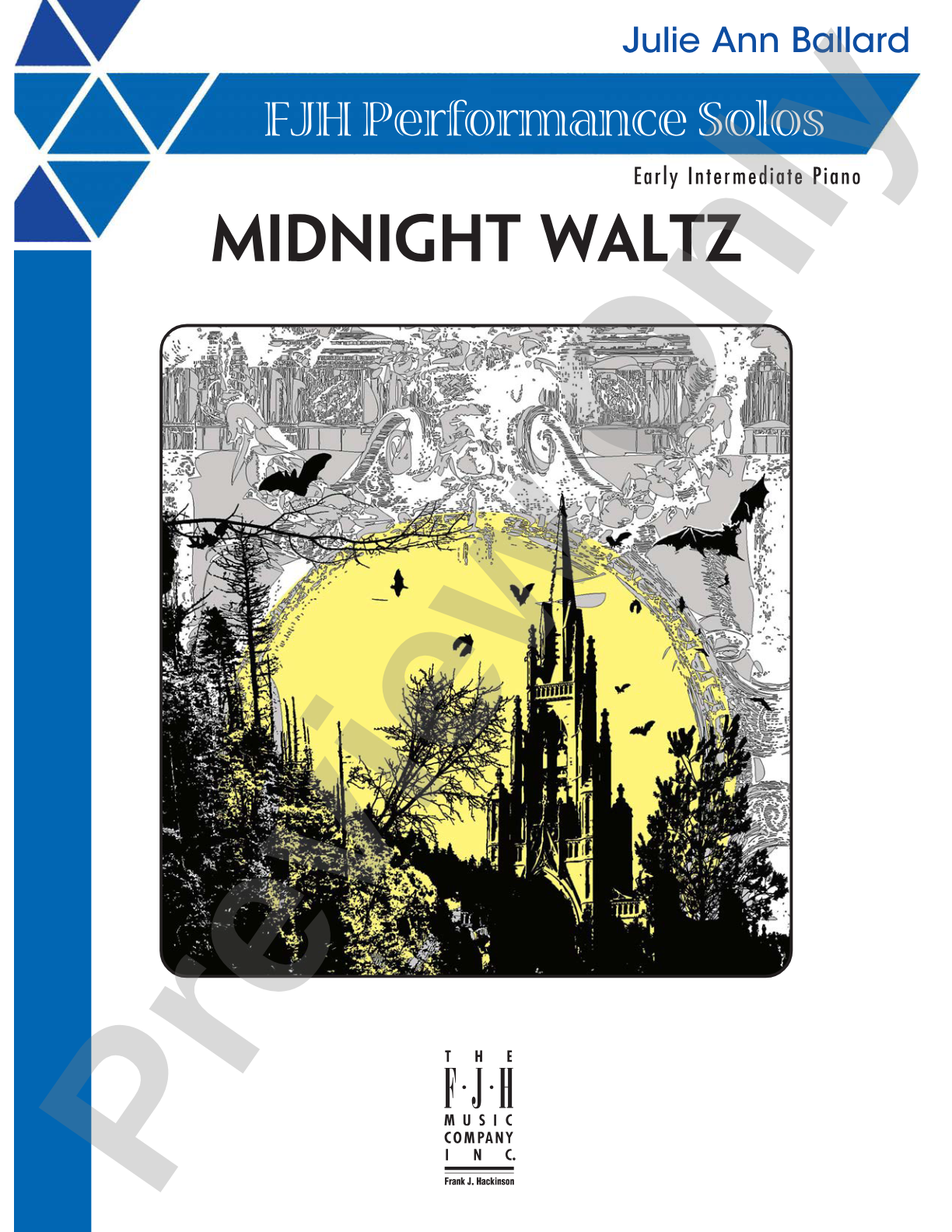
The eerily haunting melody in A minor makes this a popular piece for performances all year long. Section A uses a broken chord pattern in the L.H. until the melody shifts to it in Section B. Students learn how to shape a phrase and to project a lyrical melody.

Midnight Waltz: Piano isn't in MakeMusic Cloud just yet...but it could be. Let us know you'd like to see it, and you'll help shape what comes next. In the meantime, start a free trial and dive into thousands of interactive titles your students can play along with today.

Sample Audio
No sample audio found.
Sample Video
Additional Details
Series: FJH Performance Solos
Publisher: The FJH Music Company, Inc.
SKU: 98-DP2003

More about this title

Why we love this

Ballard writes with a sure hand for what intermediate pianists need to develop: phrase shaping and melodic projection, wrapped in genuinely atmospheric music. The broken chord foundation in Section A gives students secure harmonic grounding before the melody migrates to the left hand, creating a natural pedagogical arc that doesn't feel like a lesson.

What to expect

Walking through a moonlit garden in minor key, where beauty carries an undertone of unease. The waltz rhythm gives motion and buoyancy, but the minor tonality and broken-chord accompaniment pattern create a reflective, slightly distant mood that pulls the listener inward.

Who it's for

Intermediate pianists ready to refine their control over phrase architecture and melodic balance. This solo suits students who have solid hand independence and are beginning to think about how structural choices affect emotional communication.

How to get the most out of it

  • Shape the opening phrase in Section A by letting the broken chords sit slightly back in the texture, allowing the right-hand melody to breathe forward. This creates the emotional distance that makes the piece feel haunting rather than merely pretty.
  • When the melody transfers to the left hand in Section B, resist the urge to play it as loudly as the right-hand melody was. A minor-key left-hand tune needs warmth and projection, but not volume; aim for clarity and singing tone instead.
  • Use the A minor tonality deliberately. Lean into the darker character without dragging the tempo; maintain the waltz rhythm's forward motion even as you explore the melancholy of the key.

How to use it

Program this as a standalone recital piece when you want to showcase a student's lyrical maturity and sensitivity to minor-key expression. It also pairs naturally with other character pieces or shorter classical works, offering a different emotional color than major-key contemporary solos.

Skills your students will build

  • Shaping and projecting a lyrical melody across phrase boundaries
  • Balancing broken-chord accompaniment patterns with singing tone in the melody
  • Playing with textural clarity in minor keys without sacrificing warmth
  • Transferring melodic line between hands while maintaining phrase coherence

You May Also Like