
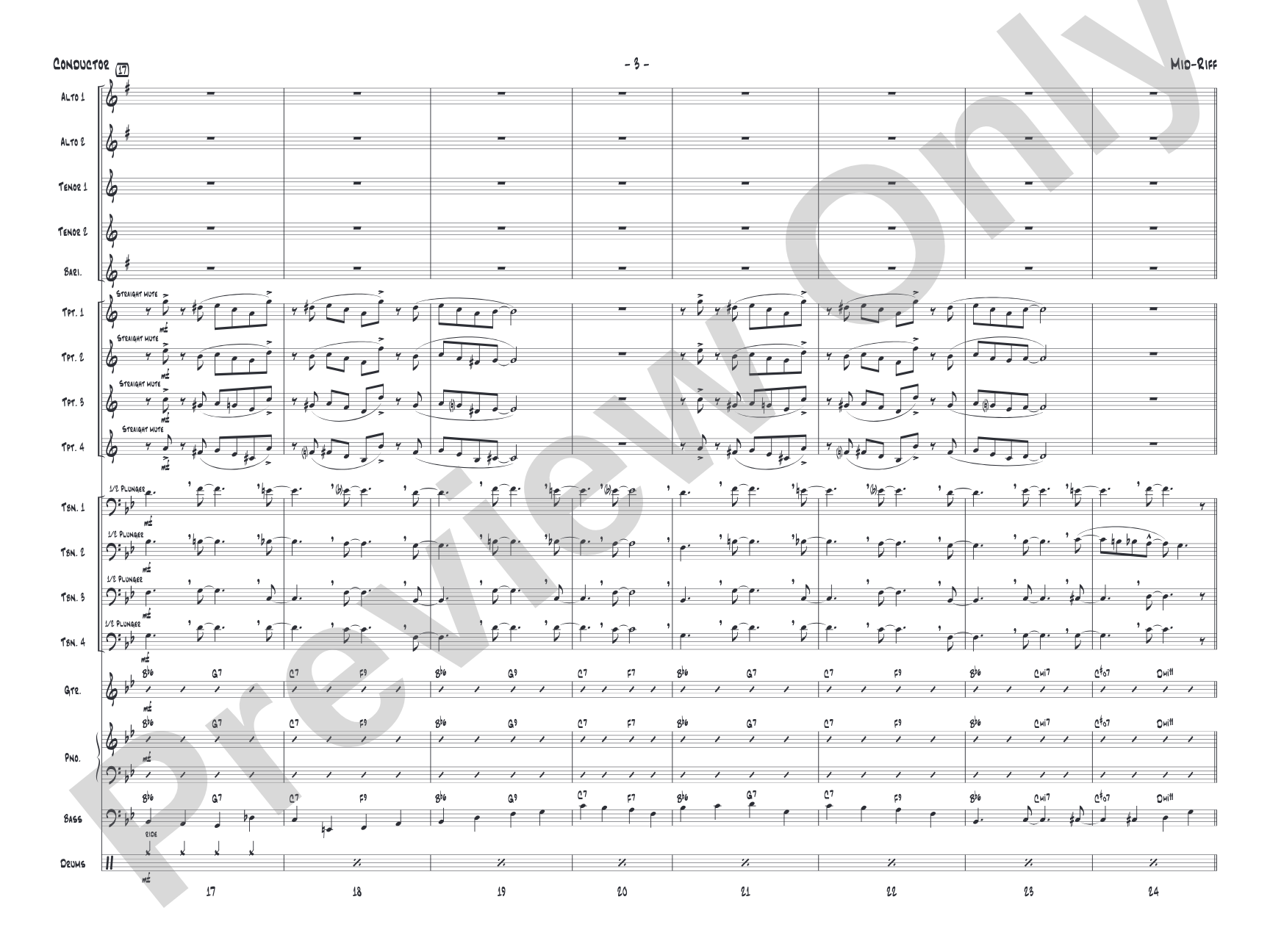
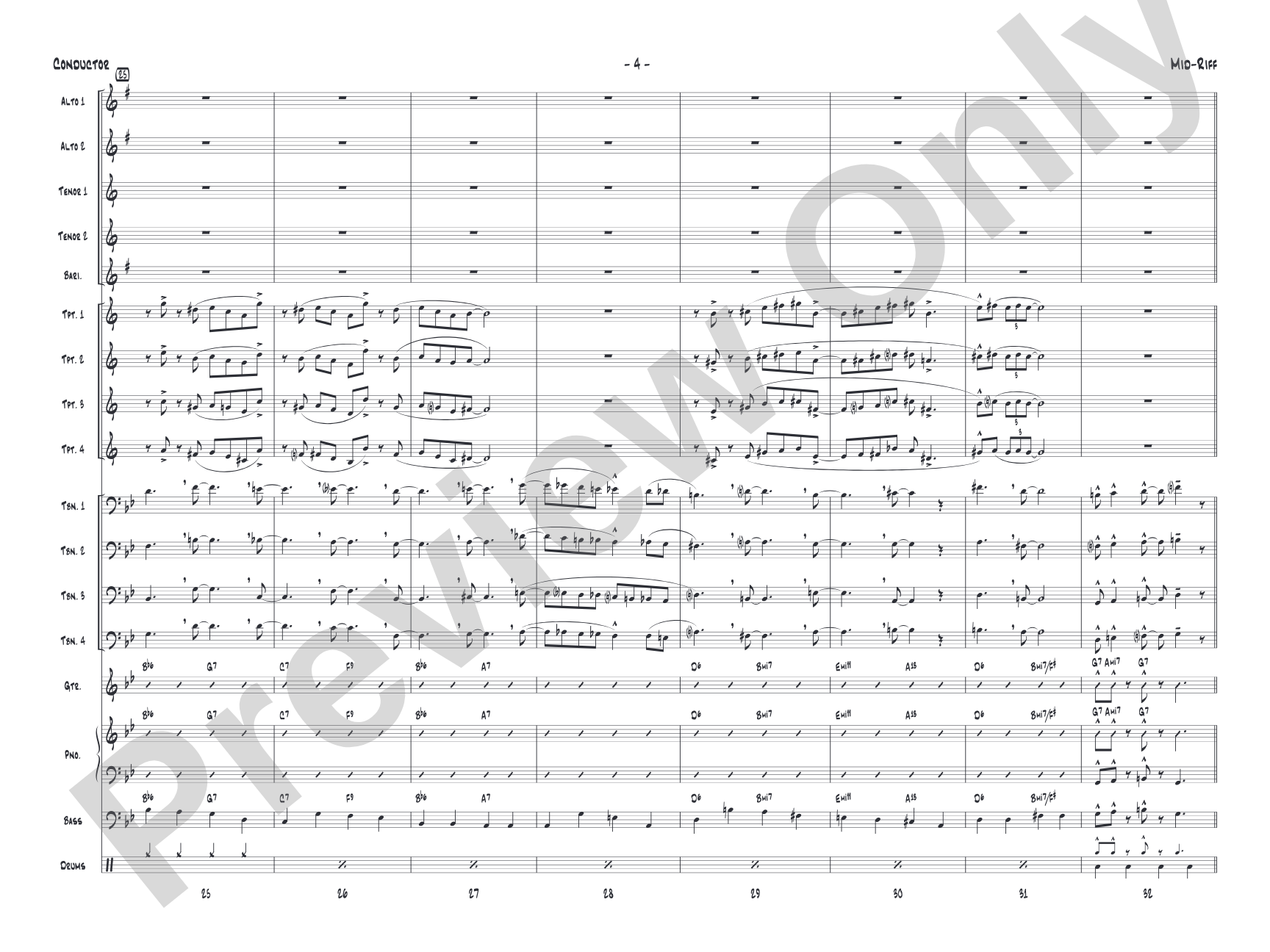
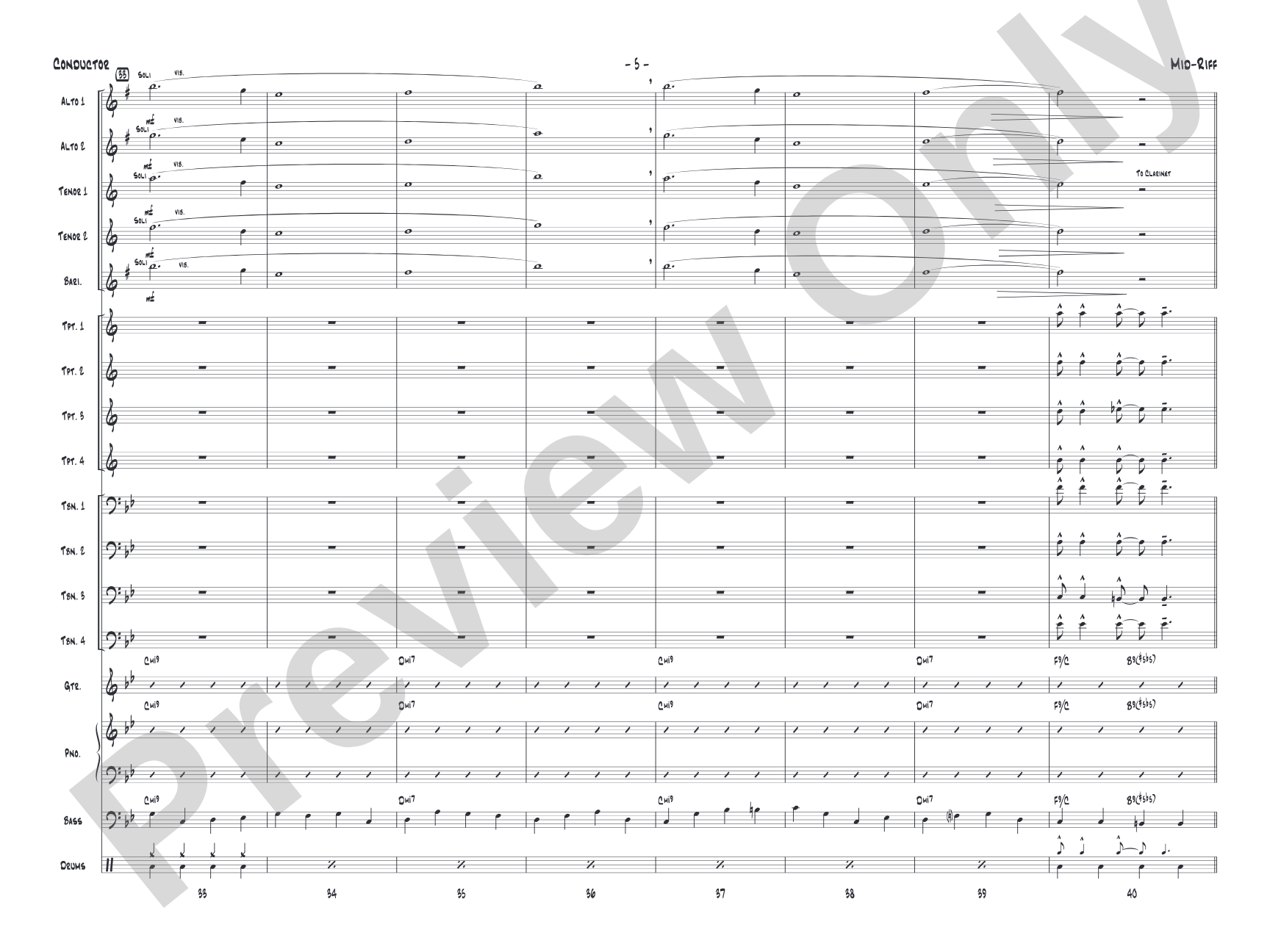
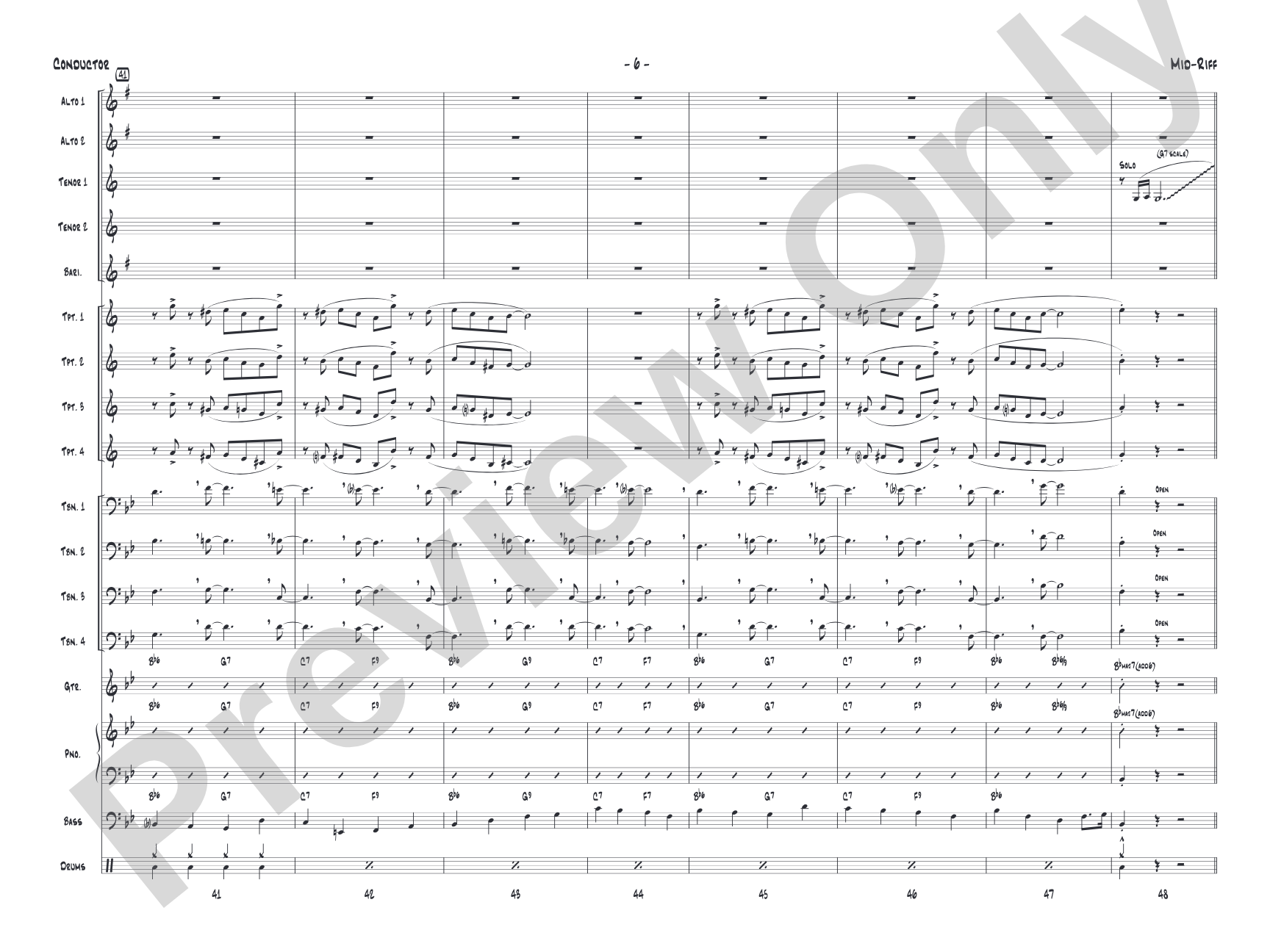
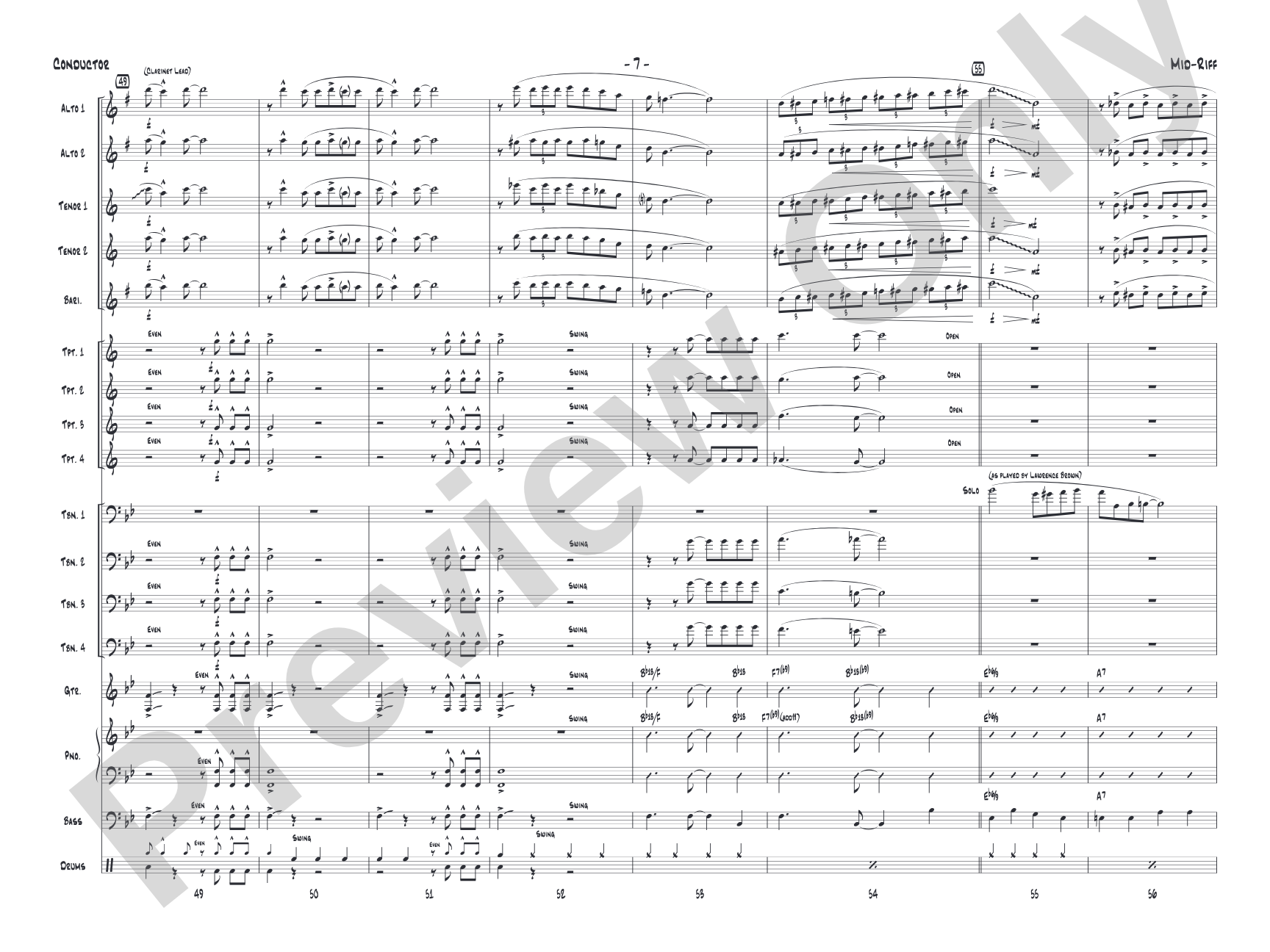
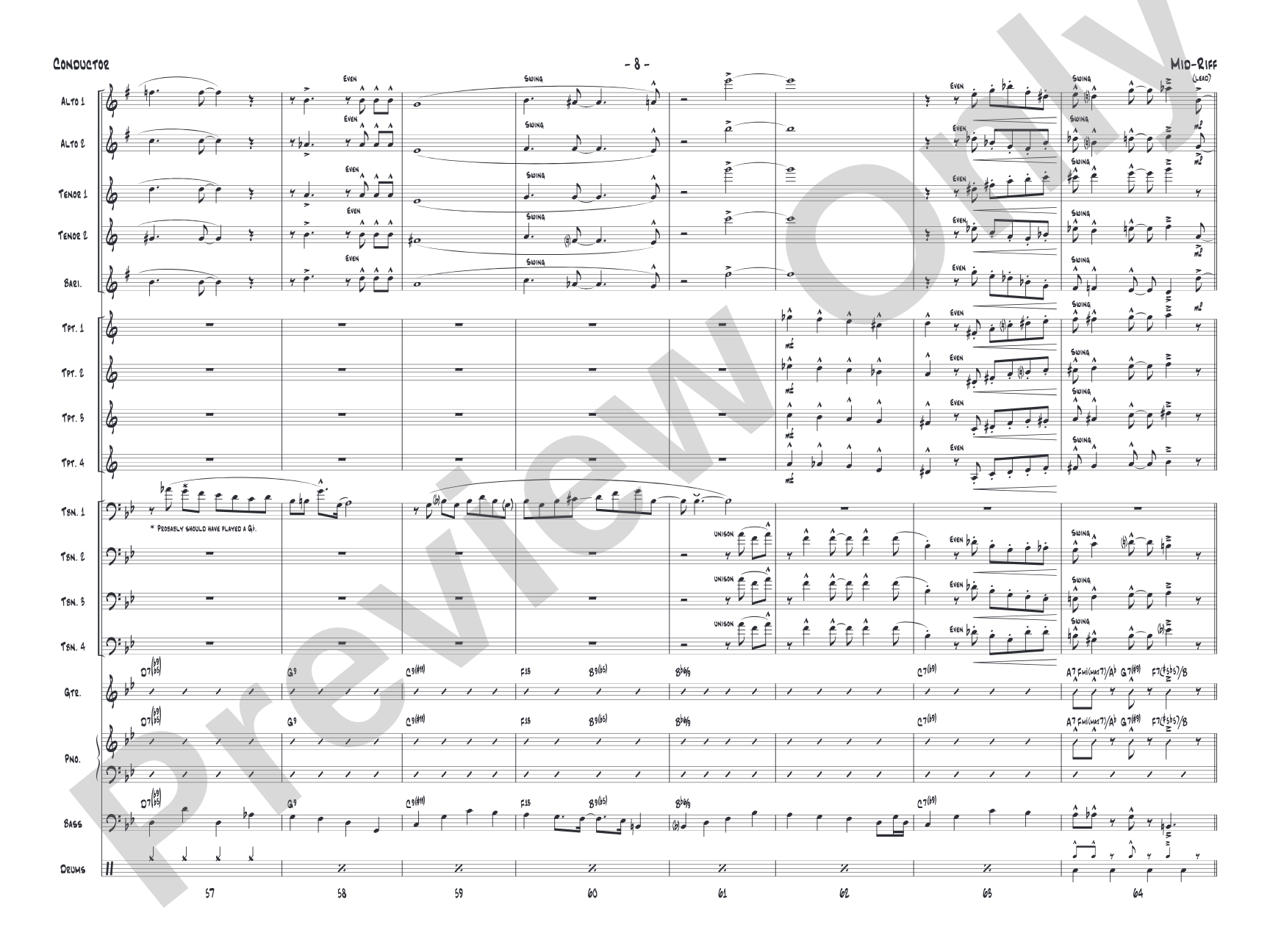
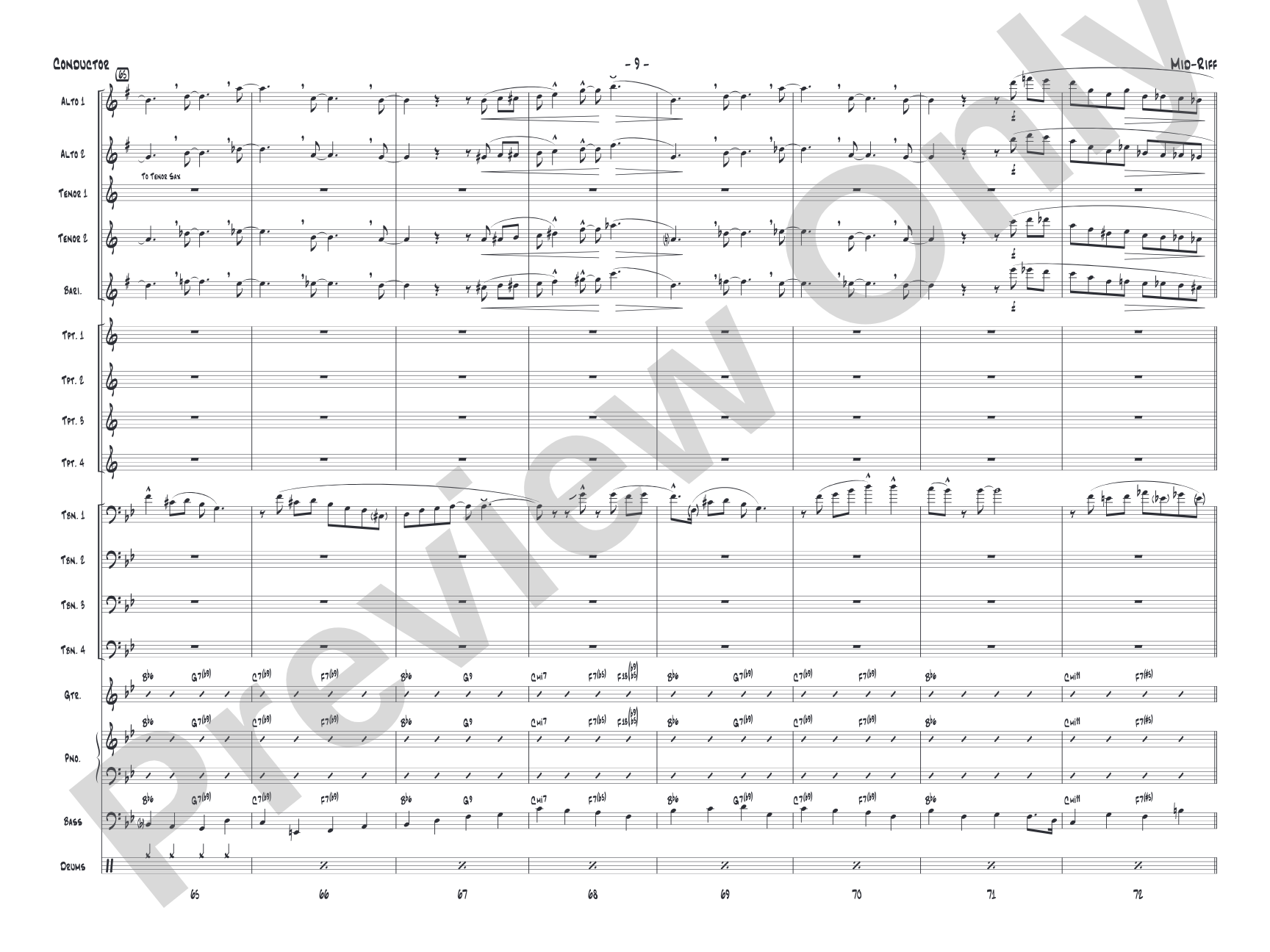
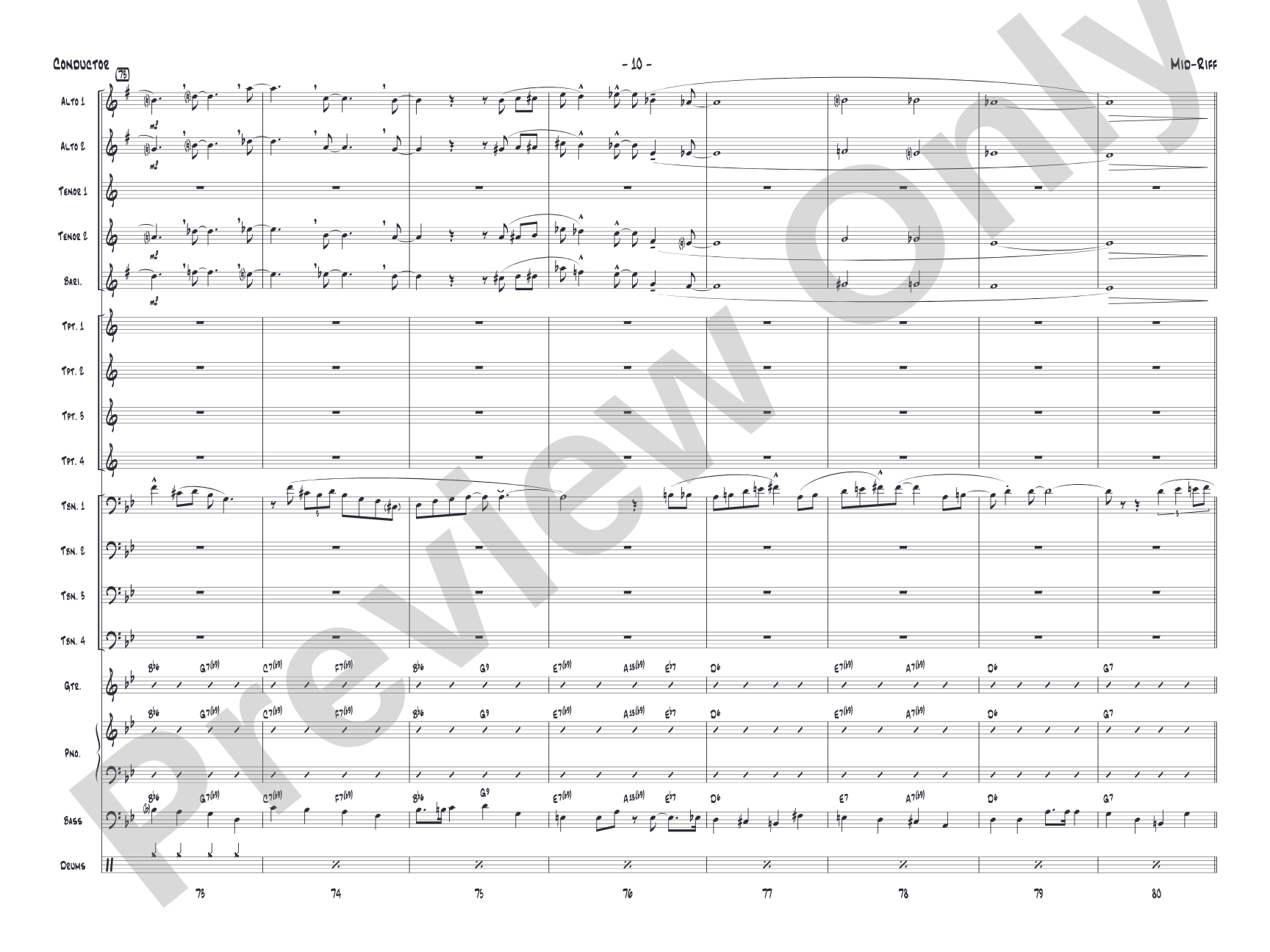
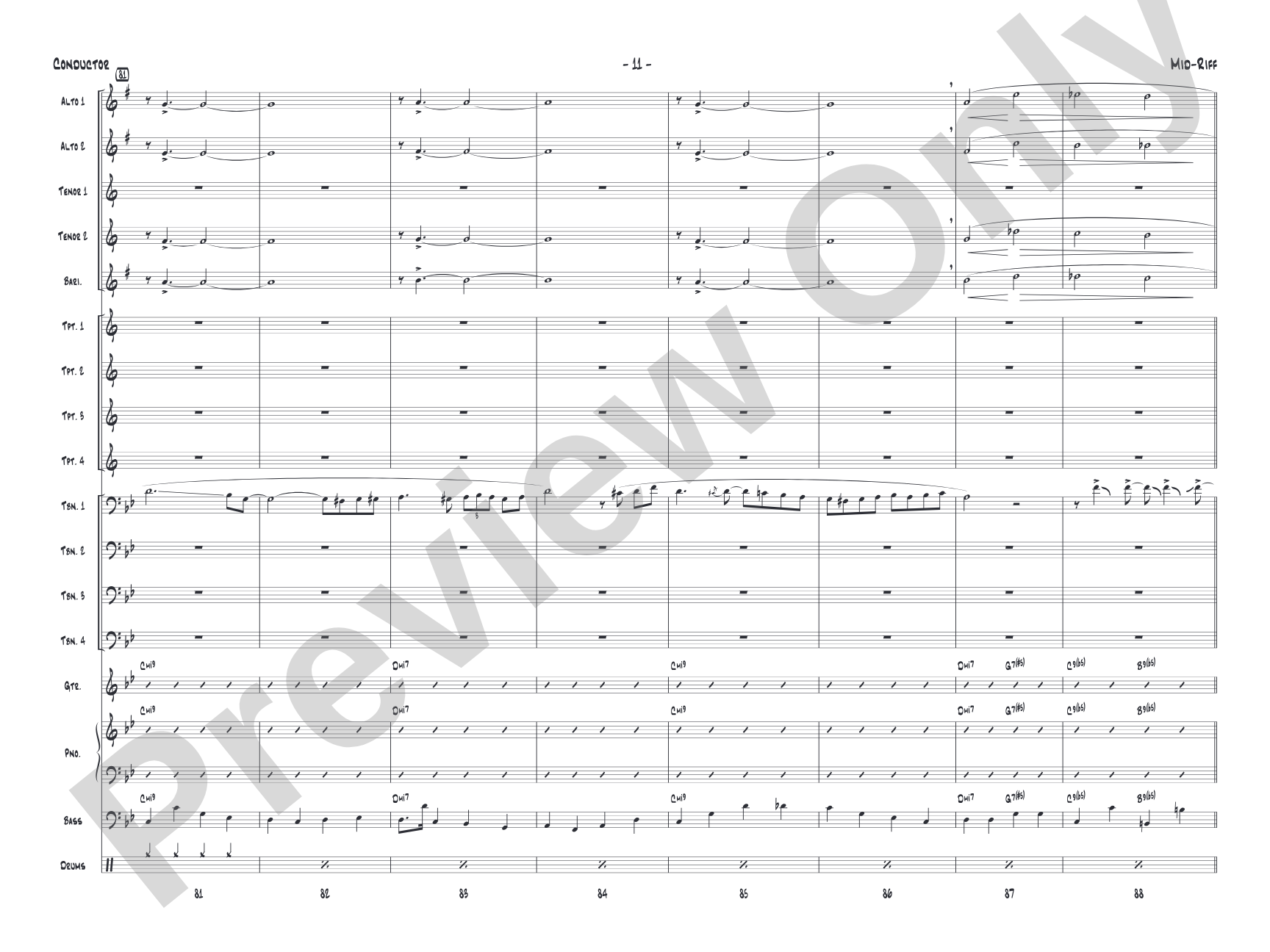
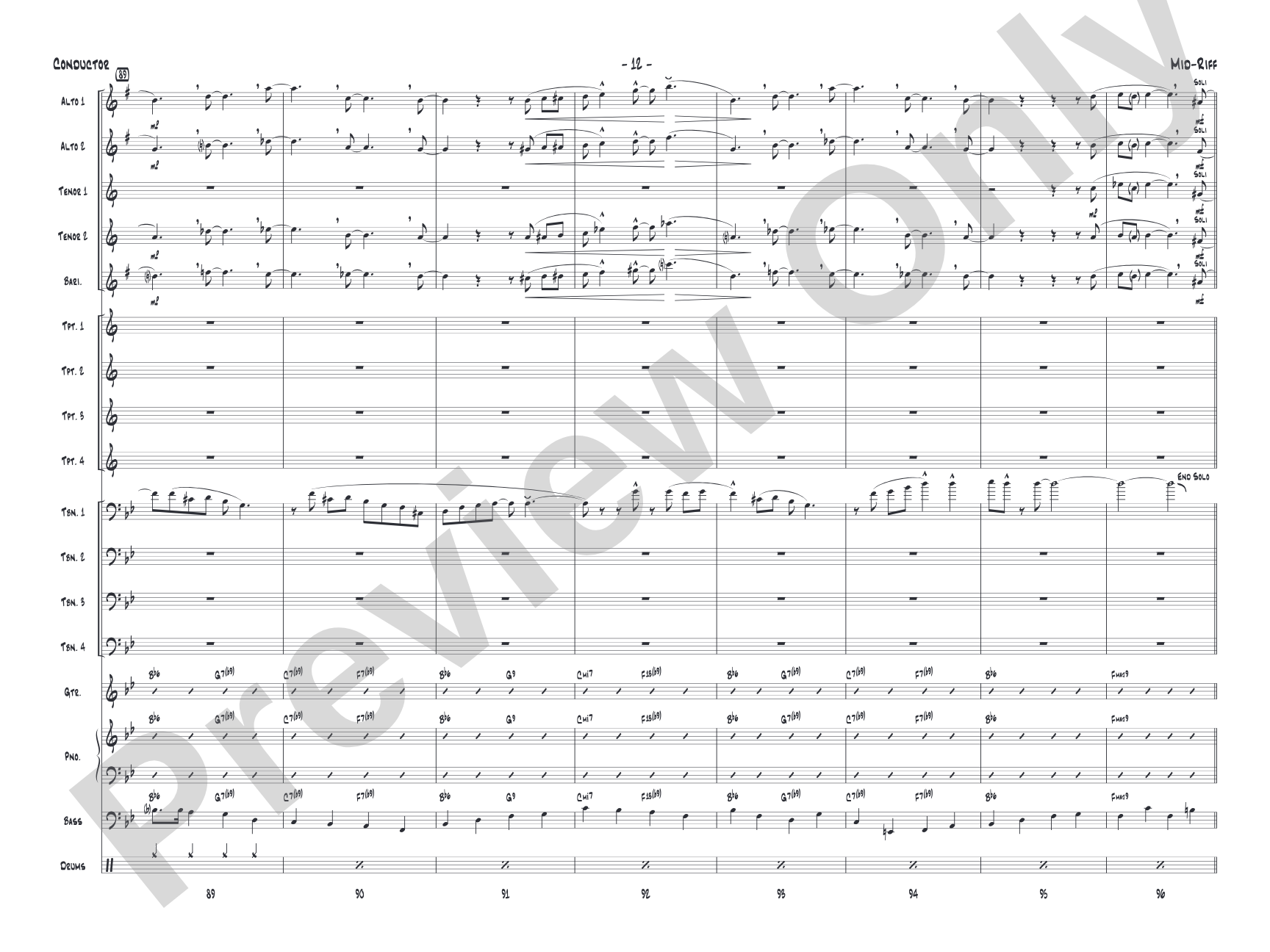
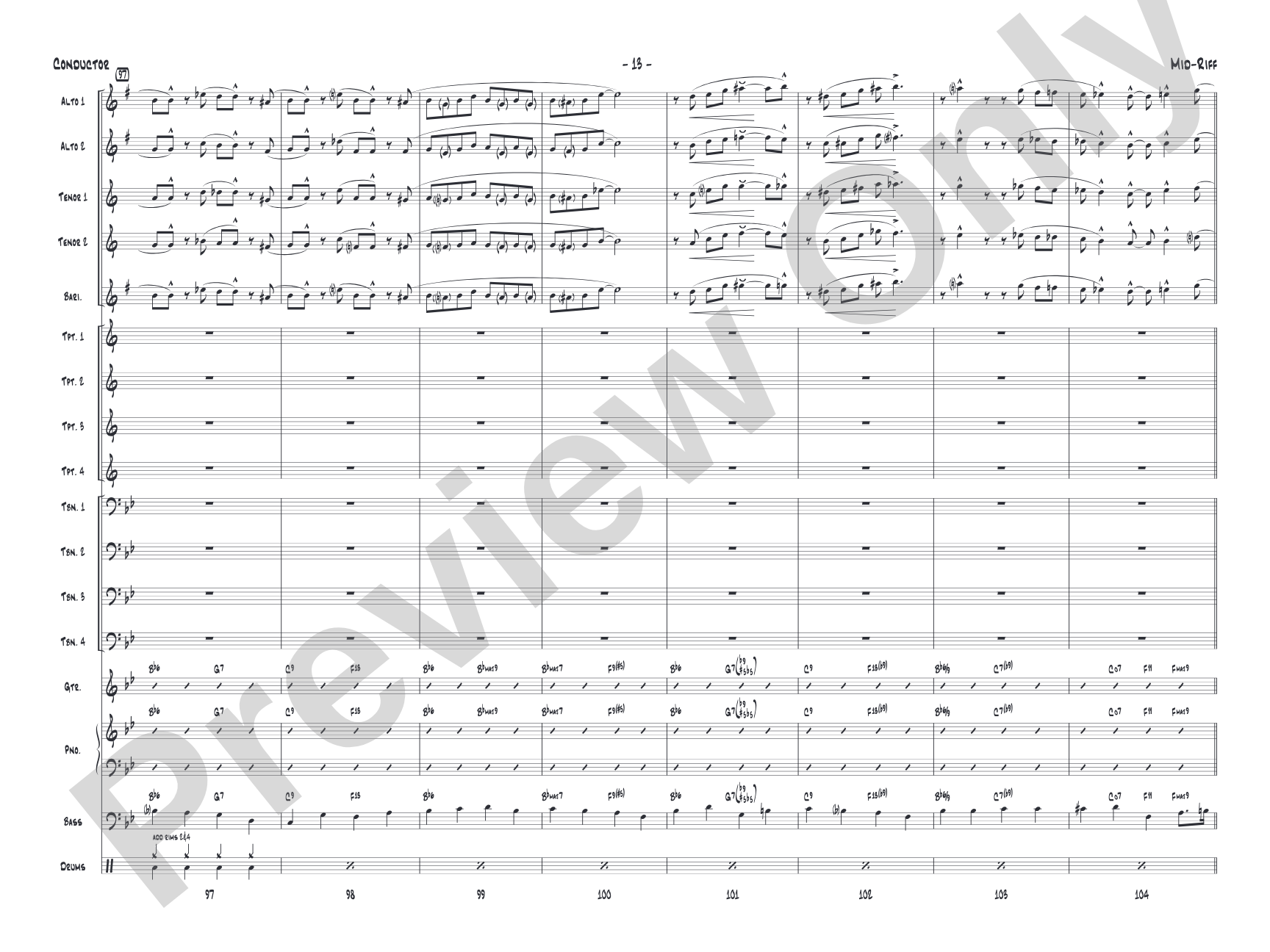
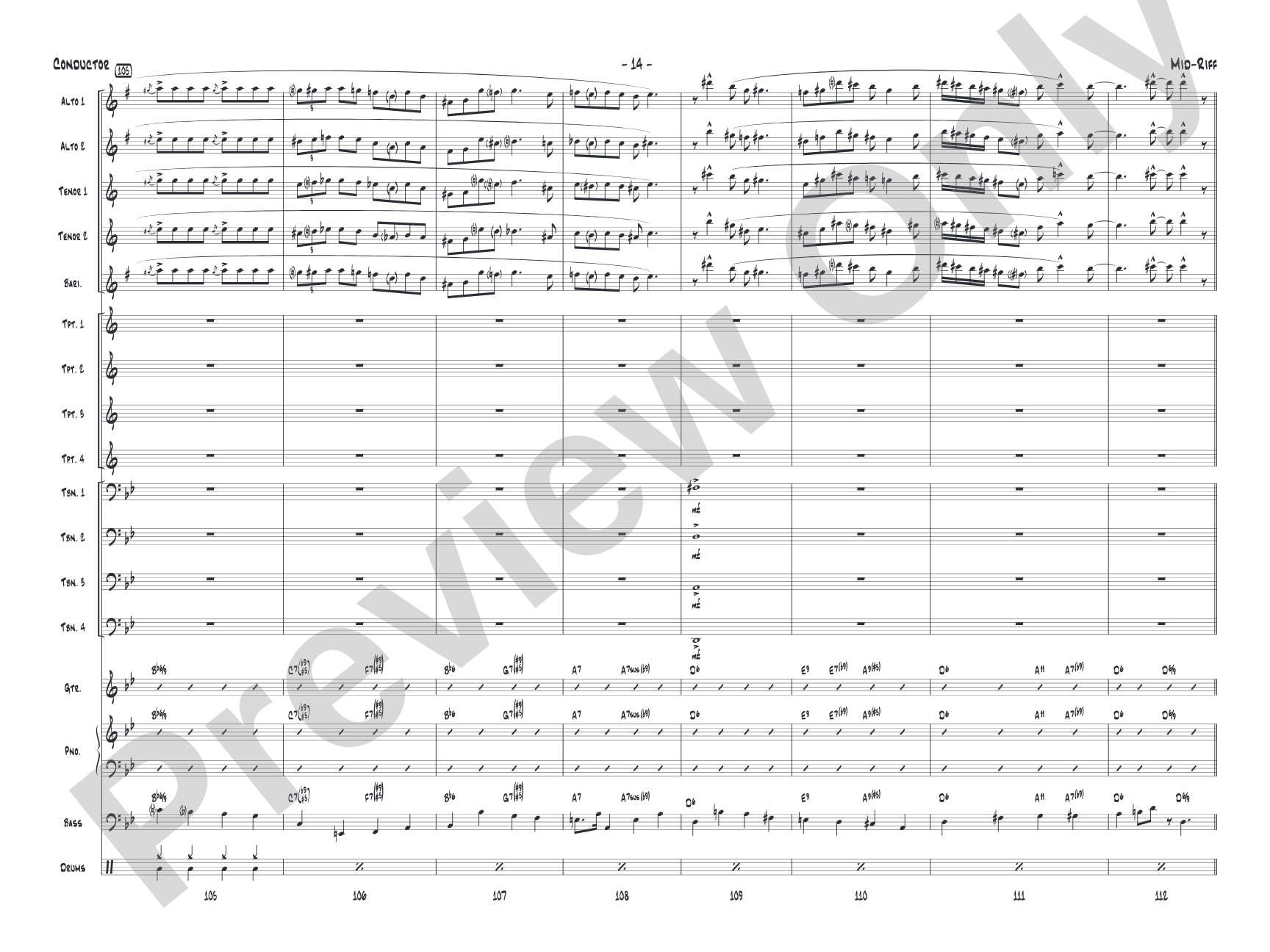
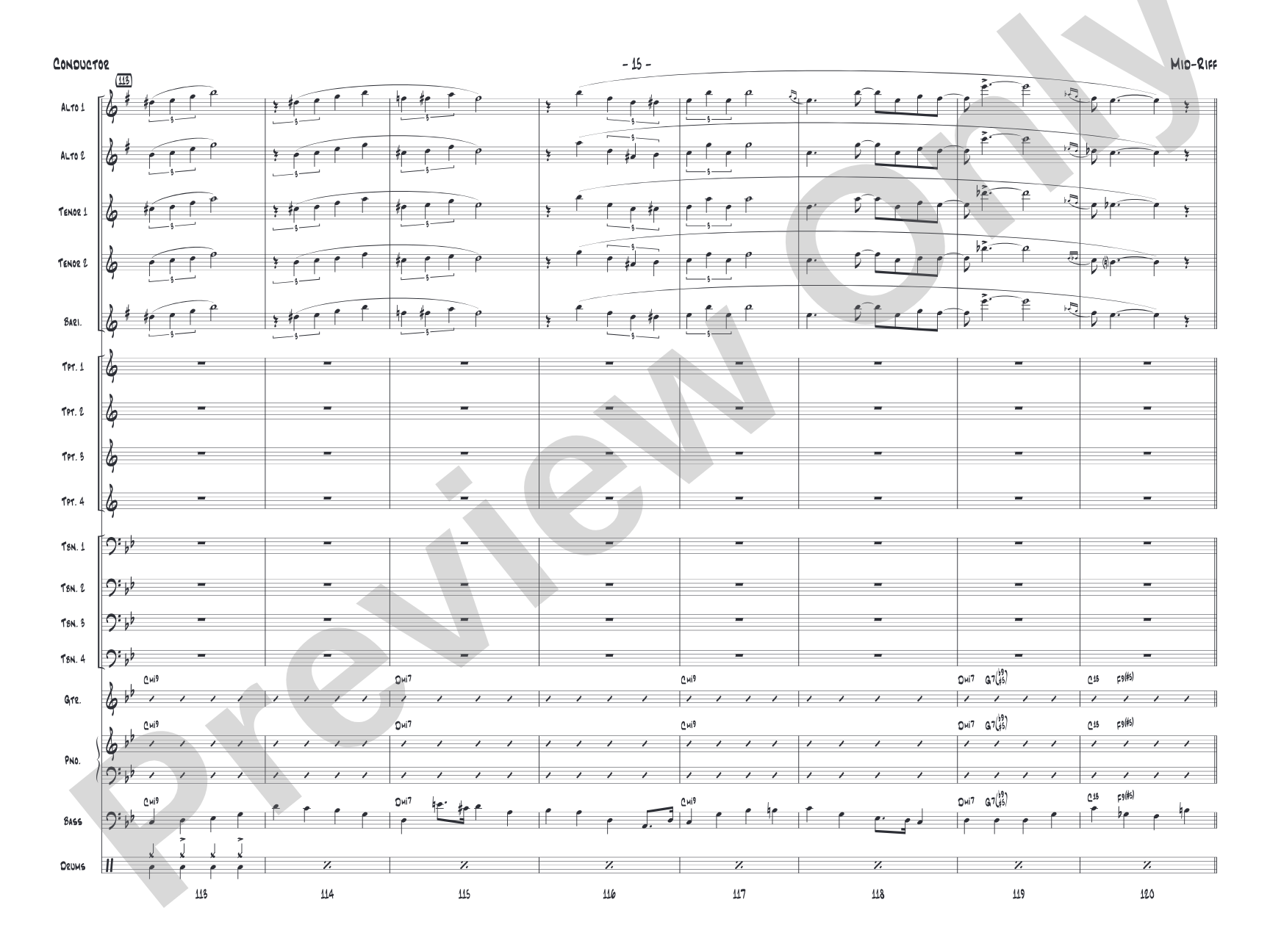
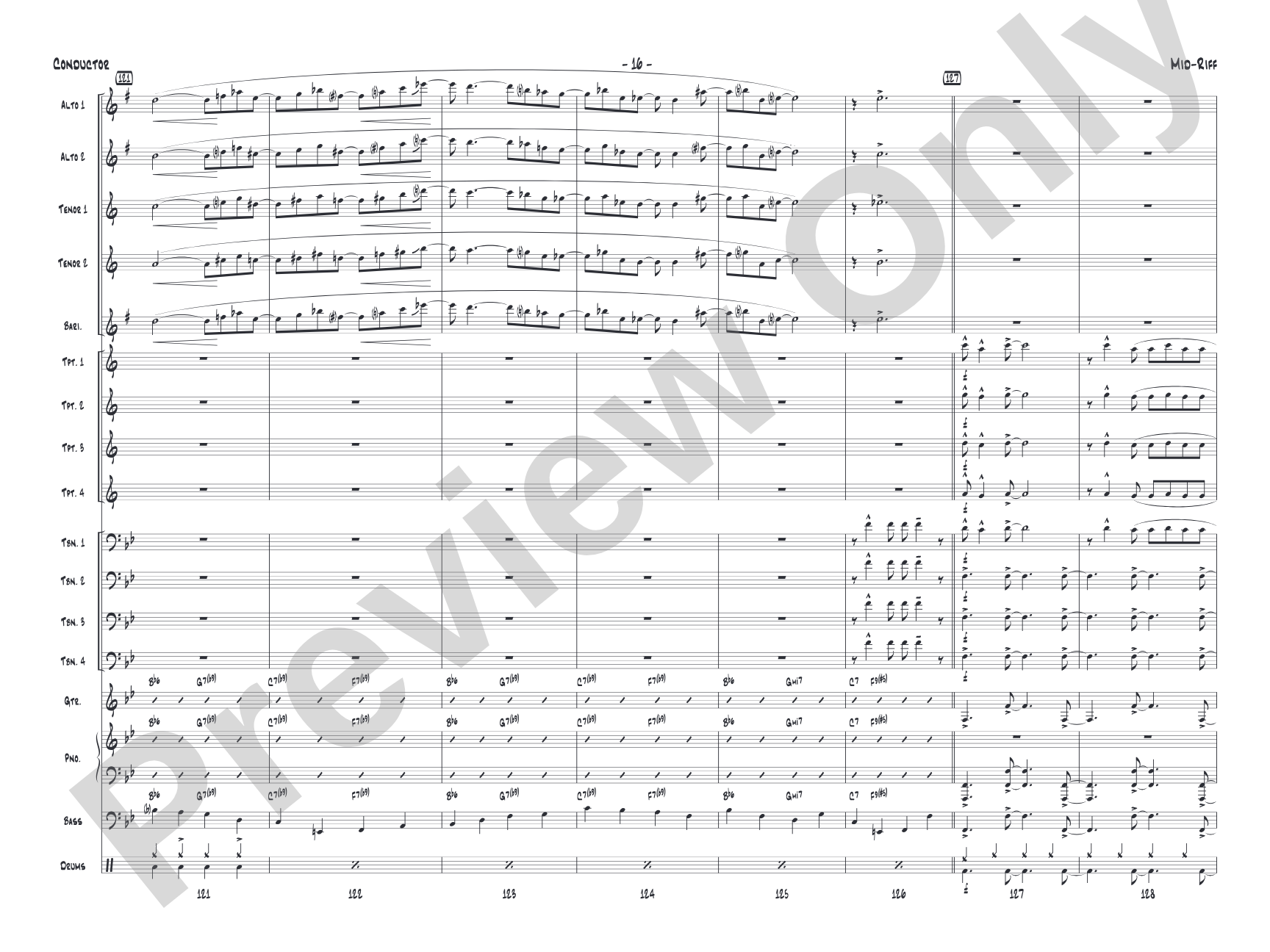
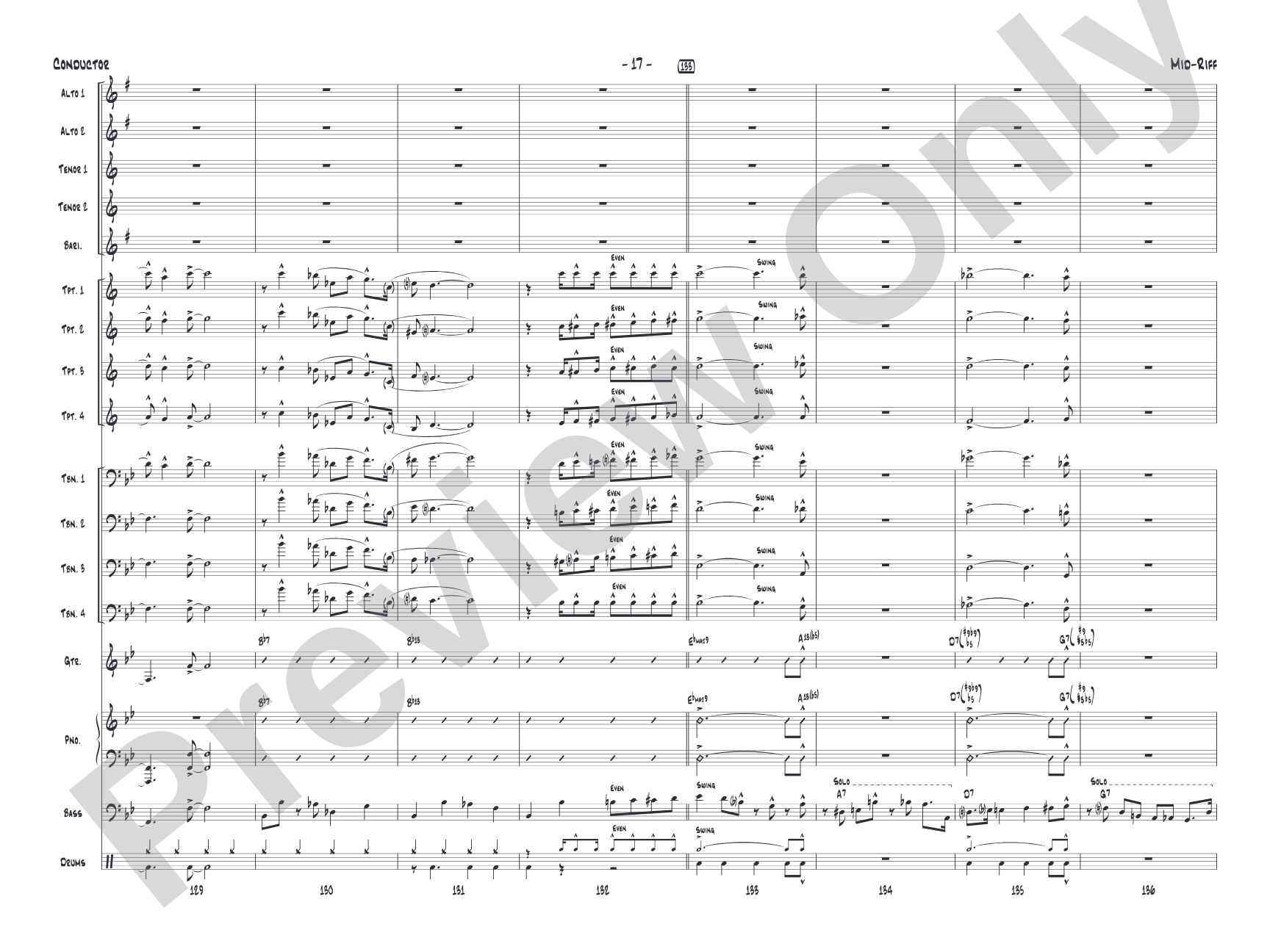
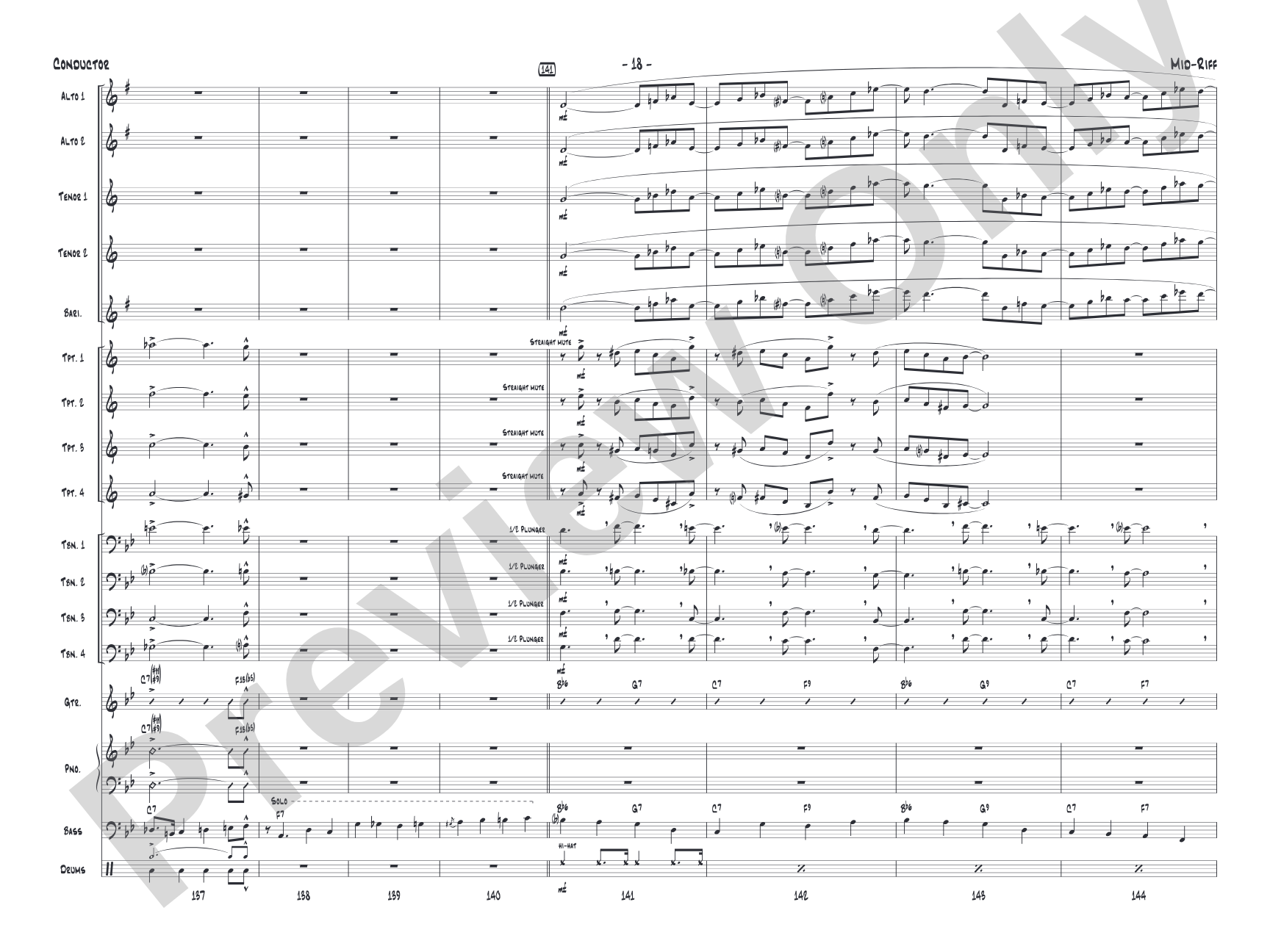

Mid-Riff: Jazz Ensemble Conductor Score & Parts
By Billy Strayhorn / ed. and transcr. Jeff Lindberg
Grade: 5 (Advanced / Difficult)
Item: 00-PK-0006335

$70.00
Pickup currently not available
Buy Extra Parts (Digital PDF Download)
| Product | Price | Quantity |
|---|---|---|
| Mid-Riff: Score | $12.00 | |
| Mid-Riff: E-flat Alto Saxophone | $3.00 | |
| Mid-Riff: 2nd E-flat Alto Saxophone | $3.00 | |
| Mid-Riff: B-flat Tenor Saxophone | $3.00 | |
| Mid-Riff: 2nd B-flat Tenor Saxophone | $3.00 | |
| Mid-Riff: E-flat Baritone Saxophone | $3.00 | |
| Mid-Riff: 1st B-flat Trumpet | $3.00 | |
| Mid-Riff: 2nd B-flat Trumpet | $3.00 | |
| Mid-Riff: 3rd B-flat Trumpet | $3.00 | |
| Mid-Riff: 4th B-flat Trumpet | $3.00 | |
| Mid-Riff: 1st Trombone | $3.00 | |
| Mid-Riff: 2nd Trombone | $3.00 | |
| Mid-Riff: 3rd Trombone | $3.00 | |
| Mid-Riff: 4th Trombone | $3.00 | |
| Mid-Riff: Guitar Chords | $3.00 | |
| Mid-Riff: Guitar | $3.00 | |
| Mid-Riff: Piano Accompaniment | $3.00 | |
| Mid-Riff: String Bass | $3.00 | |
| Mid-Riff: Drums | $3.00 |
Parts Added to Cart!
Related Items
Mid-Riff: Jazz Ensemble Conductor Score |
$12.00
|
View |
Description
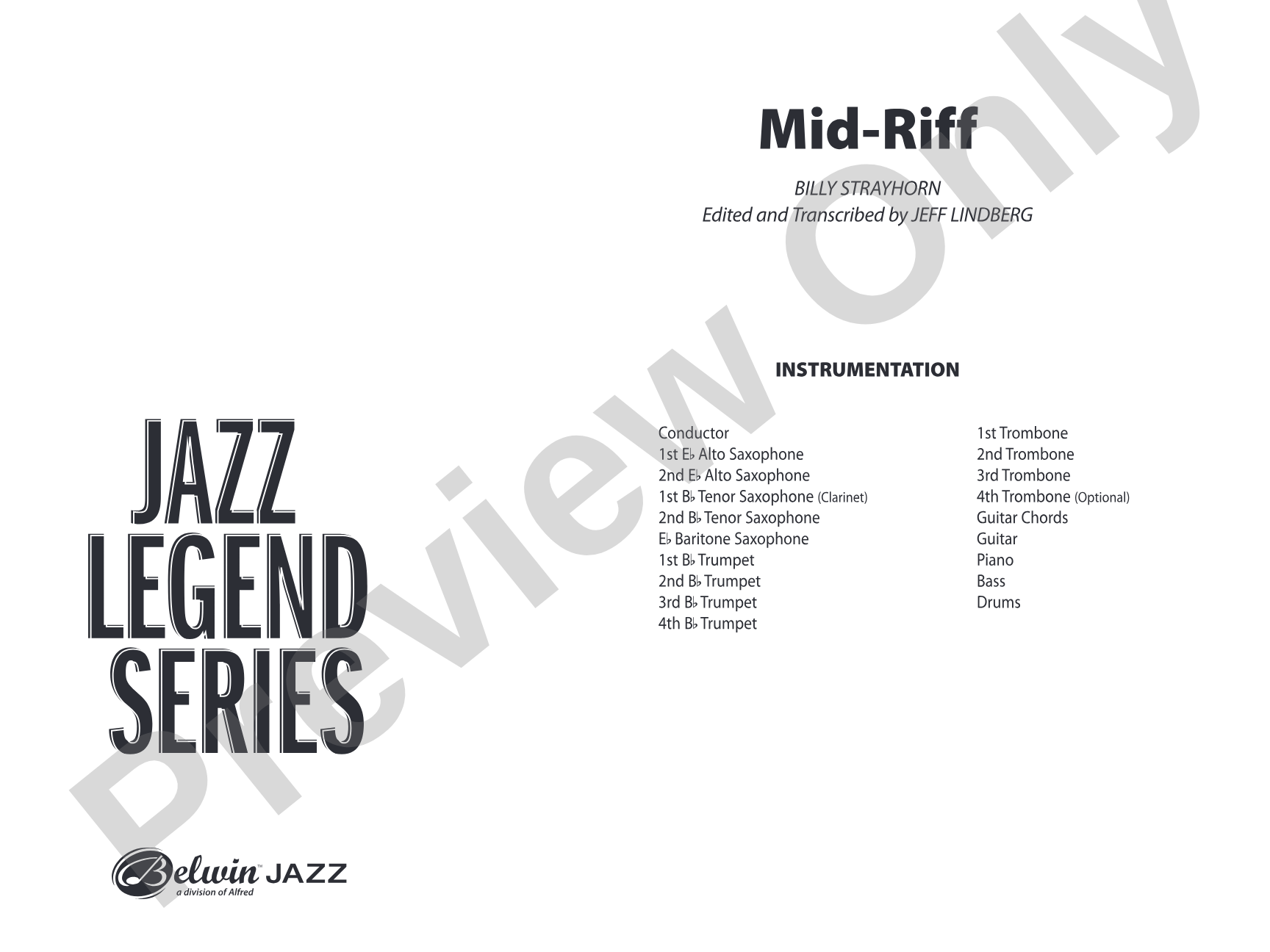
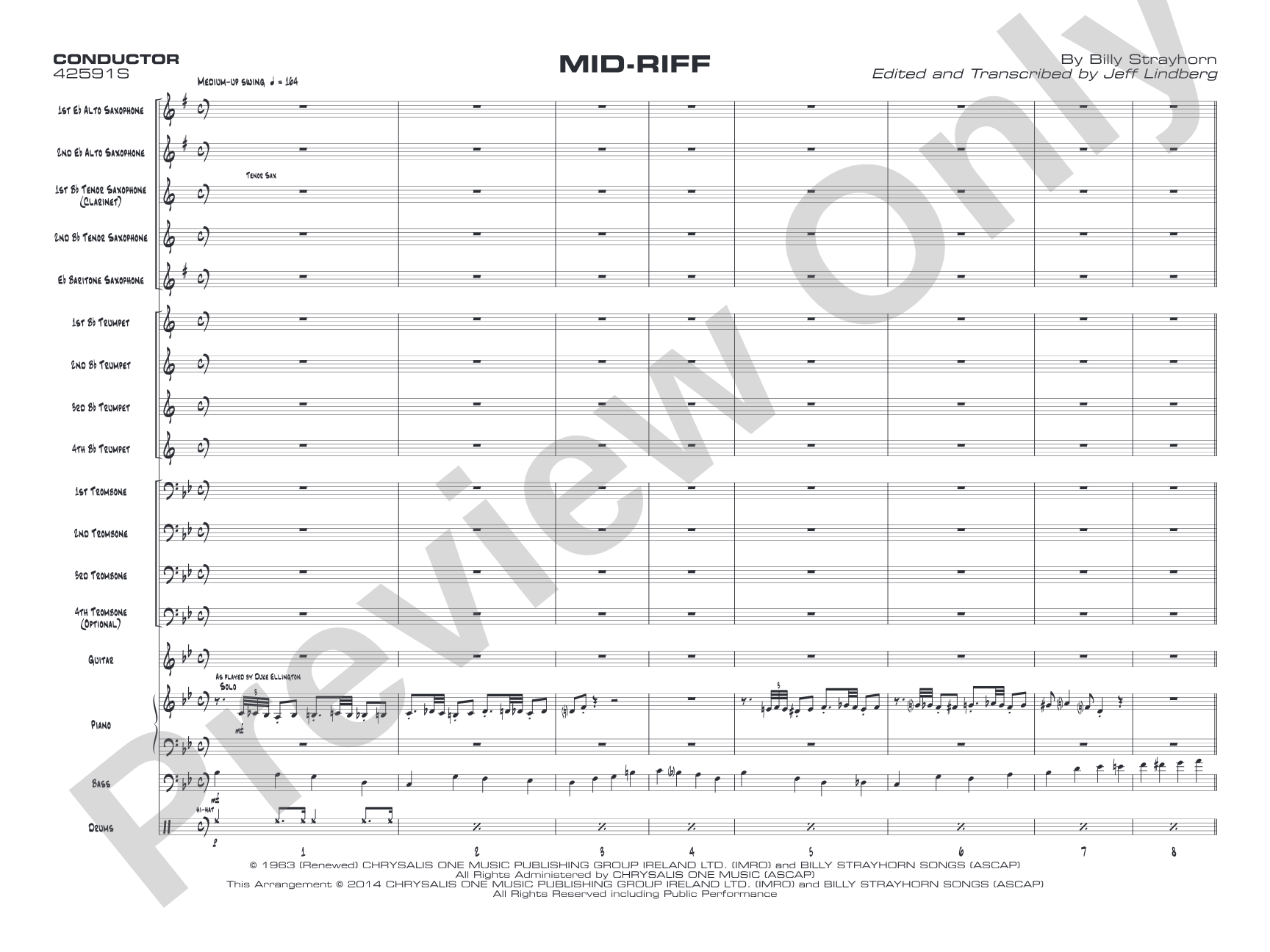
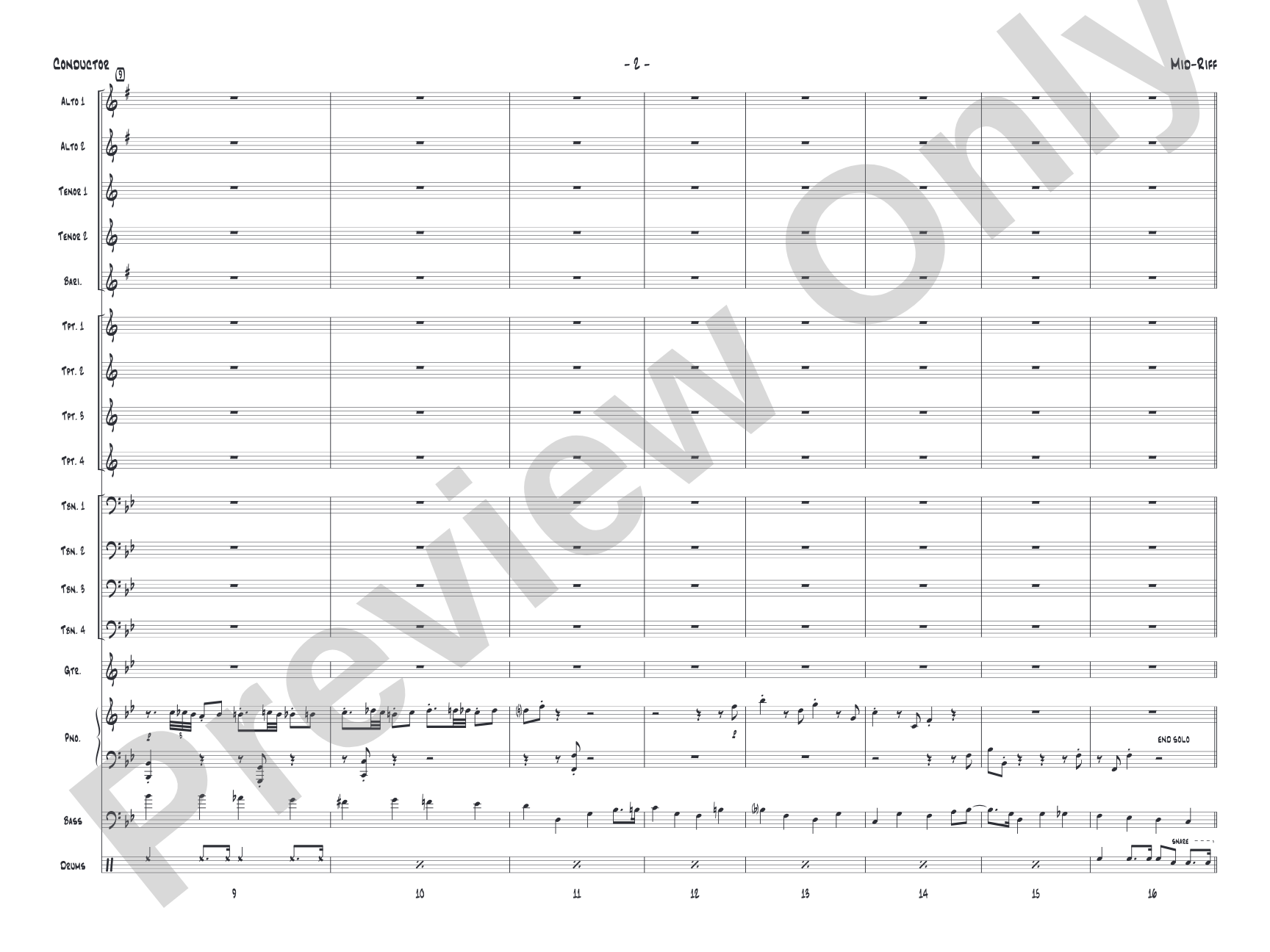
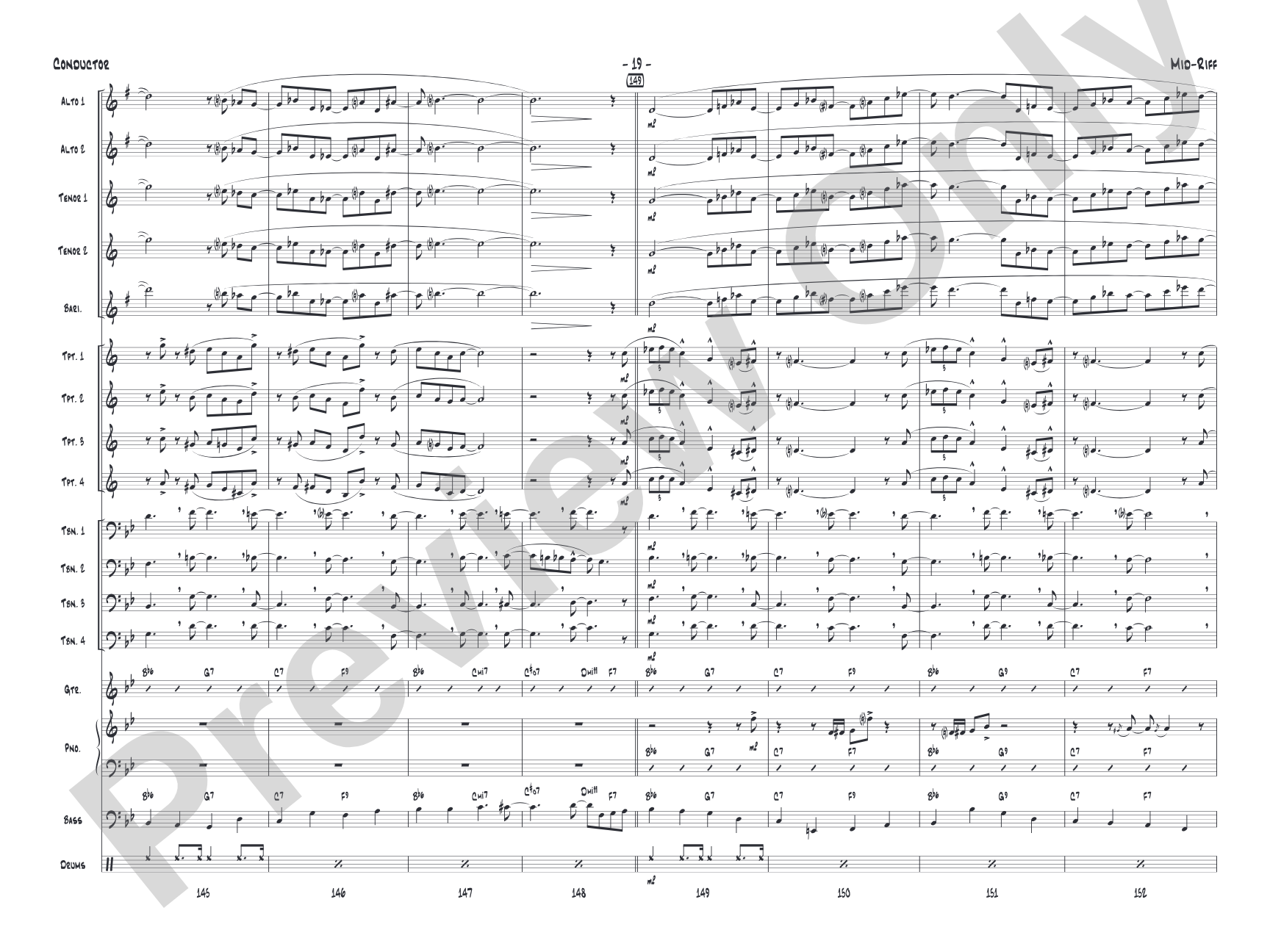
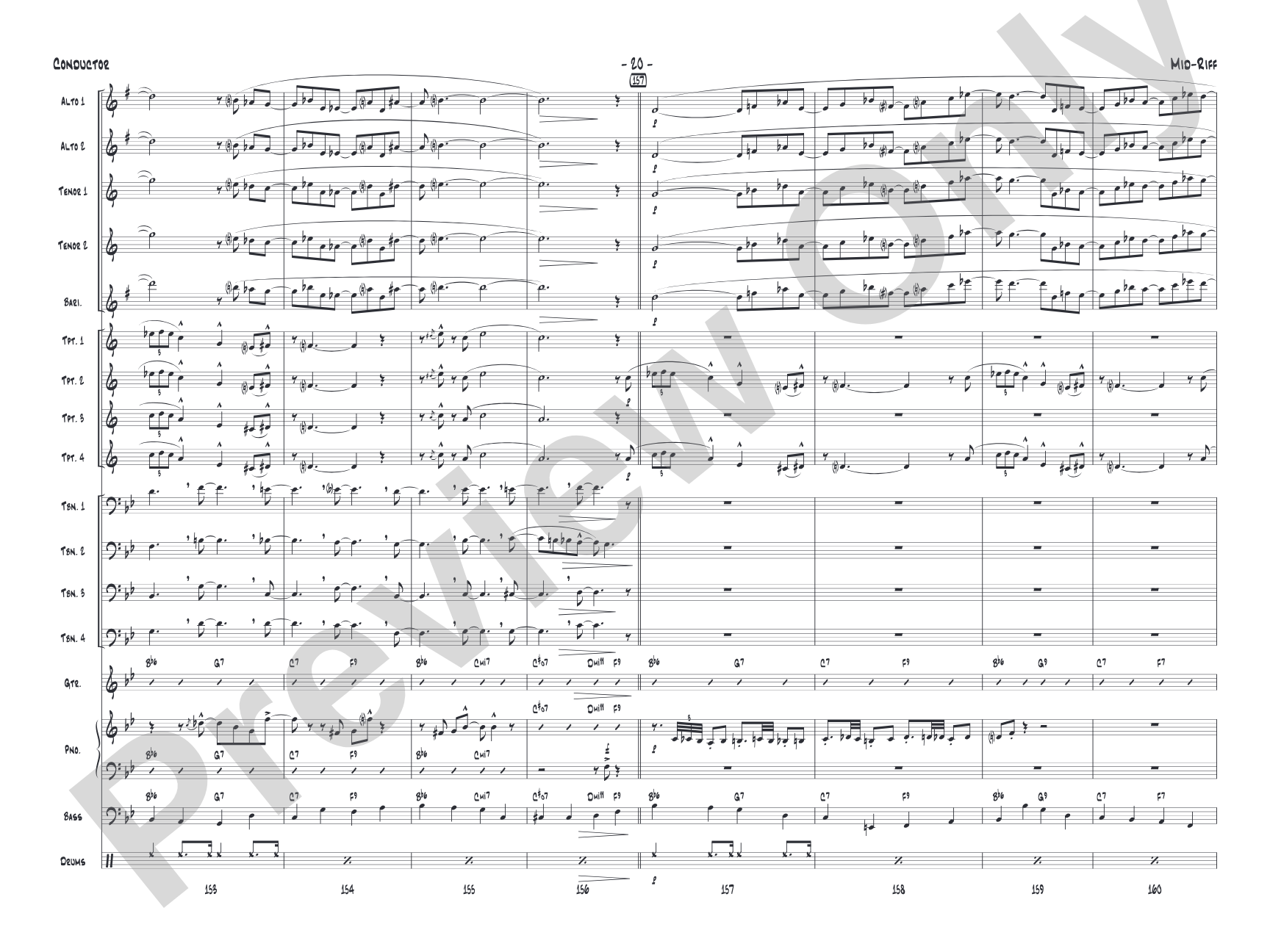
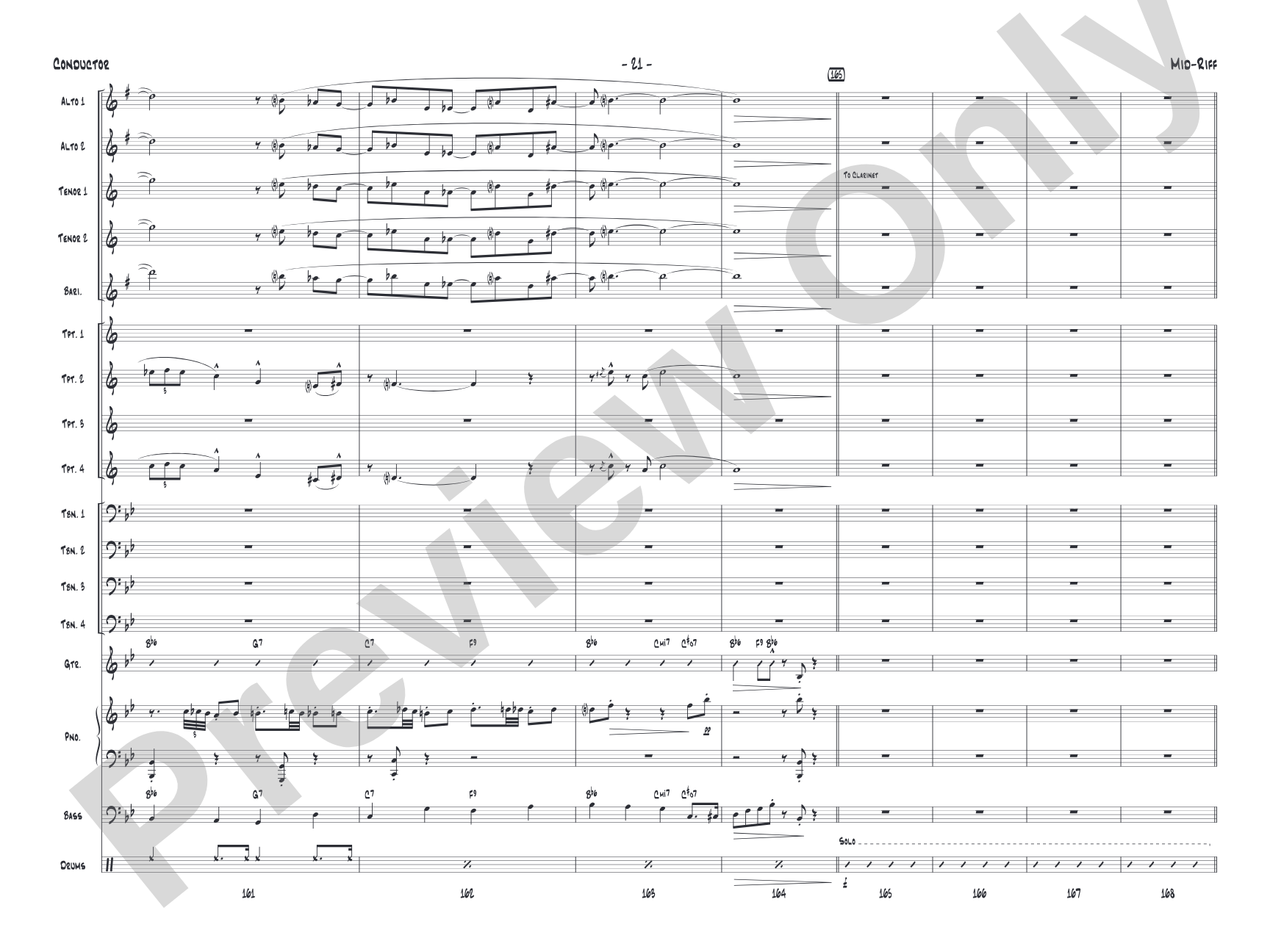
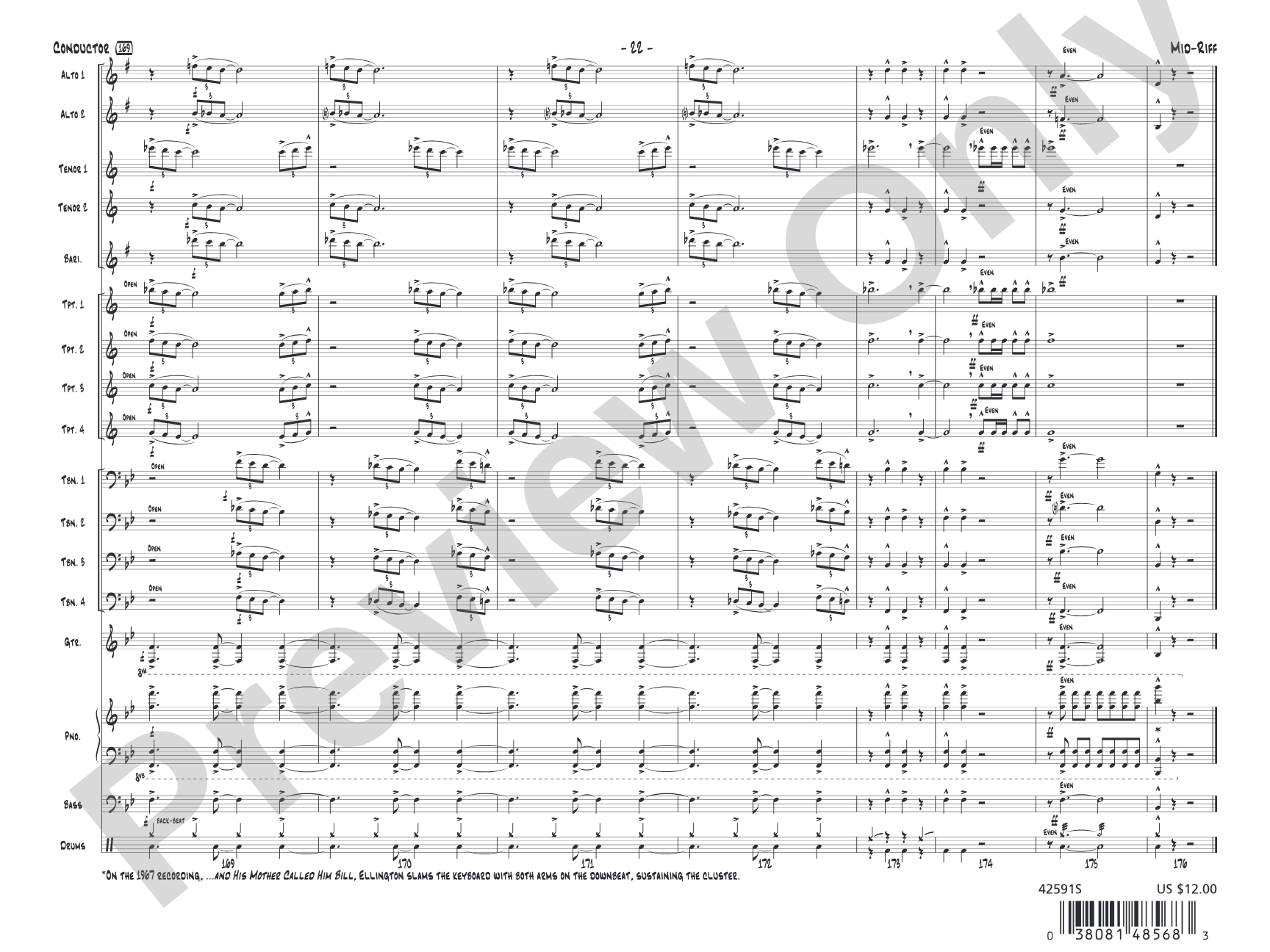
Introducing, Mid-Riff, composed and arranged by Billy Strayhorn! A medium up-swing at 164 BPM, this chart was originally recorded by Duke Ellington. It's been edited and transcribed by Jeff Lindberg to exacting specifications to include all solos by the Ellington band members.


Don't just read it, hear it, play along with it, and watch your students grow with it. In MakeMusic Cloud, Mid-Riff: Jazz Ensemble Conductor Score & Parts comes alive with professional accompaniment, adjustable tempo, and built-in practice tools that turn solo practice into real progress.
Open in the Player
Jump straight in and assign it today.
Start Your Free Trial
Open this title and explore the full library in minutes.
Sample Audio
No sample audio found.
Sample Video
No sample videos found.
Additional Details
Series:
Belwin Jazz Legend Series
Publisher:
Alfred Music
Page Count:
70
SKU:
00-PK-0006335
More about this title
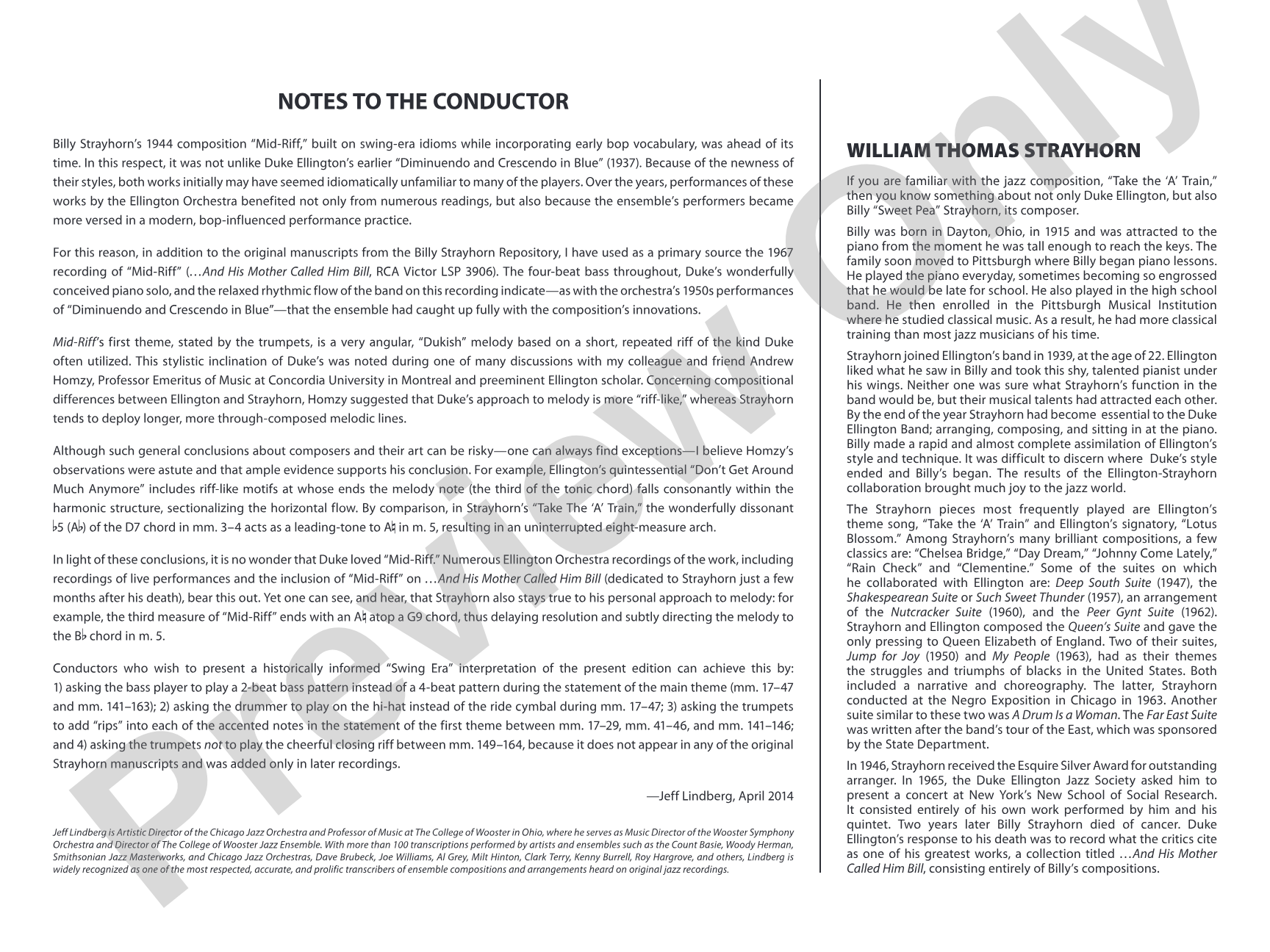
About the Composer: Billy Strayhorn
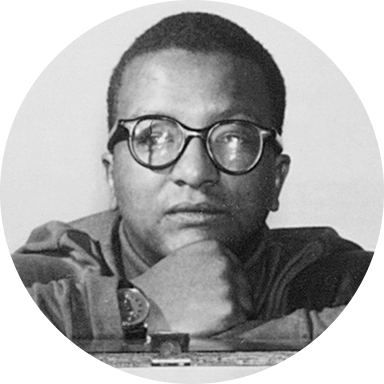
Billy Strayhorn (1915-1967) shaped American jazz through a prolific compositional partnership with Duke Ellington that began in 1939. Though his name remained less visible than his collaborators' during his lifetime, Strayhorn composed some of jazz's most enduring standards, including the Ellington Orchestra's signature tune "Take the 'A' Train" and the harmonic masterpiece "Lush Life," written when he was just 16 years old. His work appears on recordings by nearly every major jazz artist of the era, from Ella Fitzgerald and Sarah Vaughan to John Coltrane and Sonny Rollins.
Strayhorn's legacy reflects both his harmonic sophistication and his courage as a gay Black composer who chose to live openly during an era of profound social constraint. Historians and scholars increasingly recognize him as one of America's most significant but historically underappreciated composers. His arrangements and original compositions continue to define the jazz standard repertoire and remain central to understanding 20th-century American music.
Why we love this
This transcription captures all the solos from the original Ellington recording, giving your ensemble the opportunity to learn from the actual language and phrasing of master improvvisers. Jeff Lindberg's exacting work preserves both the compositional and improvisational sophistication of one of jazz history's most important recordings, and at Grade 5, the piece rewards advanced reading and stylistic maturity without becoming a specialist-only affair.
What to expect
A propulsive, swinging chart that moves with the relaxed confidence of a Duke Ellington recording session. The piece balances tight ensemble sections with spacious solo opportunities, creating a sense of conversation and call-and-response that defines small-group jazz sophistication at a big-band scale.
Who it's for
Advanced jazz ensembles and accomplished high school or college bands ready to tackle authentic Ellington-era swing with serious solo work. This is ideal for directors who want their students to engage with real transcriptions rather than simplified versions, and for musicians who understand swing eighth-note feel and can navigate through-composed ensemble passages.
How to get the most out of it
- Study the recorded version side by side with the part. The solos aren't generic jazz language; they're specific statements by these musicians, and matching their tone and articulation will help your band find the right energy at 164 BPM.
- Lock the rhythm section first, particularly the drummer's comping patterns and the bassist's relationship to the quarter-note pulse. Ellington's band swung hard, and a solid foundation makes the soloist sections breathe.
- Balance the ensemble voicings so that the saxophone section can project over the trombones and brass. Strayhorn wrote these charts with Ellington's specific timbres in mind, but your instrumentation may require careful dynamic shaping.
- Give solo sections space to breathe and develop ideas. These aren't quick passes; each solo is a conversation, and rhythm section sensitivity to phrasing will elevate the whole performance.
How to use it
Feature this as a centerpiece of a jazz concert or a program devoted to Ellington's legacy and compositions. The Grade 5 difficulty and performance length make it suitable for festival programs, and its cultural and musical significance offers a natural platform for pre-concert notes or program commentary on Strayhorn's role in American jazz.
Skills your students will build
- Swing eighth-note phrasing and articulation specific to 1940s-1950s Ellington style
- Solo navigation and listening within a composed framework
- Reading and executing rhythmically complex ensemble figures at tempo (164 BPM)
- Balancing individual voice projection with collective harmonic color
- Understanding jazz history and performance practice through analysis of transcribed solos