Mid-Riff Cover Image

Mid-Riff: Jazz Ensemble Conductor Score

$12.00 USD
Sale price  $12.00 USD Regular price 
Skip to product information
Mid-Riff Cover Image

Mid-Riff: Jazz Ensemble Conductor Score

By Billy Strayhorn / ed. and transcr. Jeff Lindberg

Grade: 5 (Advanced / Difficult)

Item: 00-42591S

$12.00
Shipped

One moment…

Description
Introducing, Mid-Riff, composed and arranged by Billy Strayhorn! A medium up-swing at 164 BPM, this chart was originally recorded by Duke Ellington. It's been edited and transcribed by Jeff Lindberg to exacting specifications to include all solos by the Ellington band members.

Mid-Riff: Jazz Ensemble Conductor Score isn't in MakeMusic Cloud just yet...but it could be. Let us know you'd like to see it, and you'll help shape what comes next. In the meantime, start a free trial and dive into thousands of interactive titles your students can play along with today.

Sample Pages

Sample Audio
No sample audio found.
Sample Video
Additional Details
Series: Belwin Jazz Legend Series
Publisher: Alfred Music
Page Count: 24
UPC: 038081485683
SKU: 00-42591S

More about this title

About the Composer: Billy Strayhorn
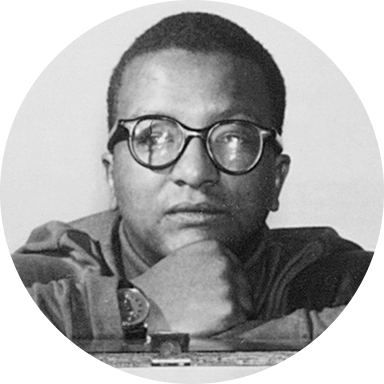
Billy Strayhorn

Billy Strayhorn (1915-1967) stands as one of the most prolific and harmonically inventive composers in jazz history, yet spent much of his career in the shadow of his most famous collaborator. Beginning his partnership with Duke Ellington in 1939, Strayhorn shaped the sound of the Ellington Orchestra for nearly three decades, contributing compositions and arrangements that defined the ensemble's sophistication and harmonic depth. His output ranges from the eternally swinging "Take the 'A' Train" to the chromatic complexity of "Lush Life," written when he was just 16 years old.

Strayhorn's influence on jazz composition extends far beyond his years as an active musician. Generations of jazz artists from Ella Fitzgerald to John Coltrane have recorded his works, and his harmonic innovations continue to challenge and inspire musicians. Despite the groundbreaking nature of his music and his courageous personal life as an openly gay black composer in mid-20th-century America, Strayhorn remained publicly understated. His legacy has only grown since his death, with scholars and musicians increasingly recognizing him as one of the defining voices of American jazz composition.

Why we love this

This conductor score preserves the authentic Ellington orchestra sound with all the original solos transcribed, giving your ensemble direct access to the legendary performances that made this chart iconic. At Grade 5, it respects the complexity of swing ensemble music without requiring an advanced jazz vocabulary, making it accessible to strong high school or college ensembles ready for genuine jazz interpretation rather than simplified versions.

What to expect

A propulsive, sophisticated swing that moves with the ease of a well-oiled machine. The harmonies are lush and chromatic beneath the drive of the rhythm section, while the solos sit naturally within the ensemble texture, never fighting for space. There's a sense of purposeful groove and smart arrangement that rewards careful listening.

Who it's for

Conductors leading Grade 5 jazz ensembles who want to program authentic Ellington orchestra repertoire and give their musicians direct exposure to how the masters voice and voice-lead in swing. This works best for ensembles with at least one competent soloist on each featured part and rhythm players comfortable with the demands of straight-ahead swing.

How to get the most out of it

  • Anchor the swing feel in the rhythm section before the ensemble joins. At 164 BPM, the tempo sits in that challenging zone where rushing is tempting; lock the quarter-note pulse with bass and drums first.
  • Study the original Duke Ellington recording (readily available) to internalize the articulation and phrasing of the solos. These transcriptions are note-for-note from the record, so hearing the source material makes learning the chart exponentially faster.
  • Balance the soloists within the ensemble texture. The chart includes passages where soloists trade off with the full band; resist the urge to overwhelm the featured player with accompaniment volume.
  • Attend to the harmonic voicings in the saxes and brass. Strayhorn's writing is sophisticated; slight adjustments in intonation within chords will reveal the harmonic movement that makes swing ensembles sing.

How to use it

Schedule this as a centerpiece in a jazz concert program, pairing it with one or two shorter charts to build a coherent set. The Grade 5 difficulty and 24-page length make it ideal for a spring jazz concert where you've had time to develop ensemble maturity and soloist confidence, or as a capstone piece for a jazz band course.

Skills your students will build

  • Executing swing articulation and phrasing at tempo (164 BPM)
  • Reading and executing transcribed solos with authentic jazz inflection
  • Balancing solo voice with ensemble accompaniment
  • Voicing jazz harmony across sections (block voicings, drop-two arrangements)
  • Ensemble intonation tuning within chromatic jazz harmony
  • Responding to conductor cues while maintaining groove-based timekeeping

You May Also Like