
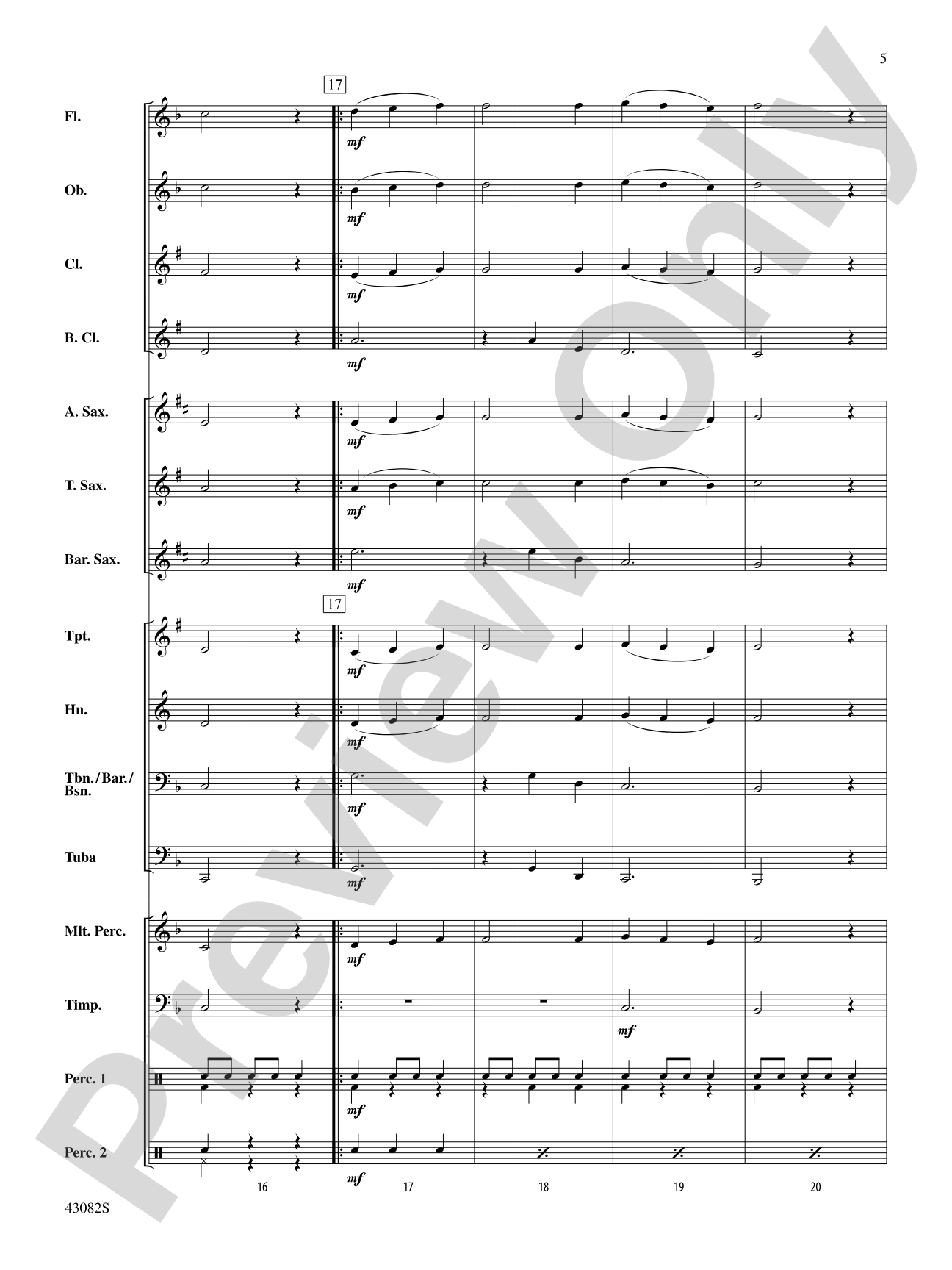
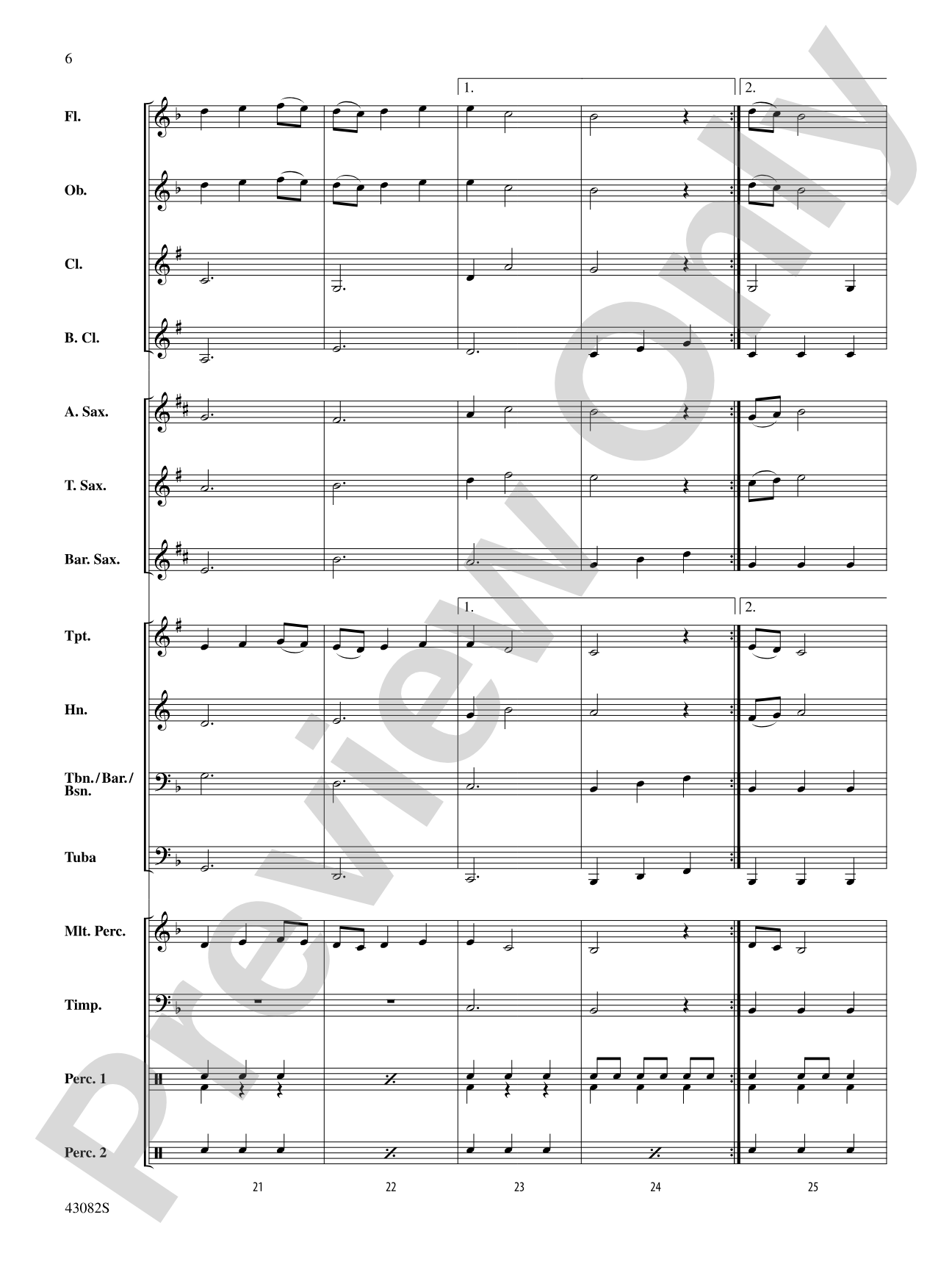
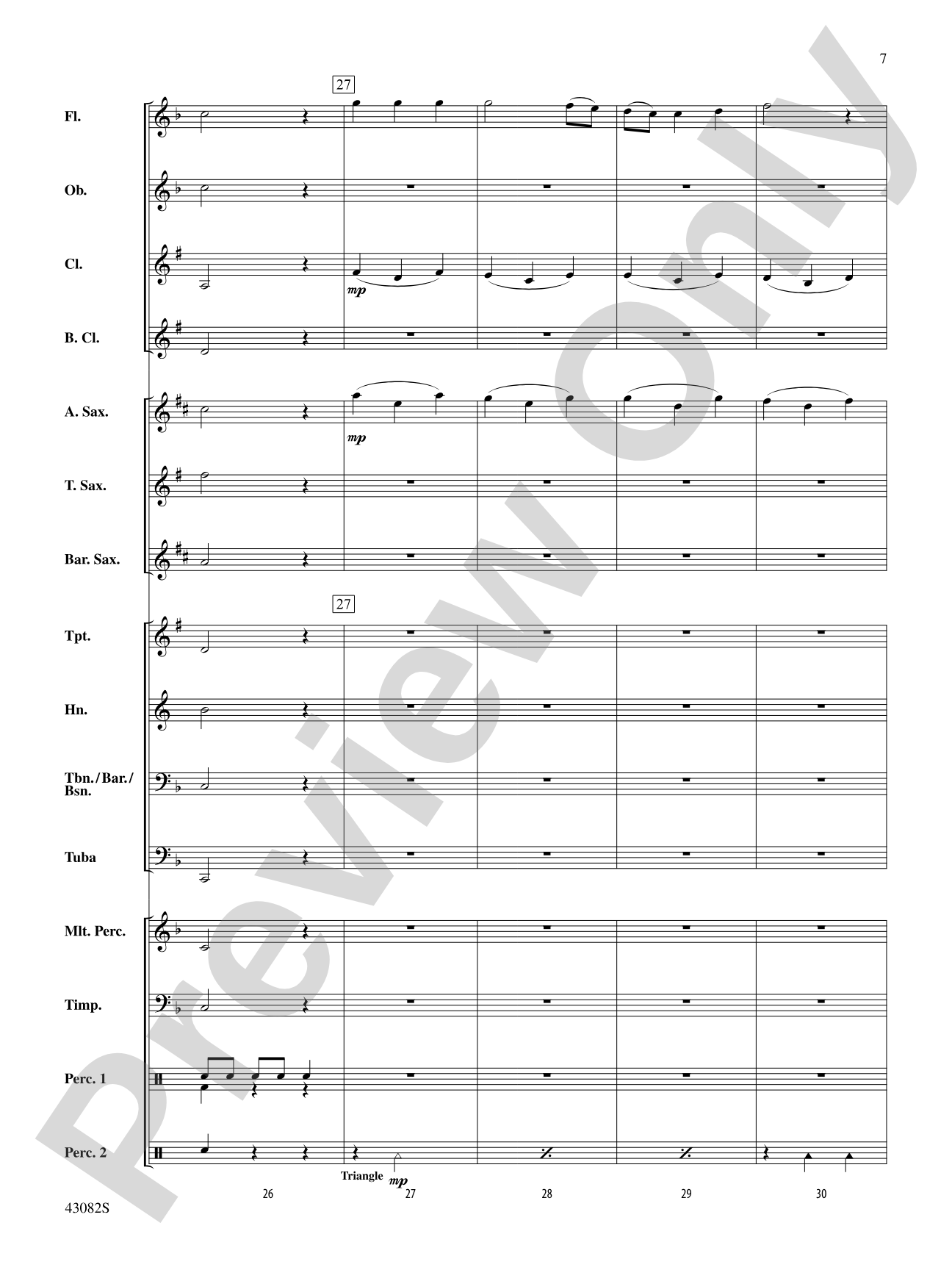
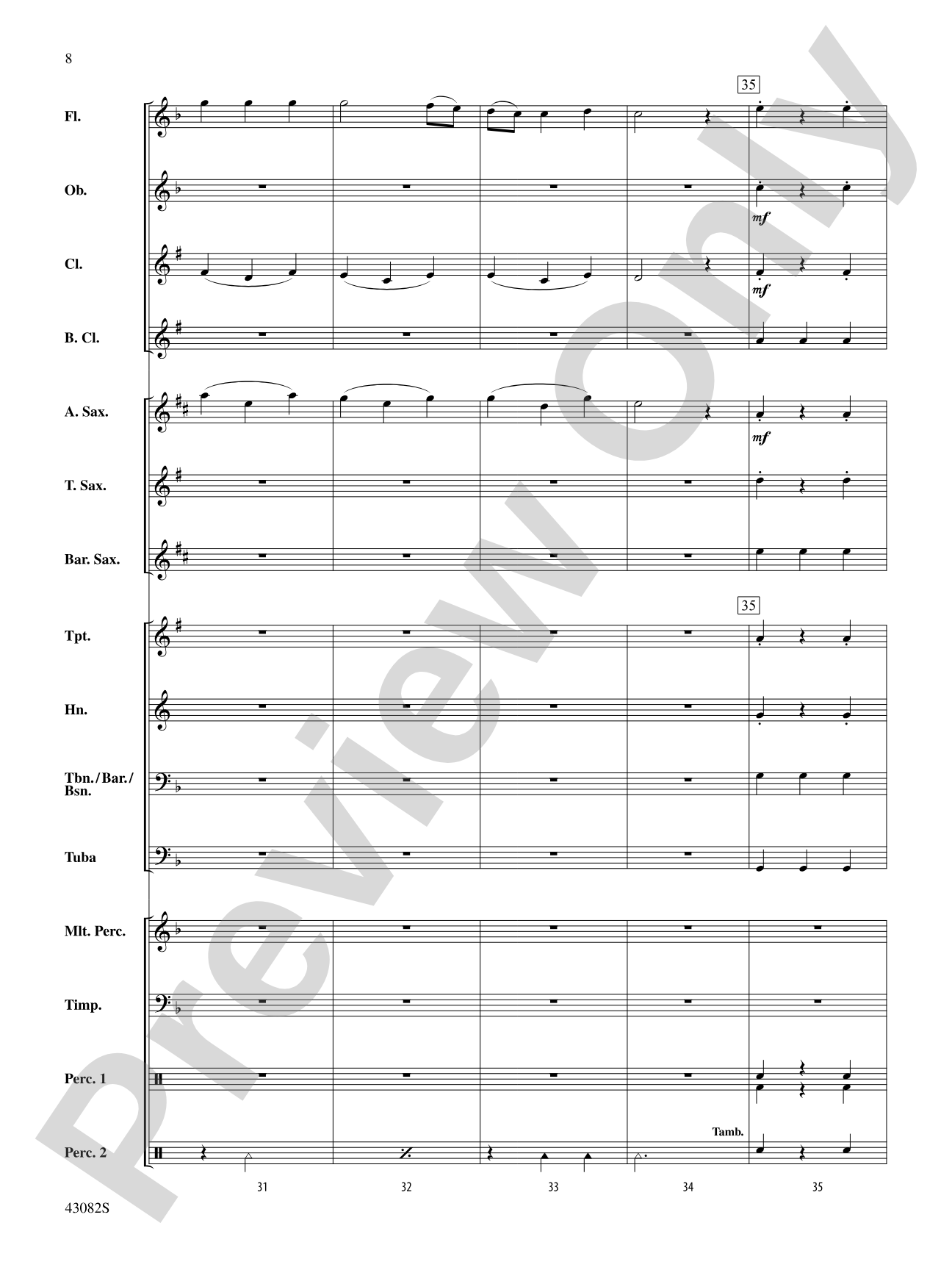
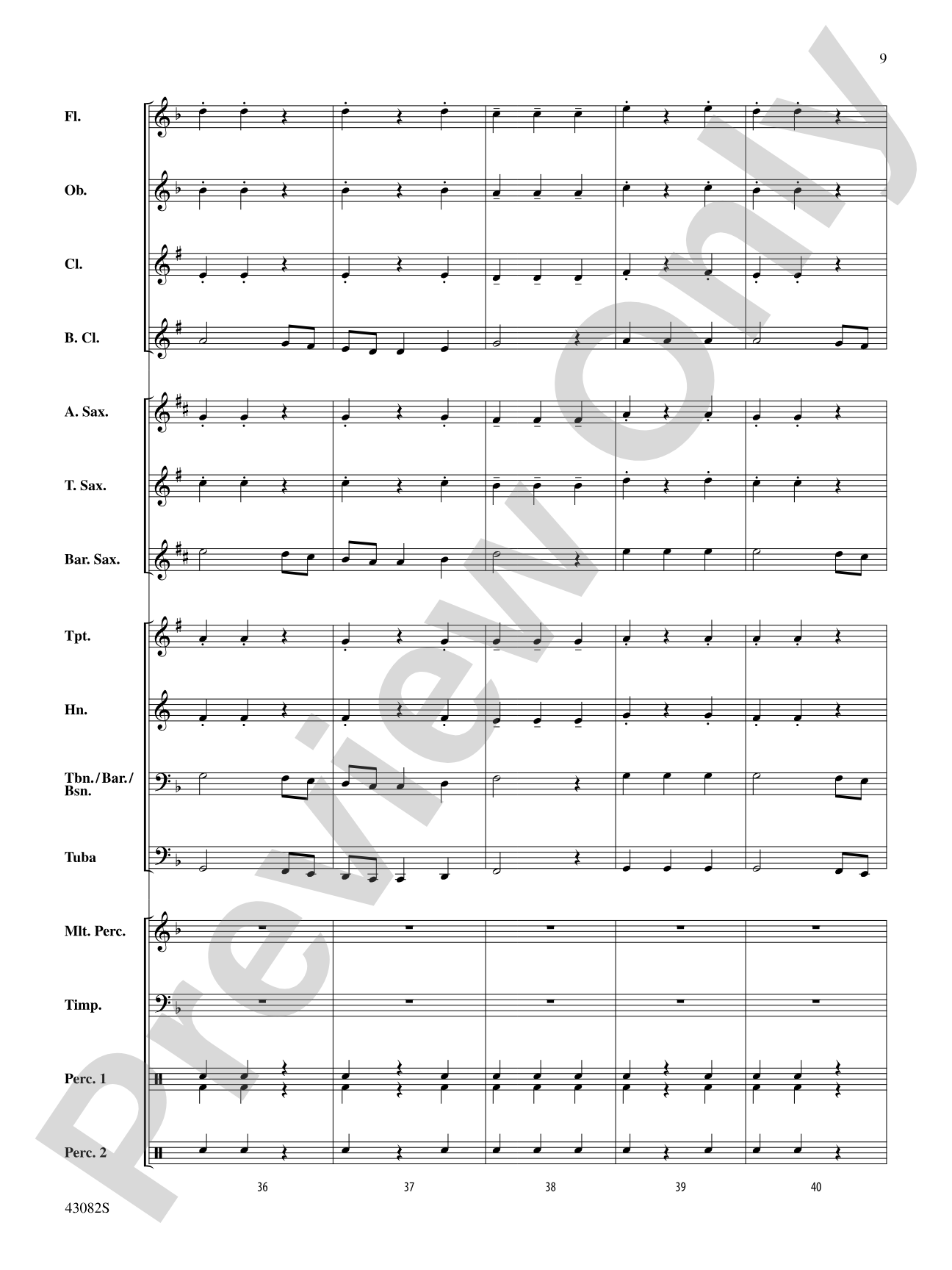
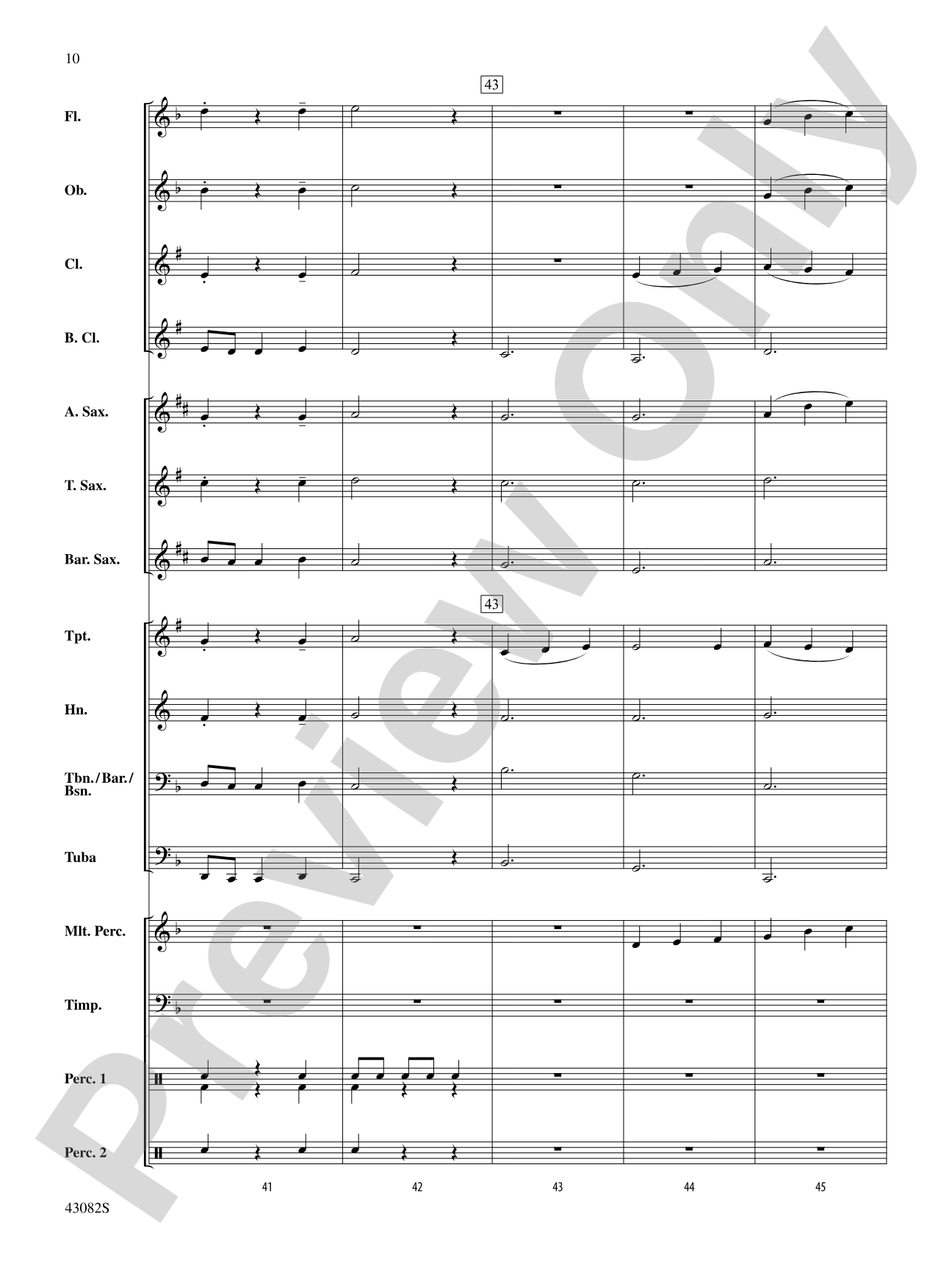
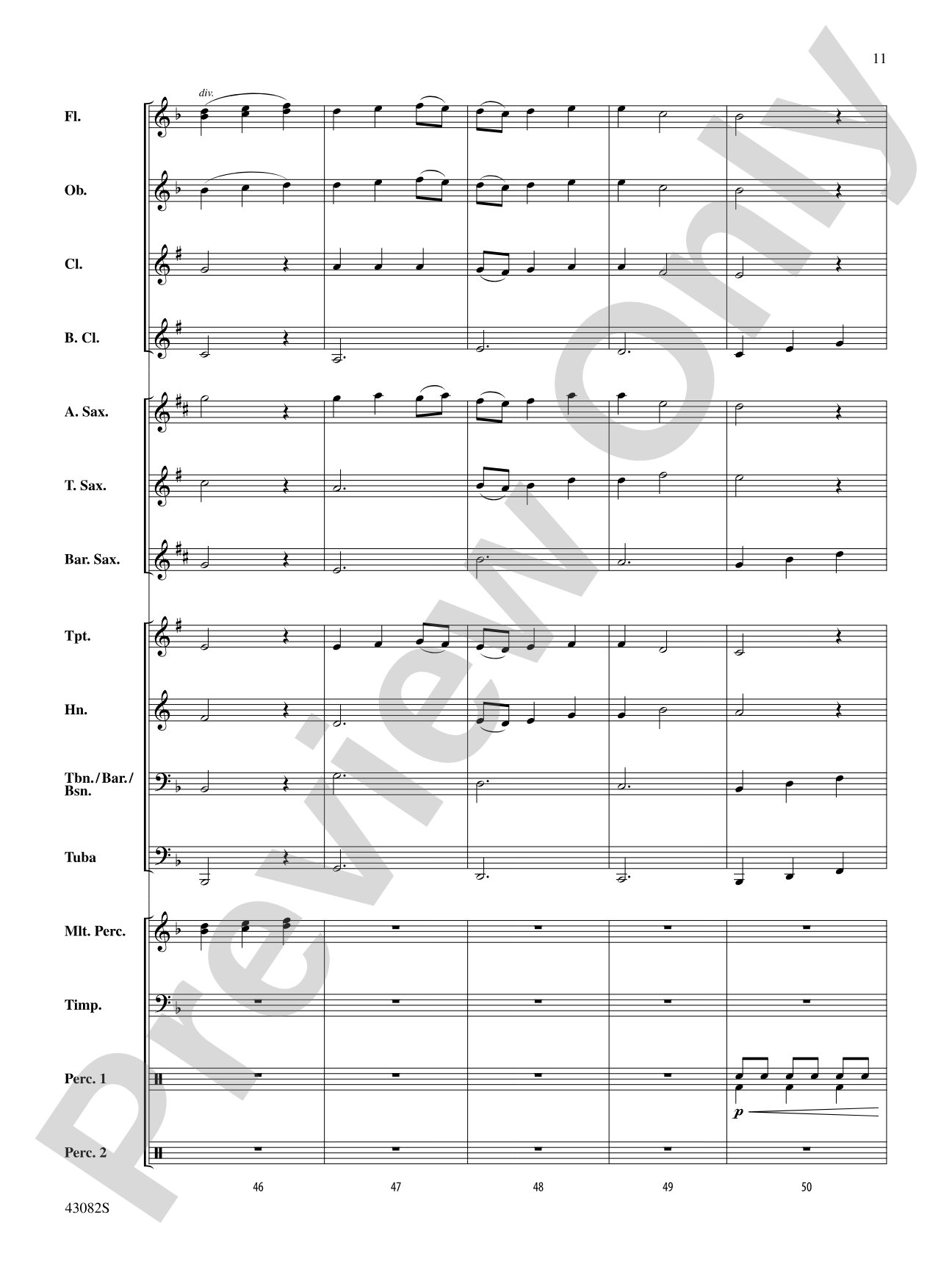
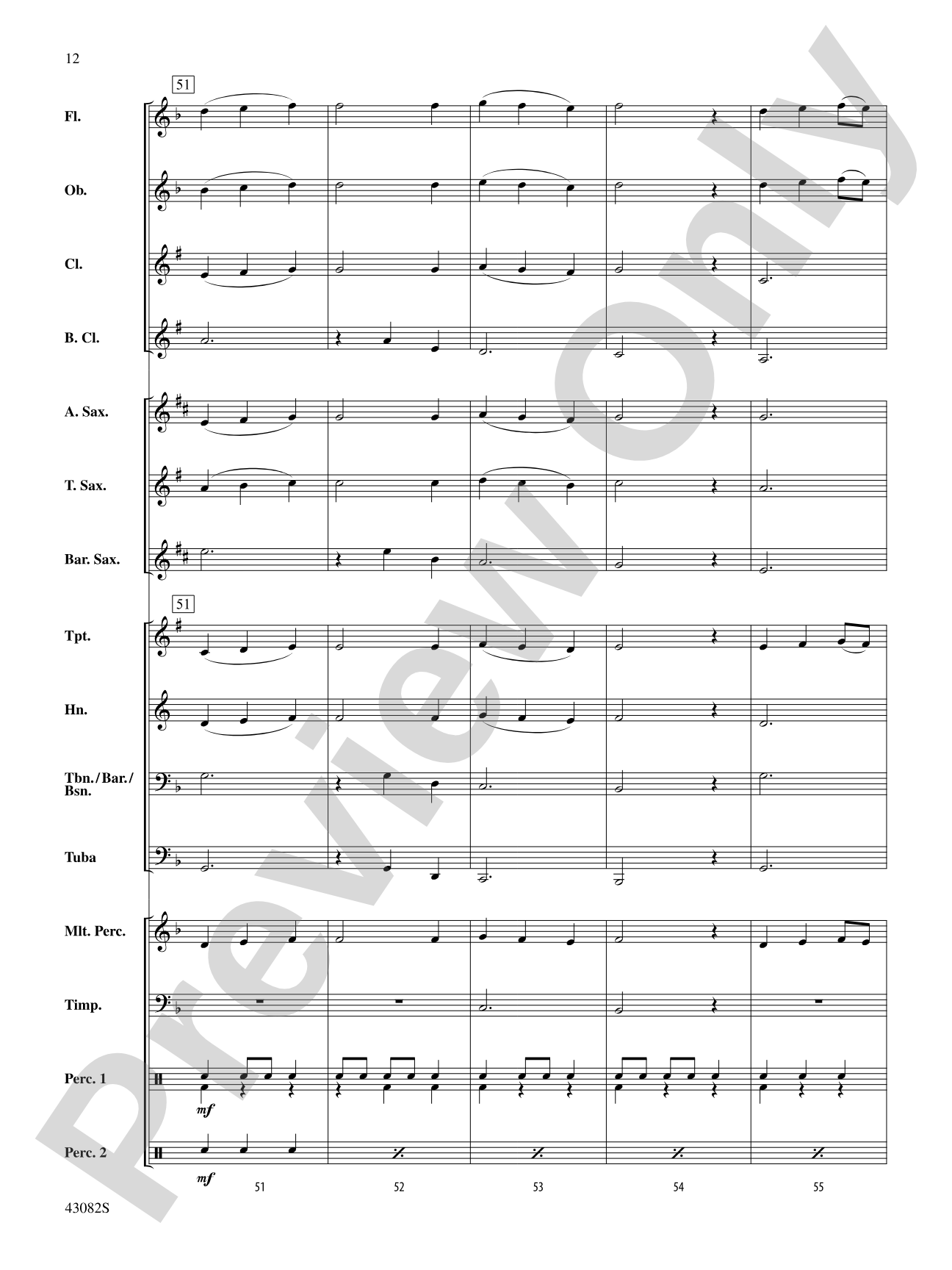
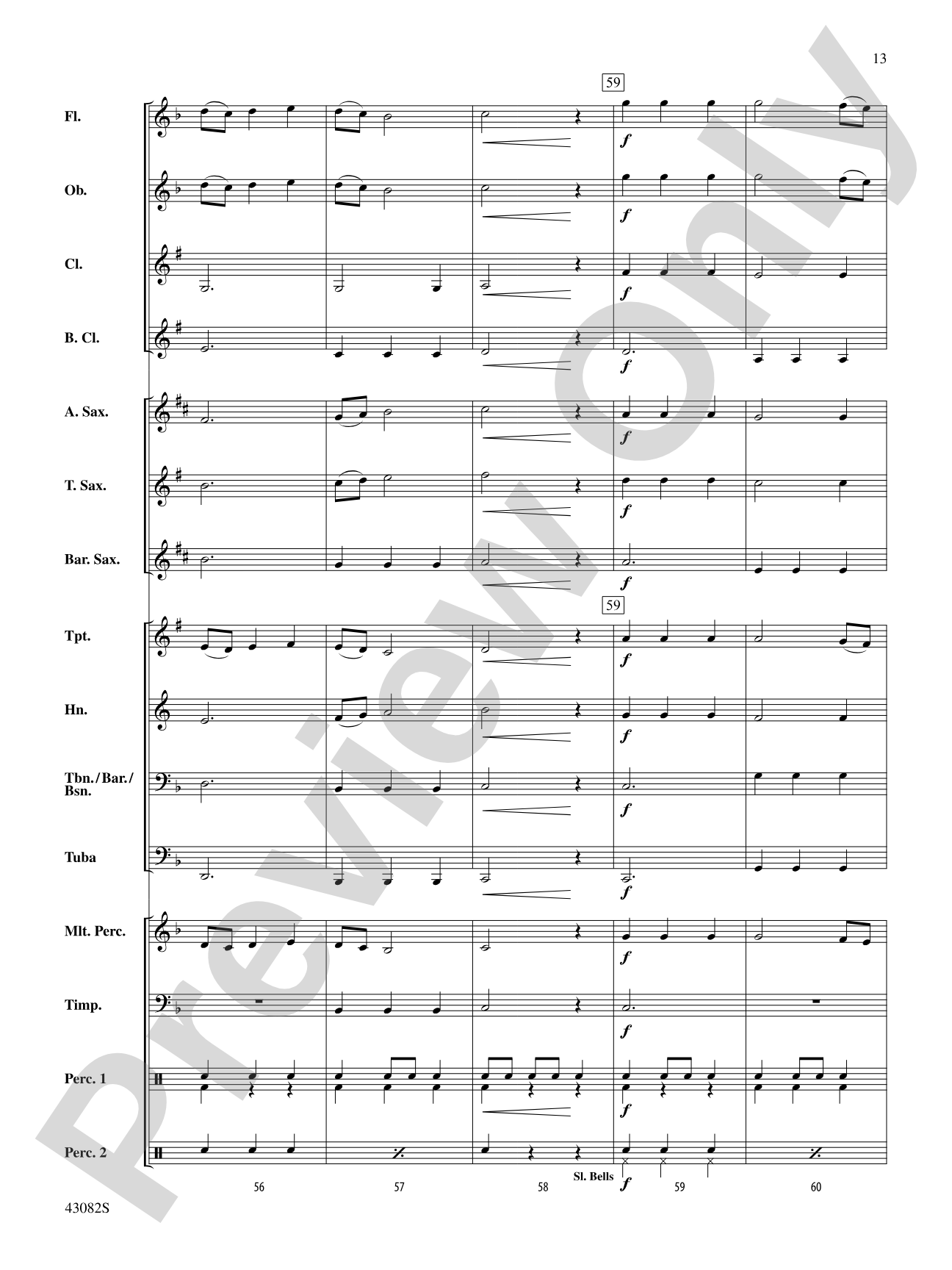
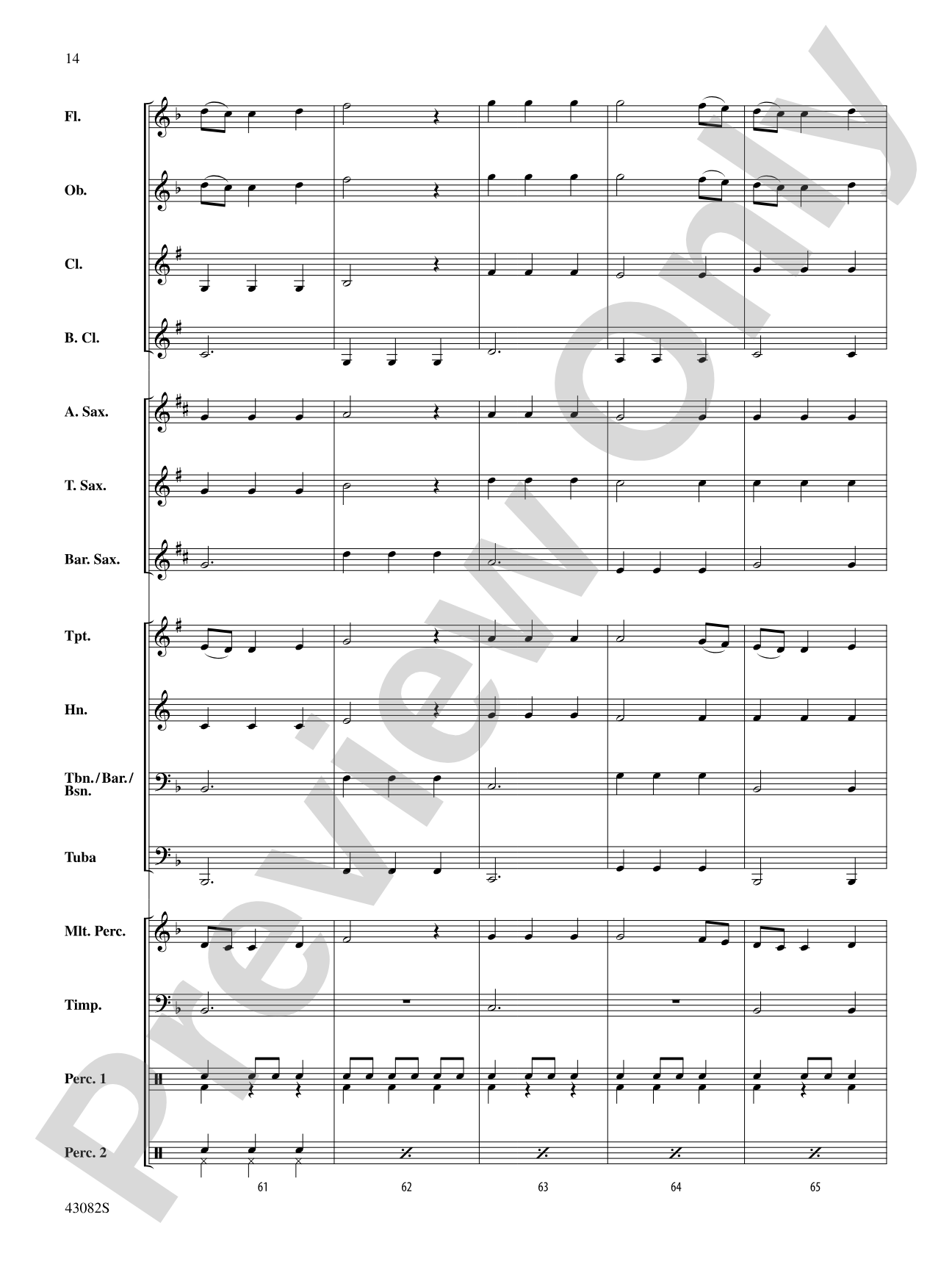
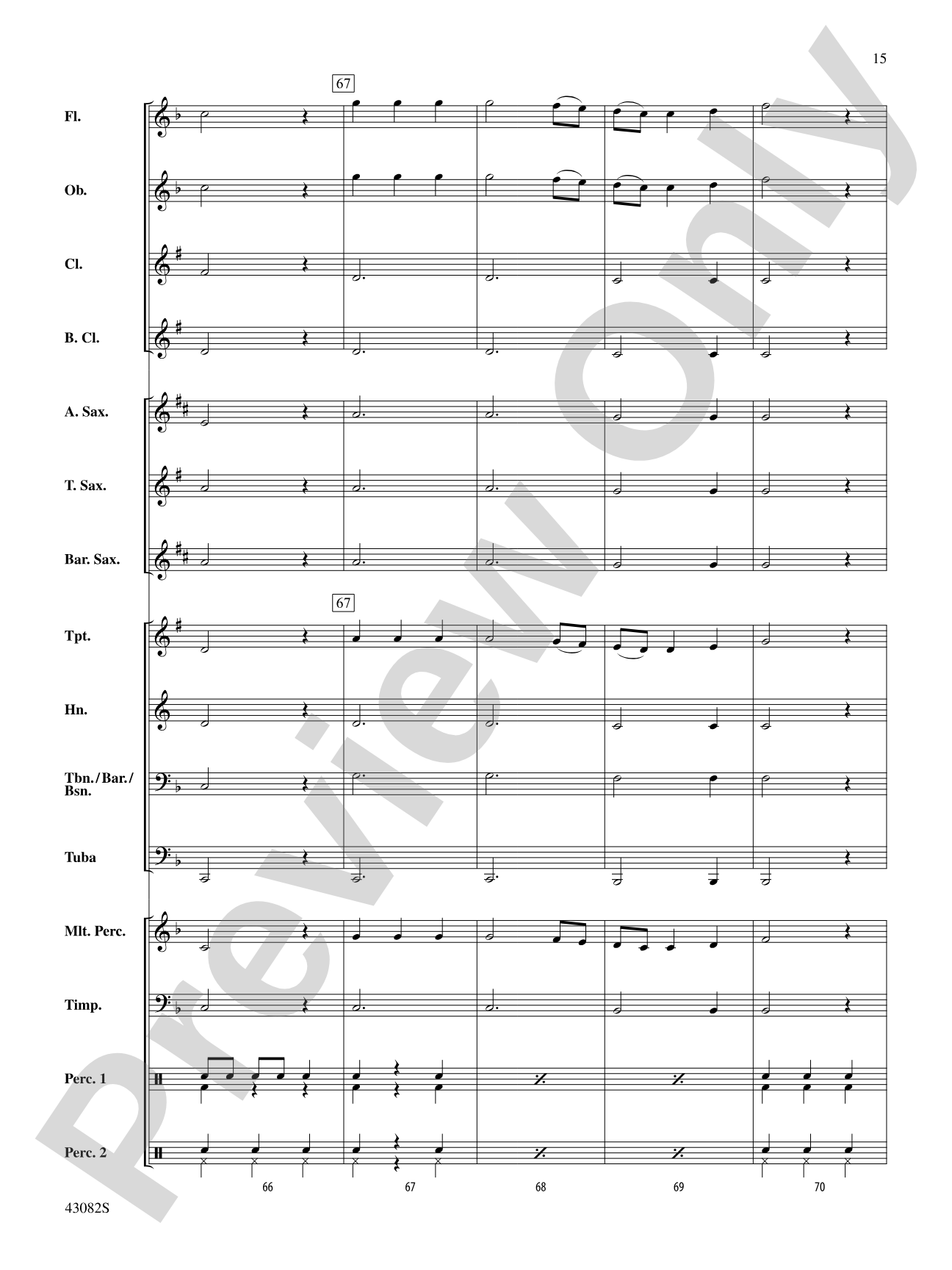
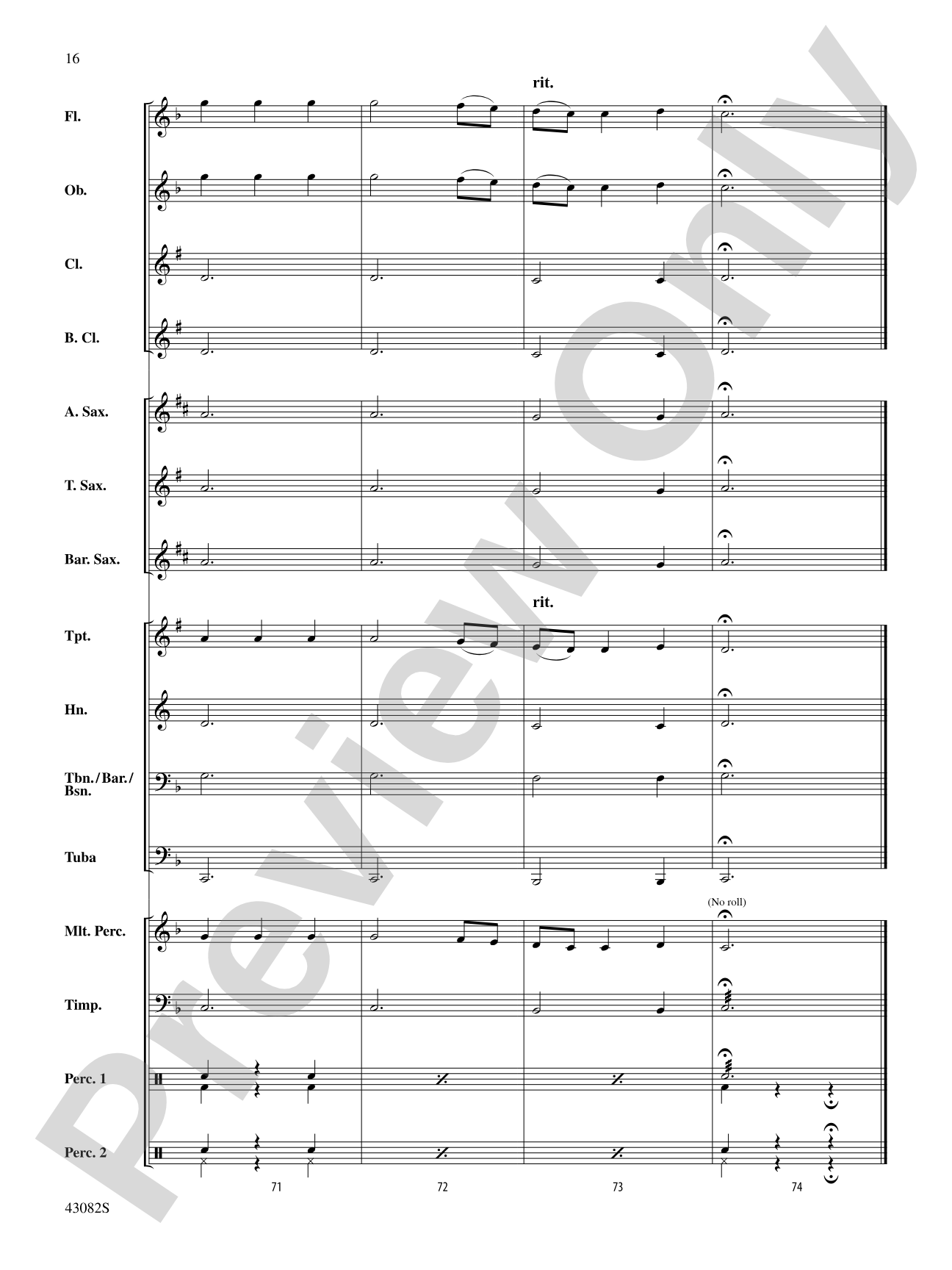

Medieval Dance: Concert Band Conductor Score & Parts
By Thibaut de Blason / arr. Michael Story
Grade: 1 (Very Easy)
Item: 00-PK-0006490

$51.00
Pickup currently not available
Buy Extra Parts (Digital PDF Download)
| Product | Price | Quantity |
|---|---|---|
| Medieval Dance: Score | $9.00 | |
| Medieval Dance: Flute | $3.00 | |
| Medieval Dance: Oboe | $3.00 | |
| Medieval Dance: 1st B-flat Clarinet | $3.00 | |
| Medieval Dance: B-flat Bass Clarinet | $3.00 | |
| Medieval Dance: E-flat Alto Saxophone | $3.00 | |
| Medieval Dance: B-flat Tenor Saxophone | $3.00 | |
| Medieval Dance: E-flat Baritone Saxophone | $3.00 | |
| Medieval Dance: 1st B-flat Trumpet | $3.00 | |
| Medieval Dance: 1st F Horn | $3.00 | |
| Medieval Dance: 1st Trombone | $3.00 | |
| Medieval Dance: Baritone T.C. | $3.00 | |
| Medieval Dance: Tuba | $3.00 | |
| Medieval Dance: Mallets | $3.00 | |
| Medieval Dance: 1st Percussion | $3.00 | |
| Medieval Dance: 2nd Percussion | $3.00 | |
| Medieval Dance: Timpani | $3.00 |
Parts Added to Cart!
Related Items
Medieval Dance: String Orchestra Conductor Score & Parts |
$45.00
|
View | |
Medieval Dance: Concert Band Conductor Score & Parts |
$51.00
|
View | |
Medieval Dance: Concert Band Conductor Score |
$9.00
|
View | |
Medieval Dance: String Orchestra Conductor Score & Parts |
$45.00
|
View | |
Medieval Dance: String Orchestra Conductor Score |
$8.00
|
View |
Description
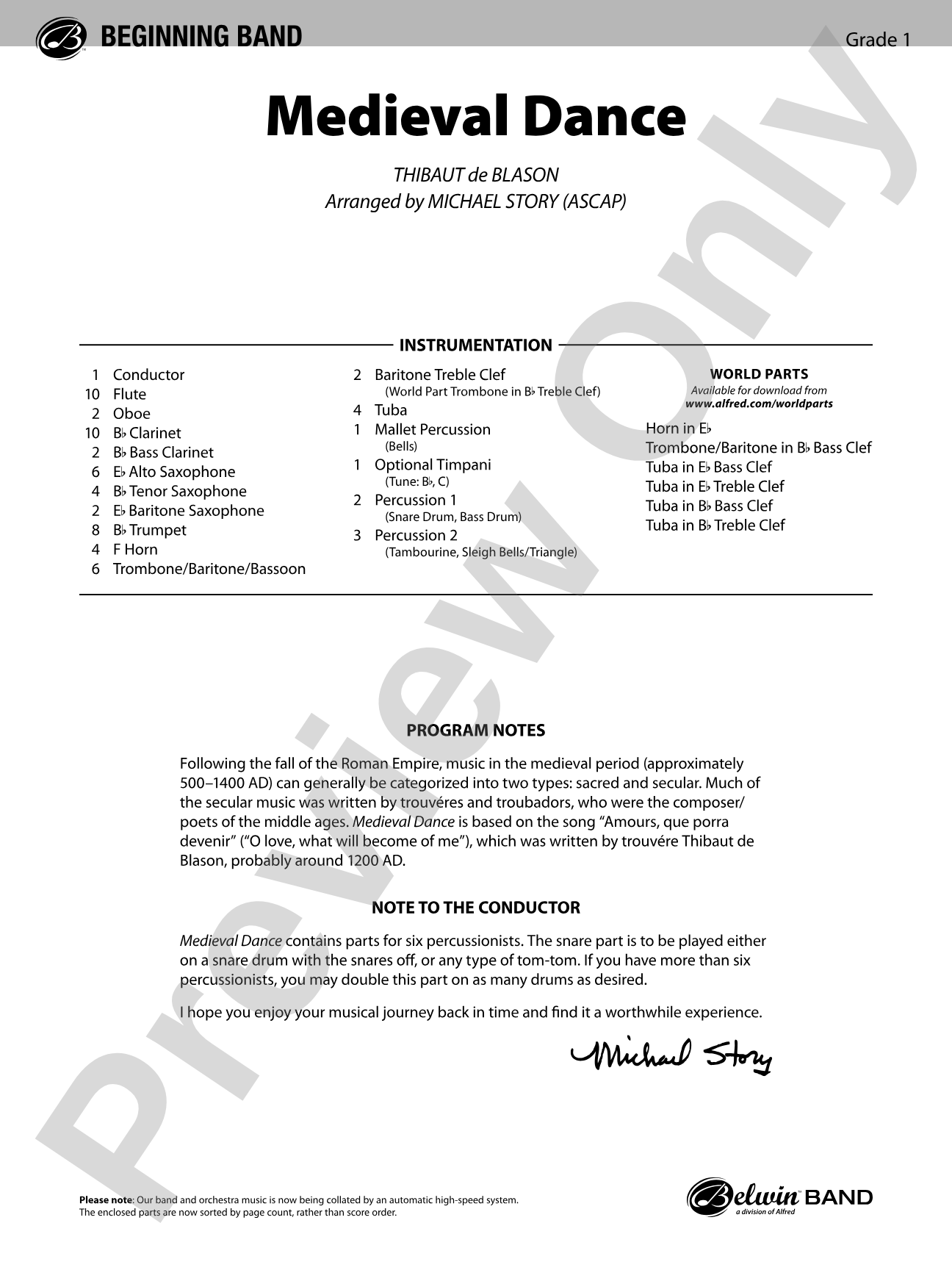
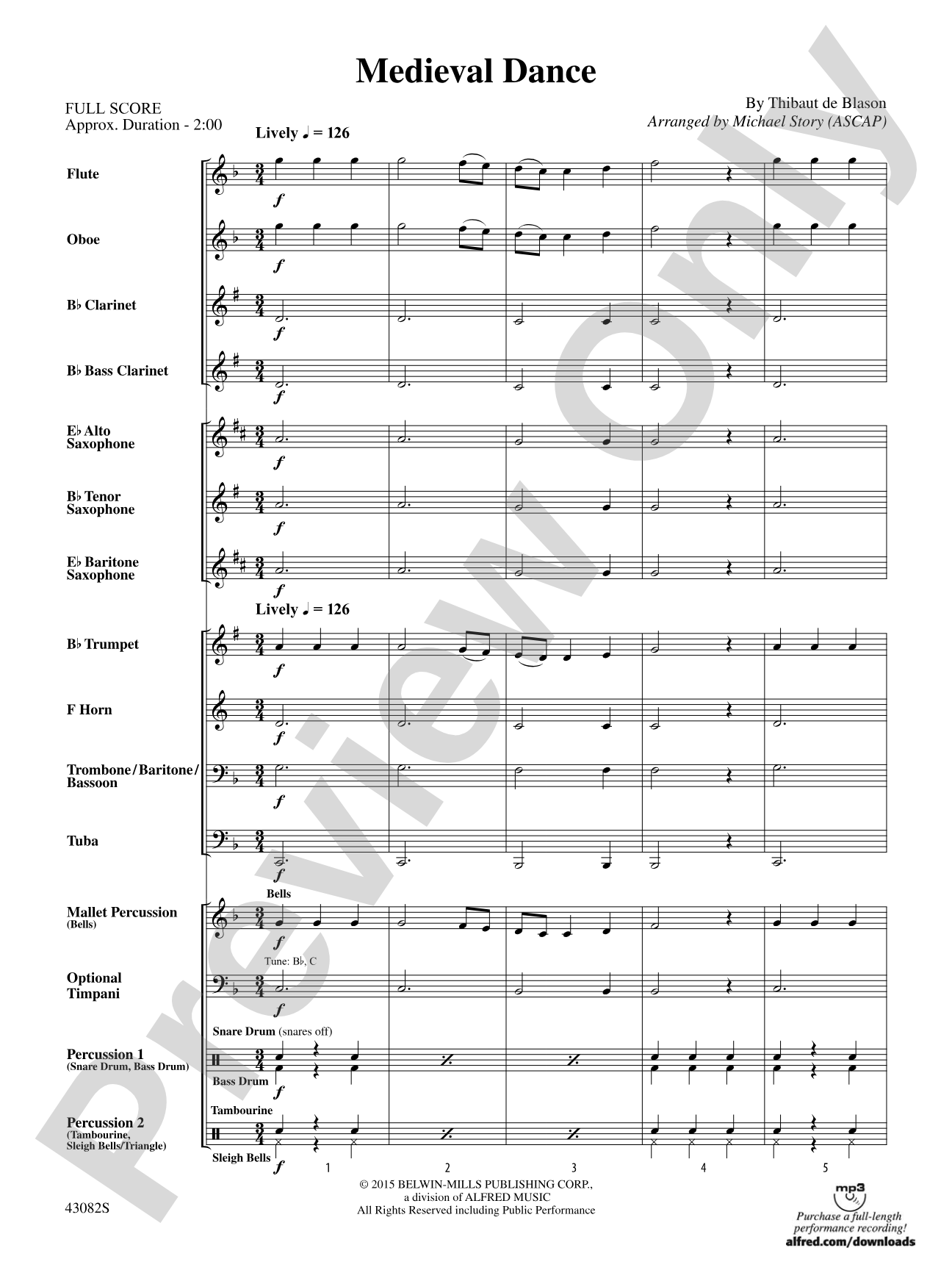
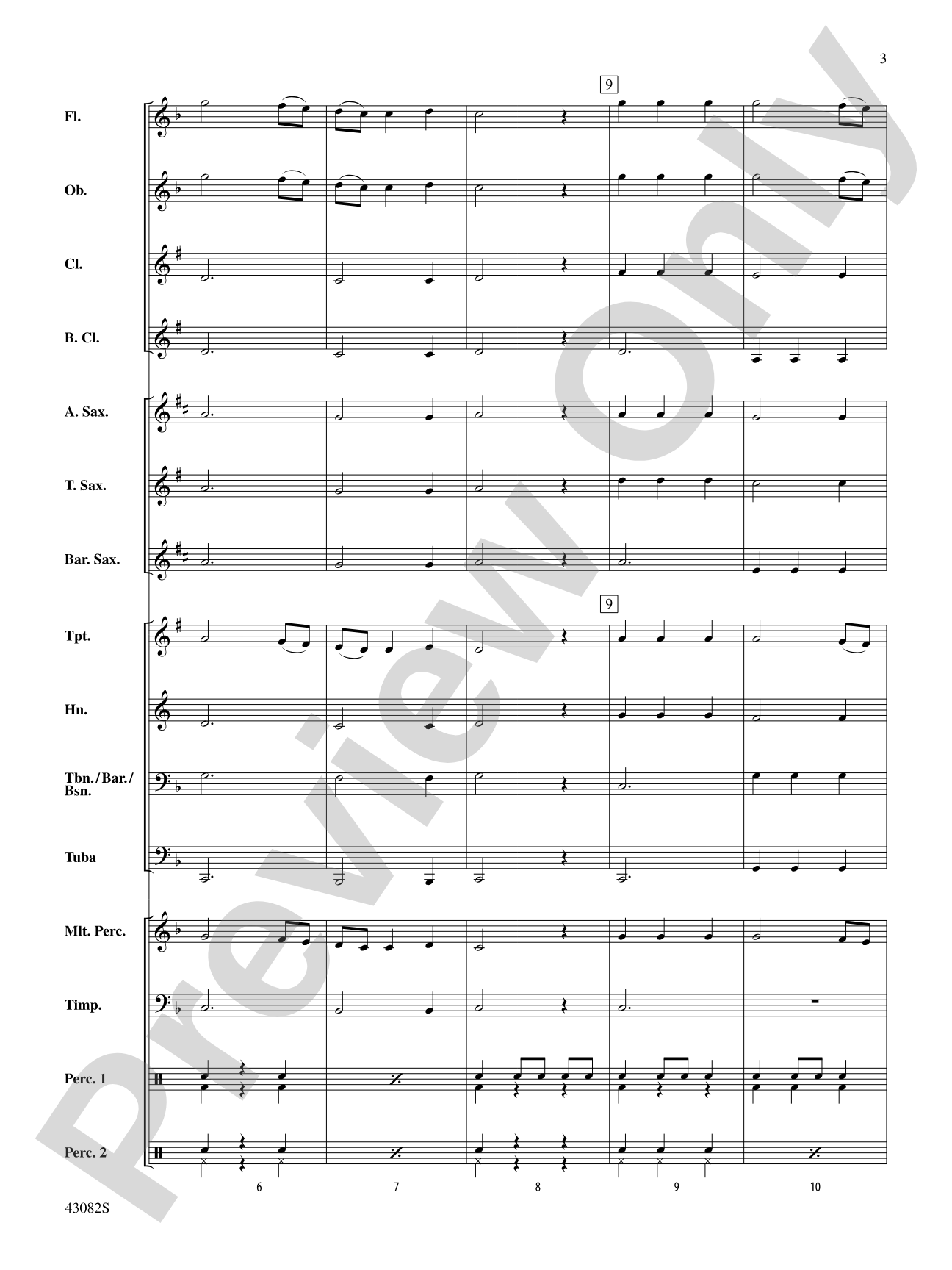
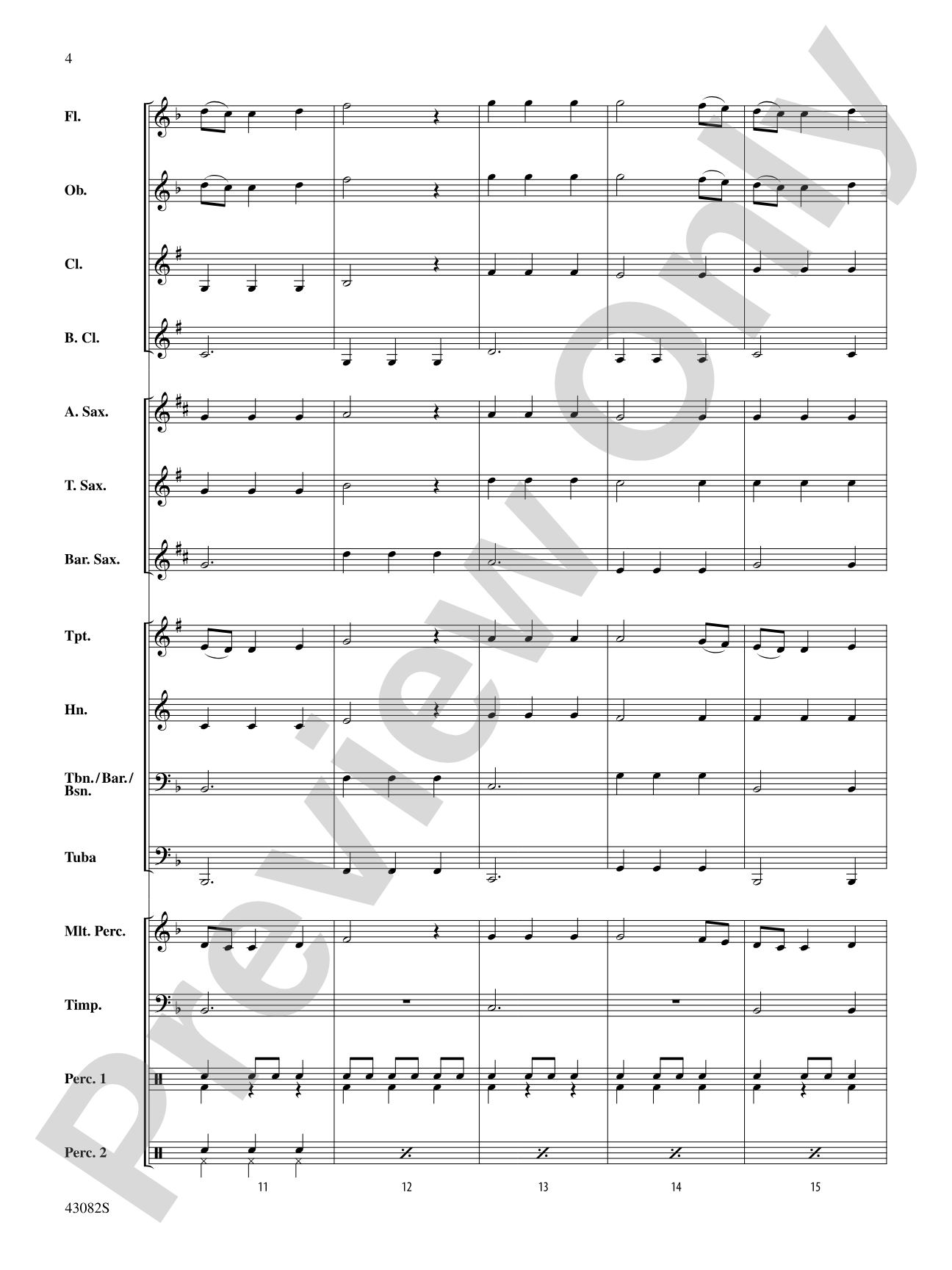
A secular tune from the Medieval era, "Amours, que porra devenir" (O love, what will become of me), was composed by trouvére Thibaut de Blason, probably around 1200 AD. This arrangement for beginners is scored in 3/4 time and brings the vivid history back to life. Carefully scored, this piece offers both a history lesson and reinforcement of triple meter. Great for teaching and performance! (2:00)


Don't just read it, hear it, play along with it, and watch your students grow with it. In MakeMusic Cloud, Medieval Dance: Concert Band Conductor Score & Parts comes alive with professional accompaniment, adjustable tempo, and built-in practice tools that turn solo practice into real progress.
Open in the Player
Jump straight in and assign it today.
Start Your Free Trial
Open this title and explore the full library in minutes.
Sample Audio
1
Audio File
--:--
0:00
0:00
Sample Video
No sample videos found.
Additional Details
Series:
Belwin Beginning Band
Publisher:
Alfred Music
Page Count:
134
SKU:
00-PK-0006490
More about this title
About the Composer: Thibaut de Blason
Thibaut de Blason was a trouvère, one of the aristocratic poet-musicians who flourished in northern France during the late 12th and early 13th centuries. Active around 1200 AD, he contributed to a repertoire that blended courtly love poetry with melody, creating songs that circulated throughout medieval courts and influenced European musical tradition for centuries.
As a trouvère, Blason occupied a unique position in medieval society: both nobleman and creative artist. His works survive in manuscript collections that document the sophistication of secular music in an era often mischaracterized as musically limited. The piece preserved here demonstrates why these melodies endured and why music educators still value them as windows into a rich historical period.
Why we love this
Michael Story's arrangement honors the character of a genuine medieval melody while making it accessible to beginning instrumentalists. The straightforward 3/4 scoring lets the tune shine without overwhelming young musicians, and the piece functions equally well as a concert opener or a teaching moment about musical history.
What to expect
Stately and graceful, with the gentle courtly character of a medieval dance. The triple meter gives it a lilting quality, and the simple, elegant melody creates a sense of stepping back into history without feeling stiff or overly academic.
Who it's for
Beginning concert bands preparing their first repertoire. This Grade 1 arrangement works especially well for younger or less experienced ensembles that still benefit from straightforward technical demands but deserve musically substantial material.
How to get the most out of it
- Shape phrases across the barline rather than stopping at each measure. Medieval melodies breathe in longer musical sentences, so encourage your band to think in four or eight-bar phrases.
- Balance the melody clearly against accompaniment parts. This arrangement's beauty depends on hearing the original tune sing through, even at beginning band level.
- Avoid too much vibrato or expressive liberties in early rehearsals. Once the band has technical security, a light, dance-like feel will emerge naturally from the triple meter.
How to use it
Program this early in a concert to establish an accessible, engaging tone while your audience settles in. It also pairs naturally with other historical arrangements or works exploring music across centuries, and it provides a natural transition into more complex pieces later in the program.
Skills your students will build
- Hearing and performing in triple meter (3/4 time)
- Shaping melodic phrases across barlines
- Balancing melody against harmonic accompaniment
- Reading a conductor score and performing from parts simultaneously
- Understanding music history through performance experience