

May-Flower: SSA Choral Octavo
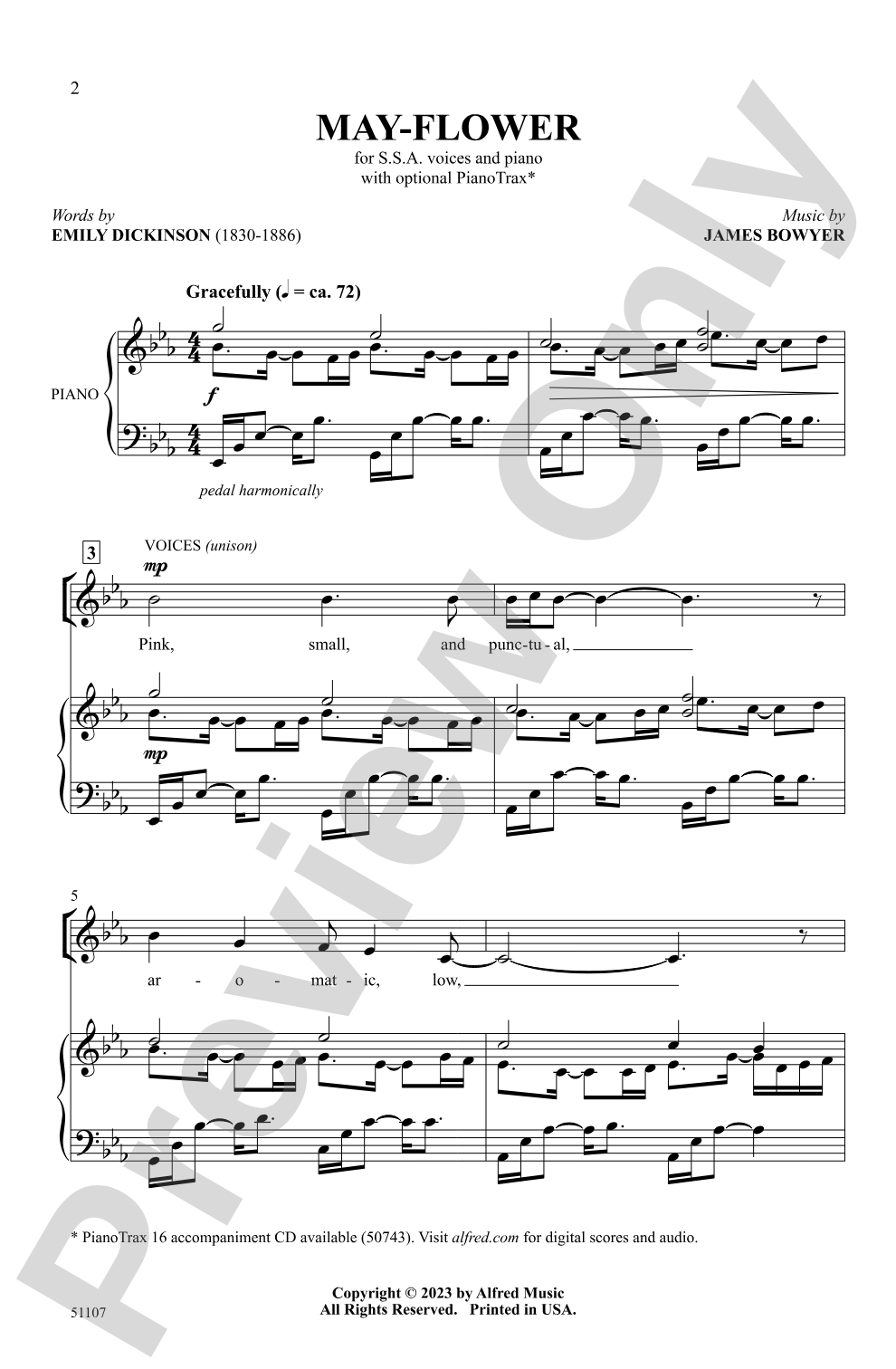
Words by Emily Dickinson, music by James Bowyer
Item: 00-PO-0007175
$2.30
Minimum order quantity: 20 copies
Pickup currently not available
Description
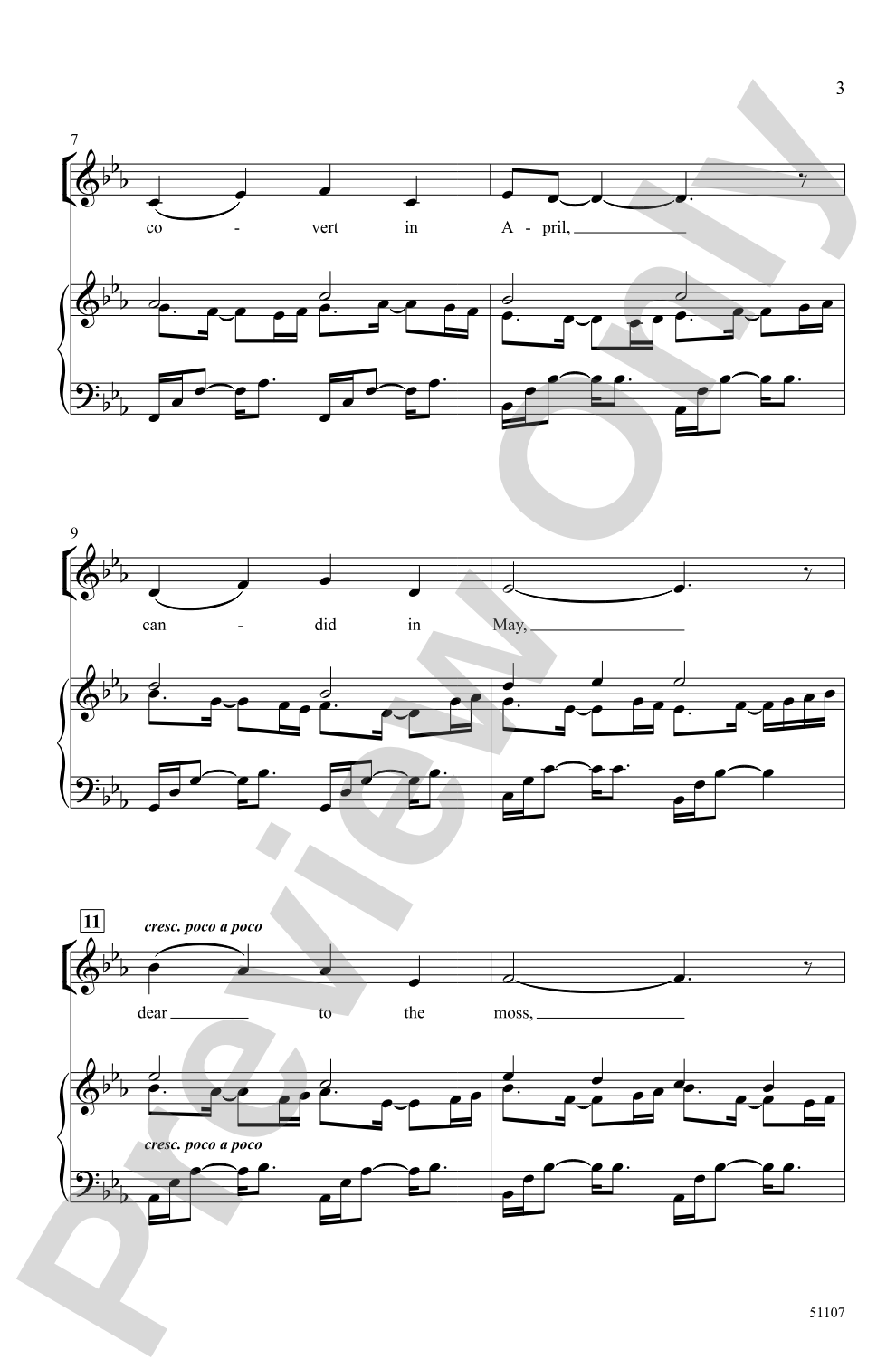
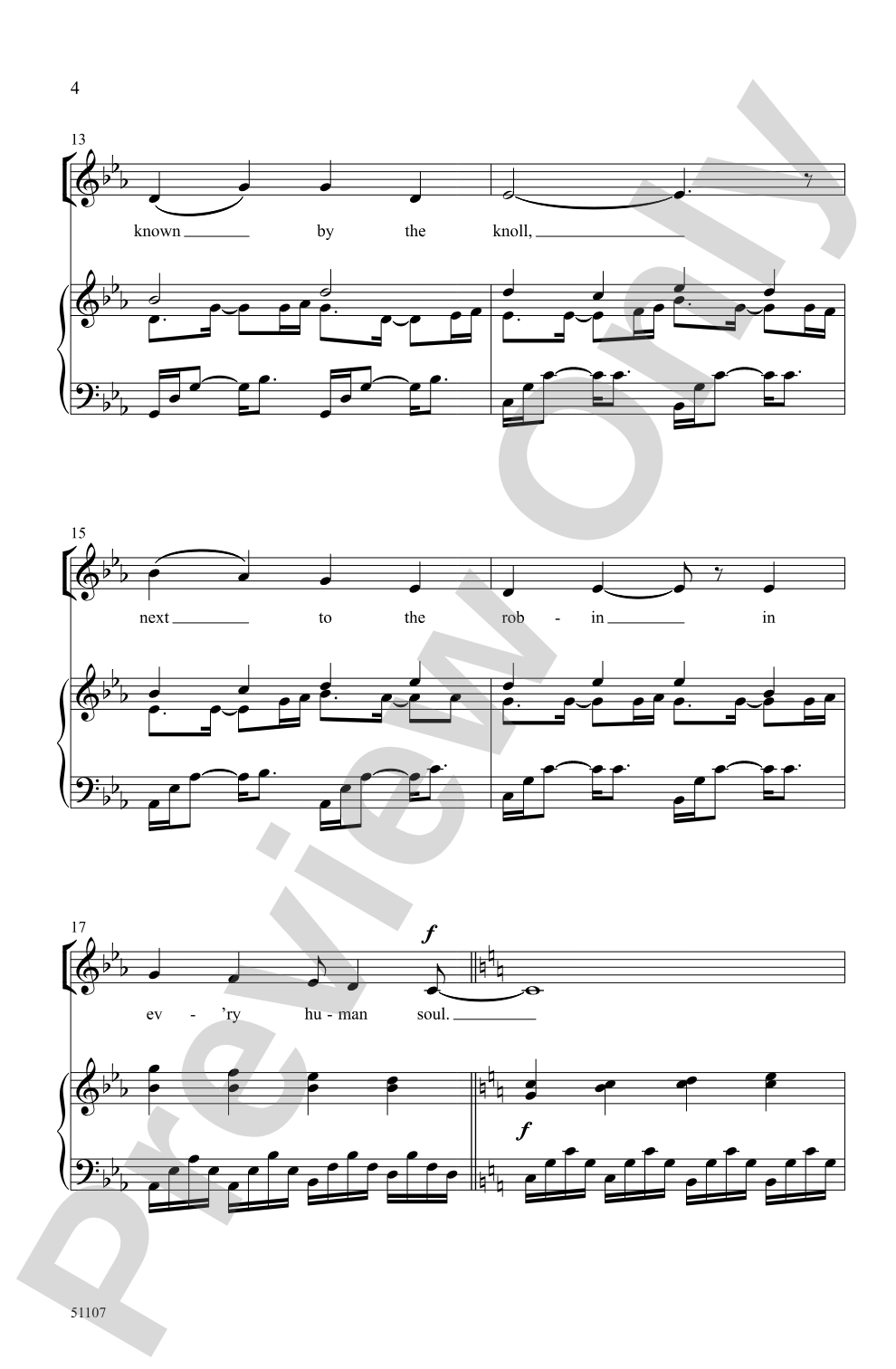
Emily Dickinson's springtime text comes alive in this bright and graceful setting for treble voices. Beginning in unison and gradually blossoming to three voice parts, this song features a flowing piano accompaniment that never doubles but always supports the singers. An artful, yet accessible choice for treble choirs of distinction.


May-Flower: SSA Choral Octavo isn't in MakeMusic Cloud just yet...but it could be. Let us know you'd like to see it, and you'll help shape what comes next. In the meantime, start a free trial and dive into thousands of interactive titles your students can play along with today.
Request This Title
Tell us you want it.
Start Your Free Trial
Explore everything that's ready to play right now.
Sample Audio
1
Audio File
--:--
0:00
0:00
Sample Video
Additional Details
Series:
Alfred Choral Designs
Publisher:
Alfred Music
Page Count:
12
SKU:
00-PO-0007175
More about this title
About the Composer: James Bowyer

James Bowyer directs the music education program at Bemidji State University, where he holds the rank of Associate Professor. His internationally adopted textbook, Creative Sightsinging, reflects his deep commitment to music literacy pedagogy. A prolific composer whose choral works appear through Alfred Music, Heritage Music Press, Lorenz, and other established publishers, Bowyer brings both scholarly rigor and practical classroom experience to his compositions.
Bowyer's research centers on literacy development, movement integration, and pedagogical practice. A Kodály and Orff specialist, he has contributed to significant publications including Choral Journal, Music Educators Journal, and the Teaching Music Through Performance in Choir series. Before joining Bemidji State, he taught at seven universities across the country and spent nine years in public and independent school settings, giving him rare perspective on what works across all educational contexts.
Why we love this
Bowyer structures this piece to let singers grow into their parts rather than jumping into complexity. The unison opening builds confidence while the gradual expansion into three-part writing keeps singers engaged and invested in their individual lines. The piano accompaniment never doubles the voices, which means your singers must listen keenly to one another and trust their own part singing.
What to expect
Bright and graceful, like watching something unfold naturally. The piece begins with gentle unity and blossoms gradually, creating a sense of discovery rather than dramatic display. Dickinson's springtime text pairs with Bowyer's flowing piano work to create an atmosphere that feels both fresh and carefully crafted.
Who it's for
Treble choirs seeking repertoire that balances musicianship with accessibility. This works especially well for high school and college programs working toward festival or contest performance, or for choirs that want to program something with genuine literary substance without overextending their technical abilities.
How to get the most out of it
- Spend extra time in unison at the beginning. Once that section feels unified and secure, singers approach their SSA material with greater independence and clarity.
- Balance the three voices carefully once they enter. Since the piano doesn't double any line, audibility depends entirely on your singers' breath support and vowel consistency.
- Let the piano accompaniment breathe between phrases. A flowing accompaniment can still have air in it, which prevents the piece from feeling relentless.
- Pay attention to the text painting opportunities throughout. Dickinson's springtime imagery invites gentle dynamic shaping that mirrors the unfolding of the poem.
How to use it
Pair this with other spring or seasonal concert material for a focused thematic program. Its moderate technical demands and literary appeal make it ideal for mid-season programming when ensembles have built solid fundamentals but still appreciate accessible, rewarding literature.
Skills your students will build
- Singing effectively in unison before expanding to independent part-singing
- Listening for line independence when accompaniment doesn't double vocal lines
- Interpreting literary text through vocal shaping and phrasing
- Sustaining tone quality across different vowels and ranges