
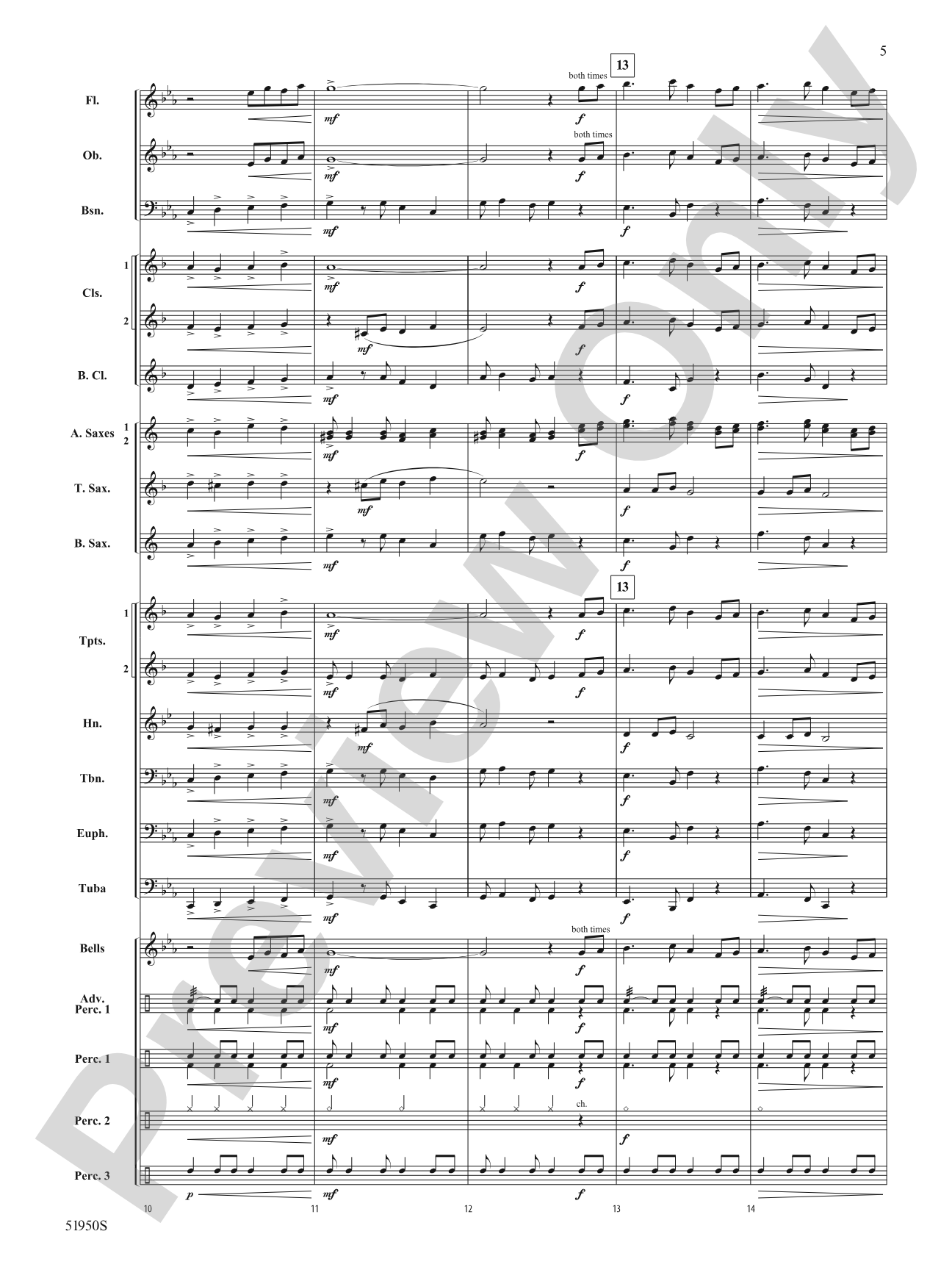
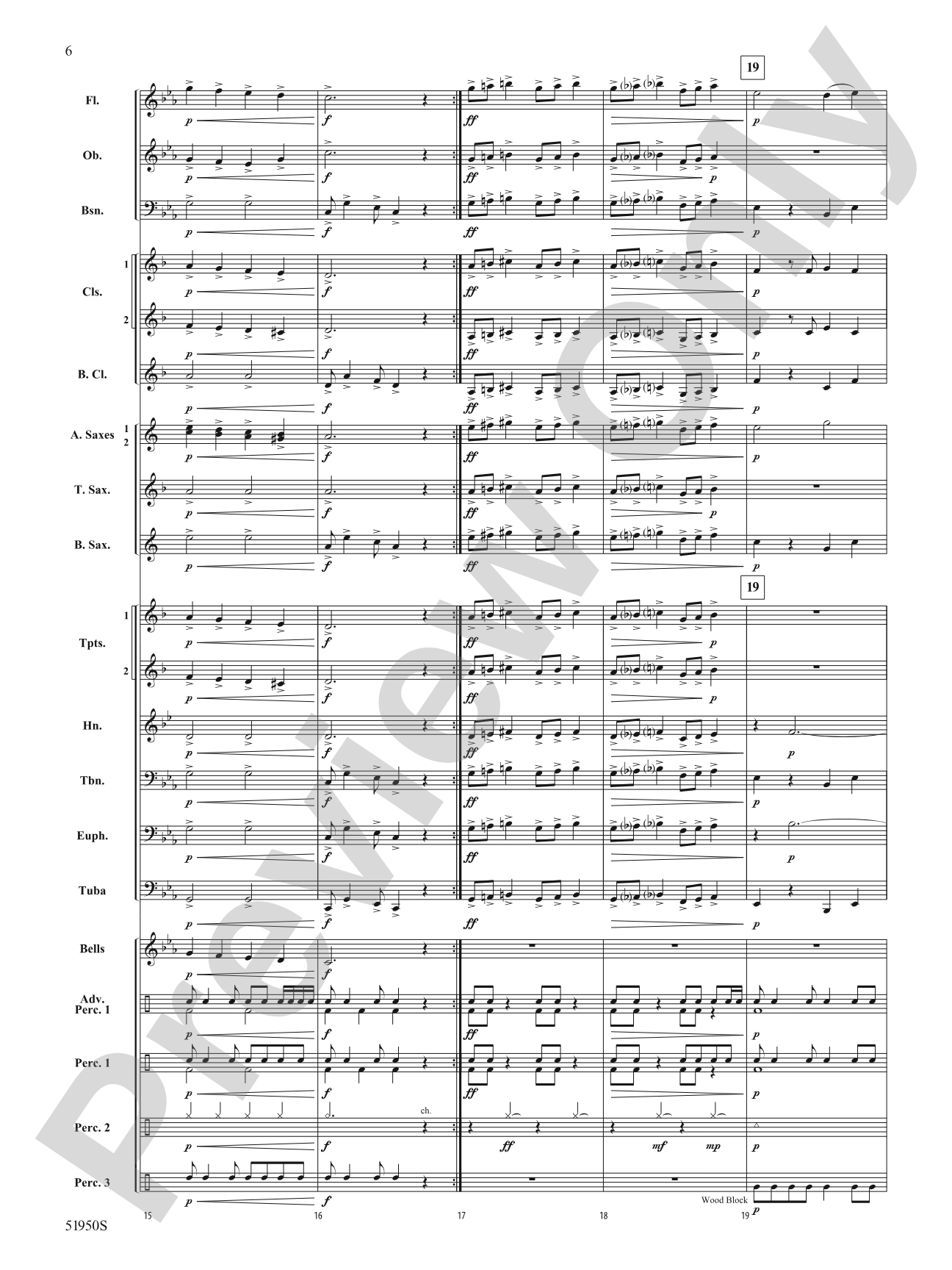
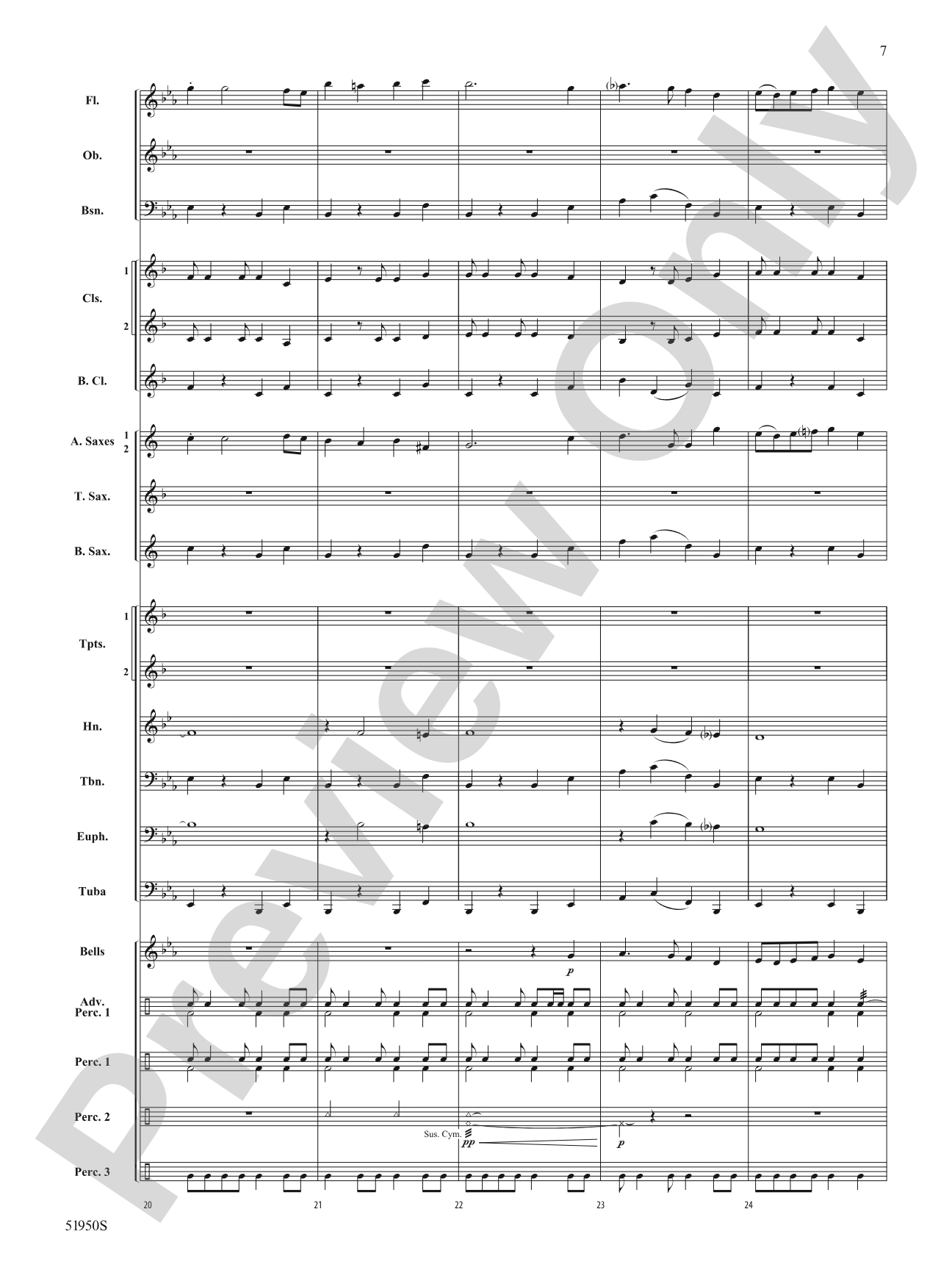
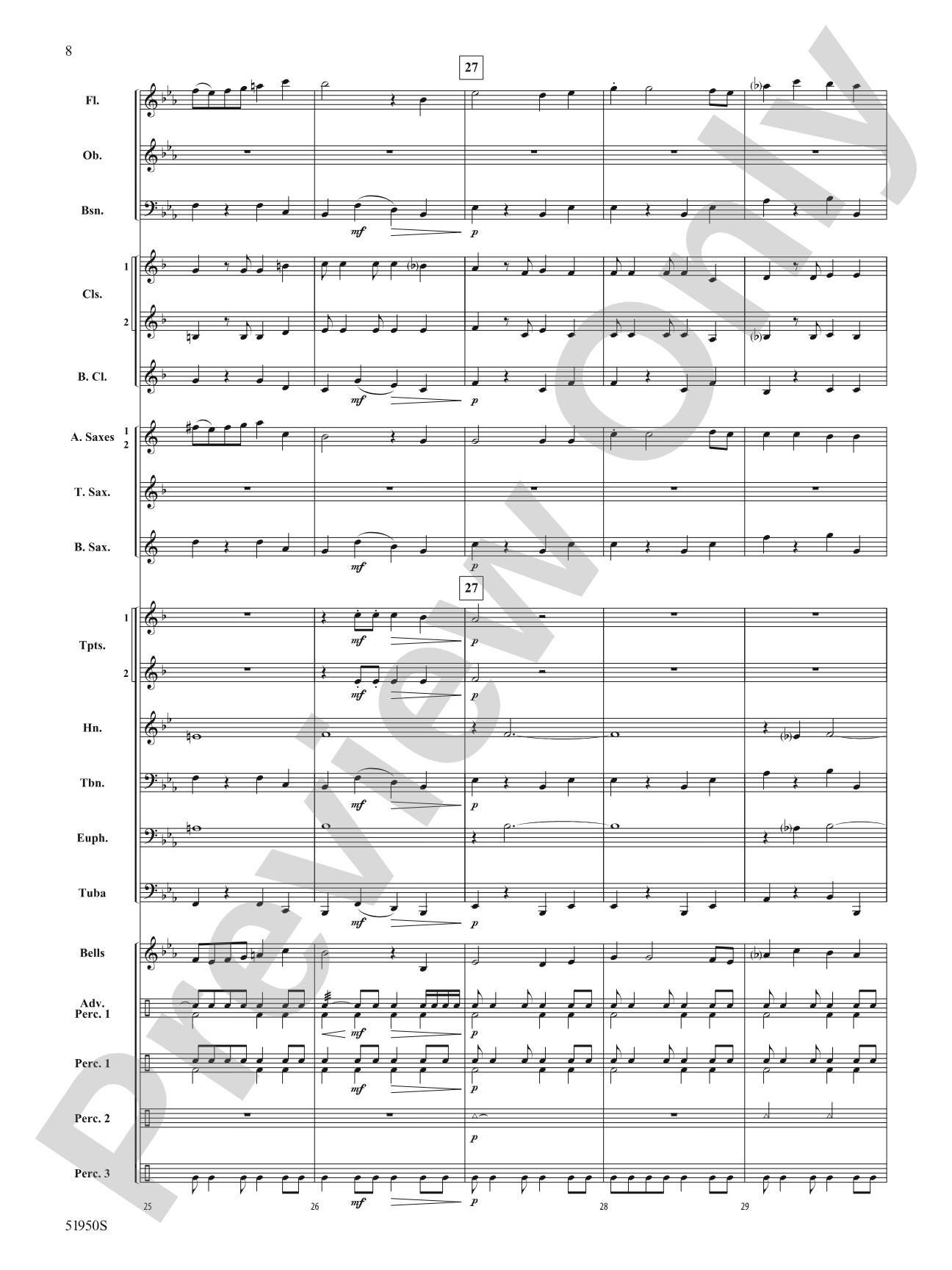
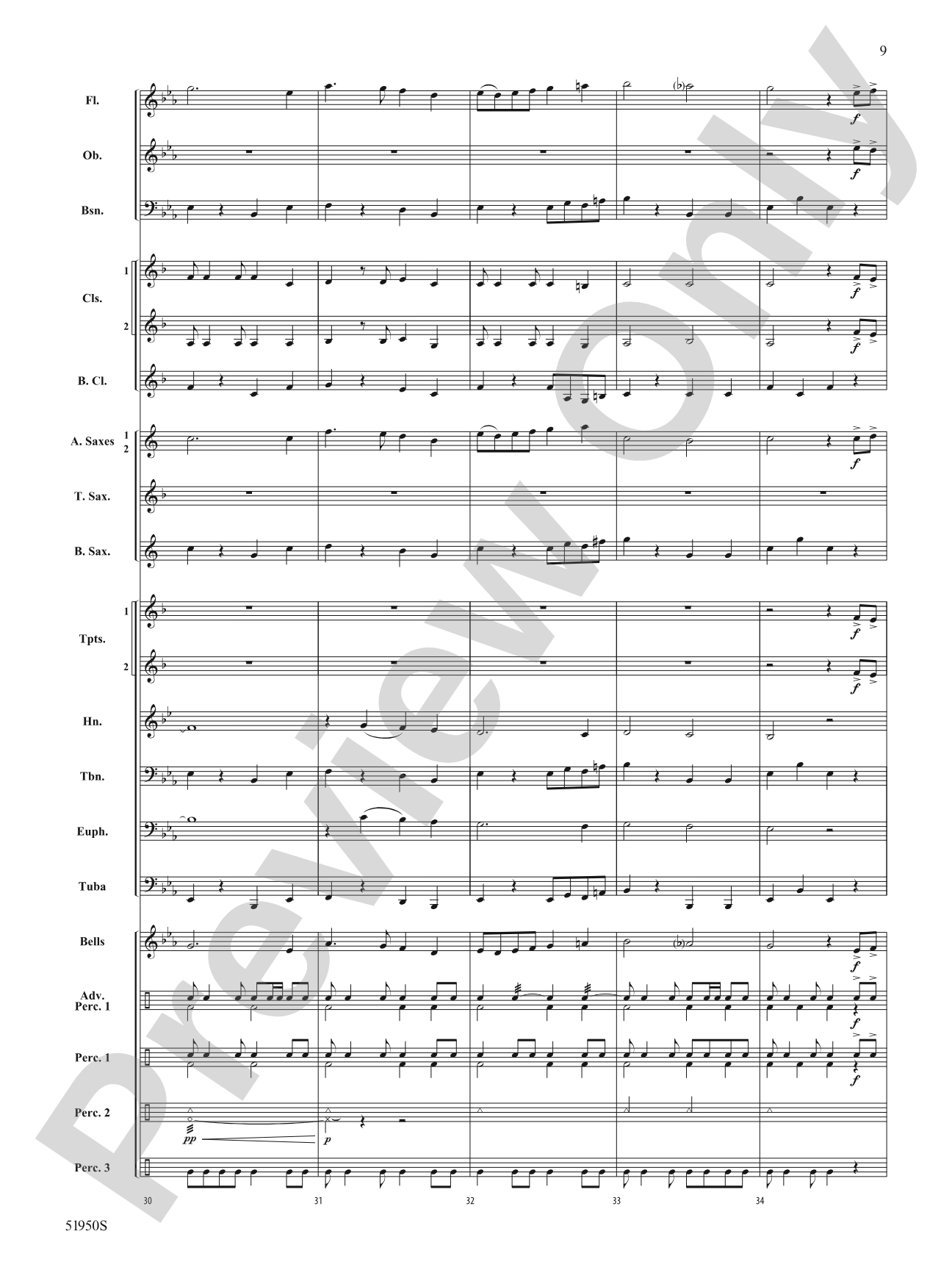
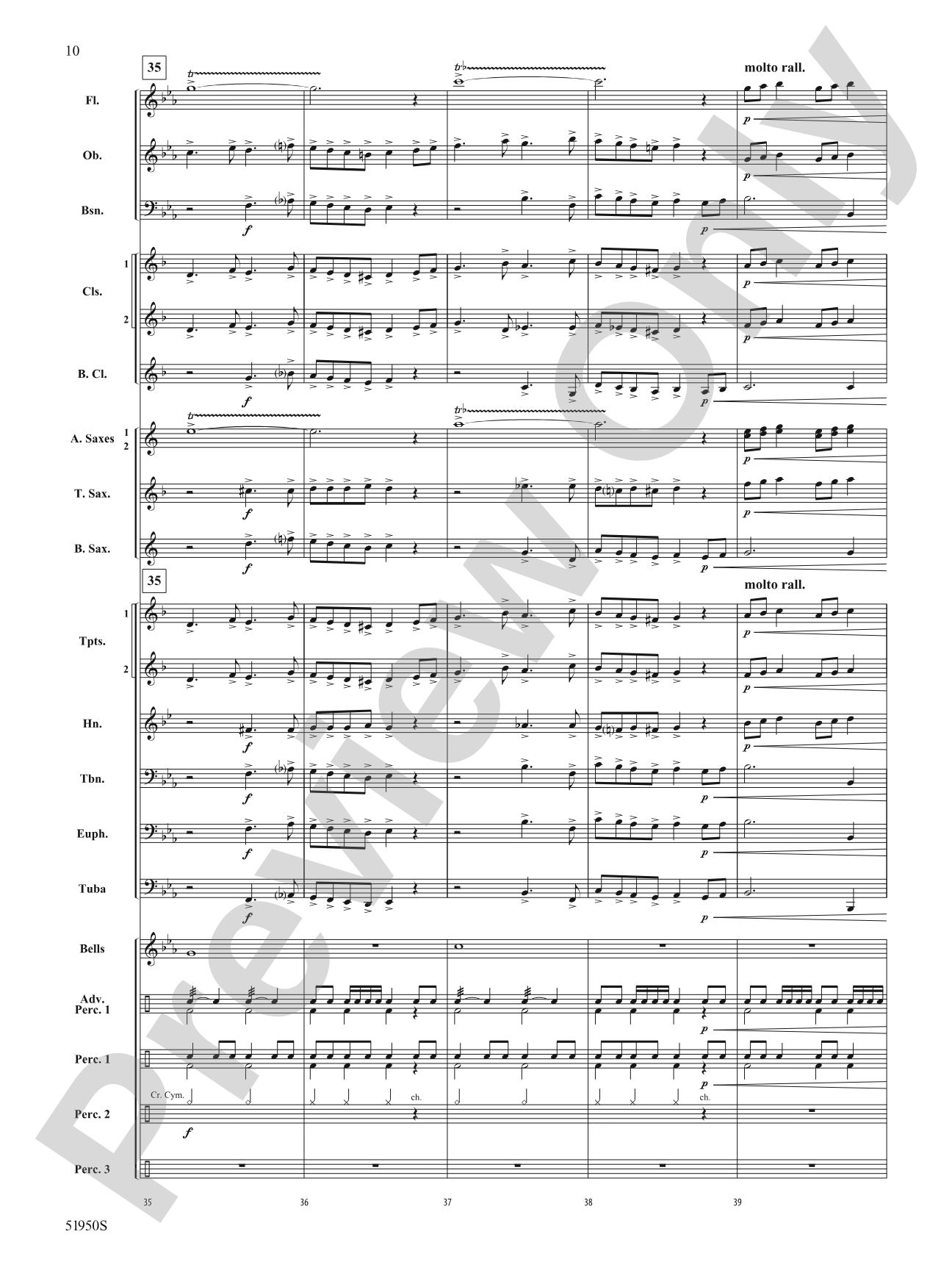
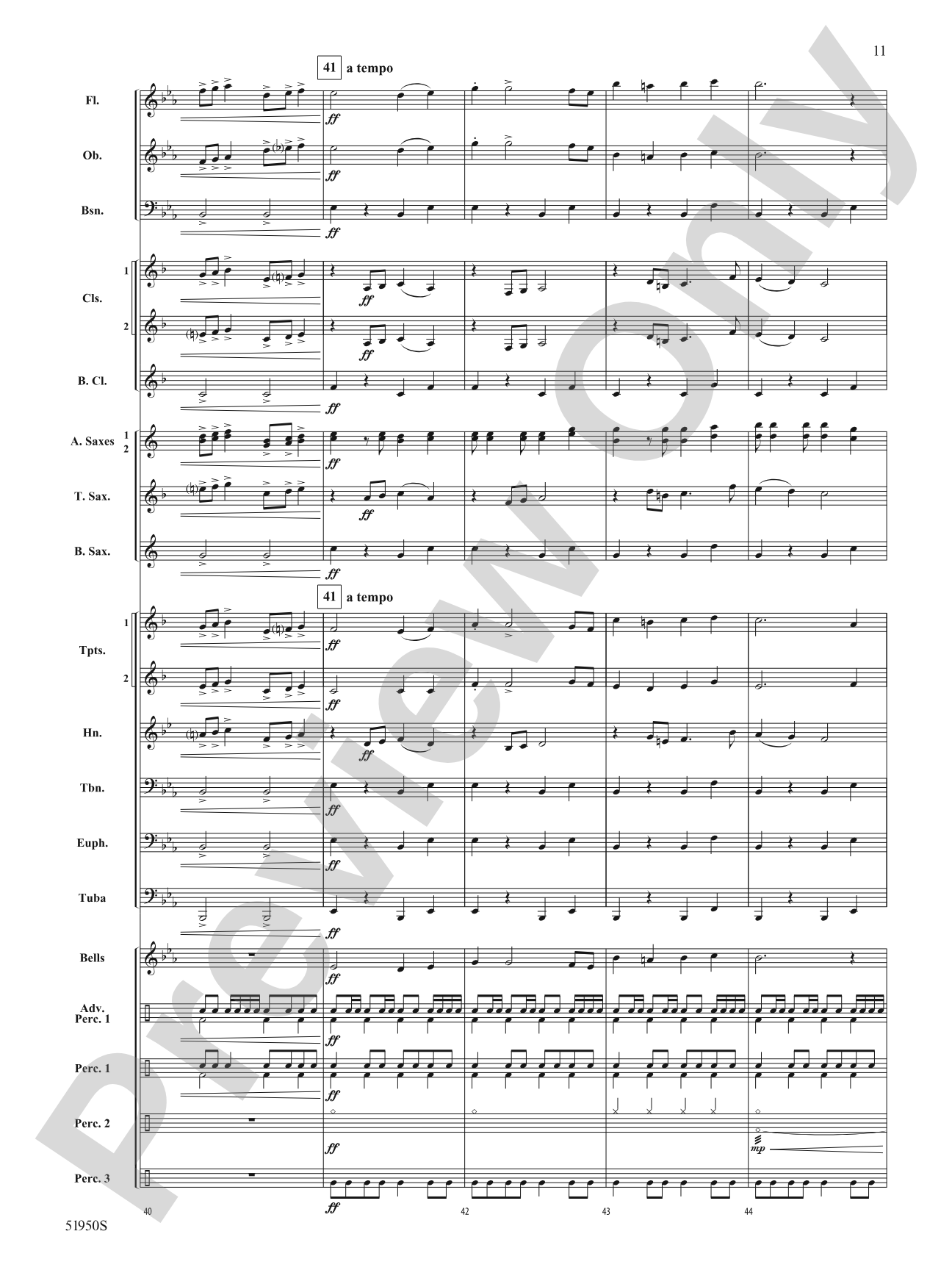
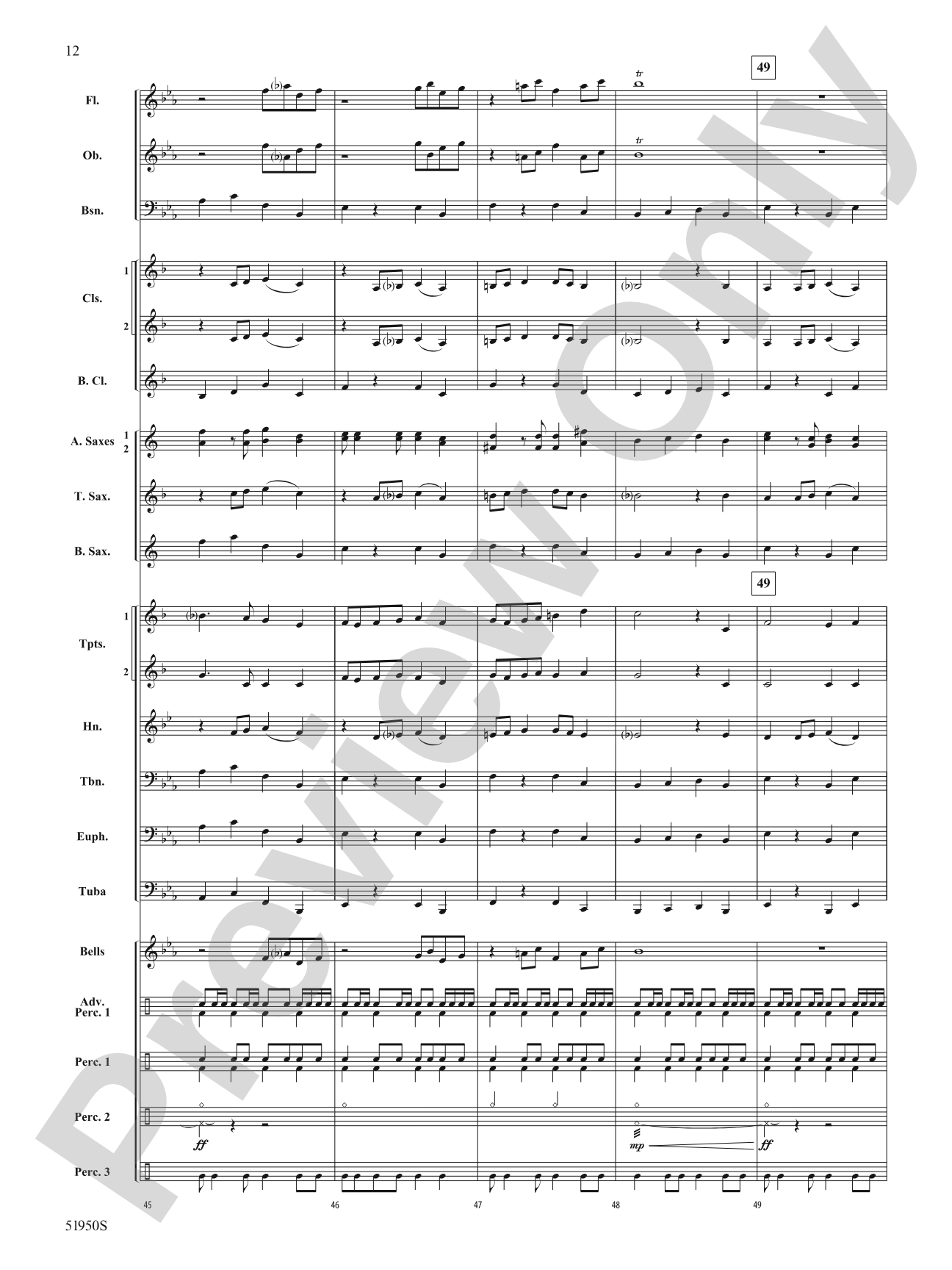

March Pasodoble: Concert Band Conductor Score & Parts
By Jack Wilds
Grade: 2
Item: 00-PK-0009146

$65.00
Pickup currently not available
Buy Extra Parts (Digital PDF Download)
| Product | Price | Quantity |
|---|---|---|
| March Pasodoble: Score | $10.00 | |
| March Pasodoble: Flute | $5.99 | |
| March Pasodoble: Oboe | $5.99 | |
| March Pasodoble: Bassoon | $5.99 | |
| March Pasodoble: 1st B-flat Clarinet | $5.99 | |
| March Pasodoble: 2nd B-flat Clarinet | $5.99 | |
| March Pasodoble: B-flat Bass Clarinet | $5.99 | |
| March Pasodoble: E-flat Alto Saxophone | $5.99 | |
| March Pasodoble: 2nd E-flat Alto Saxophone | $5.99 | |
| March Pasodoble: B-flat Tenor Saxophone | $5.99 | |
| March Pasodoble: E-flat Baritone Saxophone | $5.99 | |
| March Pasodoble: 1st B-flat Trumpet | $5.99 | |
| March Pasodoble: 2nd B-flat Trumpet | $5.99 | |
| March Pasodoble: 1st F Horn | $5.99 | |
| March Pasodoble: 1st Trombone | $5.99 | |
| March Pasodoble: Baritone B.C. | $5.99 | |
| March Pasodoble: Baritone T.C. | $5.99 | |
| March Pasodoble: Tuba | $5.99 | |
| March Pasodoble: Bells | $5.99 | |
| March Pasodoble: Advanced Percussion 1 | $5.99 | |
| March Pasodoble: 1st Percussion | $5.99 | |
| March Pasodoble: 2nd Percussion | $5.99 | |
| March Pasodoble: 3rd Percussion | $5.99 |
Parts Added to Cart!
Description
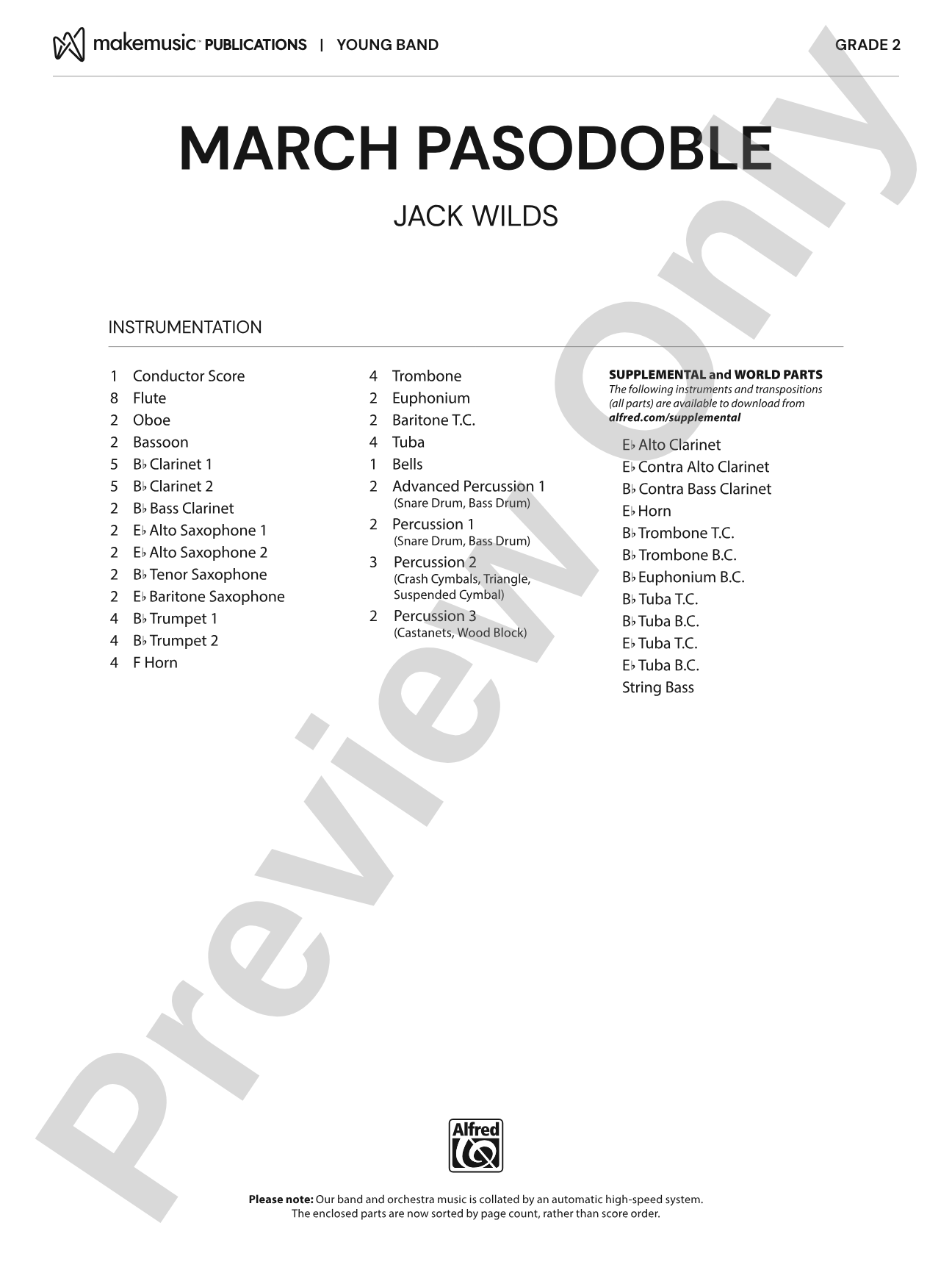
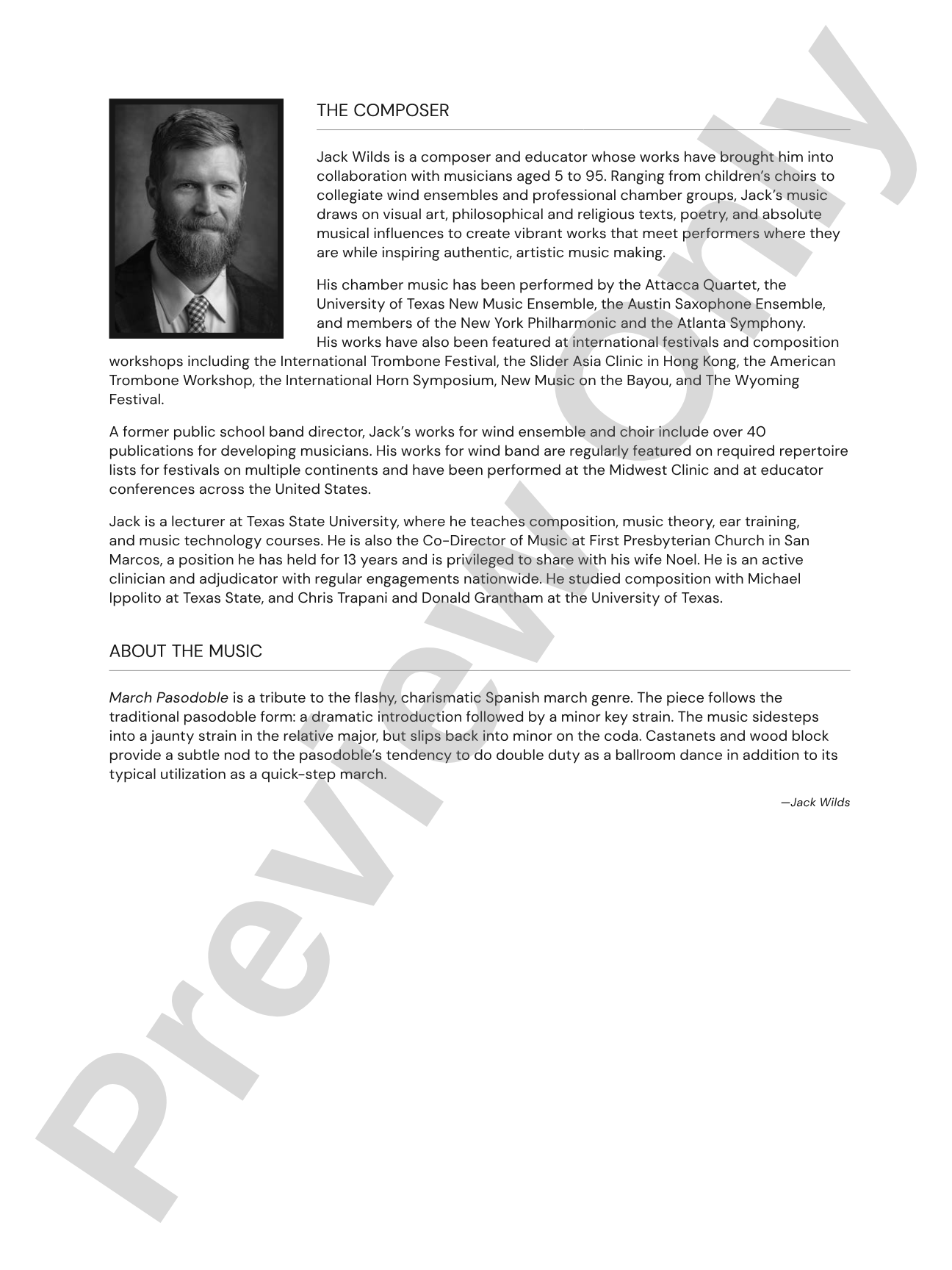
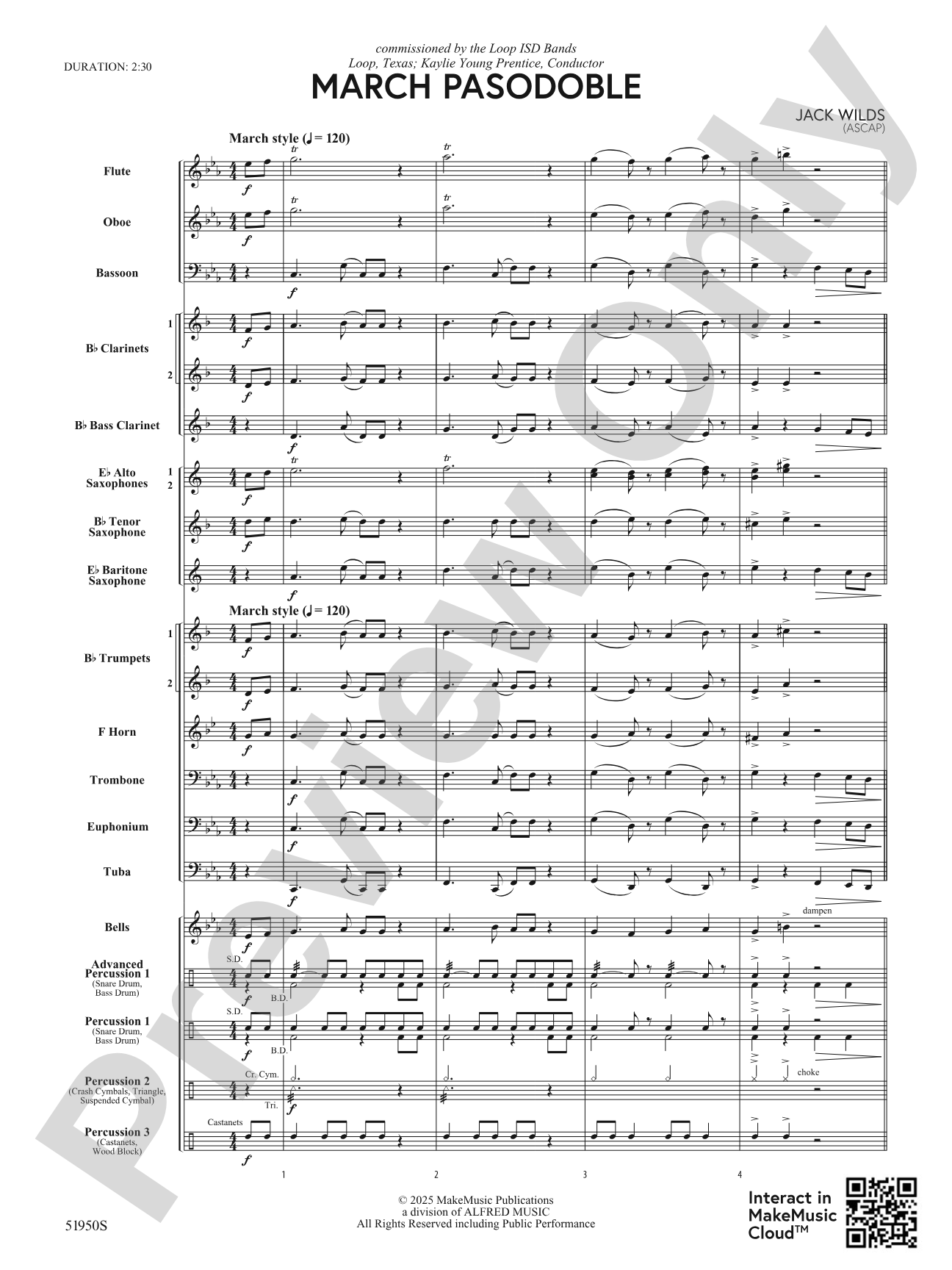
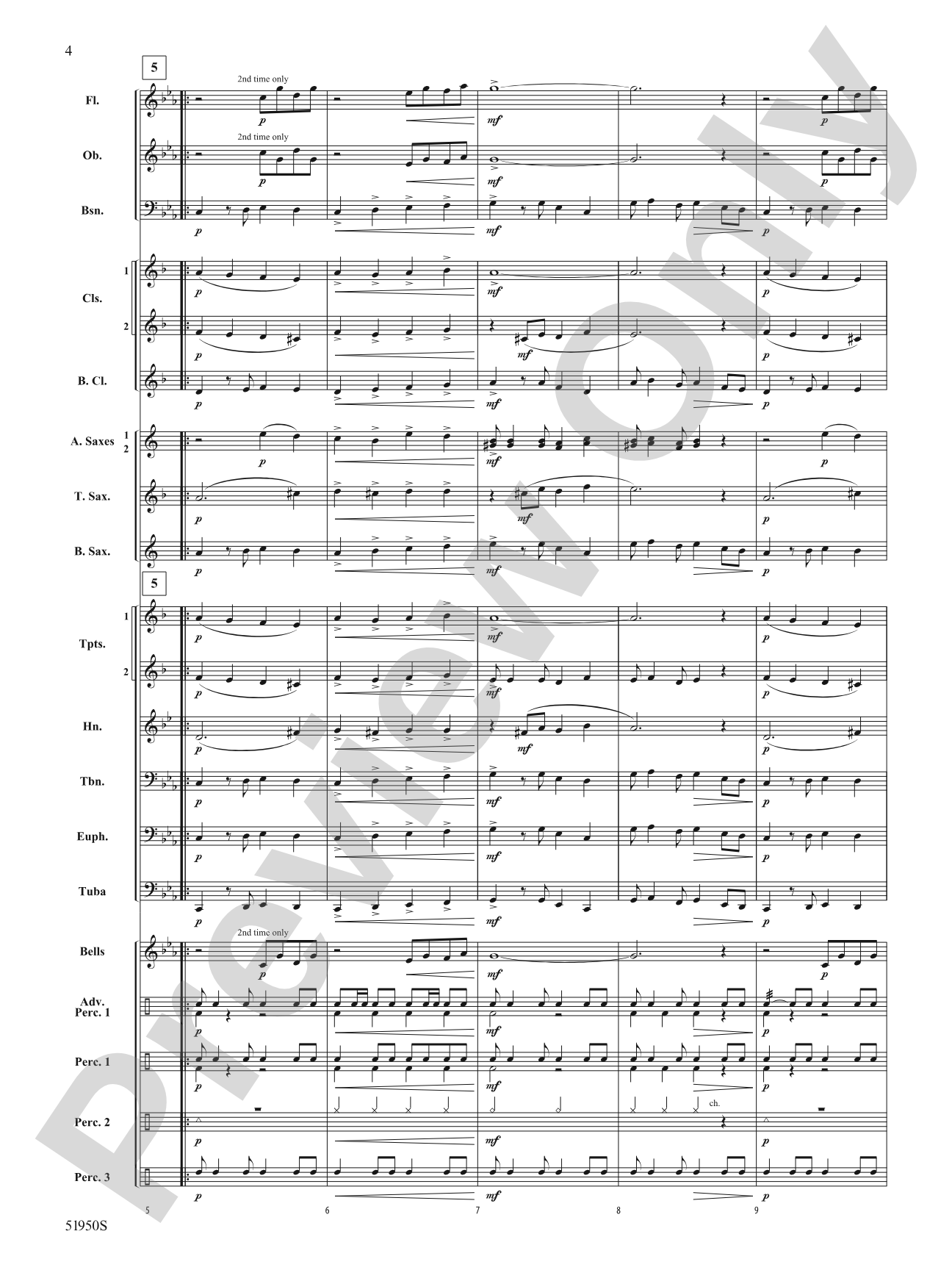
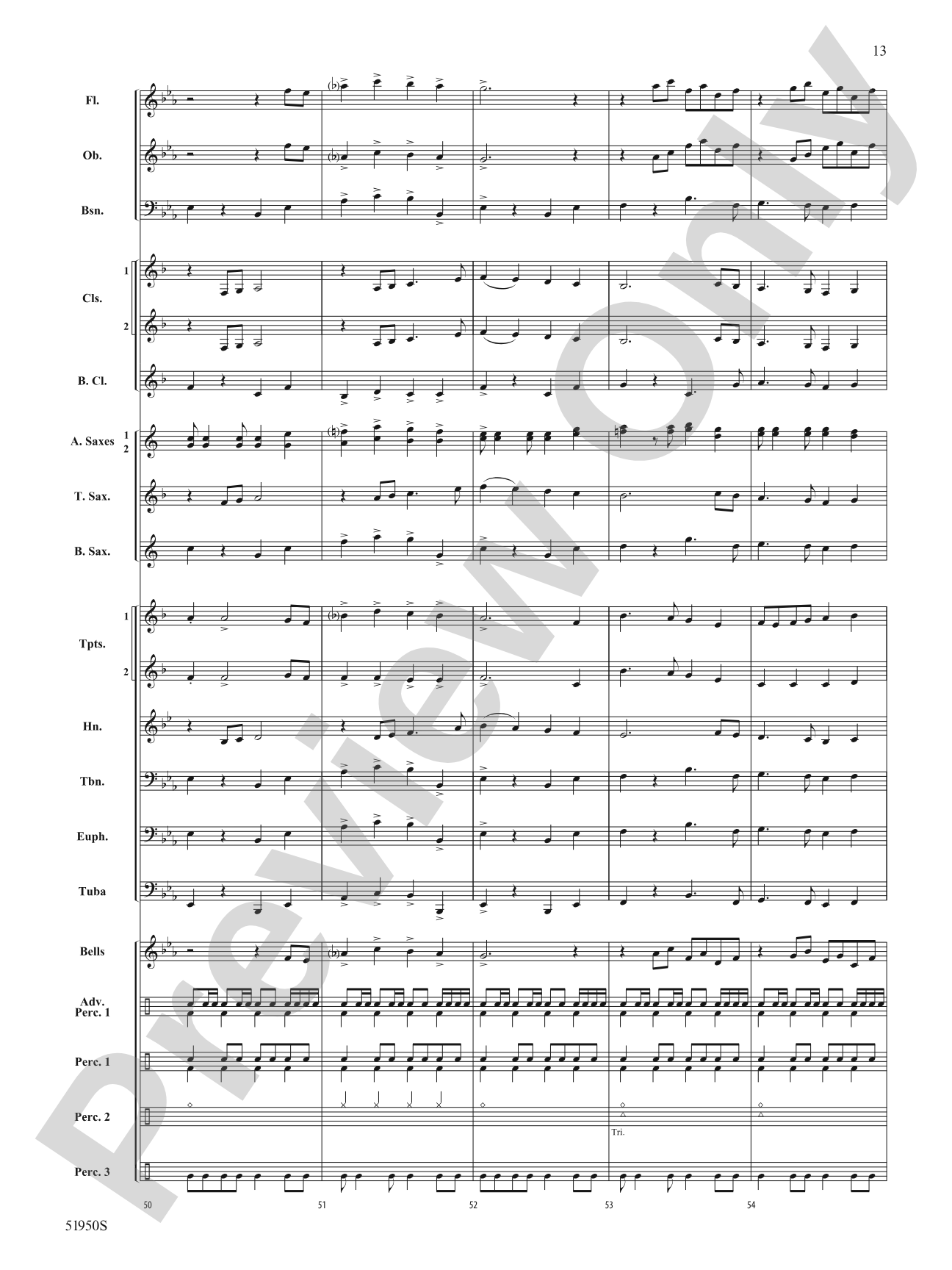
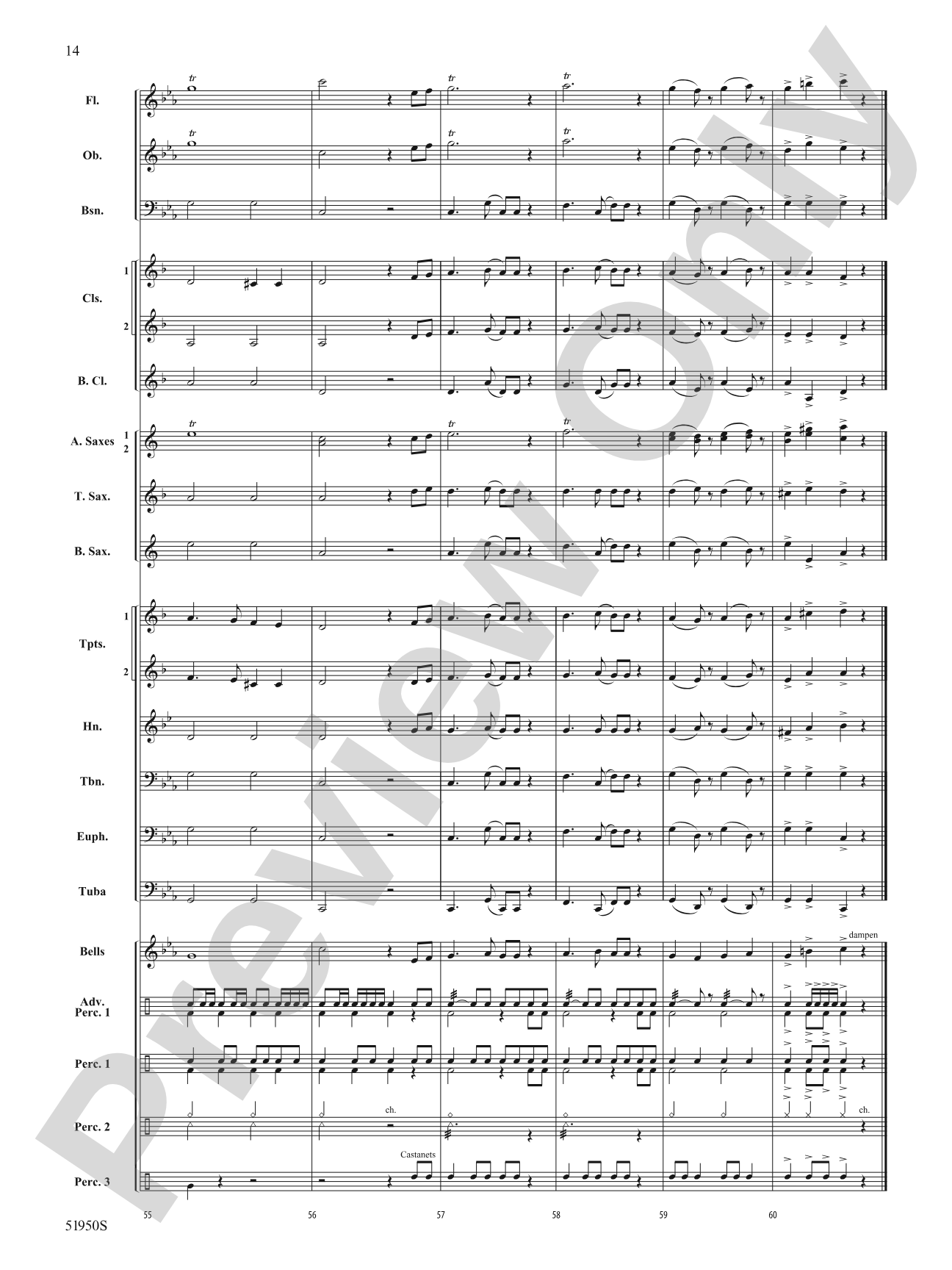
Everyone will enjoy Jack Wilds' March Pasodoble, a tribute to the flashy, charismatic Spanish march genre. A perfect vehicle for teaching march form and style, this work is a traditional pasodoble that is highly accessible and tons of fun. A perfect departure from the typical concert march! (2:30)


Don't just read it, hear it, play along with it, and watch your students grow with it. In MakeMusic Cloud, March Pasodoble: Concert Band Conductor Score & Parts comes alive with professional accompaniment, adjustable tempo, and built-in practice tools that turn solo practice into real progress.
Open in the Player
Jump straight in and assign it today.
Start Your Free Trial
Open this title and explore the full library in minutes.
Sample Audio
1
Audio File
--:--
0:00
0:00
Sample Video
Additional Details
Series:
MakeMusic Young Band
Publisher:
MakeMusic Publications
SKU:
00-PK-0009146
More about this title
About the Composer: Jack Wilds

Jack Wilds composes and teaches across the full spectrum of musical life, from elementary choirs to professional chamber ensembles. His output spans over 40 publications for developing musicians, with works that have appeared on festival required lists across multiple continents and been performed at the Midwest Clinic and major educator conferences.
Wilds brings a public school directing background to his compositional voice, drawing inspiration from visual art, philosophy, poetry, and musical architecture. His chamber music has been championed by ensembles including the Attacca Quartet and members of the New York Philharmonic and Atlanta Symphony. At Texas State University, he teaches composition, theory, ear training, and music technology. He serves as Co-Director of Music at First Presbyterian Church in San Marcos and maintains an active schedule as a clinician and adjudicator.
Why we love this
Wilds gives you a genuine Spanish march without resorting to cliché or oversimplification. The pasodoble tradition demands a certain flair and swagger, and this piece delivers both while remaining accessible to Grade 2 ensembles. It's the kind of piece that sounds good in a first reading and only improves as students dig into the style and character work.
What to expect
Vibrant and theatrical, with the confident strut of flamenco guitar and the rhythmic precision of Spanish pageantry. The music invites performers and audiences alike into a world of color and movement, trading the military formality of traditional marches for something with personality and warmth.
Who it's for
Band directors seeking an authentic march style that doesn't sound like every other grade school march. This works well for ensembles ready to explore musical genre and character beyond the standard American march conventions, while still maintaining accessibility for developing musicians.
How to get the most out of it
- Shape the melody with intentional rubato during lyrical moments. The pasodoble thrives on theatrical phrasing, so encourage soloists to breathe musically rather than metronomically.
- Articulate the characteristic march accompaniment figures with crisp definition. These rhythmic patterns are the heartbeat of the style and need clarity to land their swagger.
- Balance the upper woodwind voices against brass punctuation. The Spanish march tradition often places the melodic focus high in the ensemble, so adjust dynamics to ensure the line sings through.
How to use it
Position this as a concert brightener in the middle section of your program, where its style provides a welcome contrast to heavier concert works. It also serves exceptionally well in contest or festival settings, where the combination of musical substance and approachable difficulty demonstrates both musicianship and ensemble flexibility.
Skills your students will build
- Pasodoble march form and style conventions
- Phrasing and rubato in Spanish musical contexts
- Articulation clarity in rhythmic accompaniment figures
- Balance and blend when melody sits in upper woodwinds over brass
- Ensemble cohesion in syncopated rhythmic patterns