
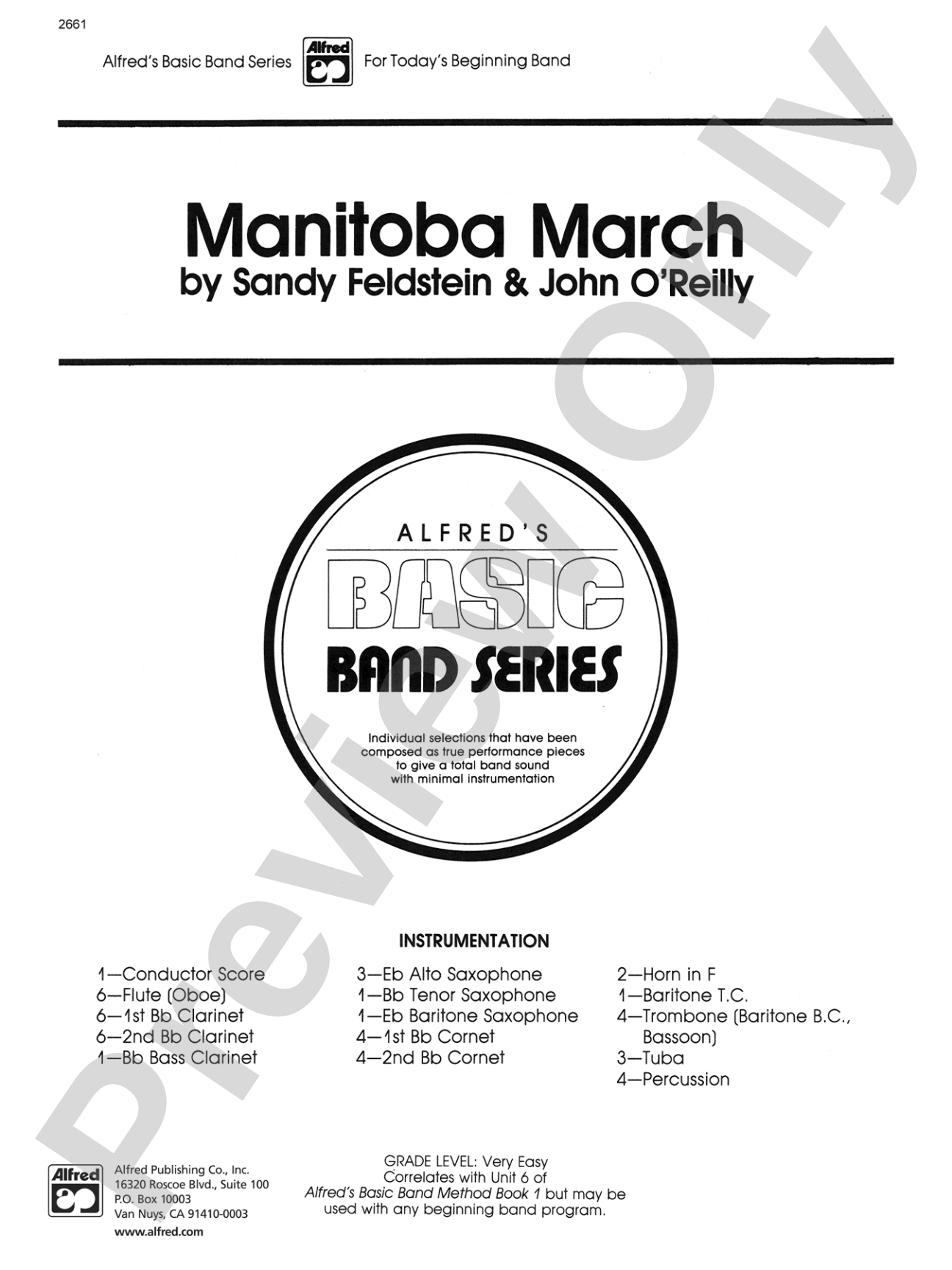

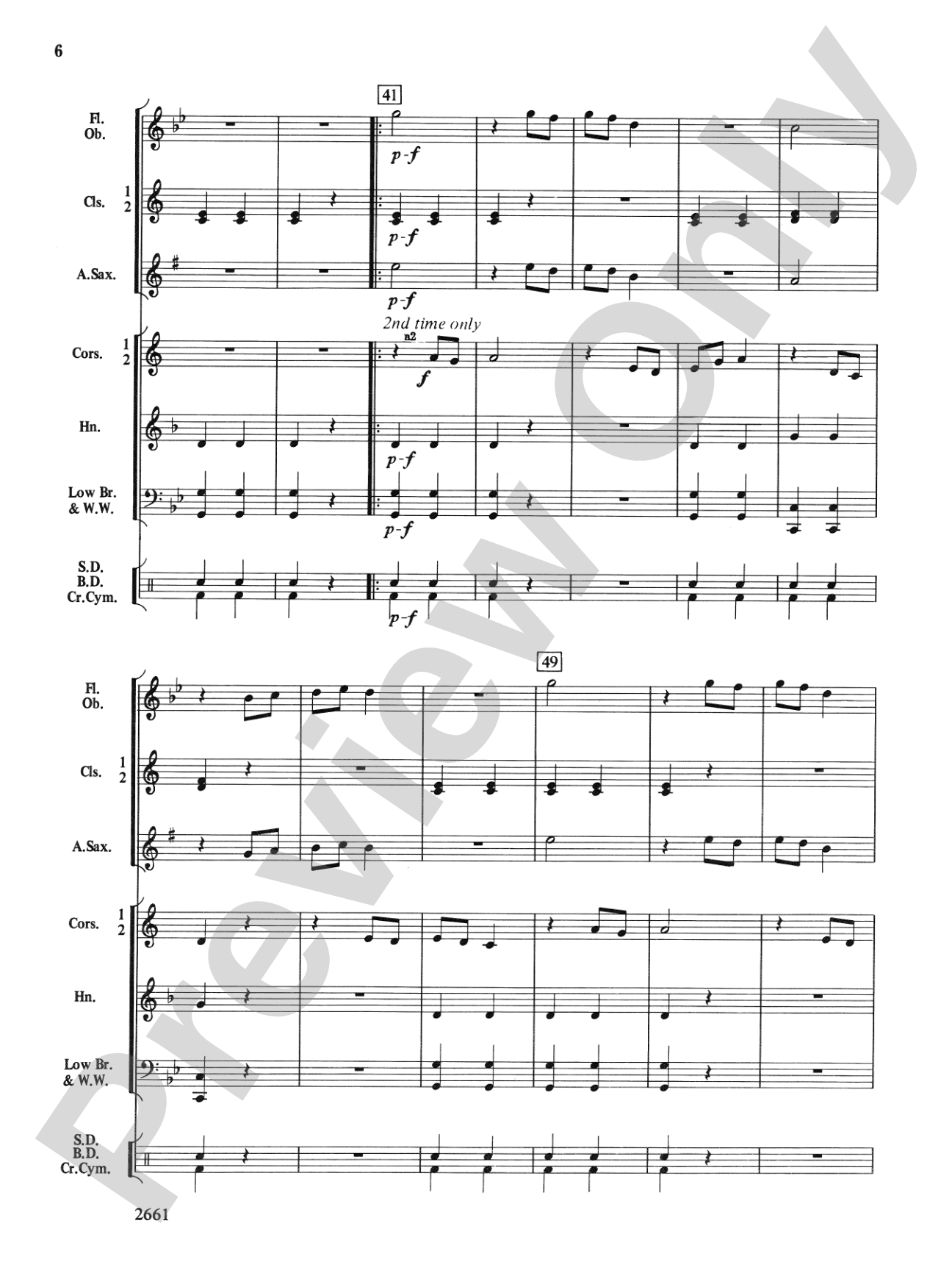
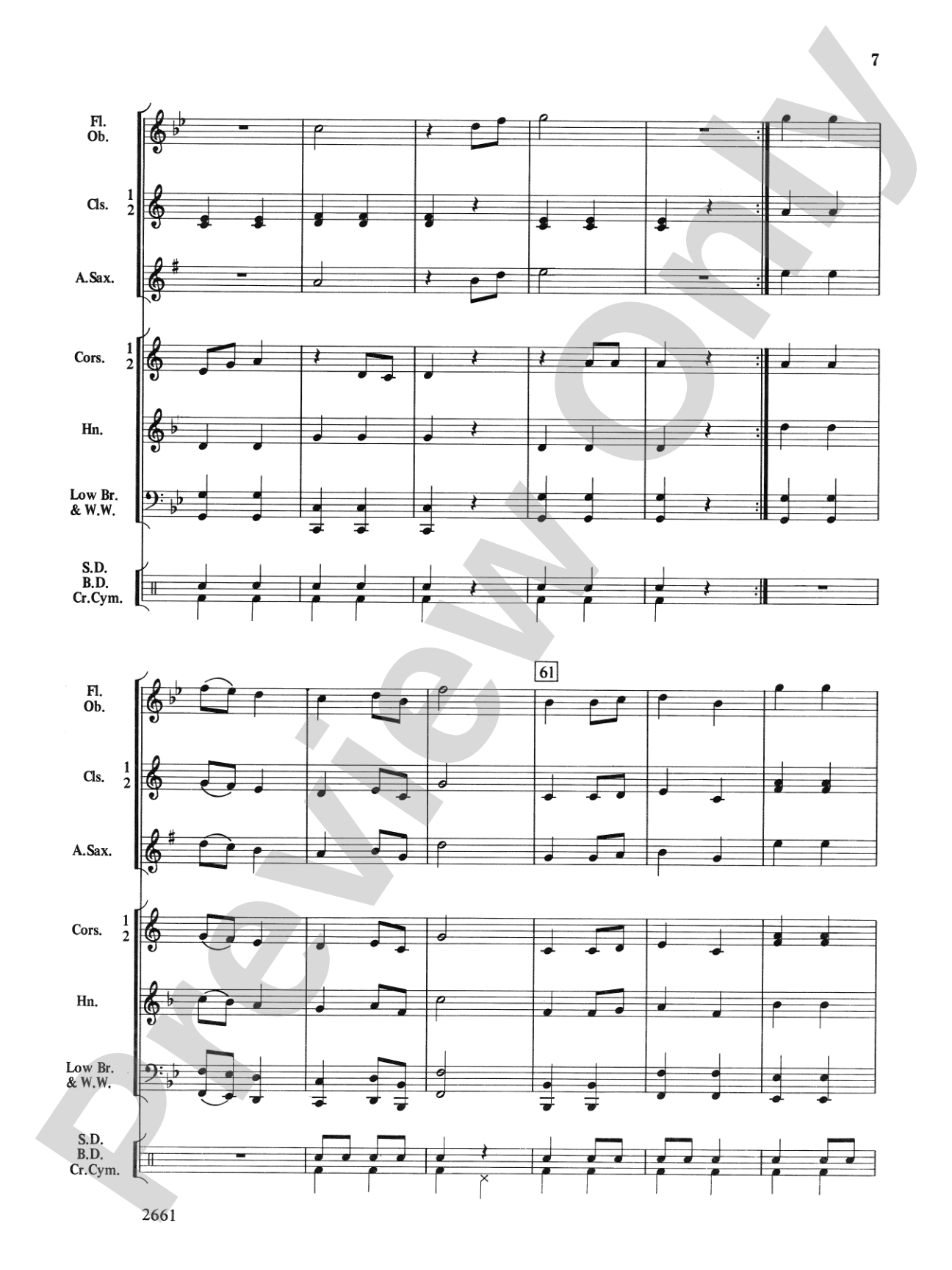
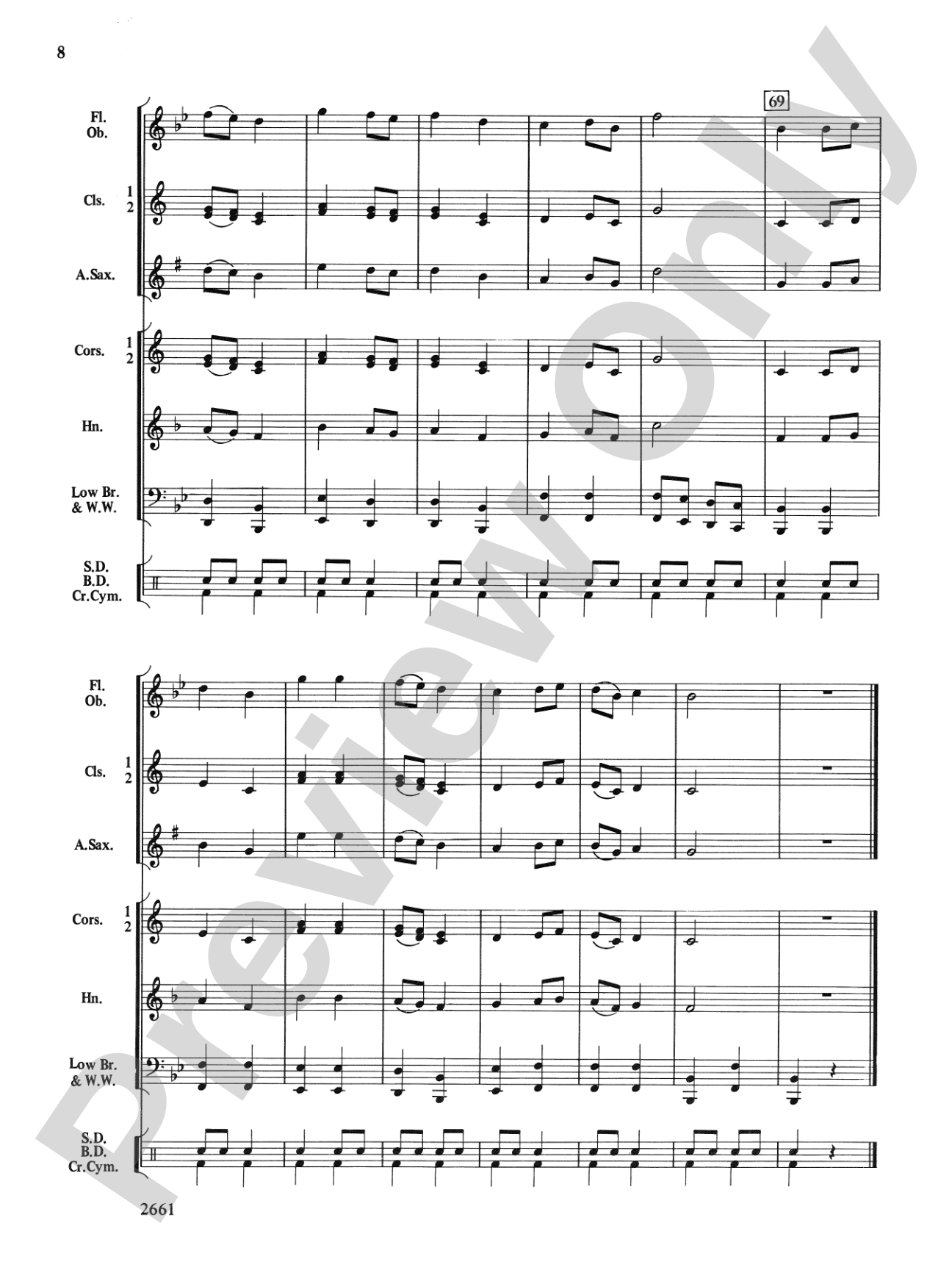

Manitoba March: Concert Band Conductor Score & Parts
By Sandy Feldstein and John O'Reilly
Grade: 1 (Very Easy)
Item: 00-PK-0001122

$40.00
Pickup currently not available
Buy Extra Parts (Digital PDF Download)
| Product | Price | Quantity |
|---|---|---|
| Manitoba March: Score | $6.00 | |
| Manitoba March: Flute | $3.00 | |
| Manitoba March: 1st B-flat Clarinet | $3.00 | |
| Manitoba March: 2nd B-flat Clarinet | $3.00 | |
| Manitoba March: B-flat Bass Clarinet | $3.00 | |
| Manitoba March: E-flat Alto Saxophone | $3.00 | |
| Manitoba March: B-flat Tenor Saxophone | $3.00 | |
| Manitoba March: E-flat Baritone Saxophone | $3.00 | |
| Manitoba March: 1st B-flat Cornet | $3.00 | |
| Manitoba March: 2nd B-flat Cornet | $3.00 | |
| Manitoba March: 1st F Horn | $3.00 | |
| Manitoba March: 1st Trombone | $3.00 | |
| Manitoba March: Baritone T.C. | $3.00 | |
| Manitoba March: Tuba | $3.00 | |
| Manitoba March: 1st Percussion | $3.00 |
Parts Added to Cart!
Description
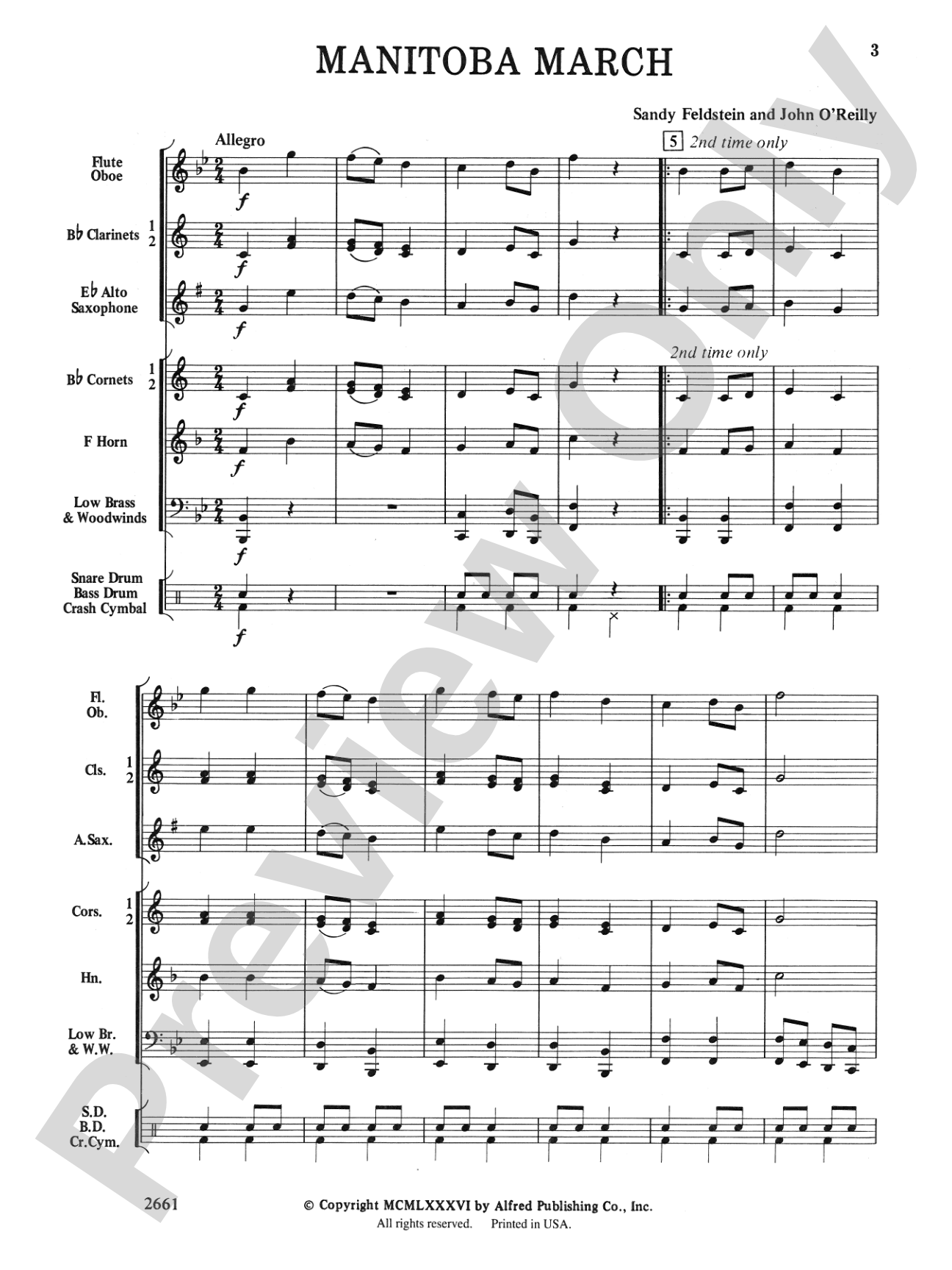
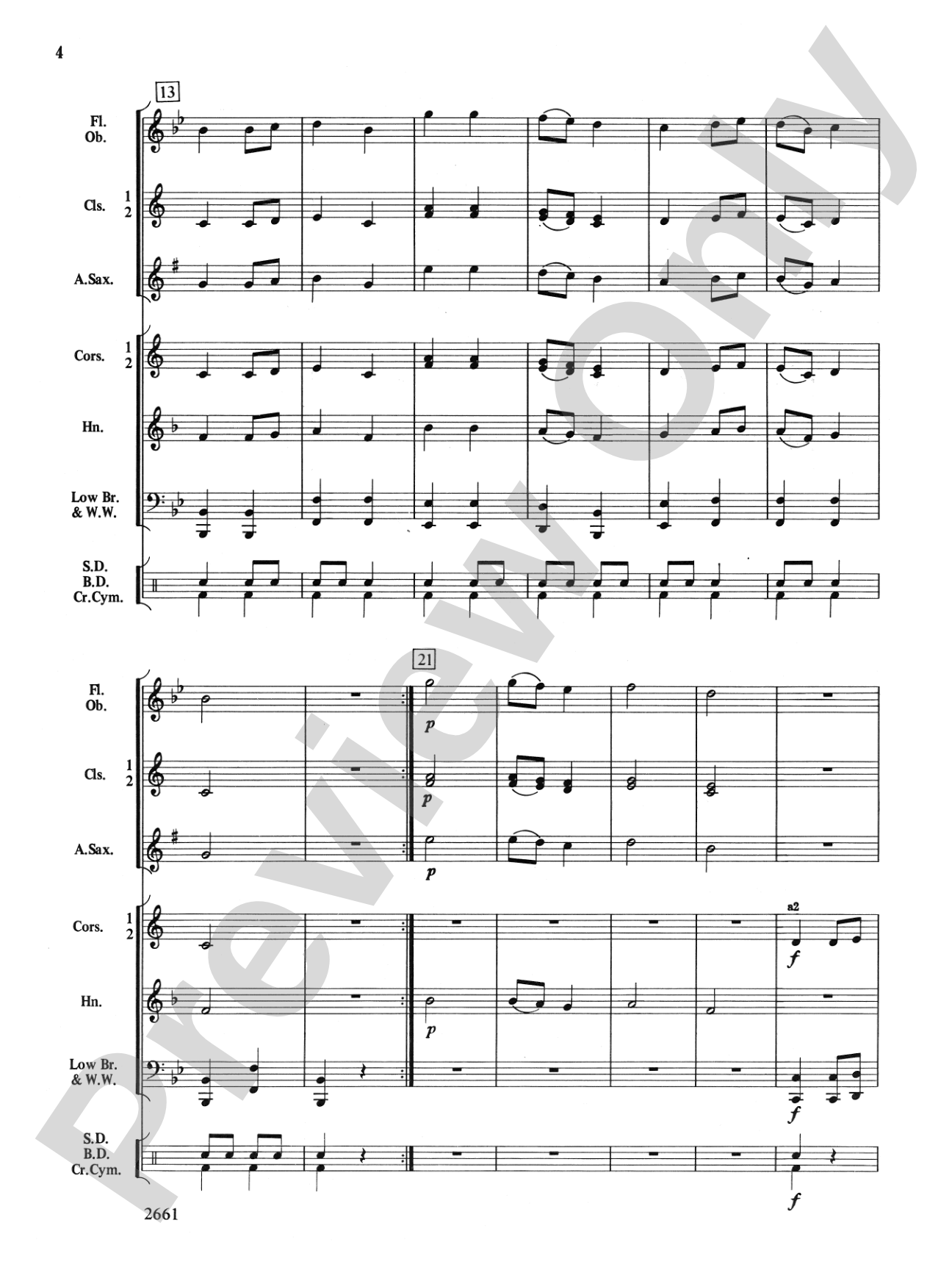
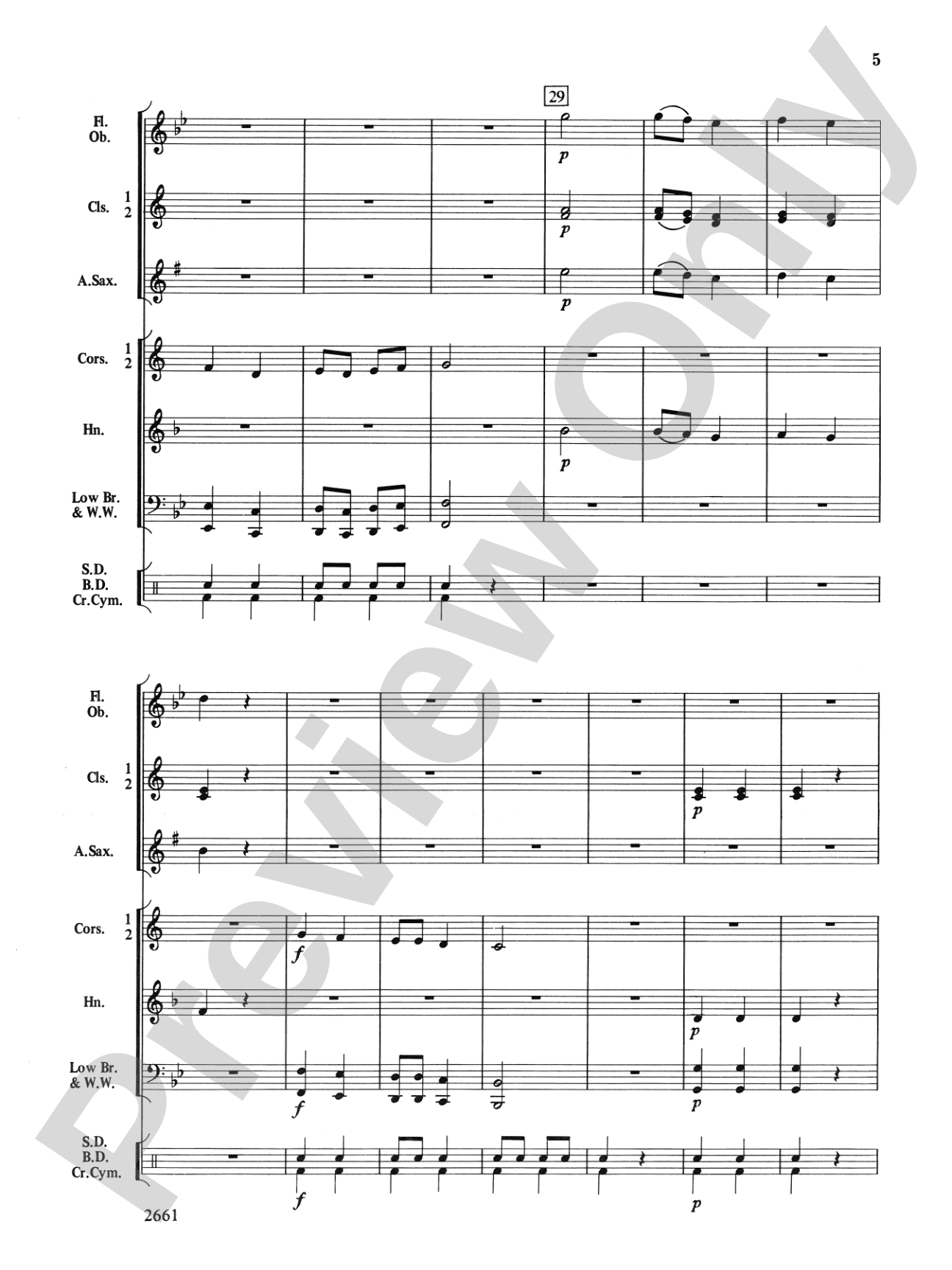
Using only 6 notes (concert B-flat to G), this original march will be a hit with your young band. The mature sound and traditional march form will make your band feel and sound like they have been playing for years. (Grade 1---Correlates with Book 1, Unit 6)


Don't just read it, hear it, play along with it, and watch your students grow with it. In MakeMusic Cloud, Manitoba March: Concert Band Conductor Score & Parts comes alive with professional accompaniment, adjustable tempo, and built-in practice tools that turn solo practice into real progress.
Open in the Player
Jump straight in and assign it today.
Start Your Free Trial
Open this title and explore the full library in minutes.
Sample Audio
No sample audio found.
Sample Video
No sample videos found.
Additional Details
Series:
Basic Band Series
Publisher:
Alfred Music
Page Count:
92
SKU:
00-PK-0001122
More about this title
About the Composer: Sandy Feldstein
Sandy Feldstein has shaped instrumental music education for decades through his compositions and arrangements, building a catalog specifically designed for young musicians navigating early instrumental study. His understanding of pedagogical pacing and age-appropriate challenge has made his work a cornerstone in band curricula across North America.
Why we love this
This march proves that limitation breeds clarity. By working within a six-note palette, Feldstein crafts something that sounds entirely complete and polished, never constrained. Your Grade 1 band will play with confidence and musicality from the first rehearsal, and audiences will hear a professional march form, not a beginner exercise.
What to expect
Stately and purposeful, this march carries the dignity of a traditional ceremonial form while remaining entirely accessible. The narrow note range never feels constraining; instead, it allows young players to focus on ensemble blend, intonation, and the rhythmic drive that makes a march memorable.
Who it's for
This piece is built for Grade 1 concert bands encountering march form and ensemble independence for the first time. Directors working with players in their first or second year of study will find immediate success here.
How to get the most out of it
- Establish a steady pulse before the first rehearsal; this march's traditional form relies on unwavering tempo to create its mature character.
- Balance the melody across sections rather than spotlighting a single line; the writing distributes thematic material intentionally, and collective ownership strengthens ensemble sound.
- Shape the phrase endings with gentle dynamics rather than abrupt cutoffs; even within a simple range, expressive phrasing elevates the performance.
- Keep articulation crisp and consistent across all parts, especially in rhythmic figures that anchor the march feel.
How to use it
Place this early in a concert program to establish ensemble confidence and energy, or use it as a processional or recessional at school events where formality and accessibility matter equally. It pairs naturally with other Grade 1 titles from the Basic Band Series in a thematic concert.
Skills your students will build
- Playing within a limited pitch range while maintaining musicality
- Understanding and performing traditional march form
- Maintaining steady tempo and ensemble rhythmic cohesion
- Balancing melody and harmony across multiple instrumental sections
- Executing clear articulation and phrase shaping