
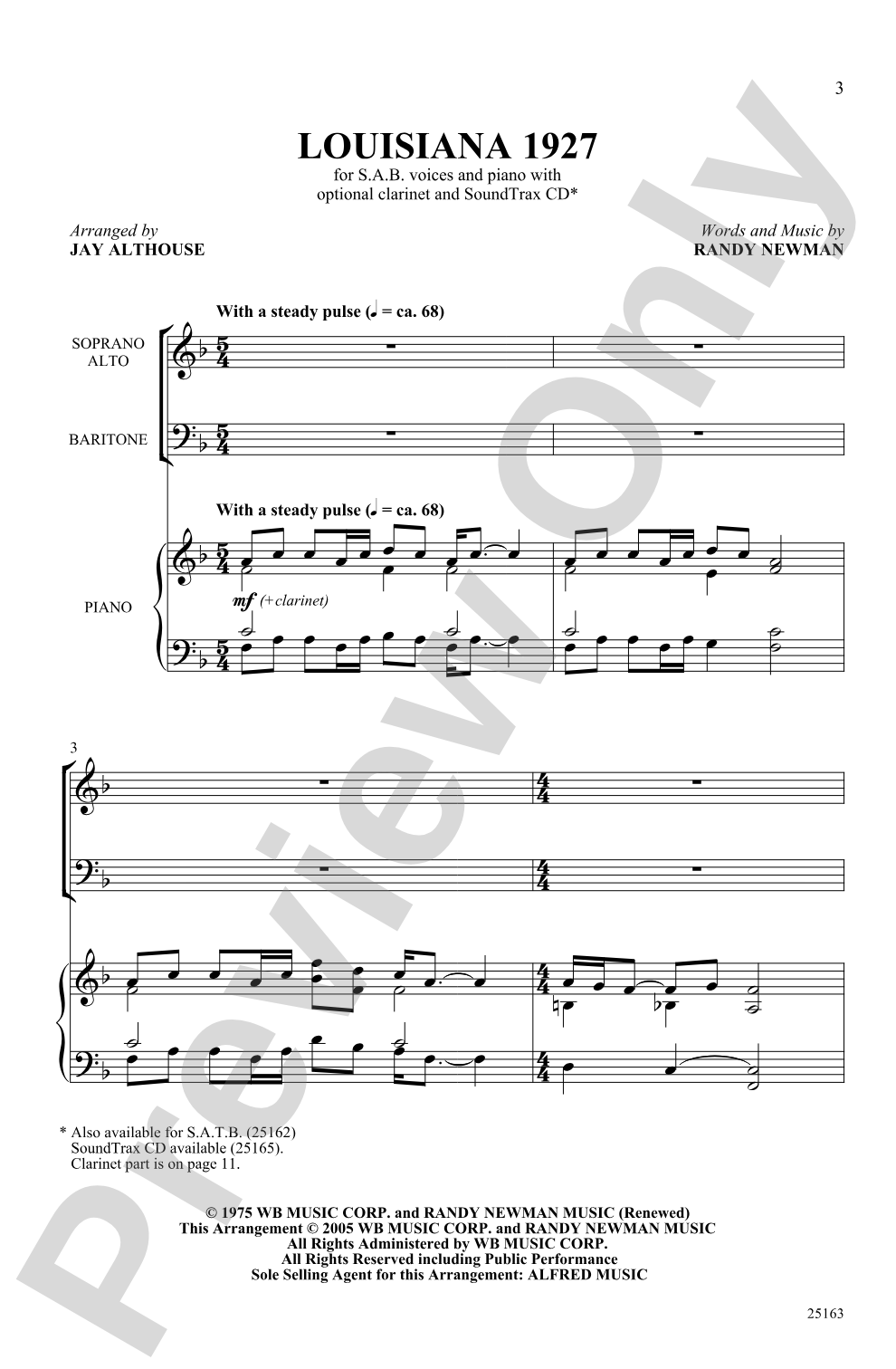
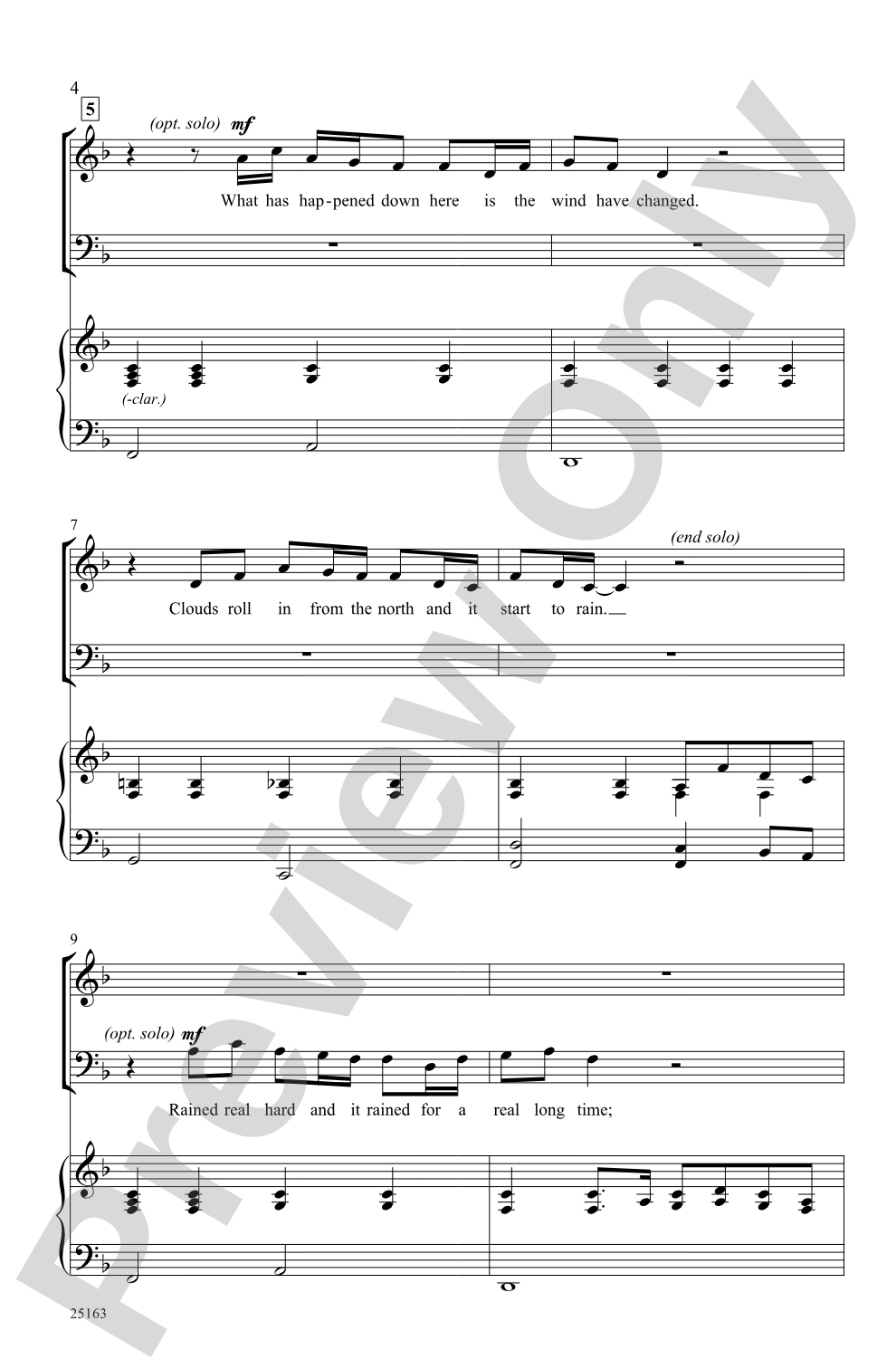

Louisiana 1927: SAB Choral Octavo
By Randy Newman / arr. Jay Althouse
Item: 00-PO-0006558
$2.25
Minimum order quantity: 20 copies
One moment…
Description
In early 1927 heavy rains in the central United States caused the Mississippi River to flood and overflow its banks down river in Louisiana. Randy Newman's 1975 song documented that event. In the aftermath of Hurricane Katrina, this song's lyrics have a new meaning. And with recordings by Aaron Neville and others, Louisiana 1927 has become a musical response to the floods of 2005, reminding us that Louisiana will recover just as it did from the floods of 1927. This haunting new choral arrangement by Jay Althouse adds an optional clarinet.


Louisiana 1927: SAB Choral Octavo isn't in MakeMusic Cloud just yet...but it could be. Let us know you'd like to see it, and you'll help shape what comes next. In the meantime, start a free trial and dive into thousands of interactive titles your students can play along with today.
Request This Title
Tell us you want it.
Start Your Free Trial
Explore everything that's ready to play right now.
Sample Audio
1
Audio File
--:--
0:00
0:00
Sample Video
No sample videos found.
Additional Details
Series:
Alfred Archive Edition: Alfred Pop Choral Series
Publisher:
Alfred Music
Page Count:
12
SKU:
00-PO-0006558
More about this title
About the Composer: Randy Newman
Randy Newman has spent decades writing sharp, observant songs that blend pop sensibility with literary substance. His work as a composer, pianist, and vocalist spans film scores, theater, and popular music, earning him recognition for his ability to capture complex emotional and social moments in deceptively simple melodies.
Why we love this
Jay Althouse's arrangement transforms a deeply personal historical song into something your singers can own emotionally without requiring operatic technique. The optional clarinet adds textural sophistication without creating instrumentation headaches, and the SAB voicing keeps the piece accessible while maintaining the song's introspective power.
What to expect
Haunting and reflective, with the weight of witness testimony. The music moves slowly through grief and remembrance, anchored by a melody that feels both familiar and plaintive.
Who it's for
Directors working with developing mixed choirs who want repertoire that connects to contemporary history and real-world meaning. This piece engages students in how music responds to tragedy and resilience without requiring advanced vocal technique.
How to get the most out of it
- Lean into the storytelling rather than vocal pyrotechnics. The arrangement asks for restraint and emotional authenticity, which often means softer dynamics and clearer diction than pop arrangements typically demand.
- If you include the optional clarinet, use it to support the choir's phrasing rather than compete with it. The instrument works best as an echo or counterpoint to the vocal line.
- Study the recorded accompaniment carefully before rehearsals begin. Understanding the harmonic and rhythmic foundation will help your singers locate their parts more quickly.
- Let silence breathe. This arrangement likely contains moments of sparse texture that carry weight. Resist the urge to fill them.
How to use it
Consider this for a concert exploring American roots music, social justice themes, or the relationship between popular song and historical memory. It pairs well with other pop arrangements or contemporary choral work, and its 12-page length makes it substantial enough to anchor a shorter set.
Skills your students will build
- Singing with emotional restraint and nuance
- Balancing three-part harmony in a pop idiom
- Responding to historical and social context through performance choice
- Coordinating with optional instrumental accompaniment
- Working with recorded backing tracks to lock harmonic and rhythmic accuracy