

Looking for the Light: SATB Choral Octavo
(A Song of Winter)
Words by Jerry Colker, music and additional words by Adam Podd and Matt Podd
Item: 00-PO-0005989

$2.20
Minimum order quantity: 20 copies
Pickup currently not available
Related Items
Looking for the Light: SoundTrax Digital Audio Download |
$27.99
|
View | |
Looking for the Light: SAB Choral Octavo |
$2.20
|
View | |
Looking for the Light: 2-Part Choral Octavo |
$2.20
|
View | |
Looking for the Light: SATB Choral Octavo |
$2.20
|
View | |
Looking for the Light: SAB Choral Octavo |
$2.20
|
View | |
Looking for the Light: 2-Part Choral Octavo |
$2.20
|
View | |
Looking for the Light: Choral Octavo SoundTrax CD |
$27.99
|
View |
Description
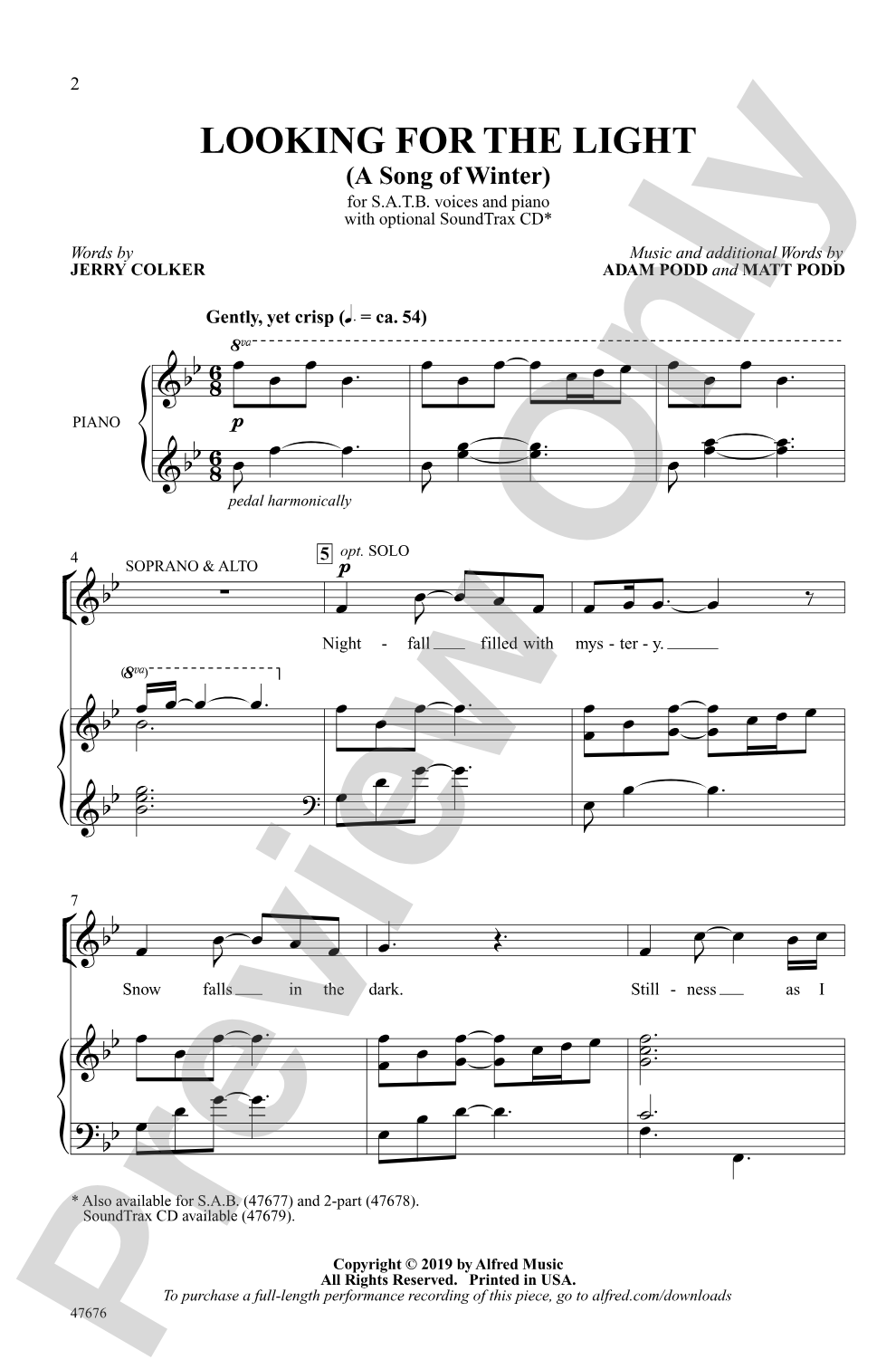
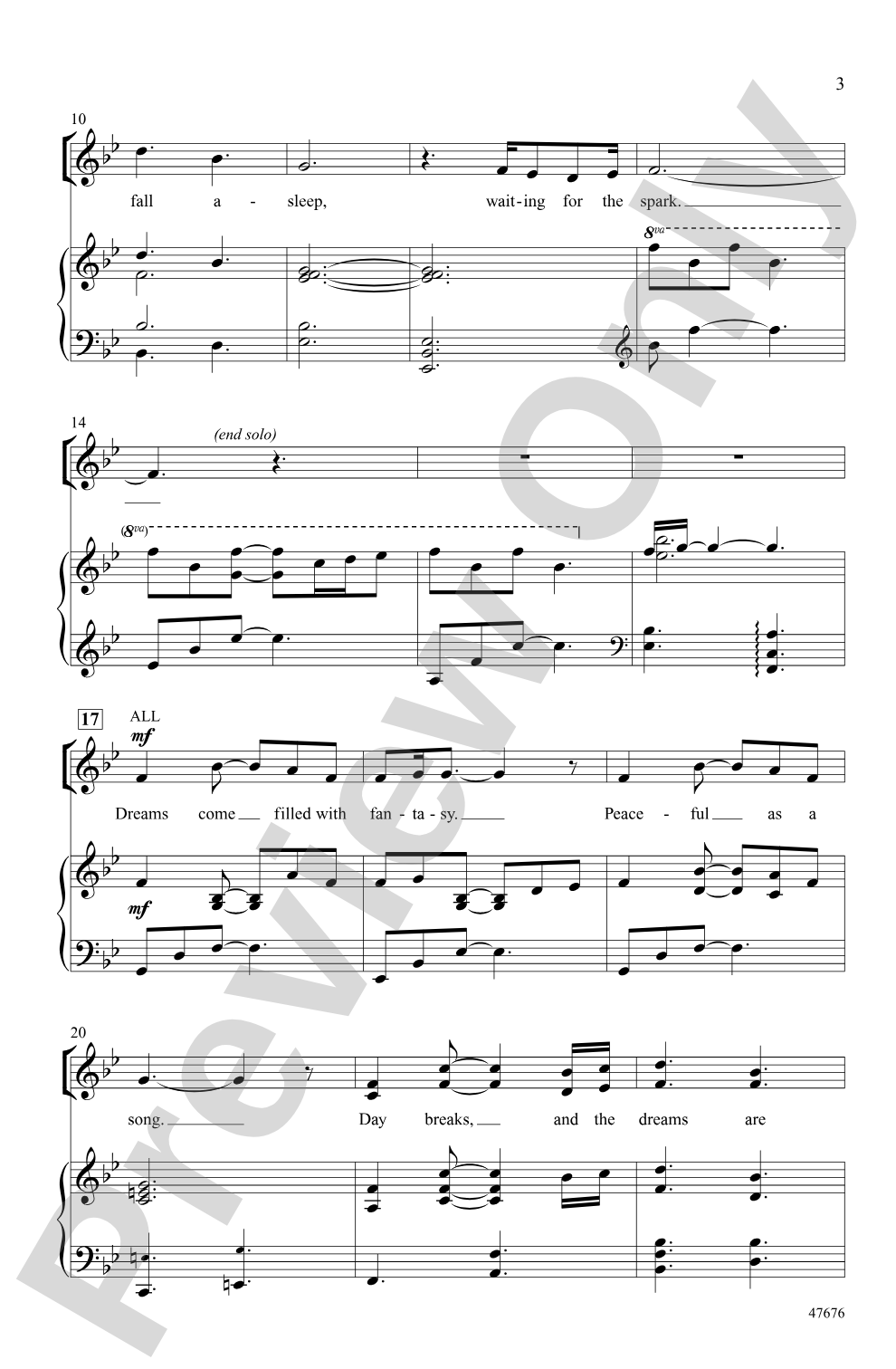
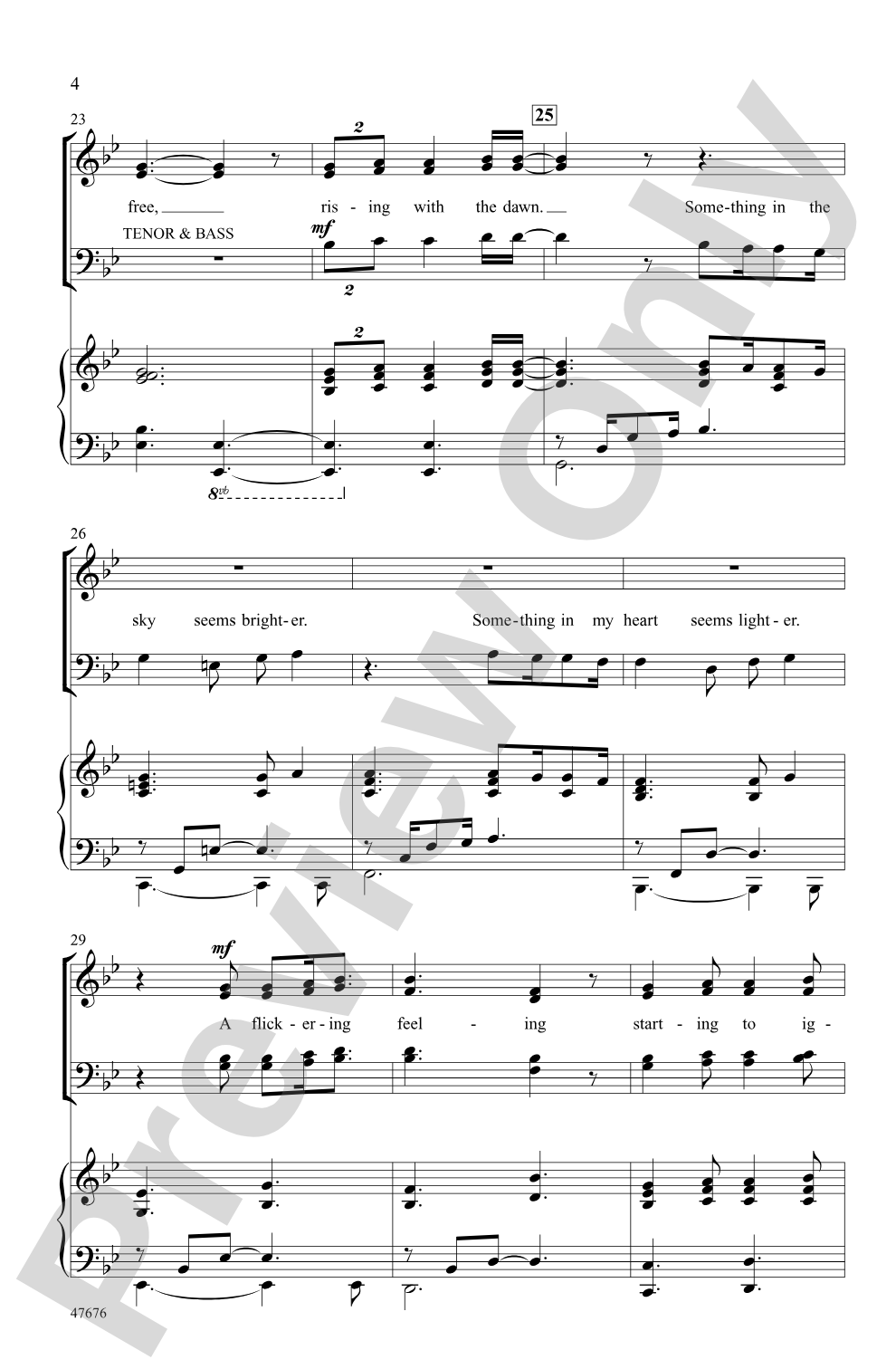
The shimmering winter-themed text and lilting 6/8 rhythms dance right off the page in this contemporary choral like none other. Accessible yet unexpected harmonies provide warmth, and a full dynamic range takes us on a journey from a single voice to full ensemble singing. The breathtaking add-on section weaves three independent lines into one radiant tapestry of sound and suggests that the light we search for may be found within.


Don't just read it, hear it, play along with it, and watch your students grow with it. In MakeMusic Cloud, Looking for the Light: SATB Choral Octavo comes alive with professional accompaniment, adjustable tempo, and built-in practice tools that turn solo practice into real progress.
Open in the Player
Jump straight in and assign it today.
Start Your Free Trial
Open this title and explore the full library in minutes.
Sample Audio
1
Audio File
--:--
0:00
0:00
Sample Video
Additional Details
Series:
Alfred Choral Designs
Publisher:
Alfred Music
Page Count:
16
SKU:
00-PO-0005989
More about this title
About the Composer: Matt Podd

Matt Podd brings decades of experience as a pianist, composer, and arranger across jazz, gospel, pop, musical theatre, and choral music. Based in New York City, he has collaborated with major artists and orchestras including Barbra Streisand, the Boston Pops, the National Symphony Orchestra, and many others, with his work performed at Carnegie Hall, the Kennedy Center, Jazz at Lincoln Center, and the White House.
Matt collaborates frequently with his twin brother Adam on musical projects, including the band Mimi & the Podd Brothers. He holds degrees from the Eastman School of Music and Ithaca College.
Why we love this
Podd crafts an arrangement that feels both contemporary and singable, with harmonies that surprise without overwhelming. The structural arc from a single voice to full ensemble creates natural pacing for rehearsals and performances, while the 6/8 rhythmic language gives singers something fresh to sink their teeth into beyond standard four-four patterns.
What to expect
Shimmering and introspective, this piece invites singers into a quiet moment of reflection before building to a radiant ensemble sound. The 6/8 lilt carries a sense of gentle movement through winter darkness, resolving into warmth and connection as voices blend in the final tapestry.
Who it's for
This octavo works well for intermediate to advanced choirs seeking contemporary sacred or secular winter programming with substance. Singers appreciate the rhythmic interest and accessible yet sophisticated harmonies, while directors value a piece that sounds more complex than its technical demands.
How to get the most out of it
- Balance the opening solo line with restraint; let its intimacy draw the audience in before the ensemble joins. This vulnerability sets up the emotional payoff of the add-on section.
- Shape the 6/8 meter with lift and flow rather than heaviness. The lilting quality depends on light articulation and forward motion through the phrases.
- Layer in dynamics gradually as more voices enter, treating each new voice addition as its own event rather than a sudden swell. This reveals the harmonic color at each stage.
- In the add-on section, clarify which voice carries the primary line while the other two weave around it, especially if doubling is limited. Strategic breath placement helps maintain transparency.
How to use it
Program this as a centerpiece for winter concerts or end-of-semester performances, particularly when pairing secular and sacred works. Its journey from solo to full choir creates a natural focal point in a set, and the hopeful arc complements both introspective opening pieces and celebratory closers.
Skills your students will build
- Reading and singing in 6/8 meter with consistent rhythmic flow
- Balancing independent melodic lines in four-part texture
- Managing dynamic contrast from single-voice passages to full ensemble
- Blending unexpected harmonic progressions by listening to adjacent voice parts
- Sustaining lyrical phrases with forward momentum in a compound meter