
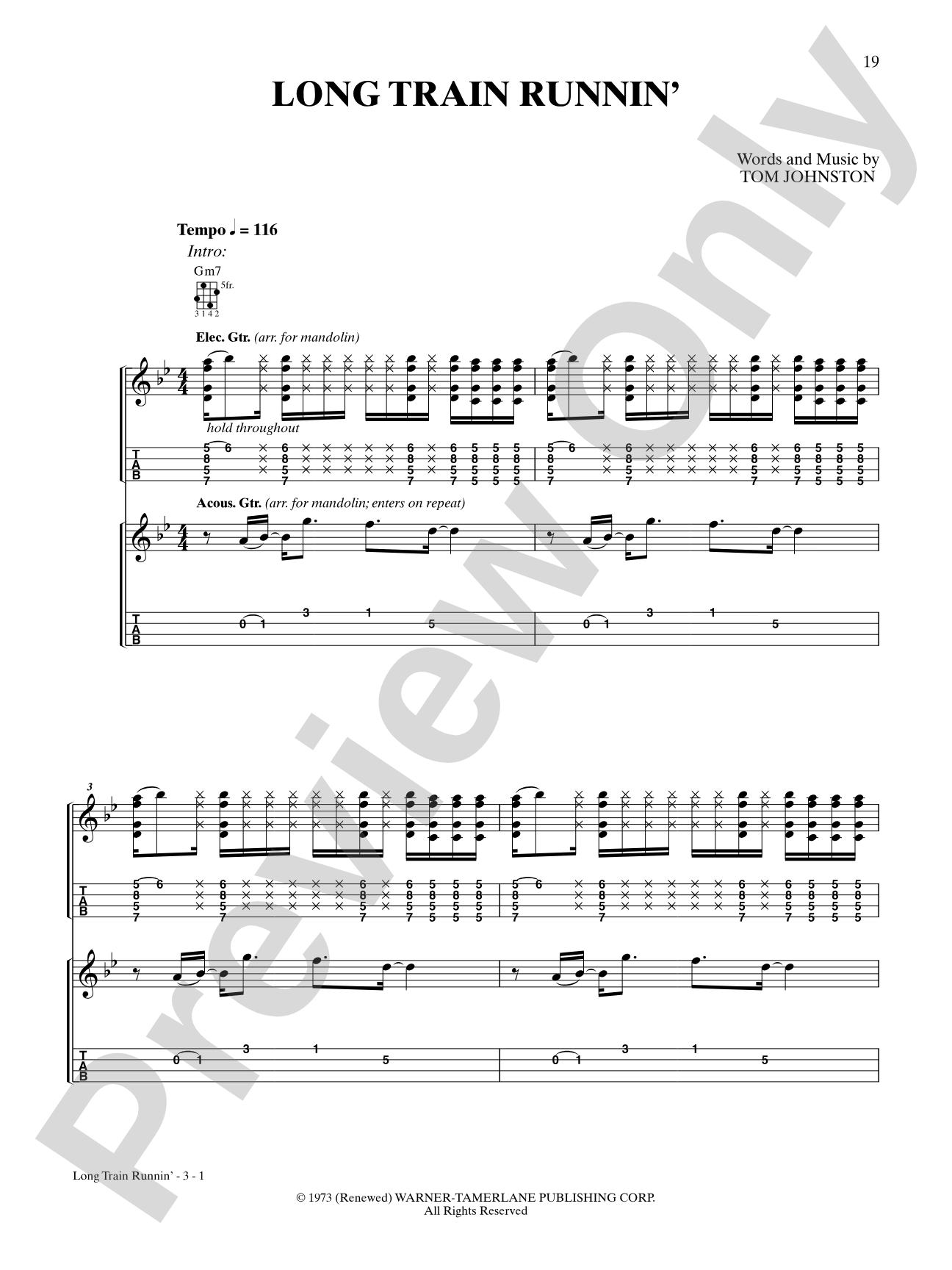

Long Train Runnin': Mandolin TAB
12 Great Songs of the '60s, '70s & '80s
Item: 00-PS-0011864
$4.99
One moment…
Related Items
Paint It, Black: Mandolin TAB |
$4.99
|
View | |
It's All Over Now: Mandolin TAB |
$4.99
|
View | |
The Night They Drove Old Dixie Down: Mandolin TAB |
$4.99
|
View | |
Stairway to Heaven: Mandolin TAB |
$5.99
|
View | |
After Midnight: Mandolin TAB |
$4.99
|
View | |
Maggie May: Mandolin TAB |
$4.99
|
View | |
Sunshine of Your Love: Mandolin TAB |
$4.99
|
View | |
Just for Fun: Classic Rock Mandolin: Easy Mandolin TAB Book |
$14.99
|
View |
Description
Classic Rock Mandolin is designed for your total enjoyment. Each song uses the original guitar parts arranged for the mandolin. Titles: After Midnight (Eric Clapton) * Go Your Own Way (Fleetwood Mac) * Hotel California (Eagles) * It's All Over Now (The Rolling Stones) * Jump (Van Halen) * Long Train Runnin' (The Doobie Brothers) * Maggie May (Rod Stewart) * The Night They Drove Old Dixie Down (The Band) * Paint It, Black (The Rolling Stones) * Stairway to Heaven (Led Zeppelin) * Sunshine of Your Love (Cream) * Truckin' (Grateful Dead).


Long Train Runnin': Mandolin TAB isn't in MakeMusic Cloud just yet...but it could be. Let us know you'd like to see it, and you'll help shape what comes next. In the meantime, start a free trial and dive into thousands of interactive titles your students can play along with today.
Request This Title
Tell us you want it.
Start Your Free Trial
Explore everything that's ready to play right now.
Sample Audio
No sample audio found.
Sample Video
No sample videos found.
Additional Details
Series:
Just for Fun
Publisher:
Alfred Music
Page Count:
60
SKU:
00-PS-0011864
More about this title
About the Composer: Tom Johnston
Tom Johnston is best known as the guitarist and vocalist for The Doobie Brothers, the San Jose rock band that defined the sound of 1970s California rock. Beyond his work as a performer, Johnston has composed and arranged material that captures the accessible, groove-oriented character that made the Doobies a staple of FM radio and concert halls alike.
Why we love this
This collection smartly takes iconic guitar riffs from the classic rock era and translates them directly to mandolin, letting players discover how well these melodies actually sit on the fretboard. The repertoire spans four decades of essentials, so mandolinists get both the satisfaction of playing recognizable music and the technical challenge of adapting parts written for a different instrument. It's a genuinely useful resource for mandolin players who want to move beyond folk and bluegrass into rock contexts.
What to expect
Open the book and you're stepping into a time machine of FM radio hits. These are songs that defined entire decades, and hearing them emerge from a mandolin feels fresh while keeping the essence of what made them memorable. There's swagger and groove here, from the blues-rock burn of After Midnight to the soaring melodicism of Stairway to Heaven.
Who it's for
Mandolin players who are comfortable reading TAB and have solid fretboard knowledge but want to expand beyond traditional folk and bluegrass repertoire into classic rock. This book appeals to intermediate players looking for recognizable, engaging material that challenges their ability to adapt arrangements.
How to get the most out of it
- Pay close attention to the original guitar tone and articulation when learning each piece; the TAB notates fingering, but listening to the original recordings will show you where to emphasize or soften phrases.
- Adjust your attack and sustain expectations based on each song's feel. Hotel California and Stairway to Heaven demand a more singing, sustained tone, while Jump requires sharper rhythmic definition.
- Experiment with your mandolin's tone controls or amp settings (if playing amplified) to find the brightness or warmth that matches the original arrangement.
- Mark repeat signs and section boundaries clearly in your copy before you start; rock songs often shift between verses and choruses in ways that differ from classical forms.
How to use it
Mandolin students at the intermediate level can use individual pieces as performance repertoire for recitals or studio showcases, especially if you're building a concert around rock and contemporary music. This collection also works as supplementary material during the school year to maintain engagement and showcase the mandolin's versatility outside its traditional folk and classical contexts.
Skills your students will build
- Adapting guitar-based arrangements to mandolin fingering patterns
- Reading TAB fluently and correlating it to standard notation
- Controlling tone and sustain across different rock idioms and tempos
- Managing position shifts and navigating the fingerboard over longer passages
- Interpreting rhythmic feel and phrasing in non-classical styles