
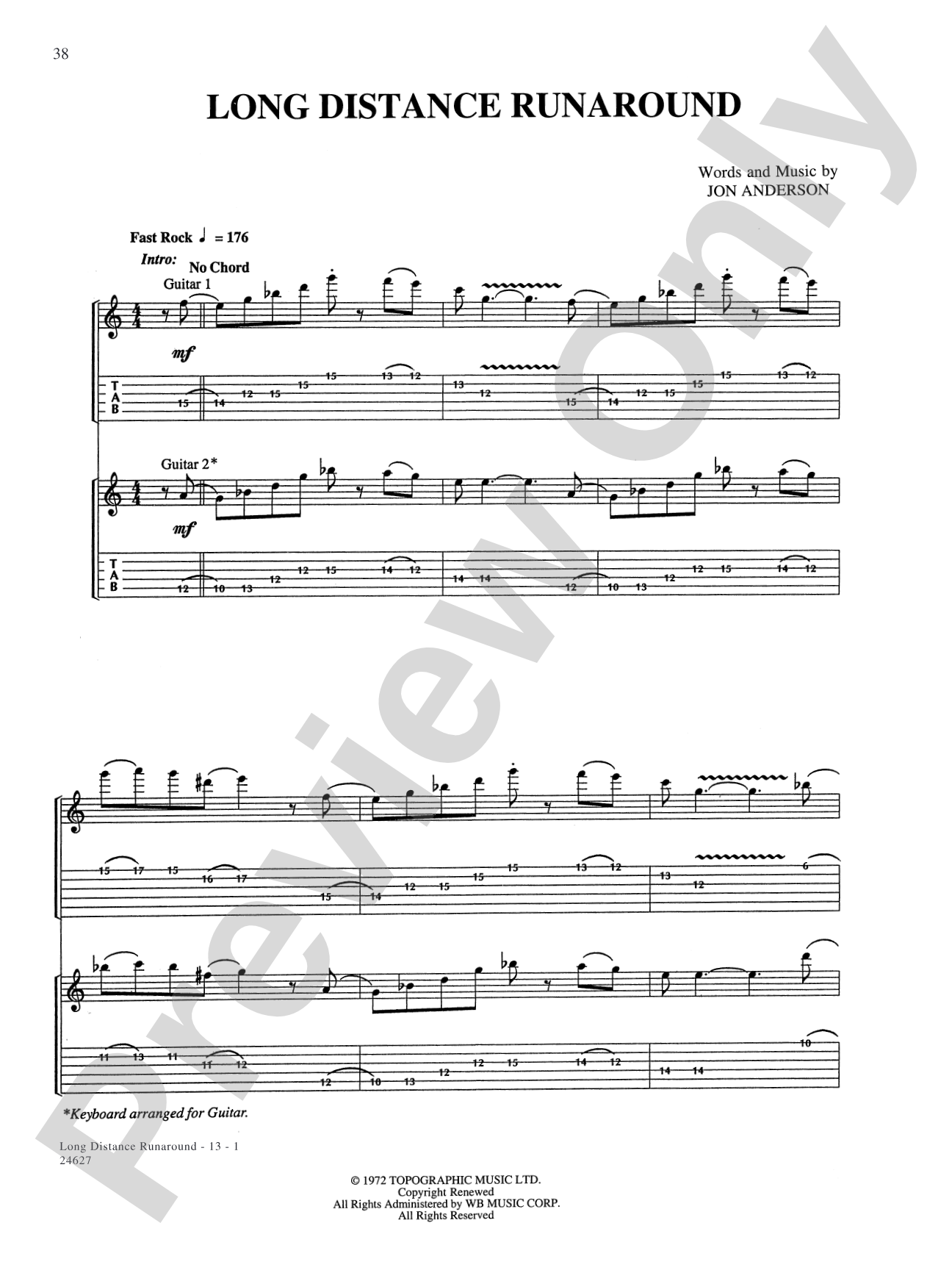
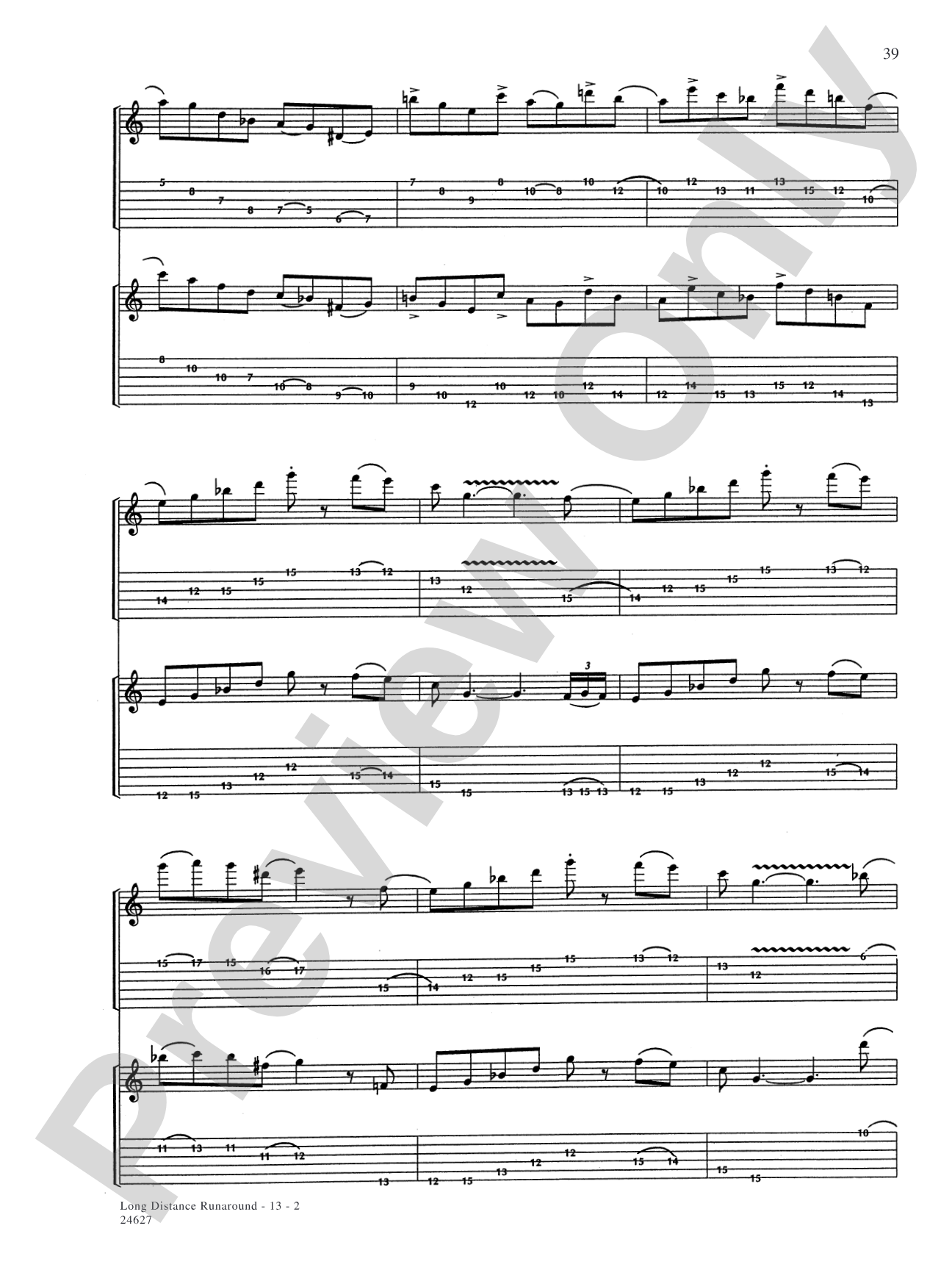
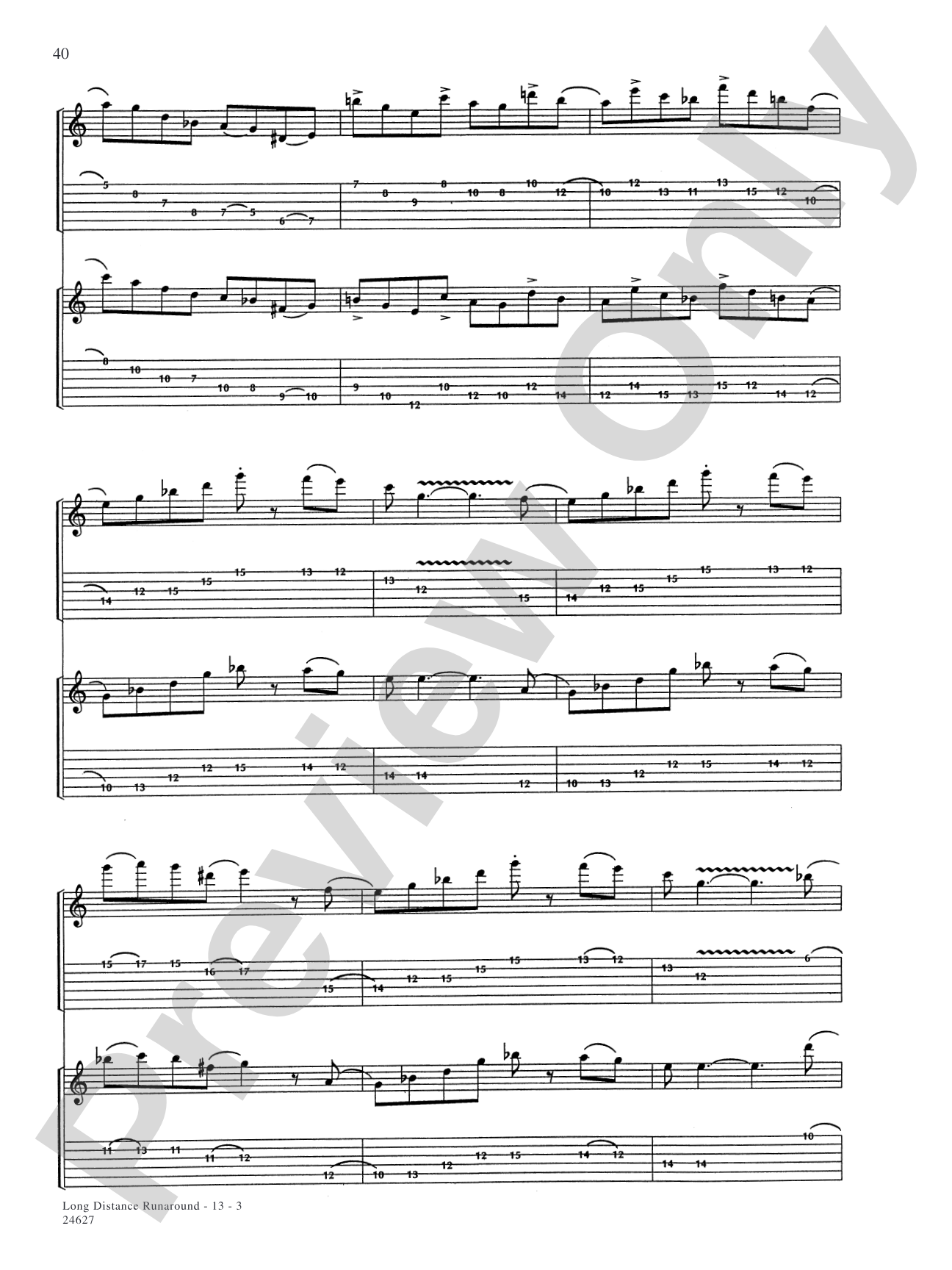

Long Distance Runaround: Authentic Guitar TAB
Yes
Item: 00-PSG-000010
$9.99
One moment…
Description
Since the group's formation in 1968, Yes has been an influential, progressive band that not only pioneered the use of synthesizers and sound effects in modern music, but also produced timeless symphonic-rock masterworks. This collection offers 11 classic songs from Yes in full Guitar TAB notation. Titles are: Clap * Hold On * I've Seen All Good People (a. Your Move b. All Good People) * Long Distance Runaround * Money * Montreux's Theme * Mood for a Day * Owner of a Lonely Heart * Roundabout * Tempus Fugit.


Long Distance Runaround: Authentic Guitar TAB isn't in MakeMusic Cloud just yet...but it could be. Let us know you'd like to see it, and you'll help shape what comes next. In the meantime, start a free trial and dive into thousands of interactive titles your students can play along with today.
Request This Title
Tell us you want it.
Start Your Free Trial
Explore everything that's ready to play right now.
Sample Audio
No sample audio found.
Sample Video
No sample videos found.
Additional Details
Series:
Guitar Anthology Series
Publisher:
Alfred Music
Page Count:
124
SKU:
00-PSG-000010
More about this title
About the Artist: Yes
Yes formed in 1968 and became one of progressive rock's most innovative ensembles, transforming the genre through ambitious compositions, virtuosic musicianship, and pioneering use of synthesizers and studio effects. The band's evolution across five decades established them as architects of symphonic rock, influencing generations of musicians who heard in their work a blueprint for technical complexity married to emotional depth.
Why we love this
This collection captures the essential Yes catalog in complete, accurate TAB notation, giving guitarists direct access to the intricate riffs and layered passages that defined progressive rock. The 11 selections span the band's most iconic work and offer a masterclass in how to construct memorable melodic lines within complex harmonic and rhythmic frameworks.
What to expect
These songs carry the expansive, exploratory spirit of progressive rock at its peak: passages shift between delicate fingerpicked sections and driving rhythmic grooves, melodies soar into unexpected registers, and the guitar weaves through dense arrangements as both anchor and featured voice. Playing through this collection feels like navigating intricate musical landscapes where precision, tone, and conviction all matter equally.
Who it's for
Intermediate to advanced guitarists interested in progressive rock repertoire and players seeking authentic transcriptions of Yes compositions for study or performance. This resource serves musicians who want to understand the technical and compositional approach behind one of rock's most influential bands.
How to get the most out of it
- Pay attention to the rhythmic precision required in pieces like Roundabout; these compositions demand tight internal time and awareness of where the downbeat lands after polyrhythmic passages.
- Use the TAB alongside standard notation to clarify finger positioning on pieces with extended range or rapid position shifts, particularly in passages spanning multiple octaves.
- Work through Owner of a Lonely Heart and Money to understand how Yes balanced accessibility with sophistication, learning how melody can carry a song even when harmonic movement is unconventional.
- Study the fingerstyle and hybrid picking approaches evident in tracks like Mood for a Day, where tone control and articulation distinction between notes become as important as accuracy.
How to use it
Guitarists preparing solo recitals can draw individual selections from this collection to showcase technical range and musicality. Program a Yes track alongside other progressive or art rock pieces to explore how the band's approach compares to their contemporaries, or use these transcriptions as reference material for a unit on 1970s rock composition and arrangement.
Skills your students will build
- Reading complex TAB notation with multiple voices and extended range
- Navigating time signature changes and polyrhythmic figures common to progressive compositions
- Developing finger independence and position shifting across the fretboard
- Interpreting fingerstyle and hybrid picking approaches from transcribed notation
- Understanding how melody functions within layered, harmonically adventurous arrangements