
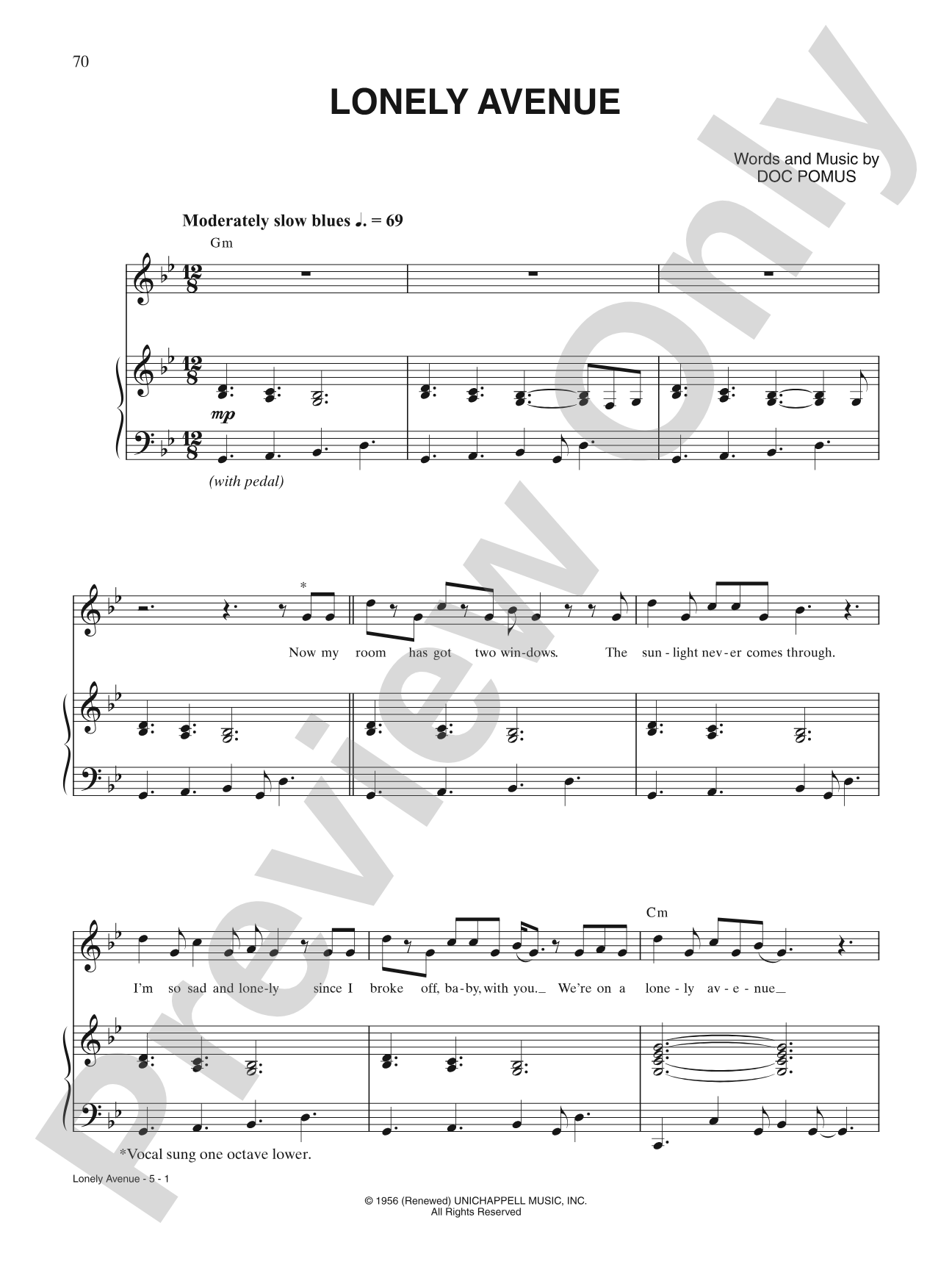

Lonely Avenue: Piano/Vocal/Chords
Diana Krall
Item: 00-PS-0015533
$4.99
One moment…
Description
This official piano sheet music companion folio to Diana Krall's 11th studio album will delight any pianist who loves jazz and blues. The melodic 1920s- and '30s-era songs are naturally enjoyable at the keys, as are the songs from later eras, like "Lonely Avenue" and "Wide River to Cross." Vocal melodies, complete lyrics, and chords are included. Titles: We Just Couldn't Say Goodbye * There Ain't No Sweet Man That's Worth the Salt of My Tears * Just Like a Butterfly That's Caught in the Rain * You KnowF--I Know Ev'rything's Made for Love * Glad Rag Doll * I'm a Little Mixed Up * Prairie Lullaby * Here Lies Love * I Used to Love You but It's All Over Now * Let It Rain * Lonely Avenue * Wide River to Cross * When the Curtain Comes Down.


Lonely Avenue: Piano/Vocal/Chords isn't in MakeMusic Cloud just yet...but it could be. Let us know you'd like to see it, and you'll help shape what comes next. In the meantime, start a free trial and dive into thousands of interactive titles your students can play along with today.
Request This Title
Tell us you want it.
Start Your Free Trial
Explore everything that's ready to play right now.
Sample Audio
No sample audio found.
Sample Video
No sample videos found.
Additional Details
Publisher:
Alfred Music
Page Count:
84
SKU:
00-PS-0015533
More about this title
About the Composer: Doc Pomus
Doc Pomus (1920-1991) was a legendary lyricist and composer who shaped American popular music across multiple decades. Though he wrote primarily as a lyricist for some of the greatest songwriters of his era, including Mort Shuman, his contributions to blues, rock and roll, and pop standards helped define the sound of mid-20th-century American song.
Pomus's gift was for crafting lyrics that captured authentic emotion and vernacular speech, whether writing for early rock and roll hits or sophisticated jazz standards. His work has been recorded by countless artists across genres, from Elvis Presley to contemporary jazz vocalists, making him one of the most recorded songwriters in American music history.
Why we love this
Diana Krall's album presents these songs as intimate explorations of jazz and blues standards, many of them written or popularized decades ago. This folio captures that sensibility beautifully, offering pianists a chance to inhabit the repertoire that shaped modern jazz singing and accompaniment. The mix of classic 1920s-30s material alongside later blues numbers creates natural variety for a recital or jazz session, and the inclusion of chords throughout makes it equally useful for singers seeking piano accompaniment or for guitarists wanting to understand the harmonic underpinnings.
What to expect
These songs breathe with the melancholy and resilience of blues tradition, tinged with the sophisticated harmonic language of the jazz era. Whether it's a 1920s lament or a contemporary blues reflection, the music carries an emotional directness paired with unexpected harmonic turns; you feel the ache in the melody while your fingers navigate chord changes that make you listen more closely.
Who it's for
This folio appeals to jazz pianists and vocalists who want to explore the songbook that inspired Diana Krall, as well as guitarists and music theater accompanists seeking quality arrangements of classic blues and jazz standards. It's also valuable for any pianist who wants to deepen their understanding of jazz accompaniment through direct engagement with these canonical songs.
How to get the most out of it
- Study the chord symbols as voicing guides, not restrictions; these songs reward personalized reharmonization and improvisation that reflects your own musical voice.
- Pay attention to song tempos in relation to the original recordings; many of these standards benefit from a slightly slower, more conversational pace than straight-ahead stride piano would suggest.
- Balance melodic clarity with harmonic sophistication in your left hand; let the bass lines sing rather than simply filling in harmony.
- If performing with a vocalist, use the chord chart to guide flexible accompaniment shapes that support rather than constrain the lyrical phrasing.
How to use it
These pieces work beautifully in a jazz recital or in mixed programs where you want to shift from classical repertoire into the American songbook. Pair them with other jazz standards or blues for a thematic set, or use individual songs as encores that showcase your connection to the vocal-driven piano tradition. They're equally at home in a cabaret-style performance or as a foundation for vocalist-accompanist collaboration.
Skills your students will build
- Reading and interpreting chord symbols in jazz contexts
- Accompanying vocalists with flexible harmonic shapes and tasteful comping
- Understanding the harmonic language of 1920s-30s standards versus later blues compositions
- Balancing melodic clarity with jazz-informed accompaniment textures
- Improvising within the harmonic framework of standards