Loco Motion: F Horn Sheet Music Preview

Loco Motion: F Horn

By Les Taylor

Grade: 1

Item: 98-PC-DB1095_H1

Digital Download
$7.00
Description
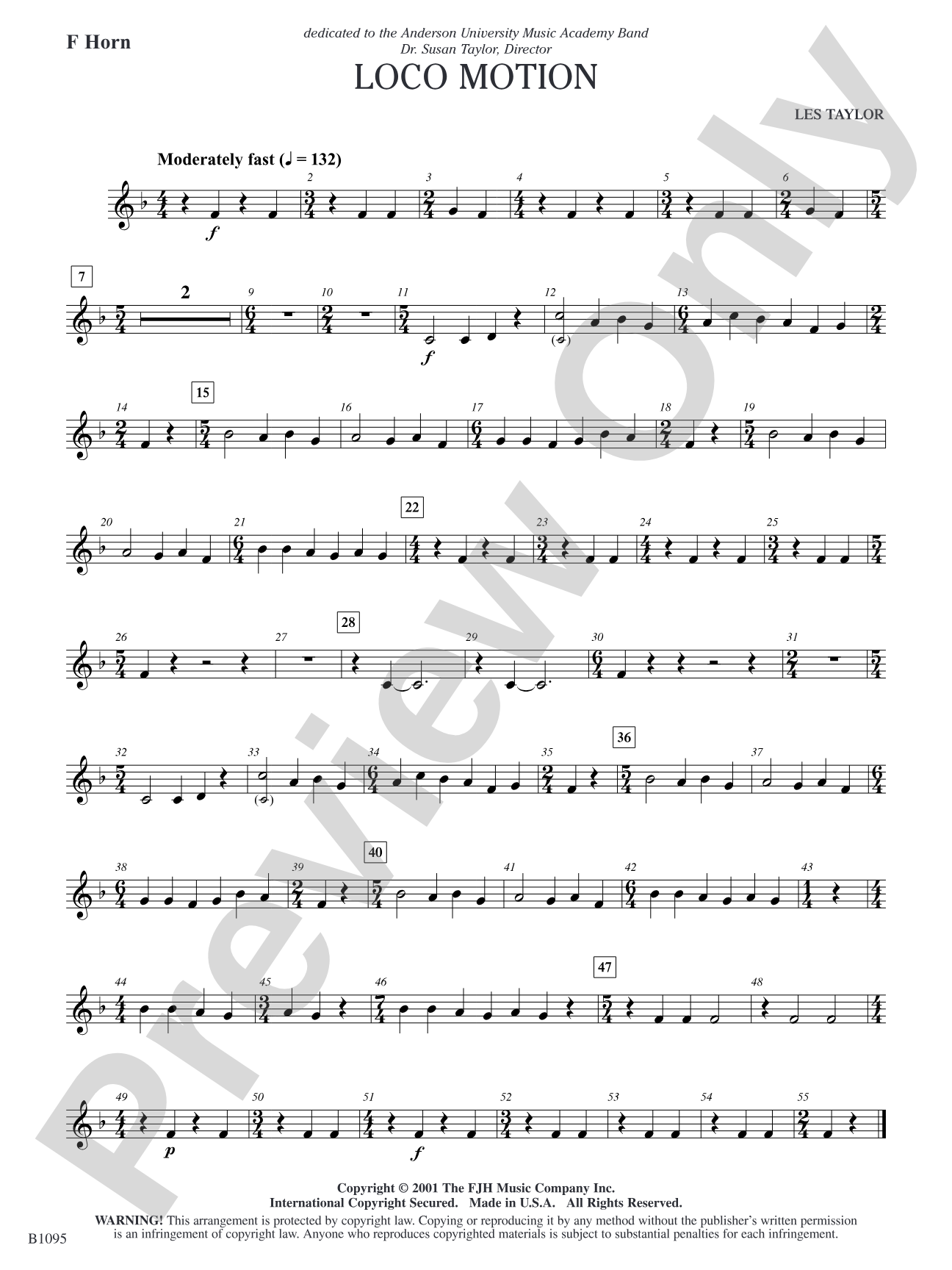
Finally... a beginning band piece that introduces students to meter changes. The quarter note is constant throughout, making this a great teaching tool. With simple rhythms and ranges very compatible with first year reading skills, your group will have lots of fun with this one. (1:45)

Loco Motion: F Horn isn't in MakeMusic Cloud just yet...but it could be. Let us know you'd like to see it, and you'll help shape what comes next. In the meantime, start a free trial and dive into thousands of interactive titles your students can play along with today.

Sample Audio
0:00
0:00
Sample Video
Additional Details
Series: FJH Beginning Band
Publisher: The FJH Music Company, Inc.
SKU: 98-PC-DB1095_H1

More about this title

Why we love this

Meter changes intimidate many first-year ensembles, but this piece builds that skill without overwhelming students. The constant quarter-note pulse makes the transition between meters feel natural rather than jarring, and the novelty arrangement keeps energy high while you're teaching something genuinely useful.

What to expect

Playful and purposeful. The novelty setting keeps things light and entertaining while the underlying meter work feels like a genuine compositional challenge. Students perform something fun that also stretches their musicianship.

Who it's for

First-year band students ready to move past simple 4/4. This works for groups that have solid foundational reading but need structured exposure to metric variety without jumping into complex syncopation.

How to get the most out of it

  • Tap the quarter note pulse with your foot during rehearsals so students internalize the constant beat across meter shifts. This removes the anxiety of counting differently.
  • Keep the tempo steady but conversational; at 1:45, there's room to breathe and let the rhythmic transitions land clearly without rushing through them.
  • Balance the harmonic motion in the lower voices so the rhythmic changes feel supported. Young players often rush meters when they can't hear where the harmony is grounding them.

How to use it

Slot this into a fall or early winter concert once your group has locked down basic ensemble skills. It pairs well after a straightforward Grade 1 march and before moving into more rhythmically dense literature. The short length and strong ending make it an effective opener or closer.

Skills your students will build

  • Reading and playing meter changes with a constant quarter-note pulse
  • Maintaining ensemble rhythm across metric shifts
  • First-year range management for all band instruments
  • Recognizing and executing simple rhythmic patterns under new metric frameworks

You May Also Like