

Lo Yissa Goy: SATB Choral Octavo
Hebrew Folk Song / arr. Andy Beck
Item: 00-PO-0000395
$1.75
Minimum order quantity: 20 copies
Pickup currently not available
Related Items
Lo Yissa Goy: SoundTrax Digital Audio Download |
$22.95
|
View | |
Lo Yissa Goy: 3-Part / SAB Choral Octavo |
$1.75
|
View | |
Lo Yissa Goy: 2-Part Choral Octavo |
$1.75
|
View | |
Lo Yissa Goy: Choral SoundPax |
$30.00
|
View | |
Lo Yissa Goy: SATB Choral Octavo |
$1.75
|
View | |
Lo Yissa Goy: 3-Part / SAB Choral Octavo |
$1.75
|
View | |
Lo Yissa Goy: 2-Part Choral Octavo |
$1.75
|
View | |
Lo Yissa Goy: Choral Octavo SoundTrax CD |
$22.95
|
View | |
Lo Yissa Goy: Choral SoundPax |
$30.00
|
View |
Description
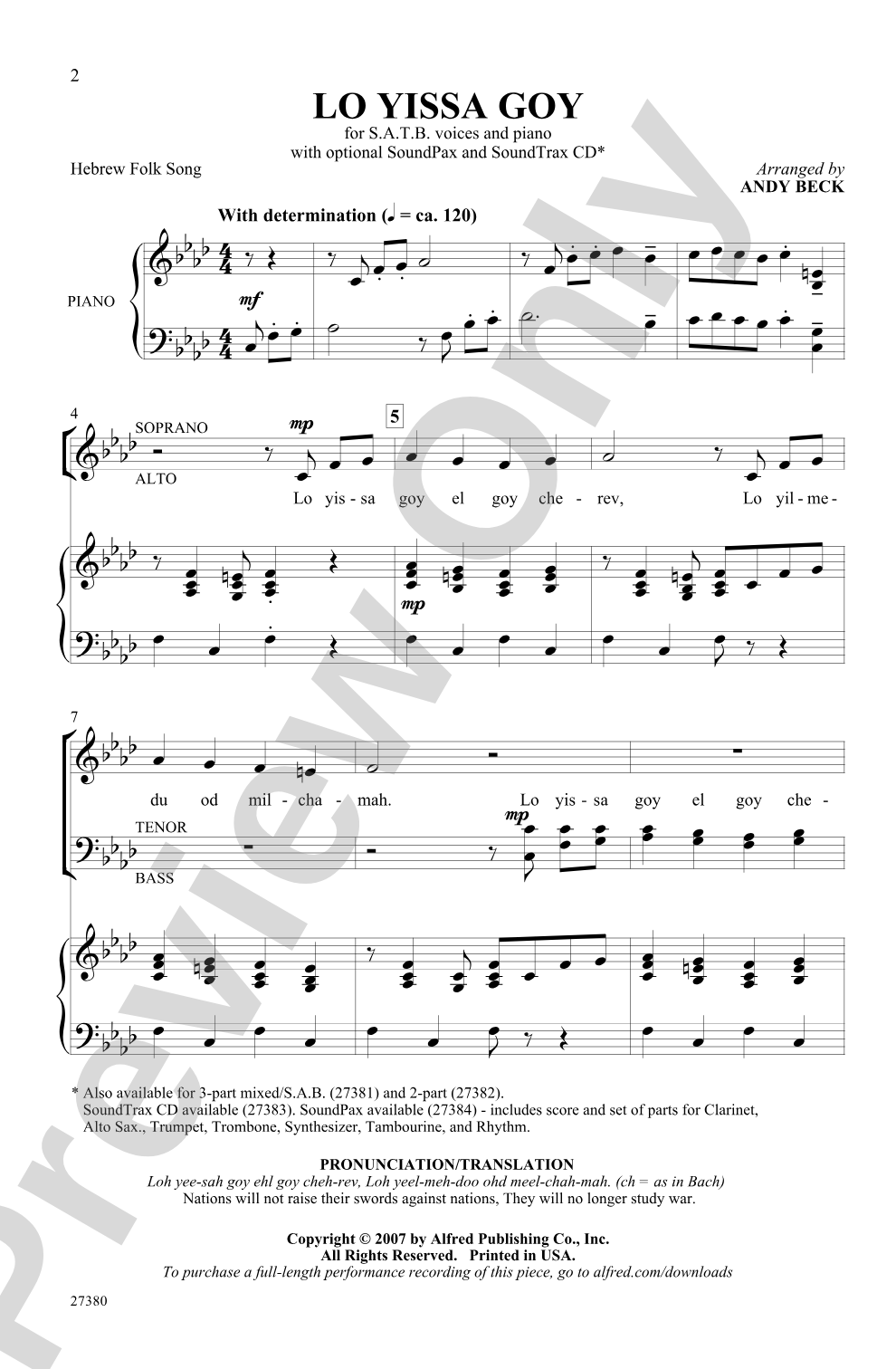
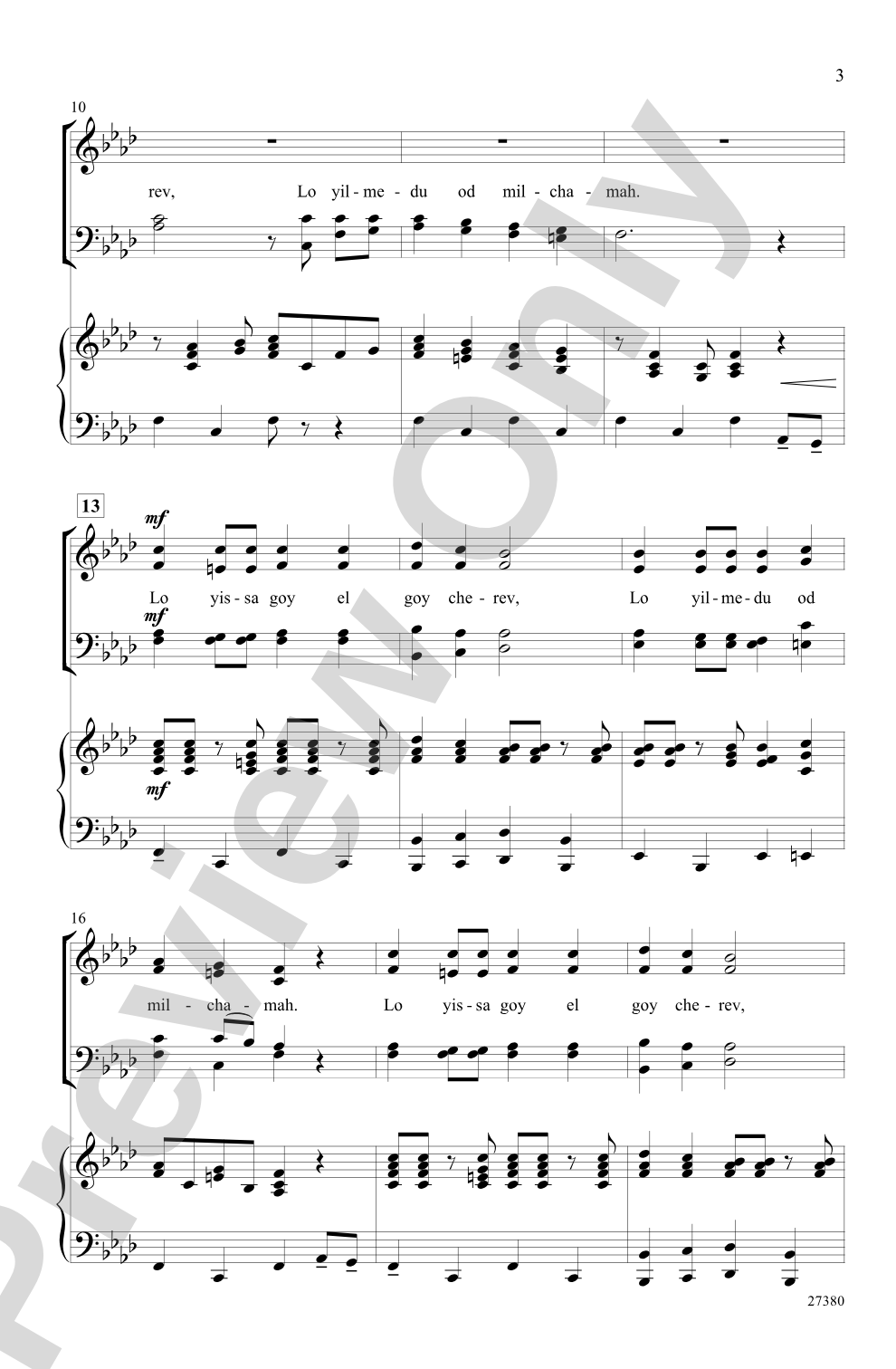
The "Klezmer" music of this traditional Hebrew folk song is vibrant and tuneful, while the text is an impassioned cry for peace. A canonic counterline animates the second verse, and the choral writing is noticeably solid throughout. Two simple Hebrew phrases and an original English stanza deliver a determined message.


Lo Yissa Goy: SATB Choral Octavo isn't in MakeMusic Cloud just yet...but it could be. Let us know you'd like to see it, and you'll help shape what comes next. In the meantime, start a free trial and dive into thousands of interactive titles your students can play along with today.
Request This Title
Tell us you want it.
Start Your Free Trial
Explore everything that's ready to play right now.
Sample Audio
1
Audio File
--:--
0:00
0:00
Sample Video
No sample videos found.
Additional Details
Series:
Alfred Choral Designs
Publisher:
Alfred Music
Page Count:
8
SKU:
00-PO-0000395
More about this title
About the Arranger: Andy Beck

Andy Beck directs choral publications at Alfred Music and has established himself as one of the most performed contemporary choral arrangers in the world, with over 450 works in print and a strong global presence through YouTube and concert performances. His compositions span sacred and secular repertoire, children's musicals, and vocal instructional resources that have shaped how singers develop technique and sight-reading skills.
Beyond the page, Beck is an active guest conductor, clinician, and adjudicator working with all-state and honor choirs across the United States and internationally. A trained tenor with degrees from Ithaca College and Northwest Missouri State University, he brings both pedagogical rigor and performance experience to every project he undertakes. His work as a studio vocalist since 1992 and his involvement with the North Carolina Master Chorale Chamber Choir reinforce his commitment to choral artistry and music education at every level.
Why we love this
Beck's arrangement captures the rhythmic vitality and melodic character of klezmer music while grounding it in text that carries real weight. The canonic counterline in the second verse creates textural interest without overwhelming singers, and the solid four-part writing ensures that every voice part matters and stays engaged throughout.
What to expect
The vibrant, dance-like energy of klezmer music infuses every phrase, creating a sense of forward momentum and joy even as the lyrics advocate for peace. The canonic writing adds architectural sophistication without dimming the folk character; instead, it deepens the emotional stakes of the message.
Who it's for
This octavo works well for intermediate to advanced high school and college choirs seeking meaningful multicultural repertoire that connects to Jewish heritage while remaining accessible. Directors programming festival or contest performances will find a piece that demonstrates solid musicianship, creative arranging, and text that speaks to contemporary values.
How to get the most out of it
- Emphasize the rhythmic drive of the klezmer idiom in the opening section. These folk melodies thrive when the ensemble commits to a light, bouncy articulation rather than a smooth, legato approach.
- When the canon enters in verse two, bring out the independence of each voice line gradually so listeners can hear both the original melody and the counterline clearly.
- Balance the Hebrew text and English stanza so the message of peace resonates equally in both languages. The shift between them offers a chance to show the music's bicultural reach without sacrificing cohesion.
How to use it
Use this piece to open or close a concert celebrating multicultural voices and Jewish traditions. It pairs effectively with other folk-based arrangements or world music selections and offers an engaging bridge between educational programming and community engagement, particularly for concerts addressing peace, justice, or interfaith themes.
Skills your students will build
- Singing in Hebrew and English with accurate pronunciation and diction
- Tracking independent voice lines in canonic writing without losing ensemble unity
- Maintaining rhythmic precision in syncopated, dance-like meter
- Balancing folk idiom characteristics with four-part choral discipline
- Building dynamic control and phrasing across text that spans two languages