

Lo Yissa Goy: 2-Part Choral Octavo
Hebrew Folk Song / arr. Andy Beck
Item: 00-PO-0000397
$1.75
Minimum order quantity: 20 copies
Pickup currently not available
Related Items
Lo Yissa Goy: SoundTrax Digital Audio Download |
$22.95
|
View | |
Lo Yissa Goy: SATB Choral Octavo |
$1.75
|
View | |
Lo Yissa Goy: 3-Part / SAB Choral Octavo |
$1.75
|
View | |
Lo Yissa Goy: Choral SoundPax |
$30.00
|
View | |
Lo Yissa Goy: SATB Choral Octavo |
$1.75
|
View | |
Lo Yissa Goy: 3-Part / SAB Choral Octavo |
$1.75
|
View | |
Lo Yissa Goy: 2-Part Choral Octavo |
$1.75
|
View | |
Lo Yissa Goy: Choral Octavo SoundTrax CD |
$22.95
|
View | |
Lo Yissa Goy: Choral SoundPax |
$30.00
|
View |
Description
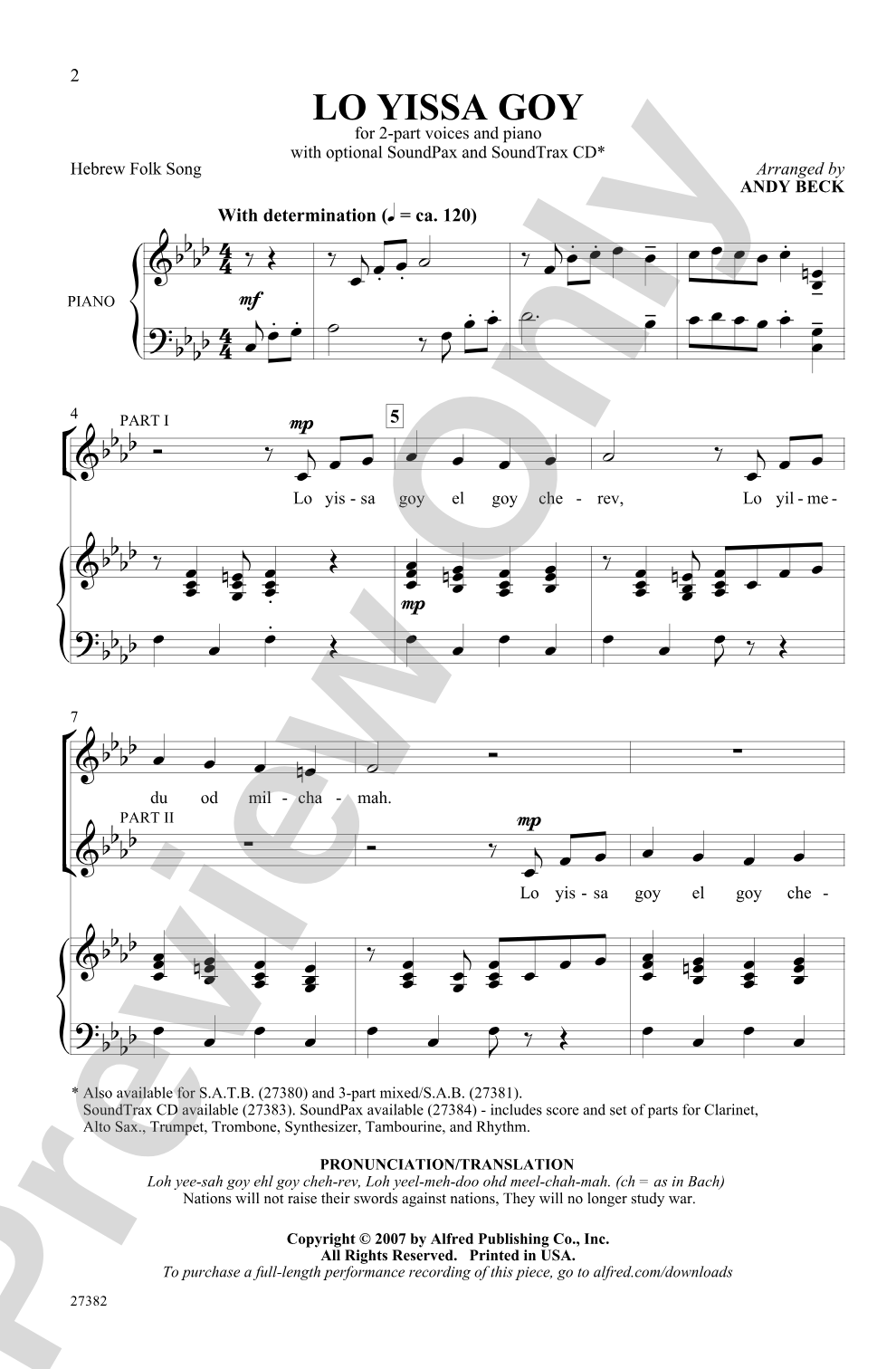
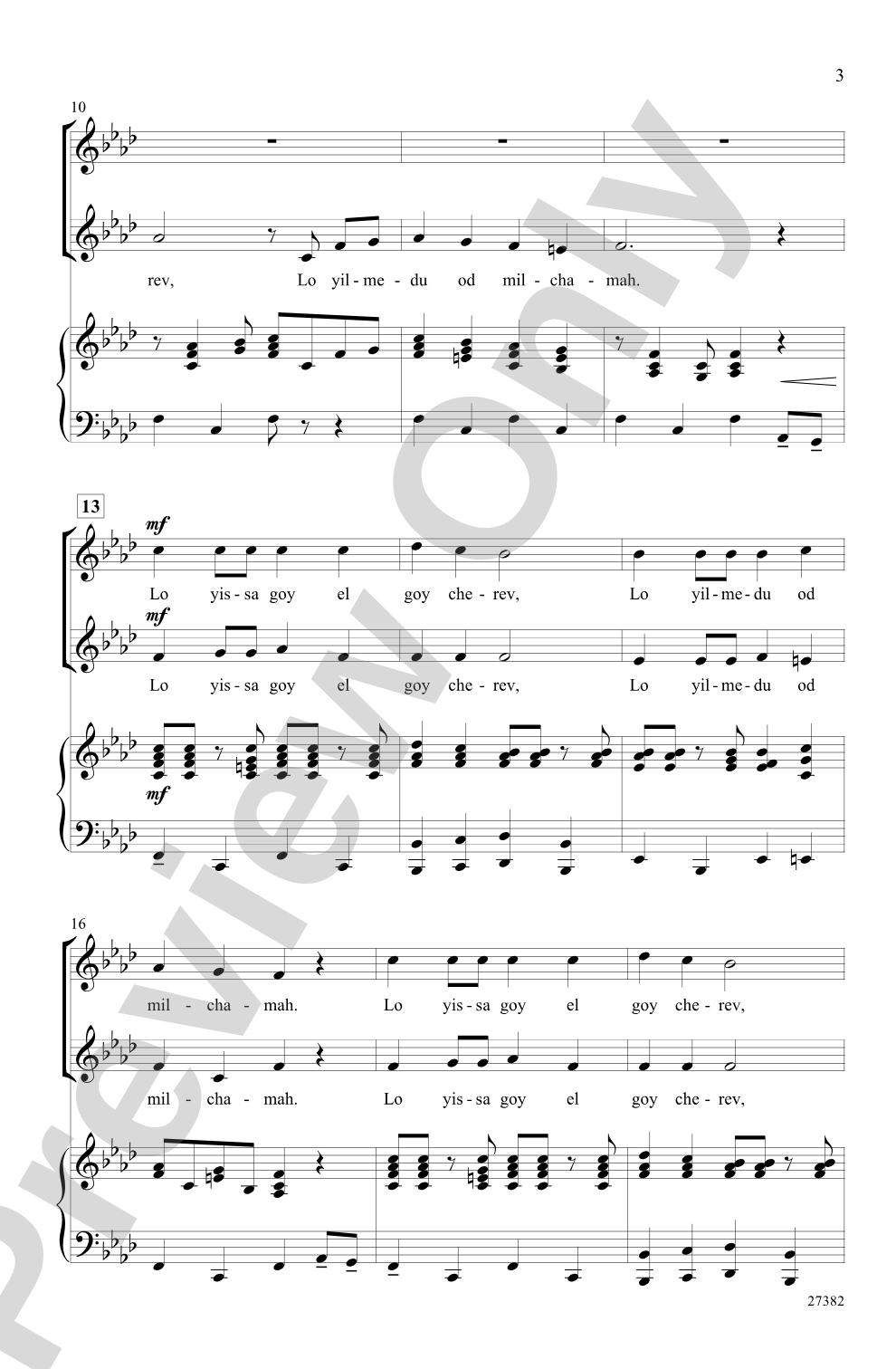
The "Klezmer" music of this traditional Hebrew folk song is vibrant and tuneful, while the text is an impassioned cry for peace. A canonic counterline animates the second verse, and the choral writing is noticeably solid throughout. Two simple Hebrew phrases and an original English stanza deliver a determined message.


Lo Yissa Goy: 2-Part Choral Octavo isn't in MakeMusic Cloud just yet...but it could be. Let us know you'd like to see it, and you'll help shape what comes next. In the meantime, start a free trial and dive into thousands of interactive titles your students can play along with today.
Request This Title
Tell us you want it.
Start Your Free Trial
Explore everything that's ready to play right now.
Sample Audio
1
Audio File
--:--
0:00
0:00
Sample Video
No sample videos found.
Additional Details
Series:
Alfred Choral Designs
Publisher:
Alfred Music
Page Count:
8
SKU:
00-PO-0000397
More about this title
About the Arranger: Andy Beck

Andy Beck leads choral publications at Alfred Music, where he has cultivated a catalog of over 450 choral works, vocal resources, and children's musicals. His reach extends far beyond print; performances of his arrangements appear regularly on YouTube, evidence of how widely his music circulates among singers globally. Beck's expertise spans composition, arrangement, guest conducting, and music education advocacy, supported by degrees from Ithaca College and Northwest Missouri State University.
Beyond his editorial role, Beck remains an active musician and educator. He serves as adjudicator and clinician for music programs across the United States and beyond, has conducted honor choirs and all-state ensembles throughout the Southeast, and performs as a tenor with the North Carolina Master Chorale Chamber Choir. His pedagogical vision also appears in print through foundational texts like Sing at First Sight and Vocalize!, which reflect his commitment to choral literacy and artistry.
Why we love this
Beck's arrangement honors the infectious rhythmic character of klezmer music while grounding it in meaningful text about peace. The canonic writing in the second verse provides musical interest without overcomplicating the voicing, making it accessible for young or developing ensembles while still offering substance for more experienced choirs.
What to expect
Spirited and purposeful. The klezmer idiom brings brightness and rhythmic drive, while the text transforms this joy into something declarative and hopeful. The canonic texture adds sophistication without sacrificing singability, creating a piece that feels both celebratory and earnest.
Who it's for
Two-part choirs at the middle school, high school, or community level seeking accessible multicultural repertoire with substance. The arrangement works equally well for concert settings, festival participation, or educational programming focused on world music and peace advocacy.
How to get the most out of it
- Emphasize the rhythmic vitality of the folk melody; klezmer music thrives on energy and forward motion, so keep the pulse clear and avoid dragging the tempo.
- Balance the canonic section so both parts sing with equal presence; this counterline should feel like a conversation, not a competing melodic line.
- Shape the Hebrew and English phrases with intention, letting the determined text inform your dynamics and articulation choices rather than treating them as neutral vocal exercises.
- Pair singers in the canon deliberately so that familiar voices work together; this builds confidence when learning the overlapping rhythms.
How to use it
Program this alongside other folk or world music selections to build a thematic concert around cultural traditions and messages of peace. Its eight pages and moderate performance demands make it a strong choice for educational concerts, festival submissions, or as a contrast piece in a program that balances lighter and more substantial works.
Skills your students will build
- Reading and performing Hebrew text with proper inflection
- Singing canonic (overlapping) melodies while maintaining independent part integrity
- Understanding klezmer rhythmic characteristics and style conventions
- Balancing folk melody interpretation with formal choral writing