
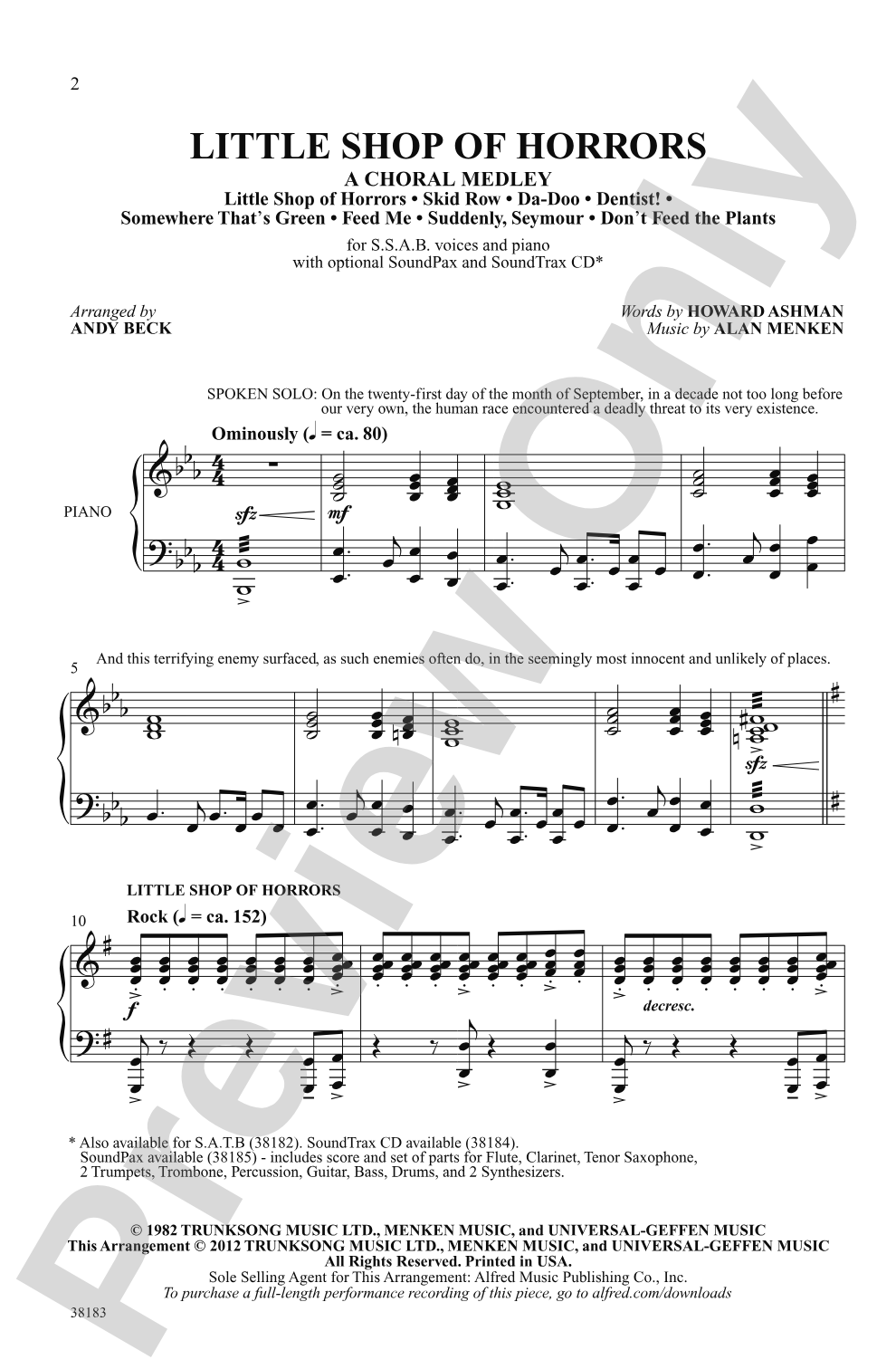
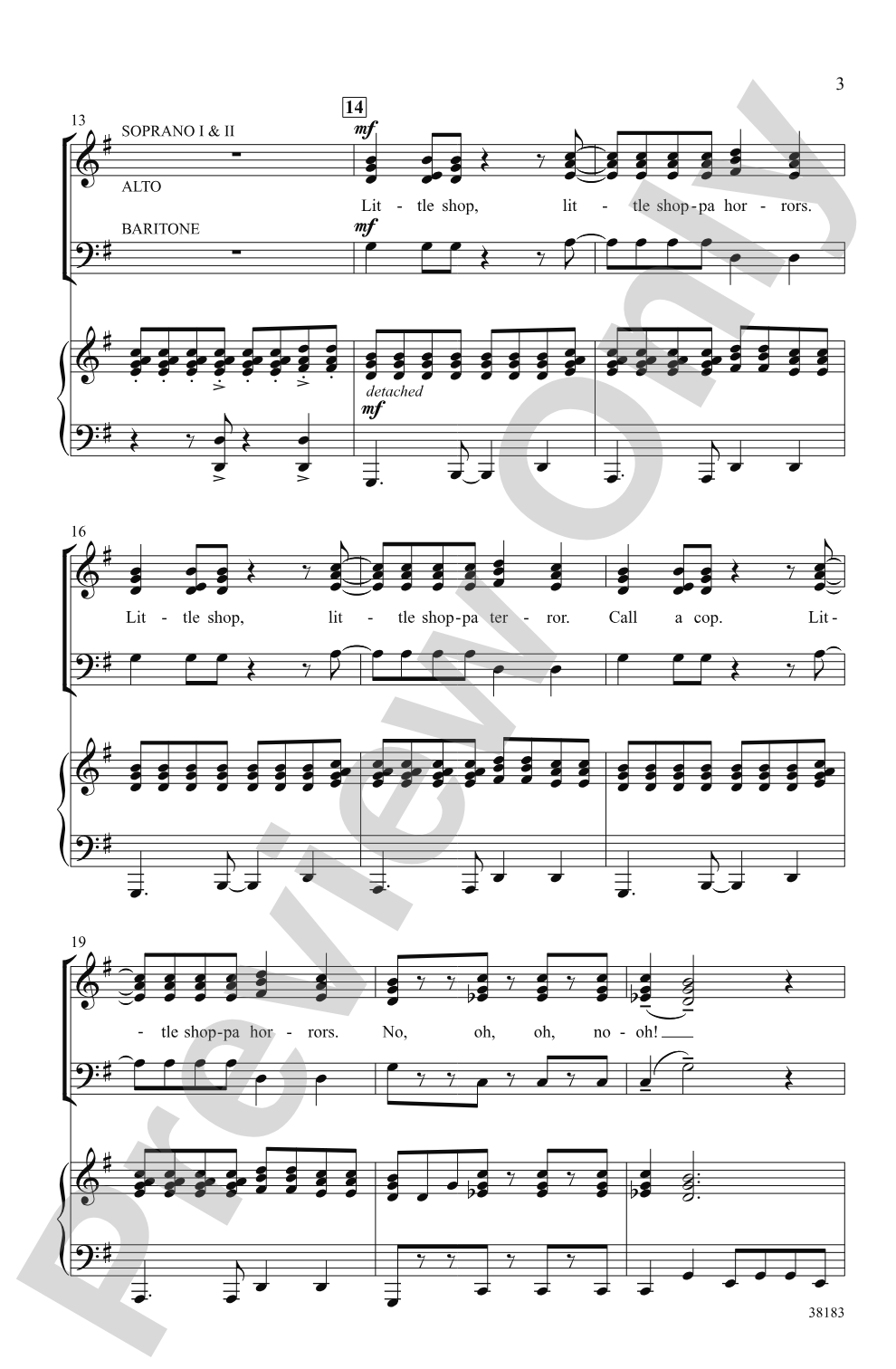
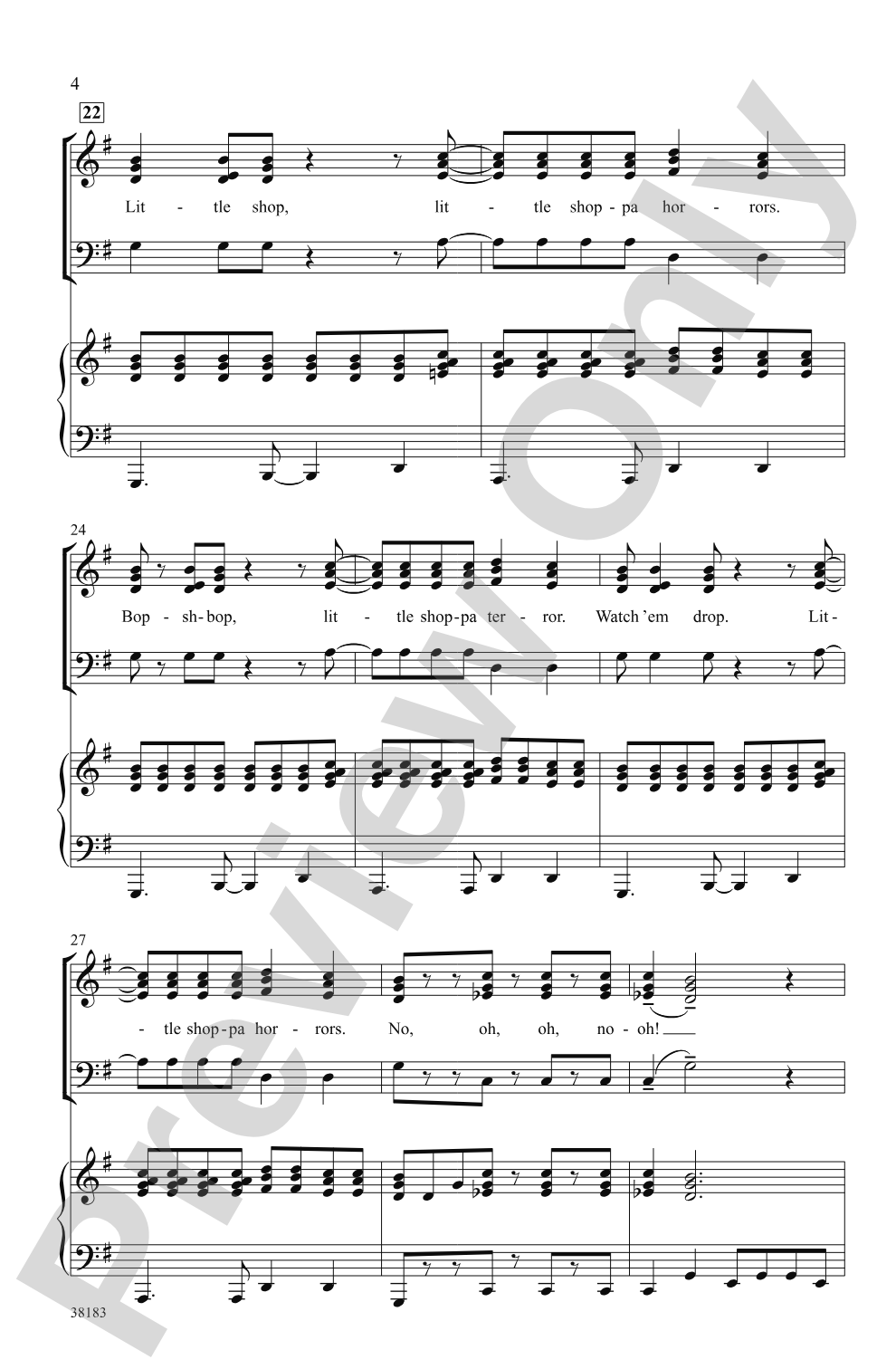
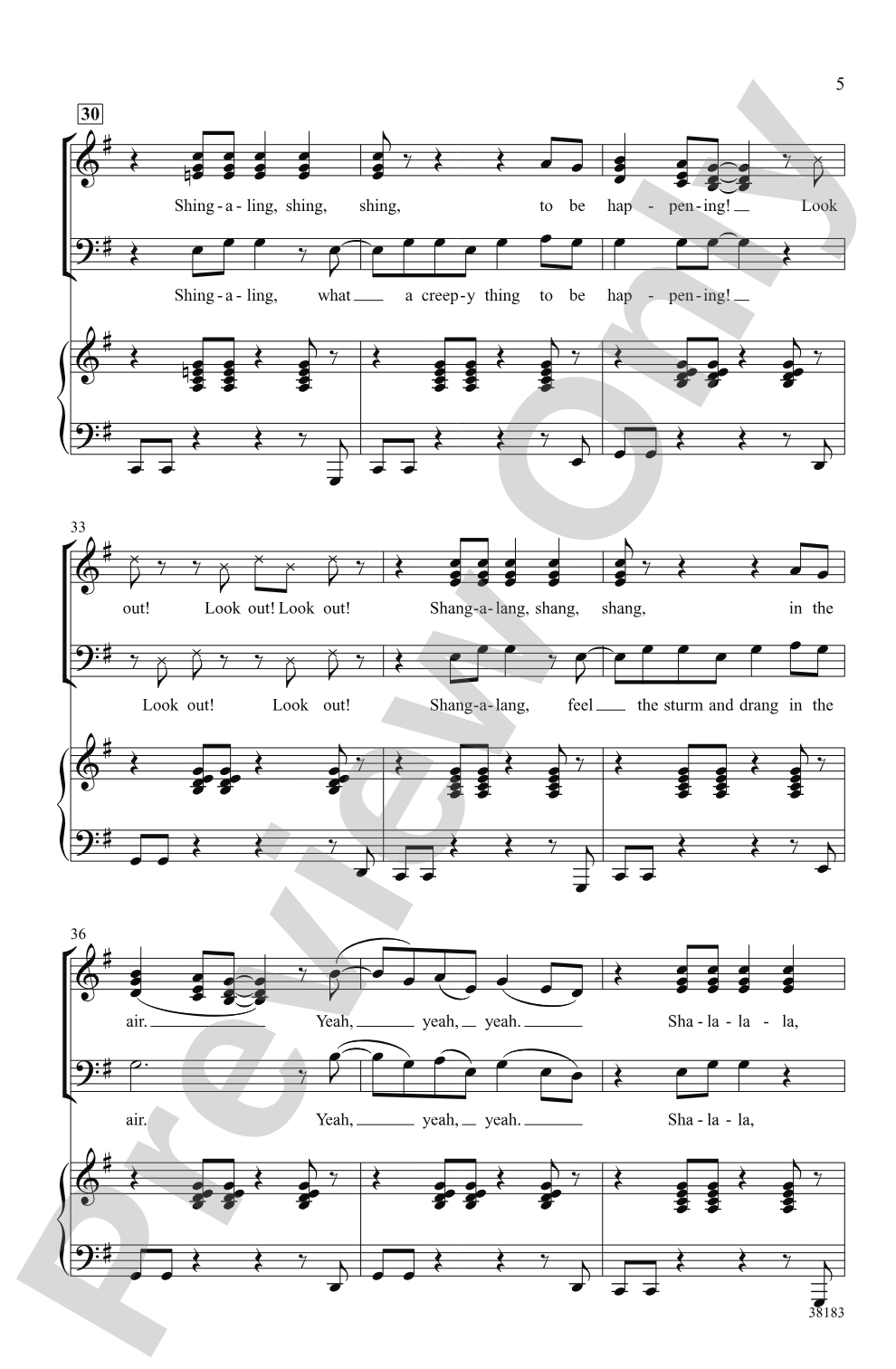
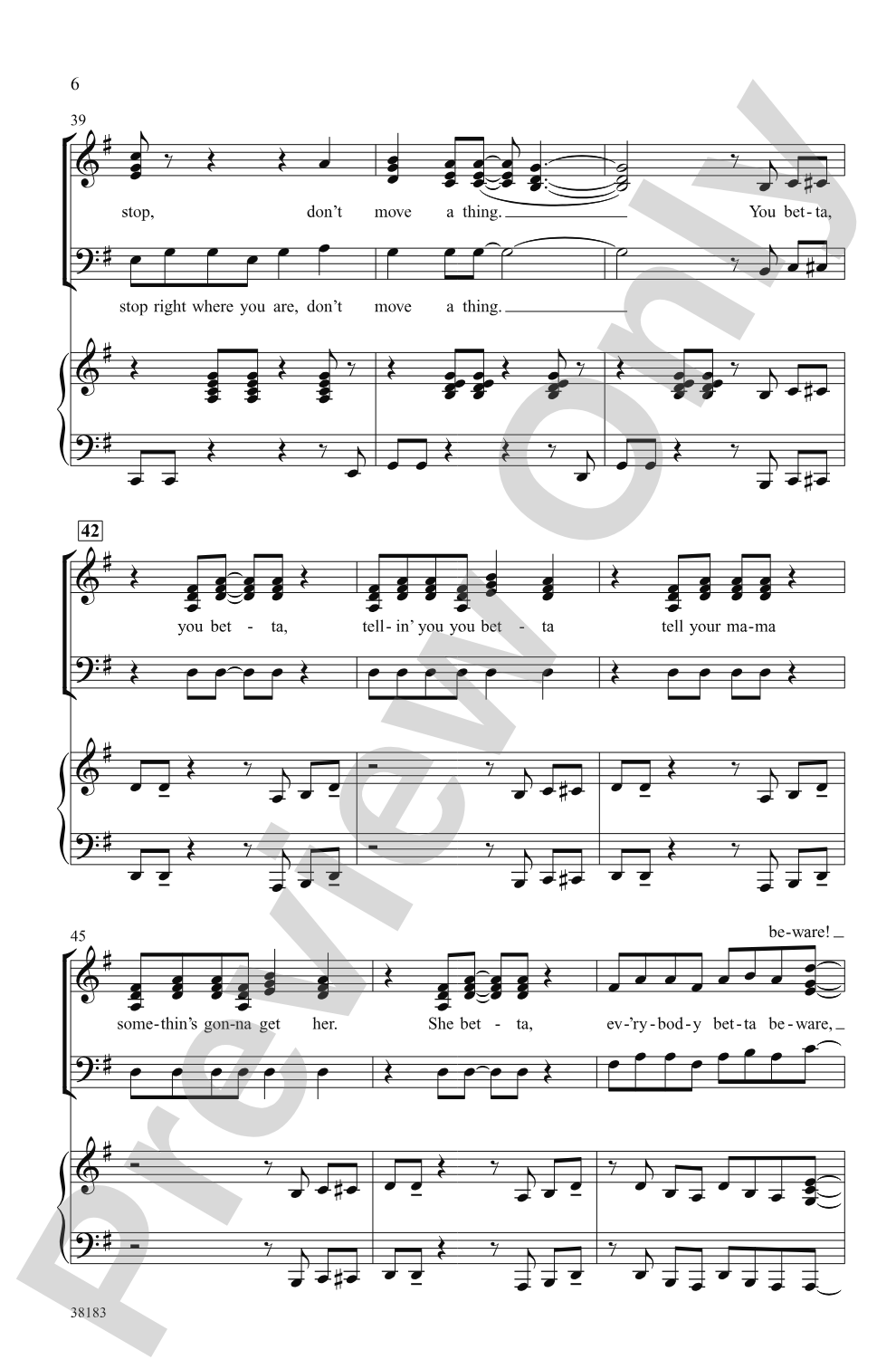
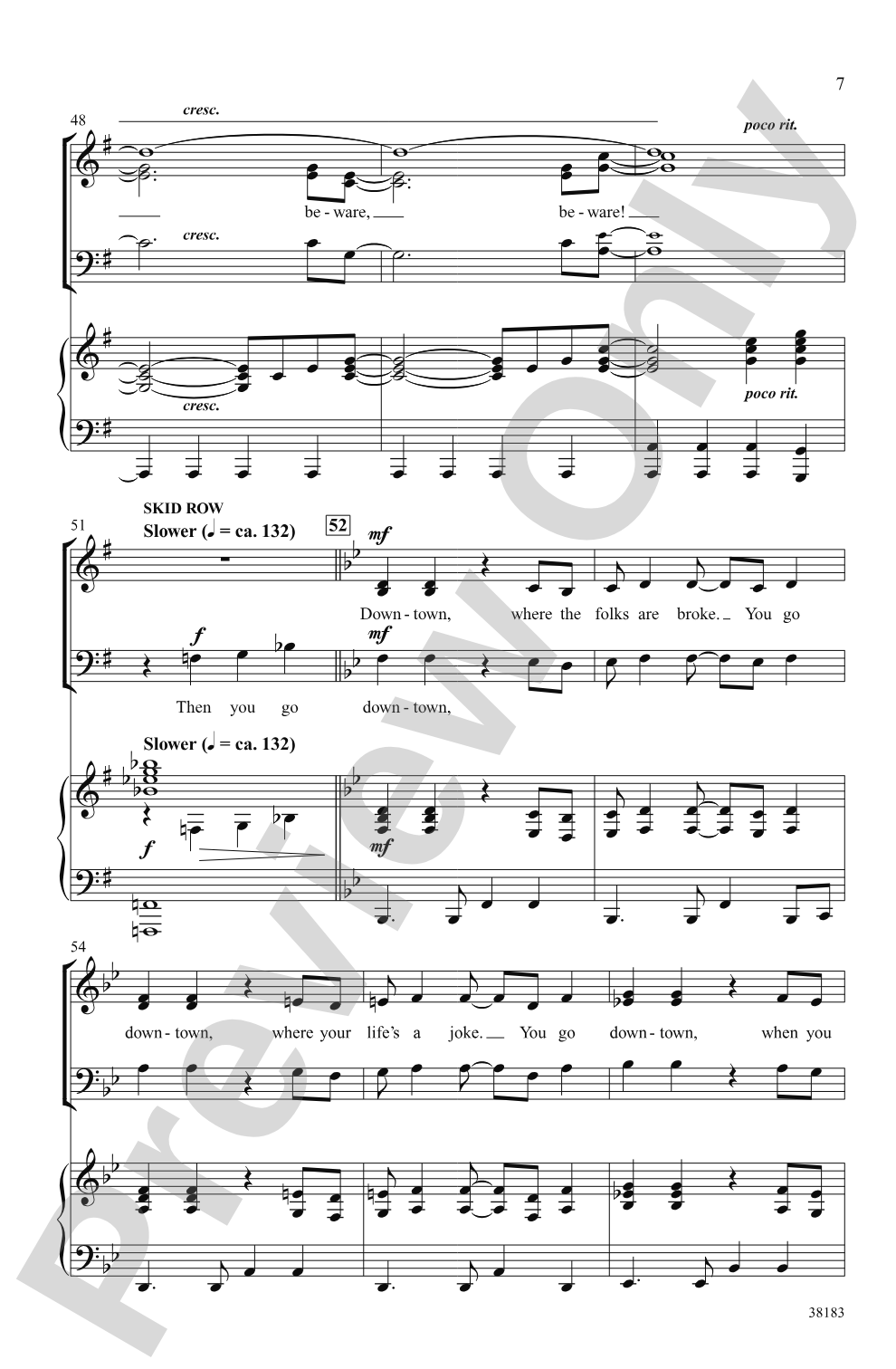
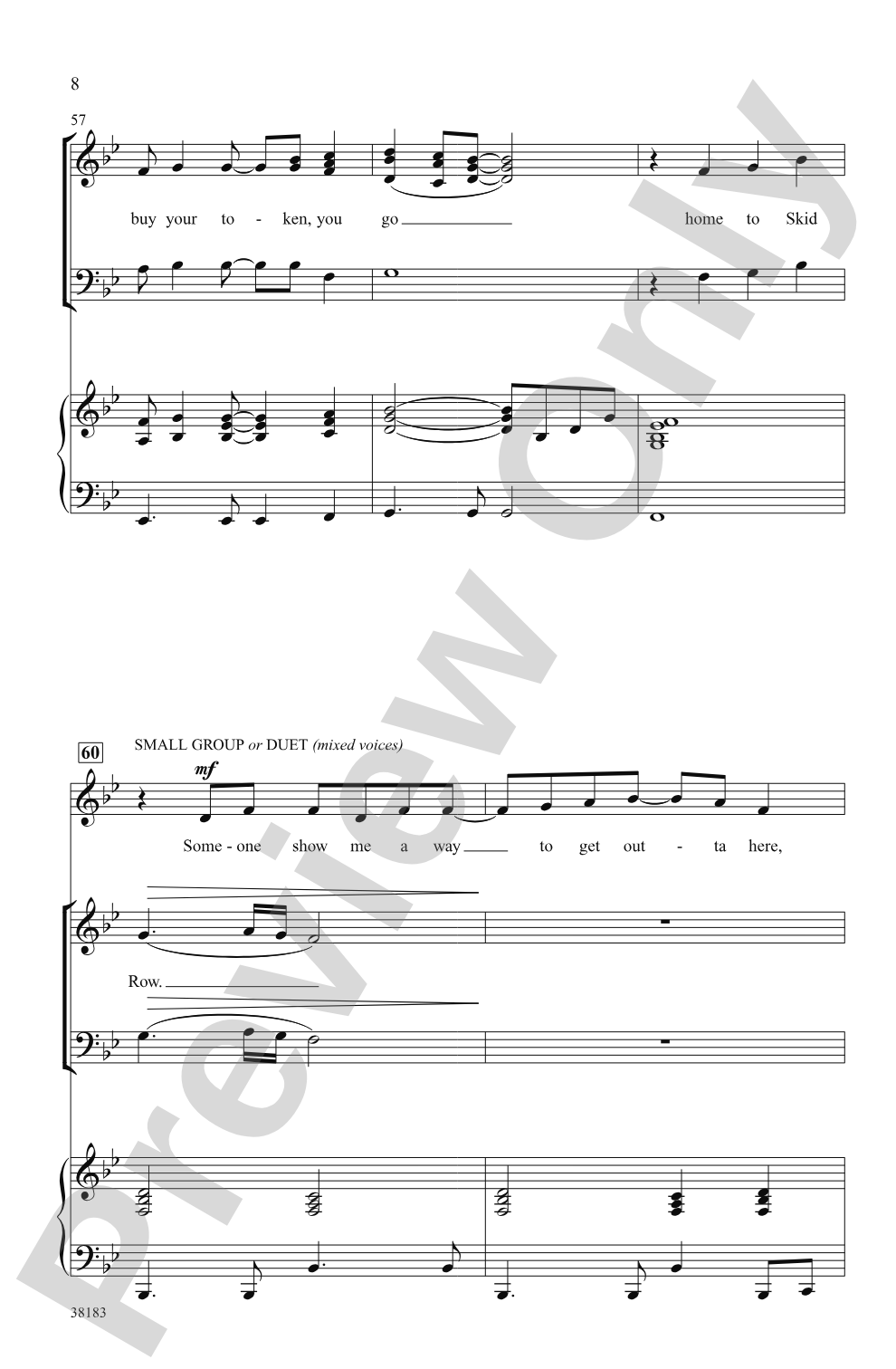
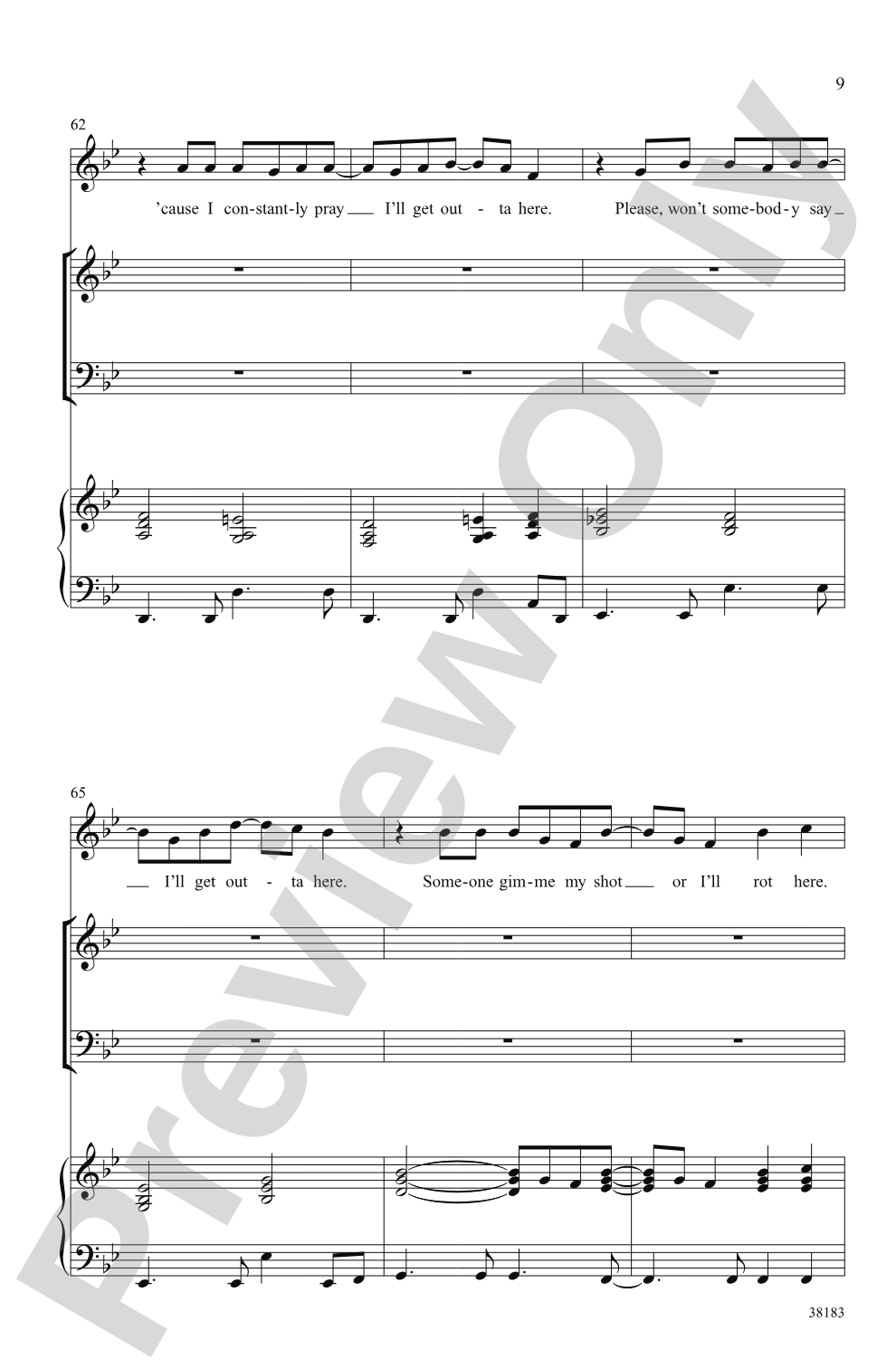
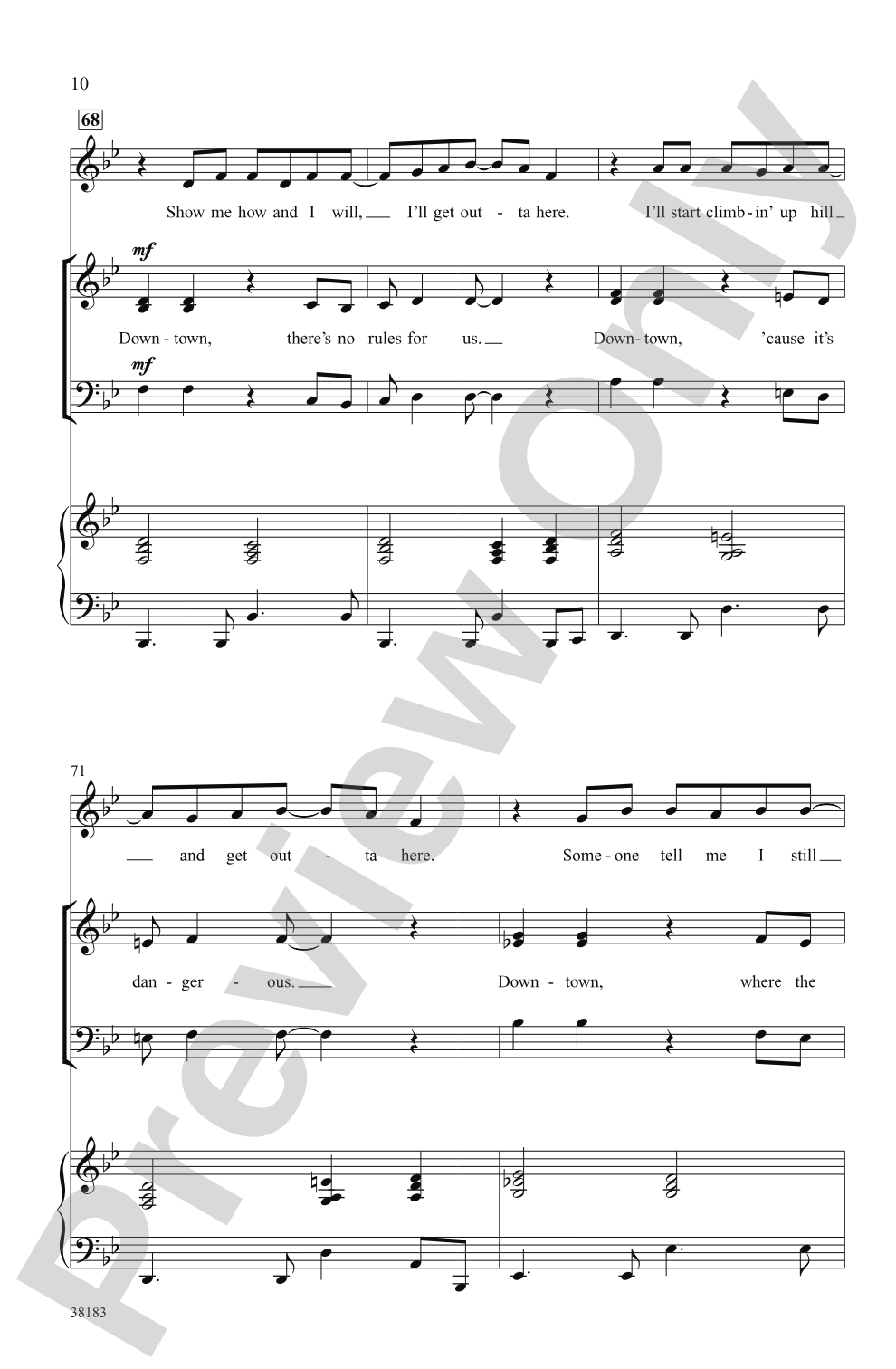

Little Shop of Horrors: A Choral Medley: SAB Choral Octavo
Featuring: Little Shop of Horrors / Skid Row / Dentist! / Somewhere That’s Green / Feed Me / Suddenly, Seymour / Don’t Feed the Plants
Words by Howard Ashman, music by Alan Menken / arr. Andy Beck
Item: 00-PO-0001433

$4.95
Minimum order quantity: 20 copies
One moment…
Related Items
Little Shop of Horrors: A Choral Medley: SoundTrax Digital Audio Download |
$49.99
|
View | |
Little Shop of Horrors: A Choral Medley: SATB Choral Octavo |
$4.95
|
View | |
Little Shop of Horrors: A Choral Medley: Choral SoundPax |
$55.00
|
View | |
Little Shop of Horrors: A Choral Medley: SATB Choral Octavo |
$4.95
|
View | |
Little Shop of Horrors: A Choral Medley: SAB Choral Octavo |
$4.95
|
View | |
Little Shop of Horrors: A Choral Medley: Choral Octavo SoundTrax CD |
$49.99
|
View | |
Little Shop of Horrors: A Choral Medley: Choral SoundPax |
$55.00
|
View |
Description
The score of this cult classic rock musical boasts a bit of rock 'n' roll, a little doo-wop, and even some early Motown sounds. Our 9-minute medley includes all of the memorable favorites as sung by Seymour, Audrey, the Dentist, and that notorious bloodthirsty plant.


Don't just read it, hear it, play along with it, and watch your students grow with it. In MakeMusic Cloud, Little Shop of Horrors: A Choral Medley: SAB Choral Octavo comes alive with professional accompaniment, adjustable tempo, and built-in practice tools that turn solo practice into real progress.
Open in the Player
Jump straight in and assign it today.
Start Your Free Trial
Open this title and explore the full library in minutes.
Sample Audio
1
Audio File
--:--
0:00
0:00
Sample Video
No sample videos found.
Additional Details
Series:
Alfred Pop Choral Series
Publisher:
Alfred Music
Page Count:
44
SKU:
00-PO-0001433
More about this title
About the Composer: Howard Ashman
Howard Ashman (1950-1991) was a lyricist and librettist whose gift for witty, character-driven storytelling transformed musical theater in the 1980s. His collaboration with composer Alan Menken produced some of Broadway's most inventive scores, blending pop sensibility with genuine theatrical craft. Ashman's work in film animation for Disney and his original musicals established him as a major voice in contemporary musical composition, though his career was cut short by his death during the AIDS crisis.
Why we love this
This medley captures everything audiences love about the show in one punchy arrangement: the doo-wop charm, the rock energy, the character moments, and yes, the plant. Andy Beck's SAB voicing keeps the part-writing accessible without sacrificing the personality that makes these songs instantly recognizable and genuinely fun to perform.
What to expect
A theatrical romp through a darkly comic garden where 1950s pastiche collides with rock energy and genuine pathos. The medley captures the show's tonal whiplash: one moment you're in a sweet doo-wop groove, the next you're caught in the plant's menacing orbit, all while maintaining an infectious sense of mischief.
Who it's for
This medley works for middle school through adult choirs seeking energetic, contemporary material with genuine comedic appeal. Directors looking to program something beyond standard pop arrangements will appreciate a score that honors the show's rock and doo-wop roots while remaining vocally manageable for SAB voices.
How to get the most out of it
- Lean into the doo-wop sections with clear articulation and tight block chord voicing; let the comedic character shine through the tuning.
- Use the recorded accompaniment to lock in the rock grooves, especially during the faster passages where rhythmic precision shapes the humor.
- Balance clarity of lyrics across the medley's genre shifts; some singers will naturally gravitate toward the rock sections while others may favor the doo-wop, so rehearse ensemble cohesion at transitions.
- Nail the character moments (Dentist, plant, etc.) through vocal inflection and dynamic contrast rather than oversinging; these songs work best with restraint and specificity.
How to use it
Program this as a concert highlight or pops concert centerpiece; its 9-minute runtime and theatrical character make it a natural draw for audiences familiar with the show. It pairs well alongside other contemporary musical theater arrangements or as a standalone entertainment piece that bridges the gap between traditional show music and modern pop sensibility.
Skills your students will build
- Navigating multiple musical styles within a single piece (doo-wop, rock, early Motown)
- Ensemble blend and balance when shifting between vocal textures and rhythmic feels
- Lyrical clarity and comedic timing in character-driven arrangements
- Reading and performing syncopated rhythms in a contemporary context
- Dynamic contrast and inflection as tools for storytelling