
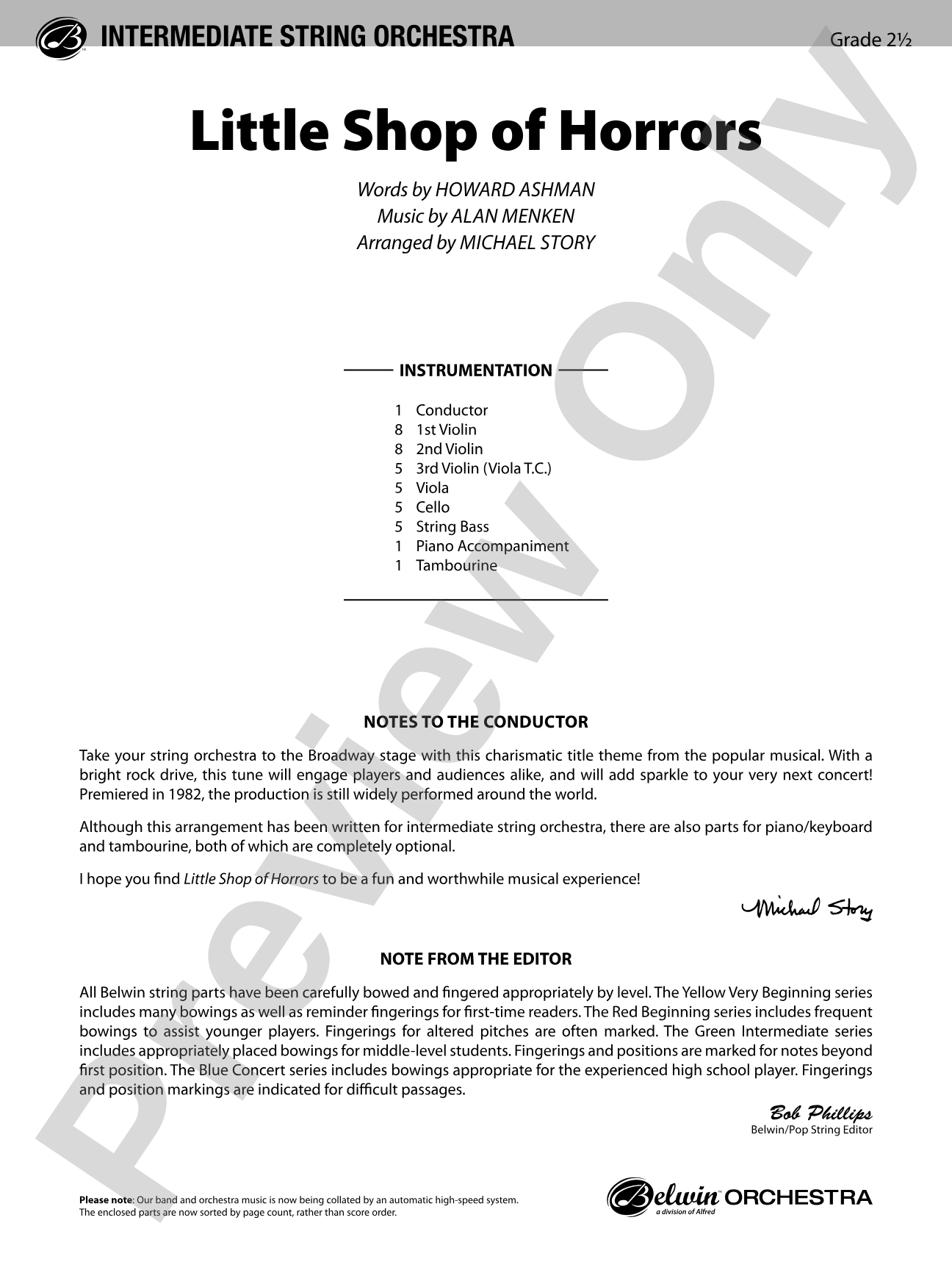
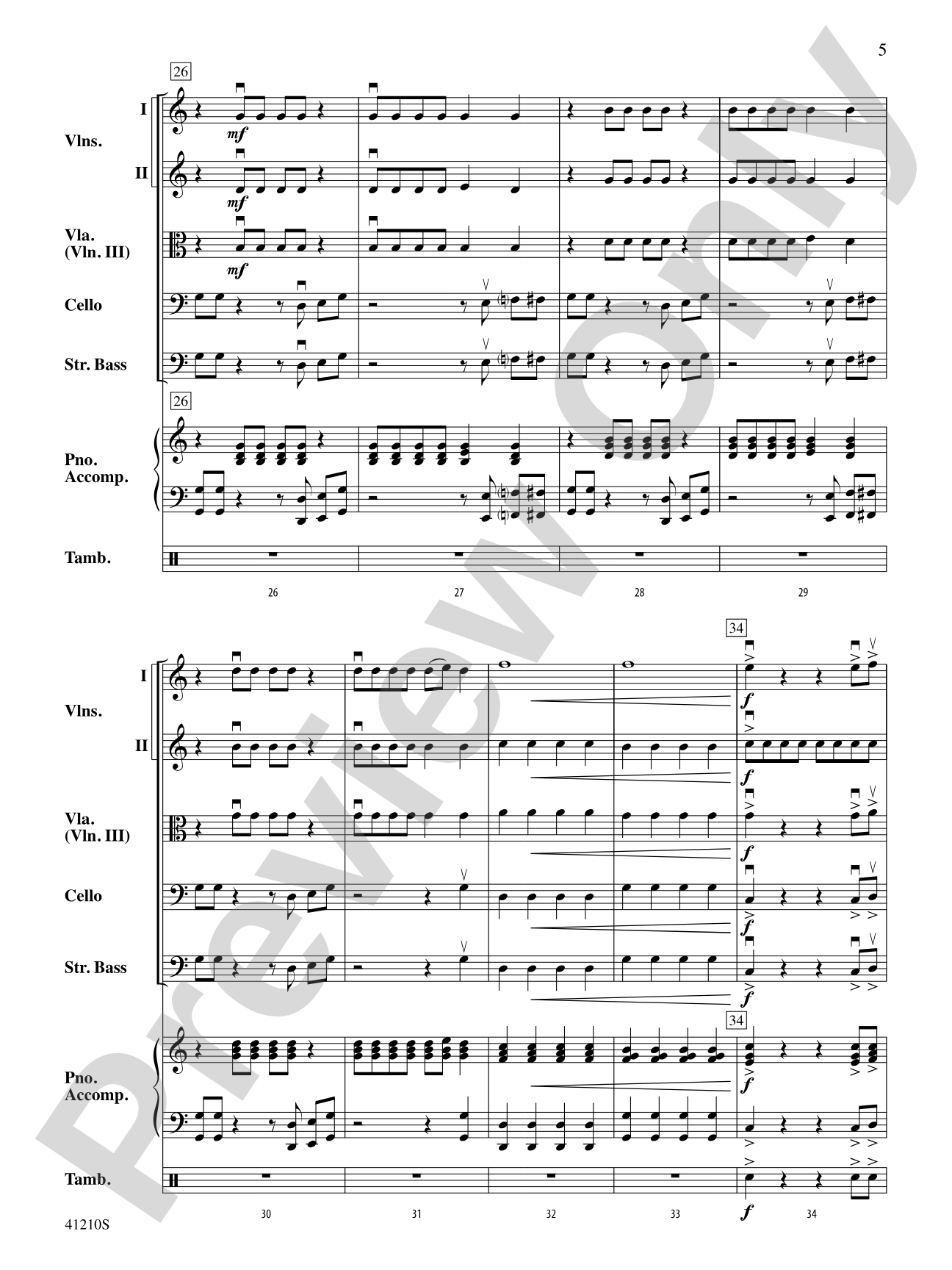
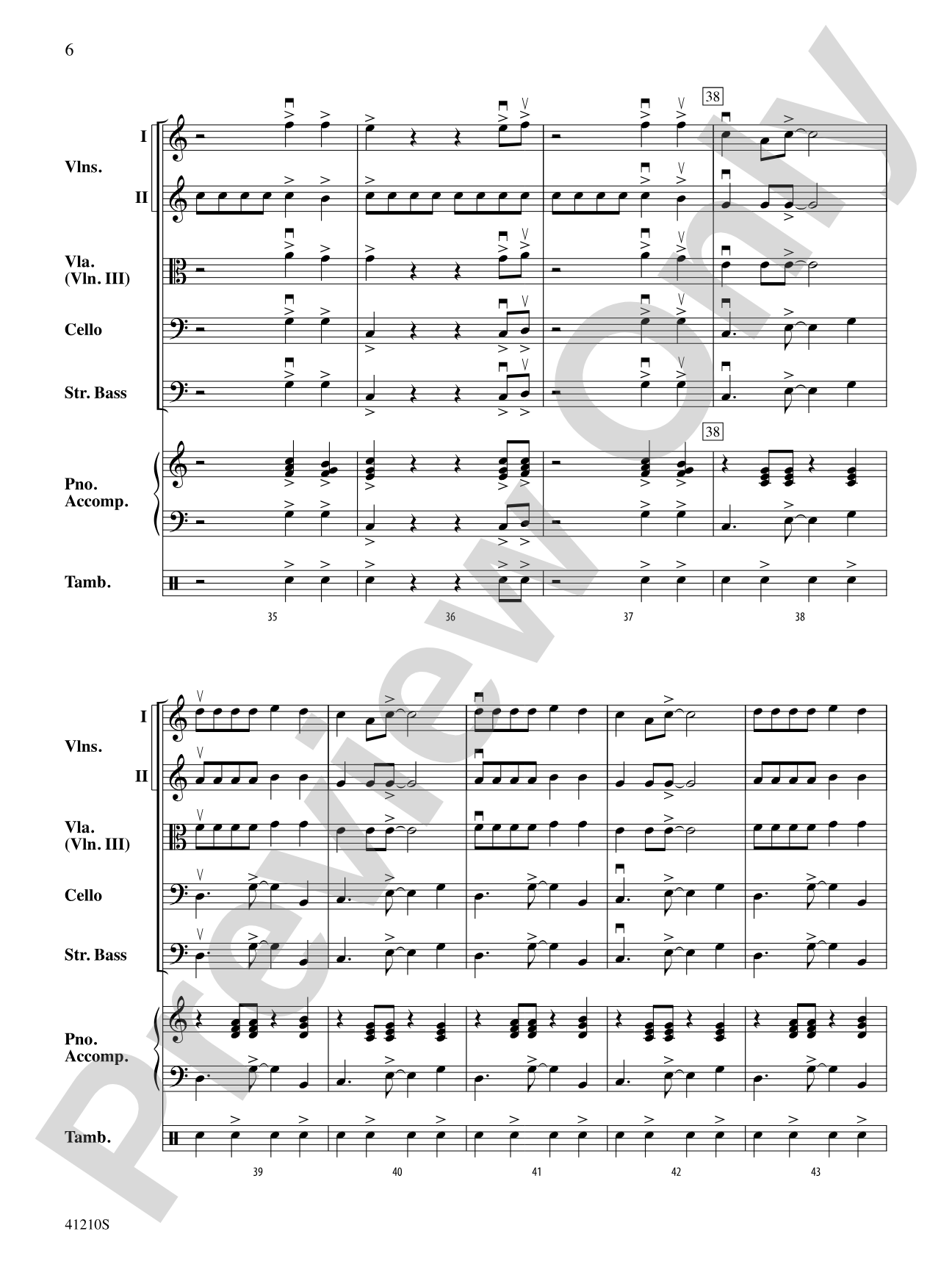
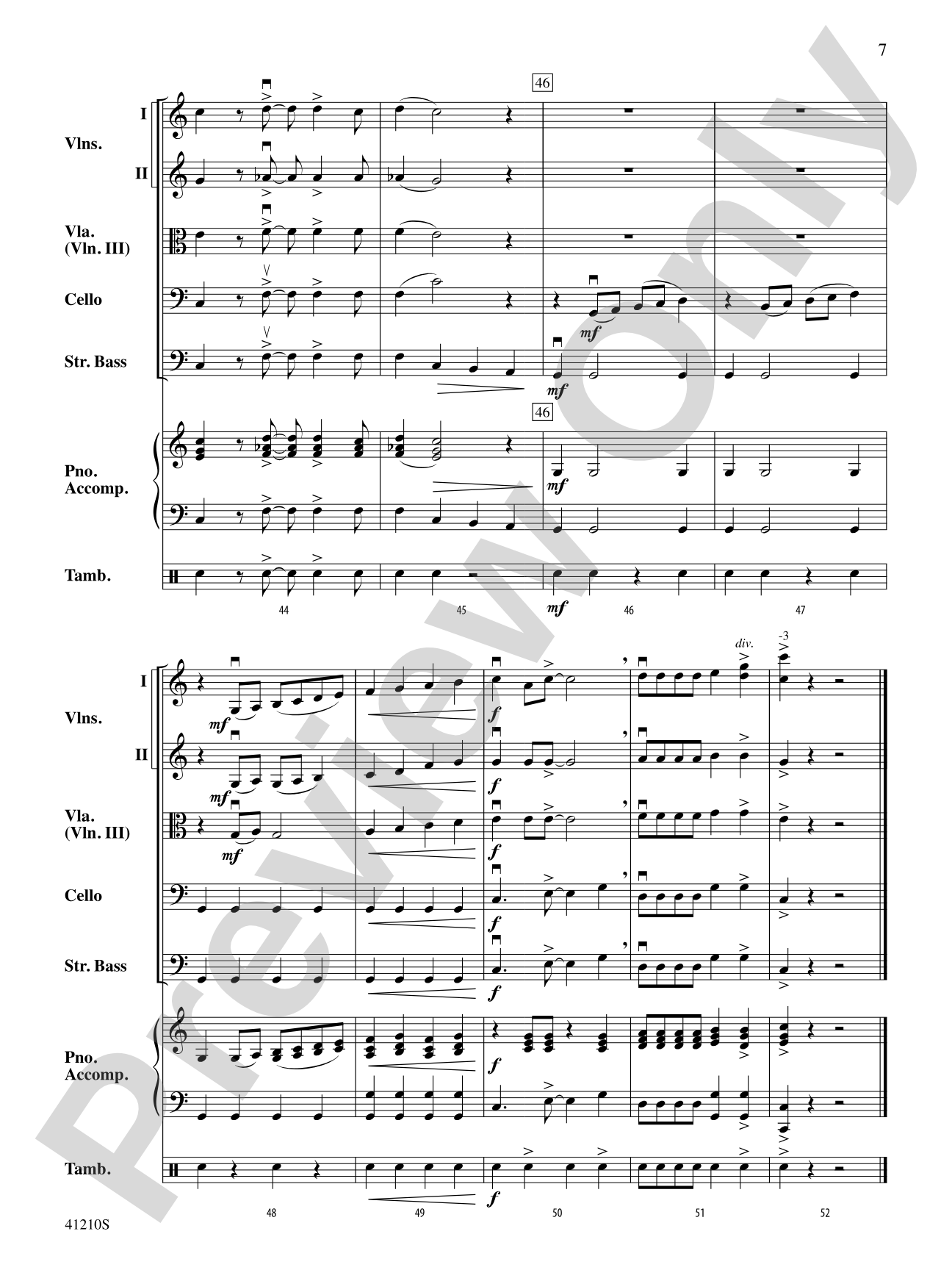

Little Shop of Horrors: String Orchestra Conductor Score & Parts
Words by Howard Ashman, music by Alan Menken / arr. Michael Story
Grade: 2.5
Item: 00-PK-0006081

$50.00
One moment…
Related Items
Little Shop of Horrors: Concert Band Conductor Score & Parts |
$56.00
|
View | |
Little Shop of Horrors: Concert Band Conductor Score & Parts |
$55.00
|
View | |
Little Shop of Horrors: Concert Band Conductor Score |
$9.00
|
View | |
Little Shop of Horrors: String Orchestra Conductor Score & Parts |
$50.00
|
View | |
Little Shop of Horrors: String Orchestra Conductor Score |
$9.00
|
View |
Description
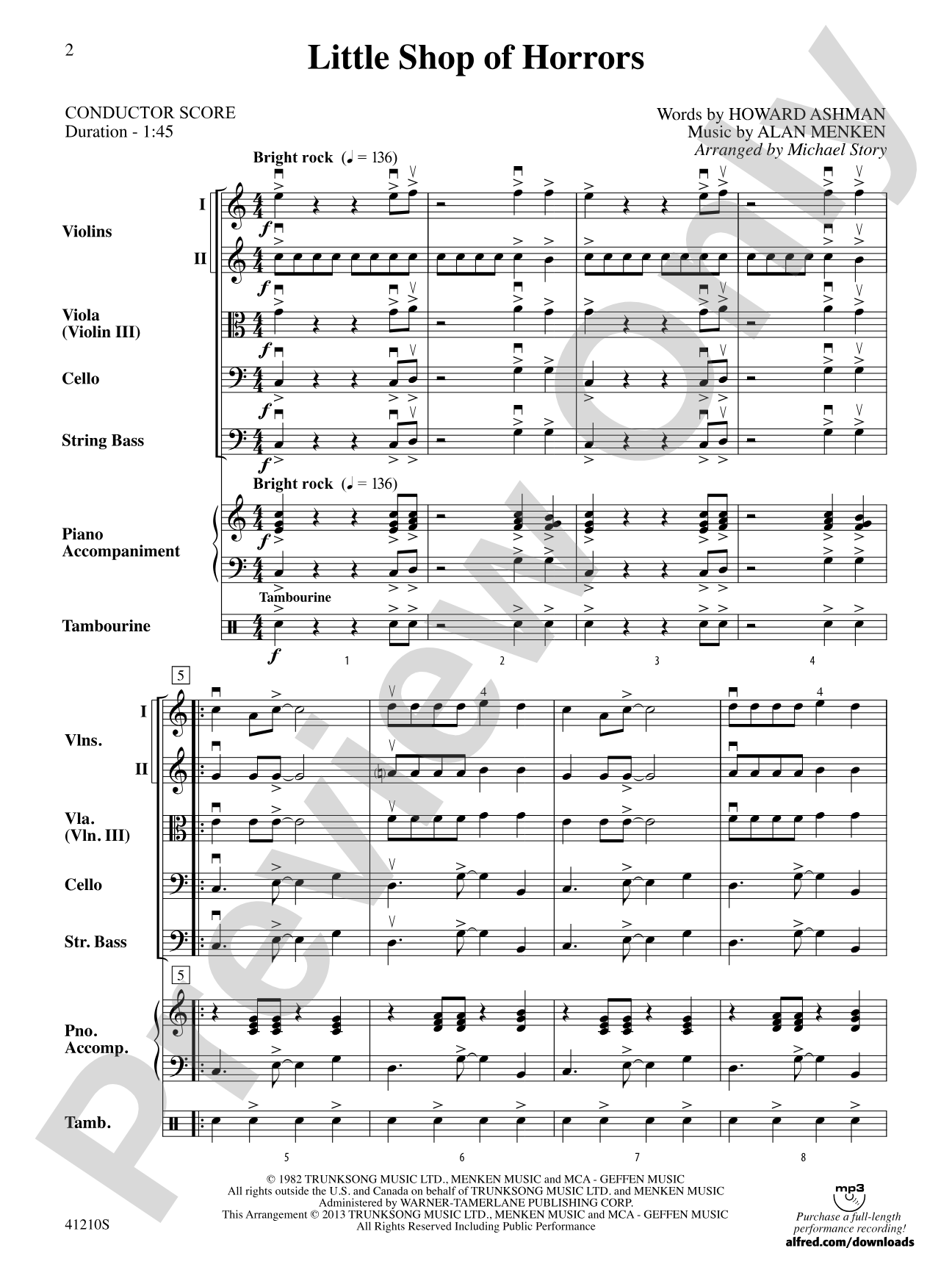
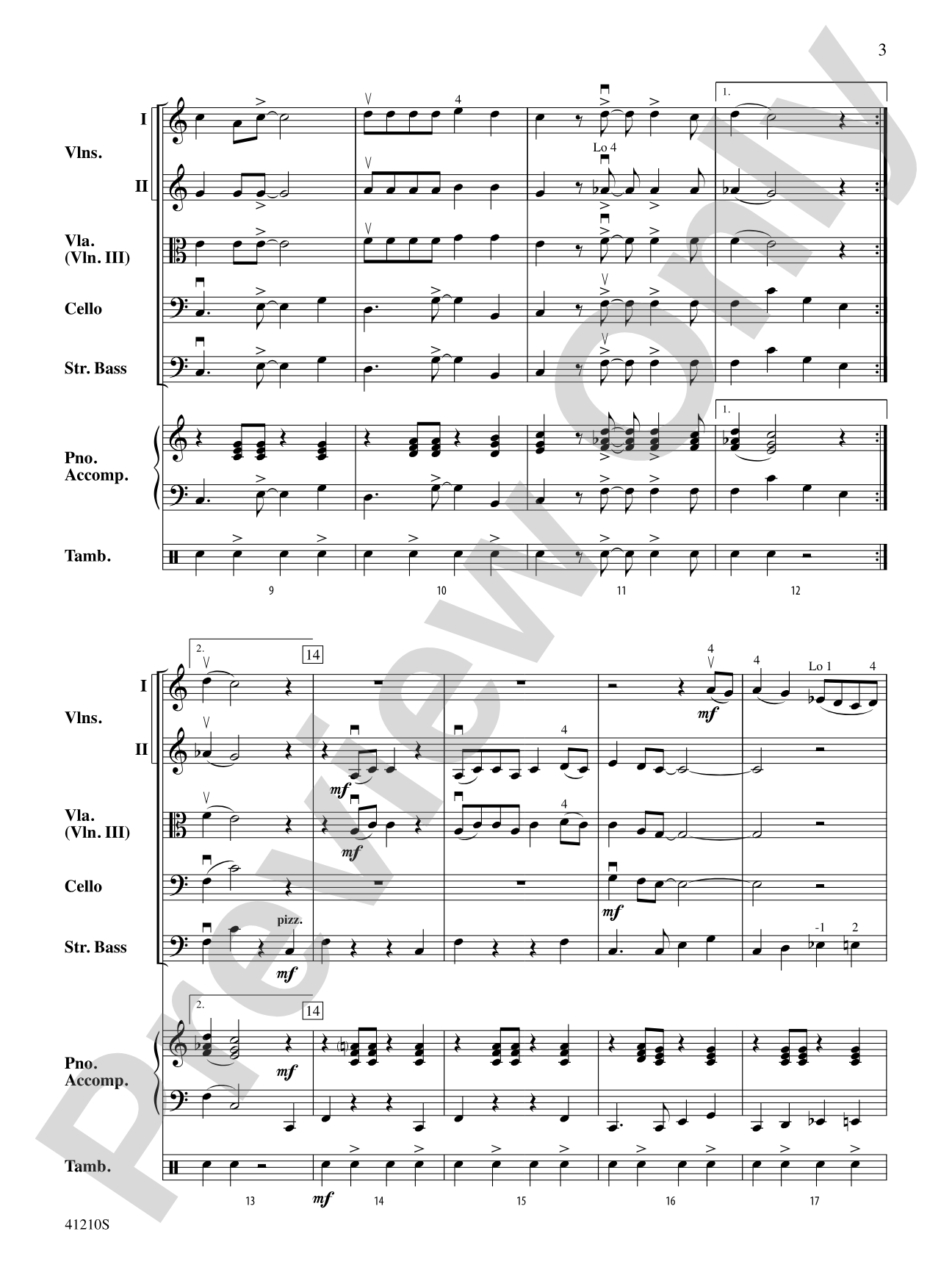
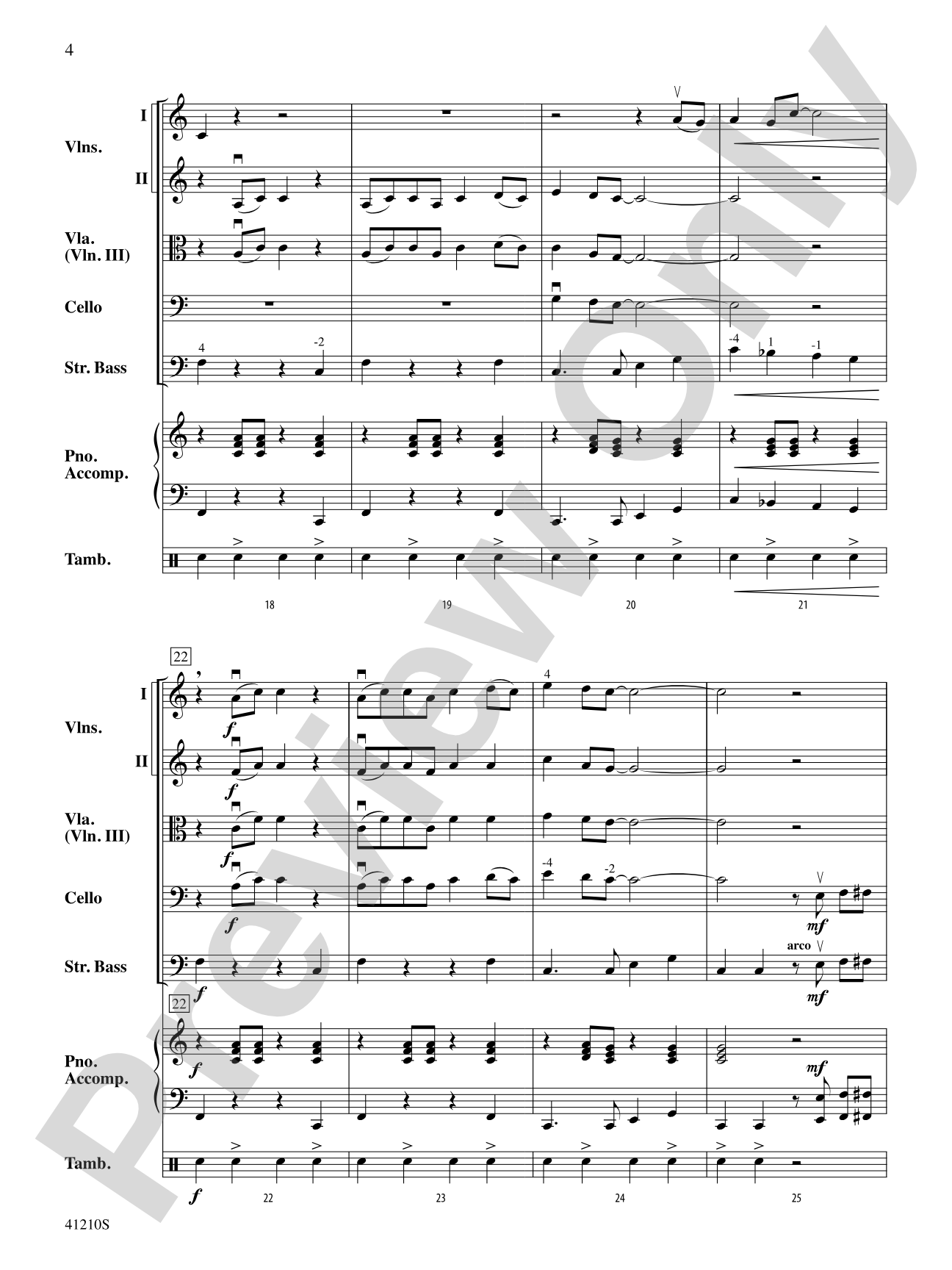
Take your string orchestra to the Broadway stage with this charismatic title theme from the popular musical. With a bright rock drive, this tune will engage players and audiences alike, and will add sparkle to your very next concert! (1:45)


Don't just read it, hear it, play along with it, and watch your students grow with it. In MakeMusic Cloud, Little Shop of Horrors: String Orchestra Conductor Score & Parts comes alive with professional accompaniment, adjustable tempo, and built-in practice tools that turn solo practice into real progress.
Open in the Player
Jump straight in and assign it today.
Start Your Free Trial
Open this title and explore the full library in minutes.
Sample Audio
1
Audio File
--:--
0:00
0:00
Sample Video
No sample videos found.
Additional Details
Series:
Pop Intermediate String Orchestra
Publisher:
Alfred Music
Page Count:
78
SKU:
00-PK-0006081
More about this title
About the Composer: Howard Ashman
Howard Ashman (1950-1991) was a lyricist and playwright who fundamentally shaped the modern Broadway musical. His collaboration with composer Alan Menken produced some of the most enduring theatrical scores, including The Little Mermaid, Beauty and the Beast, and Aladdin. Ashman's gift for character-driven storytelling and singable, emotionally direct lyrics made Broadway accessible to audiences of all ages while maintaining artistic sophistication.
Beyond his Disney work, Ashman co-created Little Shop of Horrors, a darkly comic musical that became a cultural phenomenon. His ability to blend humor, pathos, and memorable melody shaped a generation of musical theater writers. For music educators, Ashman's catalog offers repertoire that engages students through immediately recognizable, dramatically compelling material.
Why we love this
Michael Story's arrangement captures the infectious energy of this title theme while staying perfectly within the capabilities of a Grade 2.5 string orchestra. The rock-driven groove translates beautifully to strings without requiring advanced technique, making it an excellent vehicle for teaching articulation, rhythmic precision, and ensemble cohesion. Programming this piece signals to your audience that string orchestras can command a contemporary stage.
What to expect
Bright, propulsive, and irresistibly fun. The title theme bounces with chaotic energy that mirrors the musical's darkly comic premise. Players experience the satisfaction of executing a recognizable, radio-friendly tune with ensemble precision, transforming a Broadway hook into orchestral music that feels both modern and substantial.
Who it's for
String orchestras at the intermediate level seeking repertoire that combines pedagogical value with immediate appeal. This works equally well for music programs aiming to include contemporary popular music alongside classical standards, and for directors preparing a concert program that engages audiences beyond traditional string repertoire.
How to get the most out of it
- Establish the rock groove firmly in your opening rehearsals by tapping the backbeat audibly during the first run-throughs. This piece lives or dies by rhythmic confidence, not by perfect intonation.
- Shape the main theme with a slight lean into the first beat of each phrase, then release the tension through the second half. This prevents the tune from sounding metronomic.
- Balance upper and lower strings carefully so the harmonic foundation doesn't disappear under the melodic line. A string orchestra can muddy quickly at this tempo.
- Use the recorded accompaniment (if available separately) for sectional rehearsals before combining forces. This builds independence and listening skills.
How to use it
This title theme works beautifully as an opener to energize an audience or as a bridge piece connecting classical and contemporary concert halves. Consider programming it alongside other pop or musical theater arrangements to demonstrate your orchestra's stylistic range. At just 1:45, it also serves as an effective encores choice or a confidence-builder in rehearsal sequences where longer works dominate.
Skills your students will build
- Rock rhythm articulation and ensemble groove
- Rhythmic precision in driving accompaniment figures
- Balancing melody against harmonic foundation in contemporary contexts
- Stylistic flexibility and tone adjustment for non-classical music
- String crossings at moderate tempo with maintained clarity