
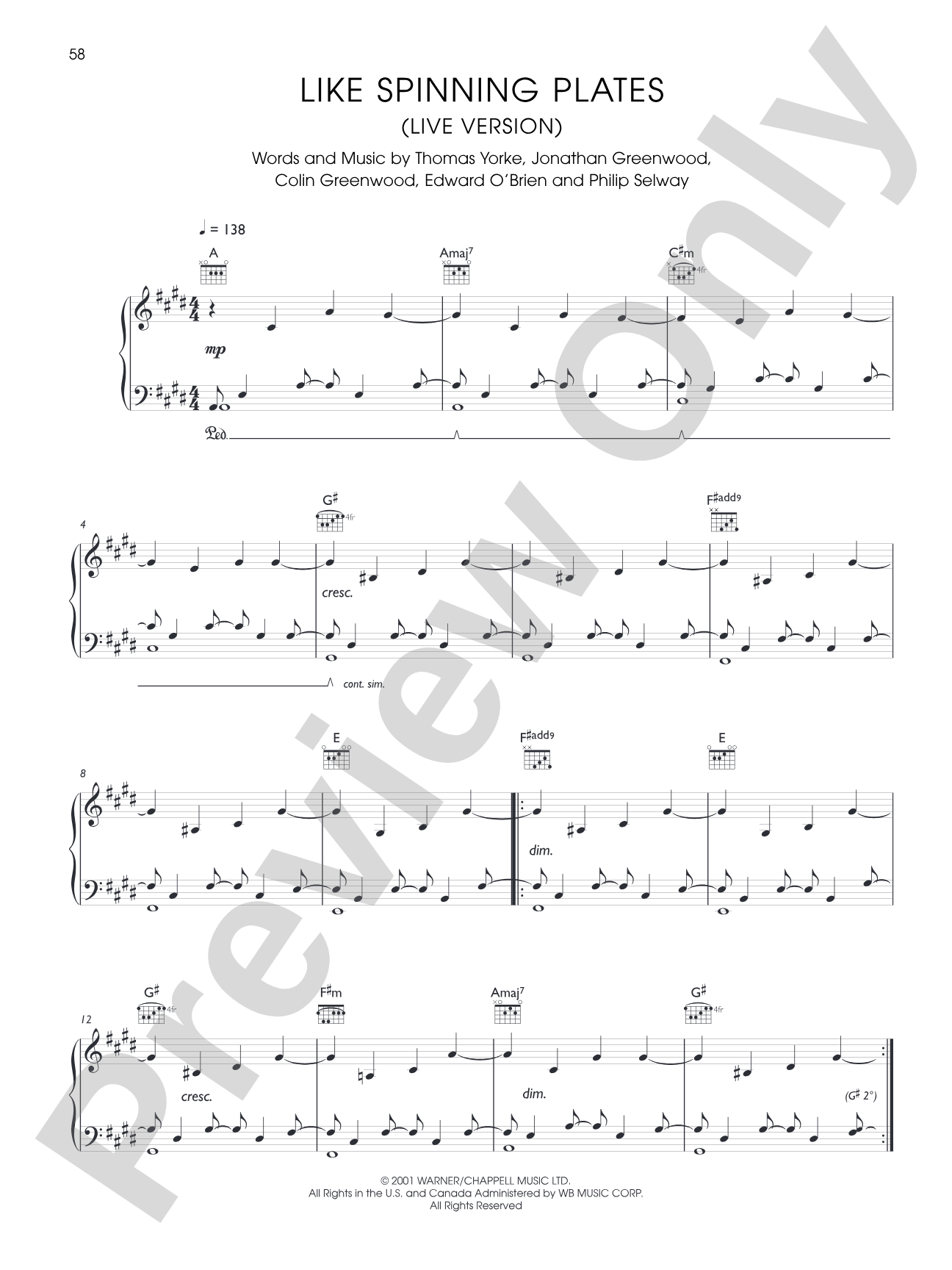
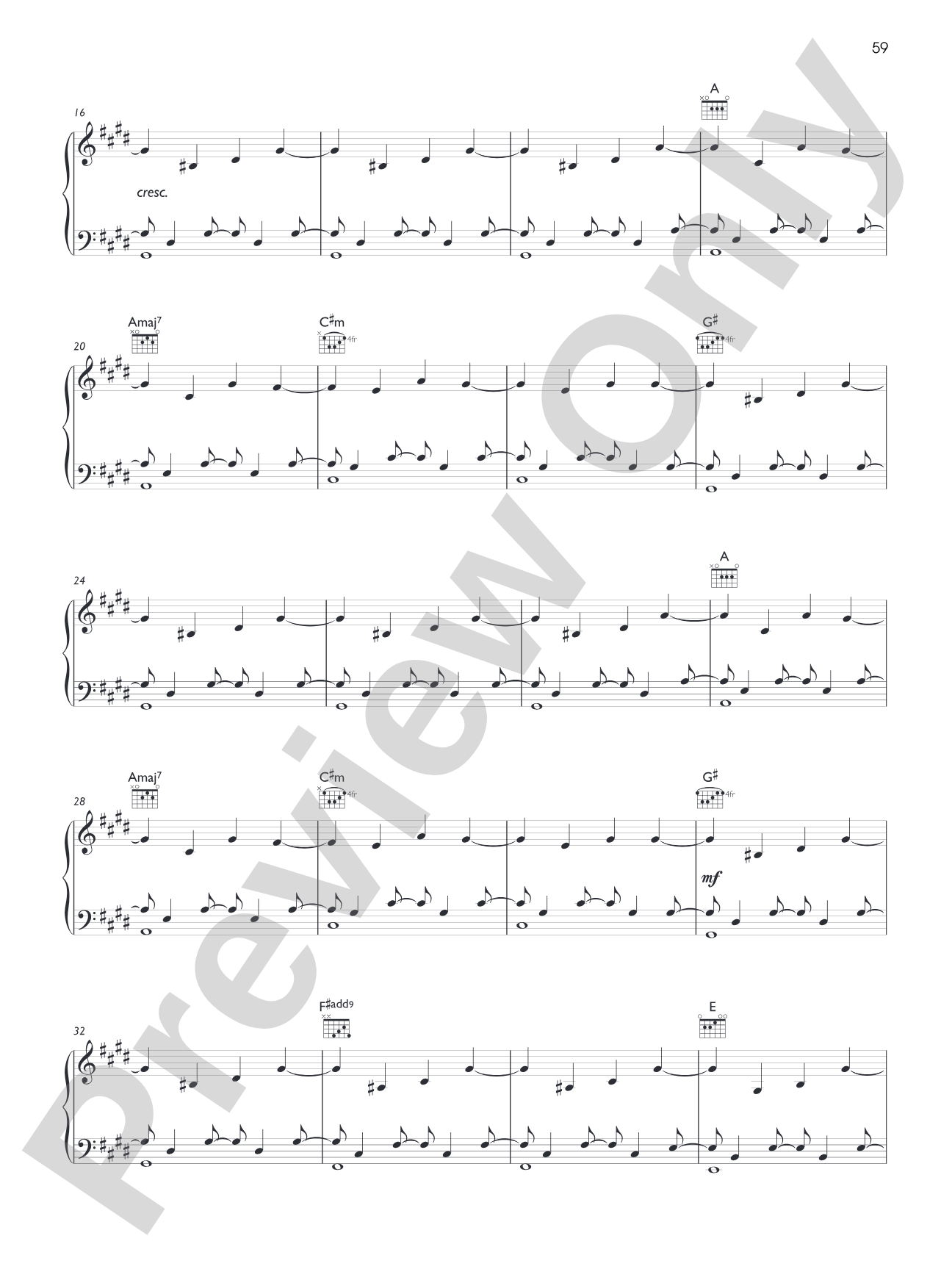

Like Spinning Plates: Piano/Vocal/Chords
Radiohead
Item: 00-PS-0013148
$5.99
One moment…
Related Items
My Iron Lung: Piano/Vocal/Chords |
$5.99
|
View | |
Street Spirit (Fade Out): Piano/Vocal/Chords |
$5.99
|
View | |
Fake Plastic Trees: Piano/Vocal/Chords |
$4.99
|
View | |
High and Dry: Piano/Vocal/Chords |
$5.99
|
View | |
Lucky: Piano/Vocal/Chords |
$4.99
|
View | |
Paranoid Android: Piano/Vocal/Chords |
$5.99
|
View | |
Subterranean Homesick Alien: Piano/Vocal/Chords |
$5.99
|
View | |
Karma Police: Piano/Vocal/Chords |
$4.99
|
View | |
No Surprises: Piano/Vocal/Chords |
$4.99
|
View | |
How I Made My Millions: Piano/Vocal/Chords |
$4.99
|
View | |
Exit Music (For a Film): Piano/Vocal/Chords |
$4.99
|
View | |
Life In a Glasshouse: Piano/Vocal/Chords |
$4.99
|
View | |
Creep: Piano/Vocal/Chords |
$4.99
|
View | |
Everything In Its Right Place: Piano/Vocal/Chords |
$4.99
|
View | |
Motion Picture Soundtrack: Piano/Vocal/Chords |
$4.99
|
View | |
Pyramid Song: Piano/Vocal/Chords |
$4.99
|
View | |
Knives Out: Piano/Vocal/Chords |
$4.99
|
View | |
Fog (Again): Piano/Vocal/Chords |
$4.99
|
View | |
Sit Down. Stand Up.: Piano/Vocal/Chords |
$5.99
|
View | |
Sail to the Moon: Piano/Vocal/Chords |
$4.99
|
View | |
A Wolf at the Door: Piano/Vocal/Chords |
$5.99
|
View | |
We Suck Young Blood: Piano/Vocal/Chords |
$5.99
|
View | |
A Punch Up at a Wedding: Piano/Vocal/Chords |
$4.99
|
View | |
All I Need: Piano/Vocal/Chords |
$4.99
|
View | |
Videotape: Piano/Vocal/Chords |
$4.99
|
View | |
Last Flowers to the Hospital: Piano/Vocal/Chords |
$4.99
|
View |
Description
After more than a decade of numerous guitar-oriented Radiohead songbook releases, pianists are at last treated to a Radiohead sheet music collection that they can enjoy. Twenty-eight favorite songs drawn from a wide variety of Radiohead albums are compiled in this expansive collection, specially transcribed and arranged to be played on the piano. Titles: All I Need * Creep * Everything in Its Right Place * Exit Music (For a Film) * Fake Plastic Trees * Fog Again * High and Dry * How I Made My Millions * I Want None of This * Karma Police * Knives Out * Last Flowers to the Hospital * Life in a Glasshouse * Like Spinning Plates * Lucky * Motion Picture Soundtrack * My Iron Lung * No Surprises * Paranoid Android * A Punch Up at a Wedding * Pyramid Song * Sail to the Moon * Sit Down. Stand Up. * Street Spirit (Fade Out) * Subterranean Homesick Alien * Videotape * We Suck Young Blood * A Wolf at the Door.


Discover MakeMusic Cloud: thousands of interactive titles your students can play along with today.
Sample Audio
No sample audio found.
Sample Video
No sample videos found.
Additional Details
Publisher:
Alfred Music
Page Count:
144
SKU:
00-PS-0013148
More about this title
About the Composer: Thomas Yorke
Thomas Yorke has composed and performed as the lead vocalist of Radiohead since the band's formation in the early 1990s. His work spans decades of studio albums and live performances that have consistently pushed the boundaries of rock music, incorporating elements of electronic production, experimental arrangements, and intricate harmonic structures that challenge conventional songwriting approaches.
Yorke's compositional voice is characterized by angular melodies, unexpected chord progressions, and a willingness to deconstruct song forms. His influence extends across music education settings where his work has become standard repertoire for pianists and vocalists seeking material that rewards close harmonic analysis and interpretive depth.
Why we love this
This collection finally gives pianists substantial access to Radiohead's catalog on their own terms. Rather than translating guitar-based arrangements, these pieces are reconceived for the piano, which means you're working with voicings and textures that actually belong to the instrument. The harmonic complexity and emotional range across 28 songs make this a rich resource for students developing sophistication in contemporary song interpretation.
What to expect
These arrangements capture the introspective, sometimes unsettling quality of Radiohead's writing while centering the piano's capacity for both delicate nuance and structural clarity. You'll encounter strange harmonic turns, moments of rhythmic floating, and emotional landscapes that feel simultaneously intimate and expansive. The music invites careful listening and rewards performers who treat contemporary songwriting with the same analytical rigor typically reserved for classical scores.
Who it's for
Pianists and vocalist-pianists who want to develop interpretive maturity through contemporary material with real harmonic substance. This collection works equally well for serious students seeking recital repertoire and for educators building programs around modern songwriting that demonstrates sophisticated composition outside classical traditions.
How to get the most out of it
- Pay close attention to the chord voicings as written; they often contain non-traditional extensions and inversions that define the song's harmonic character rather than functioning as mere accompaniment.
- Experiment with dynamics and pedal use to shape atmosphere. Many of these pieces rely on textural shifts rather than melodic drama, so subtle control of resonance becomes essential.
- Approach the vocal melody as a conversation with the harmonic landscape rather than sitting on top of it. The piano arrangements frequently blur the distinction between accompaniment and melodic line.
- Consider tempo flexibility within phrases. These songs often benefit from slight rubato and breathing space, especially in the more introspective passages.
How to use it
This book serves multiple curricular purposes: as recital material for advanced piano students exploring 21st-century songwriting, as a resource for vocalist-pianists building performance-ready arrangements, or as supplementary study material in harmony courses examining non-traditional chord progressions and song architecture. Individual pieces work well in contemporary music showcases or as intermission material in classical programs seeking stylistic variety.
Skills your students will build
- Analyzing non-functional harmony and extended chord voicings
- Interpreting vocal melody against complex piano accompaniment figures
- Controlling dynamics and pedal technique for atmospheric effect rather than volume contrast
- Sight-reading contemporary music notation and chord symbols
- Developing interpretive choices in pieces without explicit performance directions