
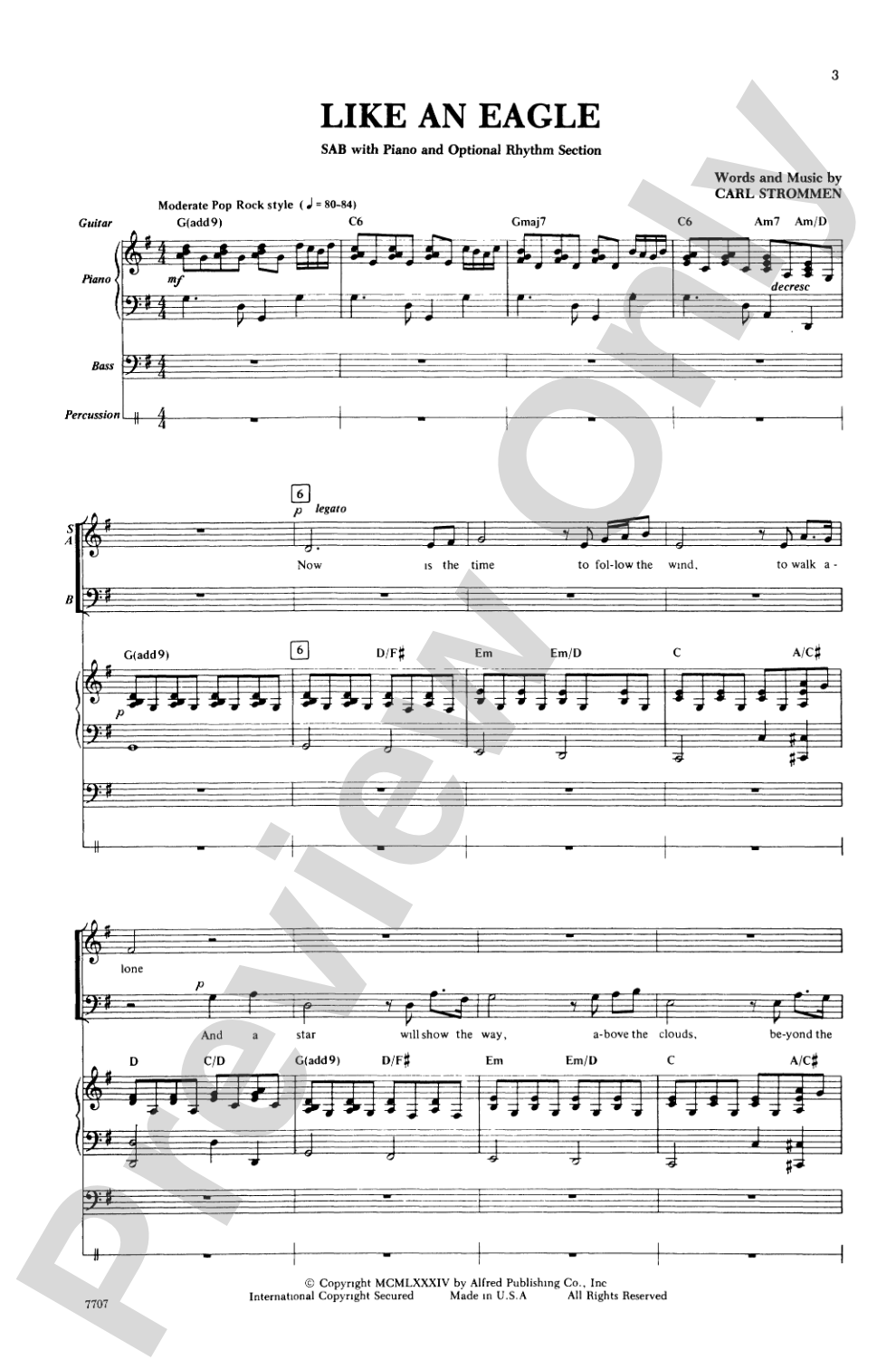
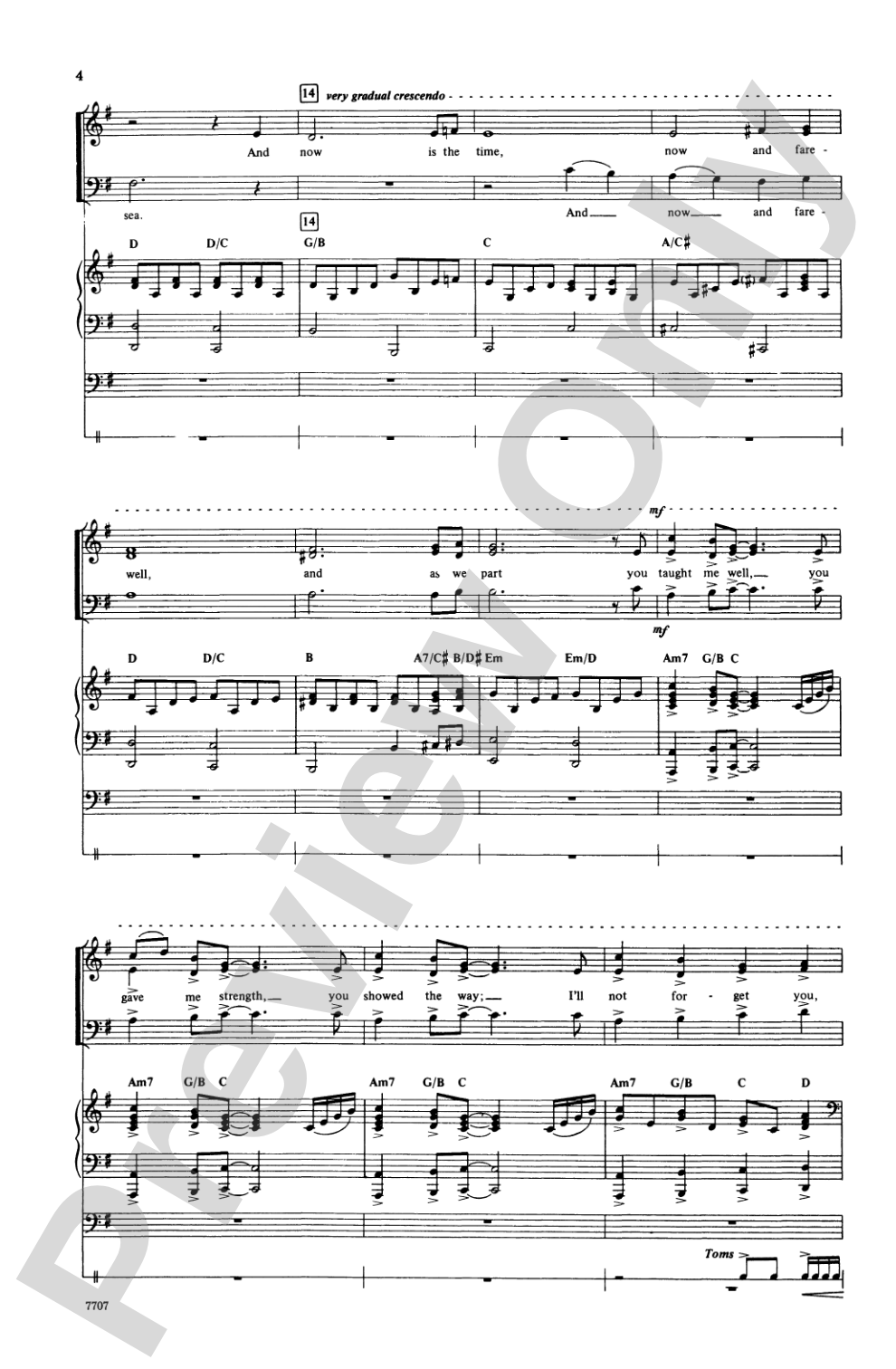

Like an Eagle: SAB Choral Octavo
Music by Carl Strommen
Item: 00-PO-0003485

$2.05
Minimum order quantity: 20 copies
Pickup currently not available
Related Items
Like an Eagle: SATB Choral Octavo |
$2.25
|
View | |
Like an Eagle: SSA Choral Octavo |
$2.25
|
View | |
Like an Eagle: 2-Part Choral Octavo |
$2.05
|
View | |
Like an Eagle: SATB Choral Octavo |
$2.25
|
View | |
Like an Eagle: SAB Choral Octavo |
$2.05
|
View | |
Like an Eagle: SSA Choral Octavo |
$2.25
|
View | |
Like an Eagle: 2-Part Choral Octavo |
$2.05
|
View | |
Like an Eagle: Choral Octavo SoundTrax CD |
$27.99
|
View |
Description
A powerful ballad that builds with intensity and energy. Don't miss this all-time smash choral standard. Use the Alfred SoundTrax. This title is available in Music Prodigy.


Don't just read it, hear it, play along with it, and watch your students grow with it. In MakeMusic Cloud, Like an Eagle: SAB Choral Octavo comes alive with professional accompaniment, adjustable tempo, and built-in practice tools that turn solo practice into real progress.
Open in the Player
Jump straight in and assign it today.
Start Your Free Trial
Open this title and explore the full library in minutes.
Sample Audio
1
Audio File
--:--
0:00
0:00
Sample Video
No sample videos found.
Additional Details
Series:
Signature Series
Publisher:
Alfred Music
Page Count:
12
SKU:
00-PO-0003485
More about this title
About the Composer: Carl Strommen
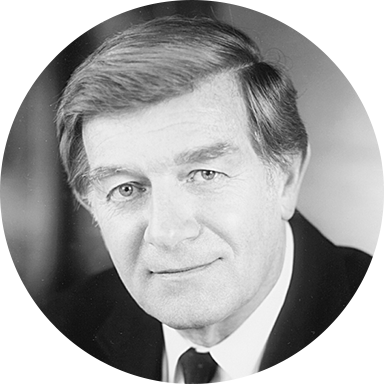
Carl Strommen stands among the most frequently performed composer-arrangers working today, with music that appears regularly in concert halls, on screen, and in broadcast settings. His output spans band, orchestra, jazz ensemble, and vocal music, and he has earned the ASCAP Standard Writers Award annually for sustained excellence across these diverse genres.
Strommen holds a degree from City College of New York and currently serves as an adjunct professor of orchestration and composition at C.W. Post Campus of Long Island University. Beyond the classroom, he maintains an active schedule as a clinician and commissioned composer, bringing his deep musical knowledge directly to ensembles and institutions across the country.
Why we love this
Strommen's ballad construction here is masterful; the piece lives up to its reputation as a choral standard precisely because it gives singers an architecturally satisfying arc to inhabit. The SAB voicing opens this emotional journey to ensembles that might not have the four-part texture options, and the recorded accompaniment from SoundTrax lets directors focus entirely on shaping the group's interpretation rather than managing piano parts.
What to expect
The piece unfolds like its title suggests: beginning with aspiration and building into soaring confidence. Strommen's harmonies are warm and accessible but never simplistic, and the emotional trajectory moves through vulnerability toward affirmation, giving singers a genuine emotional arc to perform rather than just notes to sing.
Who it's for
This octavo reaches mixed ensembles with developing singers who are ready for a ballad with emotional depth and structural sophistication. Whether your choir is preparing for spring concert, graduation, or looking to add a cornerstone piece to your repertoire, this work meets singers where they are while asking them to stretch musically.
How to get the most out of it
- Allow the opening phrases to breathe; resist the urge to rush into the intensity building described in the arrangement. The power comes from restraint early on.
- Balance the part writing so that the melody doesn't overshadow the inner voices, especially as layering increases. Listen from the house to catch where blend breaks down.
- Mark phrase endings in the score; singers often hold too long here, shortening the space needed for breath and energy to reset before the next push upward.
- Use the SoundTrax accompaniment in rehearsal to lock in your tempo, but also try a few run-throughs with piano only to develop the ensemble's internal security.
How to use it
This works beautifully as a concert closer for spring events or as a graduation opener that sets a reflective-yet-forward-looking tone. It also pairs well in a program alongside shorter, lighter pieces, where its ballad weight provides necessary contrast and leaves the audience with something substantive to carry with them.
Skills your students will build
- Sustaining legit phrasing across longer melodic lines without sacrificing diction
- Balancing part independence in SAB texture (particularly soprano-alto counterpoint)
- Dynamic control and the ability to shape crescendos that feel earned rather than imposed
- Maintaining intonation in divided voicing as harmonic complexity increases