

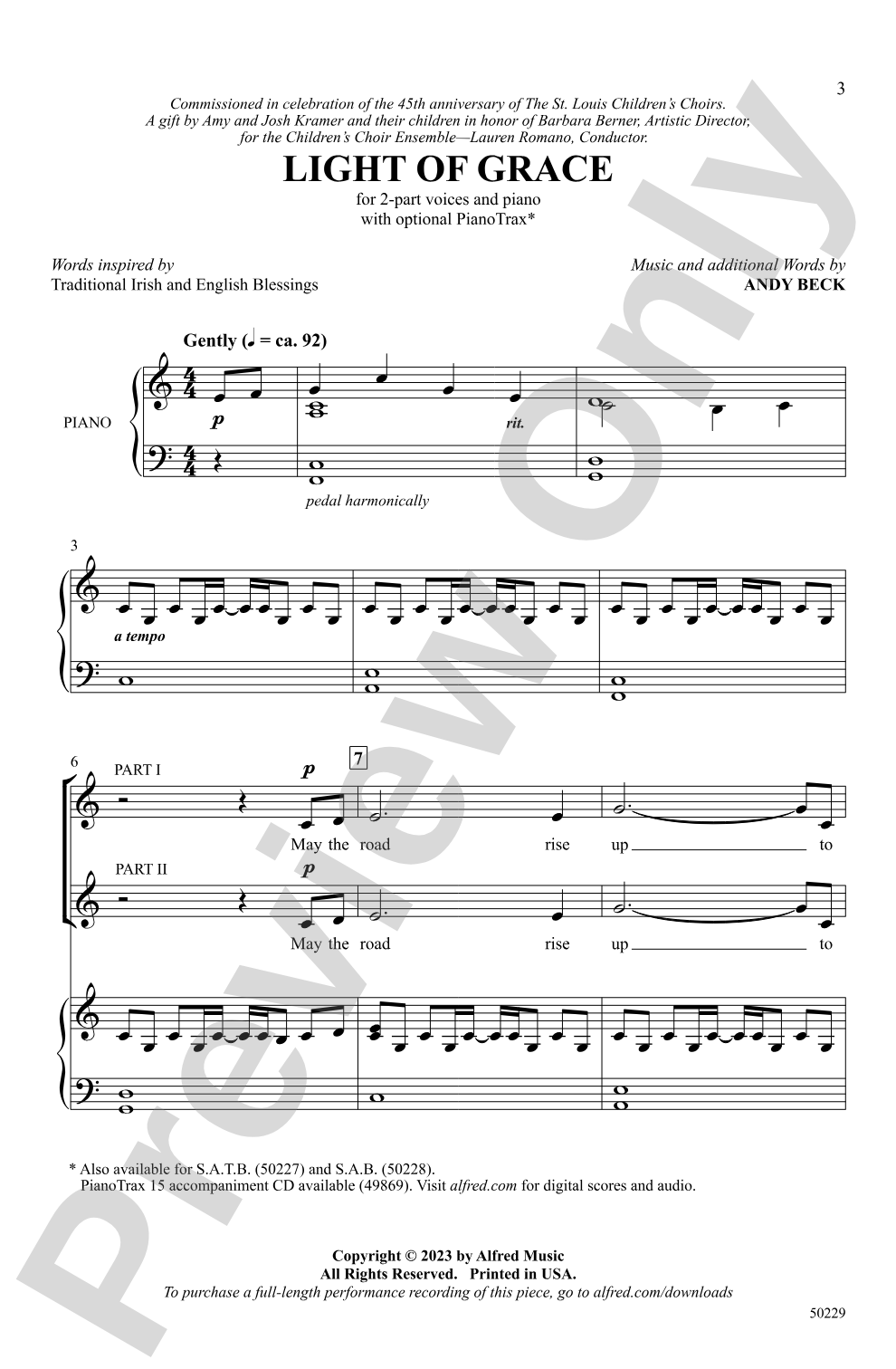

Light of Grace: 2-Part Choral Octavo
Words inspired by Traditional Irish and English Blessings, music and additional words by Andy Beck
Item: 00-PO-0007163

$2.05
Minimum order quantity: 10 copies
Please note: Under U.S. copyright law, you must purchase the exact number of copies needed for your ensemble. Printing, duplicating or sharing additional copies is strictly prohibited.
Pickup currently not available
Related Items
Light of Grace: PianoTrax Digital Audio Download |
$9.99
|
View | |
Light of Grace: SATB Choral Octavo |
$2.05
|
View | |
Light of Grace: SAB Choral Octavo |
$2.05
|
View | |
Light of Grace: SATB Choral Octavo |
$2.05
|
View | |
Light of Grace: SAB Choral Octavo |
$2.05
|
View | |
Light of Grace: 2-Part Choral Octavo |
$2.05
|
View |
Description
Here's a heartfelt adaptation of traditional Irish and English blessing texts. A gentle yet rhythmic piano figure supports graceful vocal lines and occasional harmonic crunches in this warm closer or send-off song by Andy Beck. Concludes with a musical quote from "Amazing Grace" to bring a final smile, chill, or tear.


Don't just read it, hear it, play along with it, and watch your students grow with it. In MakeMusic Cloud, Light of Grace: 2-Part Choral Octavo comes alive with professional accompaniment, adjustable tempo, and built-in practice tools that turn solo practice into real progress.
Open in the Player
Jump straight in and assign it today.
Start Your Free Trial
Open this title and explore the full library in minutes.
Sample Audio
1
Audio File
--:--
0:00
0:00
Sample Video
1 / 2
Additional Details
Series:
Alfred Choral Designs
Publisher:
Alfred Music
Page Count:
12
SKU:
00-PO-0007163
More about this title
About the Composer: Andy Beck

Andy Beck directs the choral publications department at Alfred Music, where he shapes the catalog and continues his own prolific output as a composer and arranger. With more than 450 choral works in print, along with widely used vocal resources like Sing at First Sight and Vocalize!, he has established himself as a primary voice in contemporary choral pedagogy and performance.
Beyond the page, Beck remains active as a guest conductor, adjudicator, and clinician working with honor choirs and all-state groups across the Southeast and beyond. He holds degrees in Music Education from Ithaca College and Northwest Missouri State University, and his commitment to choral artistry extends to his own singing with the North Carolina Master Chorale Chamber Choir and his longstanding work as a studio vocalist with Alfred since 1992.
Why we love this
Beck has crafted a piece that works as both a musical moment and a genuine emotional marker in a concert. The weaving of familiar blessing language with that closing nod to "Amazing Grace" gives directors a song that lands without manipulation, and the rhythmic piano underpinning keeps singers engaged rather than drifting into sweetness.
What to expect
Warm and forward-moving, with a sense of occasion built into every measure. The gentle piano figure and graceful vocal lines evoke blessing and blessing-giving; the harmonic edges remind listeners that grace is earned or recognized, not given lightly.
Who it's for
This octavo suits choirs of mixed ability at the high school or community level who want a substantial closer without extreme technical demands. The 2-part voicing gives developing singers room to lock in while still creating real harmonic texture, making it ideal for ensembles working toward graduation, spring concerts, or end-of-year celebrations.
How to get the most out of it
- Balance the harmonic crunches with the surrounding graceful lines so they register as intentional moments of tension rather than mistakes. Rehearse the full choir sonority first, then separate the two parts to ensure each line sings independently even when stacked.
- Let the piano rhythm drive the ensemble pulse. Have singers listen to the accompaniment track (if using it) or the pianist during early rehearsals to plant the rhythmic groove before adding interpretive breathing.
- Shape the "Amazing Grace" quotation at the end as a subtle callback rather than a grand moment. Singers should recognize it; the audience will too, but the effect hinges on understatement.
How to use it
Program this as the final selection on a concert, or pair it with other reflective pieces in a thematic set focused on transition and gratitude. At graduation ceremonies or year-end chapel services, it creates a moment of genuine send-off without veering into nostalgia.
Skills your students will build
- Part independence in 2-part harmony with occasional chromatic voice leading
- Rhythmic precision while singing over a syncopated piano accompaniment
- Dynamic shaping and phrasing of lyrical material over multiple stanzas
- Recognition and interpretation of musical quotation (the "Amazing Grace" reference)