

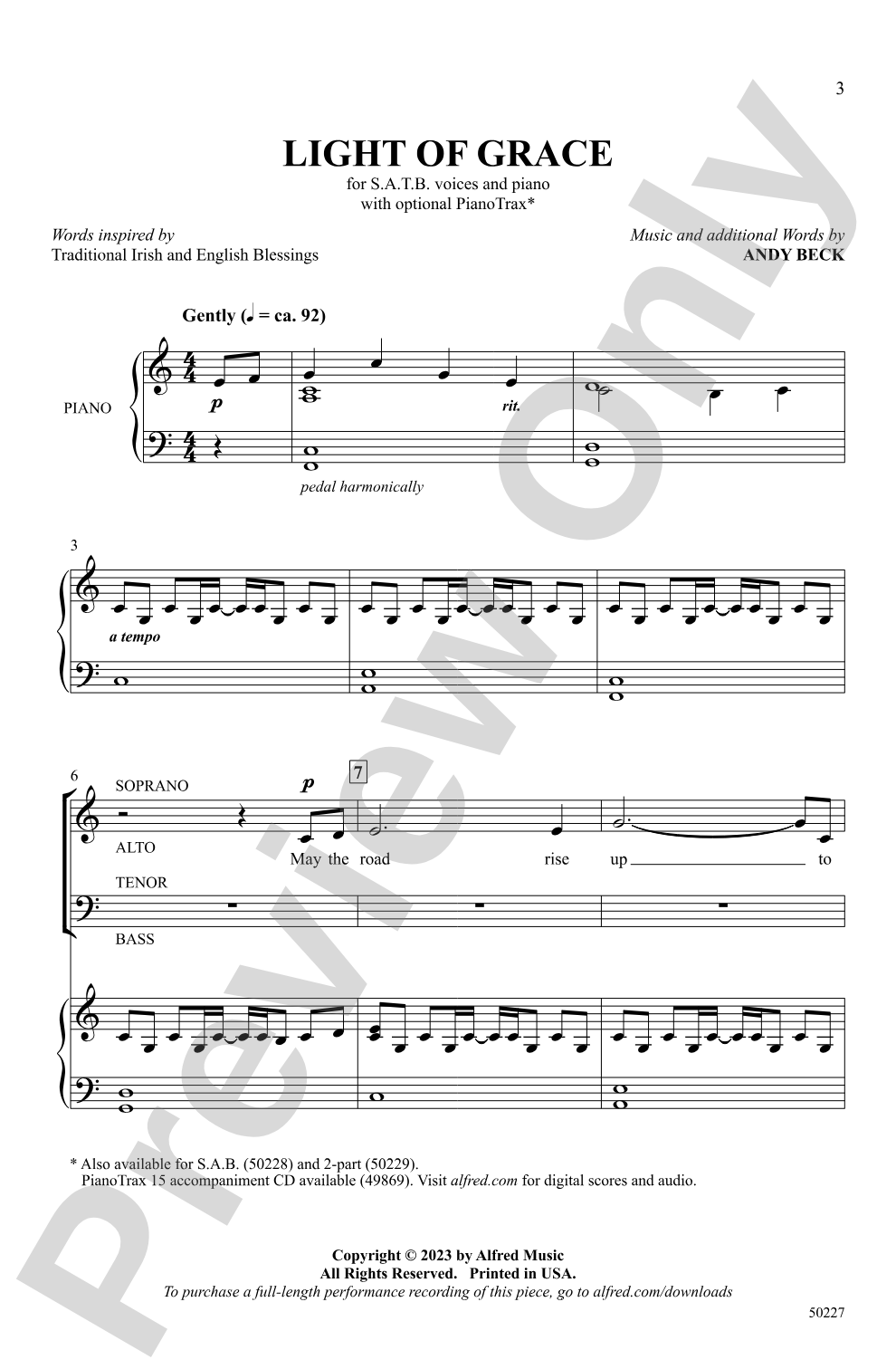

Light of Grace: SATB Choral Octavo
Words inspired by Traditional Irish and English Blessings, music and additional words by Andy Beck
Item: 00-PO-0007161
$2.05
Minimum order quantity: 20 copies
Pickup currently not available
Related Items
Light of Grace: PianoTrax Digital Audio Download |
$9.99
|
View | |
Light of Grace: SAB Choral Octavo |
$2.05
|
View | |
Light of Grace: 2-Part Choral Octavo |
$2.05
|
View | |
Light of Grace: SATB Choral Octavo |
$2.05
|
View | |
Light of Grace: SAB Choral Octavo |
$2.05
|
View | |
Light of Grace: 2-Part Choral Octavo |
$2.05
|
View |
Description
Here's a heartfelt adaptation of traditional Irish and English blessing texts. A gentle yet rhythmic piano figure supports graceful vocal lines and occasional harmonic crunches in this warm closer or send-off song by Andy Beck. Concludes with a musical quote from "Amazing Grace" to bring a final smile, chill, or tear.


Light of Grace: SATB Choral Octavo isn't in MakeMusic Cloud just yet...but it could be. Let us know you'd like to see it, and you'll help shape what comes next. In the meantime, start a free trial and dive into thousands of interactive titles your students can play along with today.
Request This Title
Tell us you want it.
Start Your Free Trial
Explore everything that's ready to play right now.
Sample Audio
1
Audio File
--:--
0:00
0:00
Sample Video
1 / 2
Additional Details
Series:
Alfred Choral Designs
Publisher:
Alfred Music
Page Count:
12
SKU:
00-PO-0007161
More about this title
About the Composer: Andy Beck

Andy Beck directs choral publications at Alfred Music and has become one of the most widely performed contemporary composers in choral music, with over 450 works currently in print across choral octavos, vocal resources, and children's musicals. His influence extends beyond the page through his work as a guest conductor, adjudicator, and clinician for honor choirs and all-state ensembles throughout the United States, as well as his collaborations with commissioned projects across the country.
Beck holds degrees in Music Education from Ithaca College and Northwest Missouri State University. A tenor himself, he brings performer's insight to his writing and continues to direct the North Carolina Master Chorale Chamber Choir while maintaining an active presence as a studio singer and musical theatre director. His commitment to music literacy and choral artistry shapes both his compositions and the publications he develops for Alfred's catalog.
Why we love this
Beck finds the sweet spot between accessibility and musical substance here. The piano figure gives your section something memorable to latch onto rhythmically, while the harmonic language feels contemporary without alienating singers who prefer traditional voicing. Using a blessing text and concluding with the final phrase of "Amazing Grace" gives you a piece that lands emotionally without sentimentality, making it equally effective as a concert closer or graduation send-off.
What to expect
The piece unfolds with quiet intention, supported by a gentle but steady rhythmic pulse. Moments of harmonic richness surprise you without disrupting the overall sense of care and blessing, and the gentle reference to "Amazing Grace" arrives as an understated gift rather than a heavy-handed callback.
Who it's for
This octavo works for choirs spanning high school through adult levels who want a closing number with genuine warmth and spiritual substance. Directors programming graduation or blessing ceremonies will find this especially valuable, as will conductors looking for a secular work rooted in traditional texts that doesn't require specialized performance techniques or extended rehearsal time.
How to get the most out of it
- Balance the piano accompaniment to sit lightly beneath the vocal lines; the rhythmic figure should anchor rather than drive the piece.
- Shape the harmonic crunches deliberately. These moments deserve slight breath space and clarity so the choir can feel the sonorities shift.
- The "Amazing Grace" quote works best when the choir recognizes it organically rather than overstating the reference. Keep the final phrases buoyant and warm.
How to use it
Close a concert with this as your final number when you want the audience to leave feeling affirmed rather than drained. It pairs beautifully on a program with other accessible choral works of substance and lands particularly well in spring concerts, graduations, or ceremonies centered on transition and blessing.
Skills your students will build
- Singing with intentional dynamic shape in a legit choral style
- Balancing blend while sustaining harmonic color in moments of tension
- Responding to accompaniment cues in ensemble rather than as individual voice parts
- Connecting text meaning to musical phrasing in a secular blessing context