
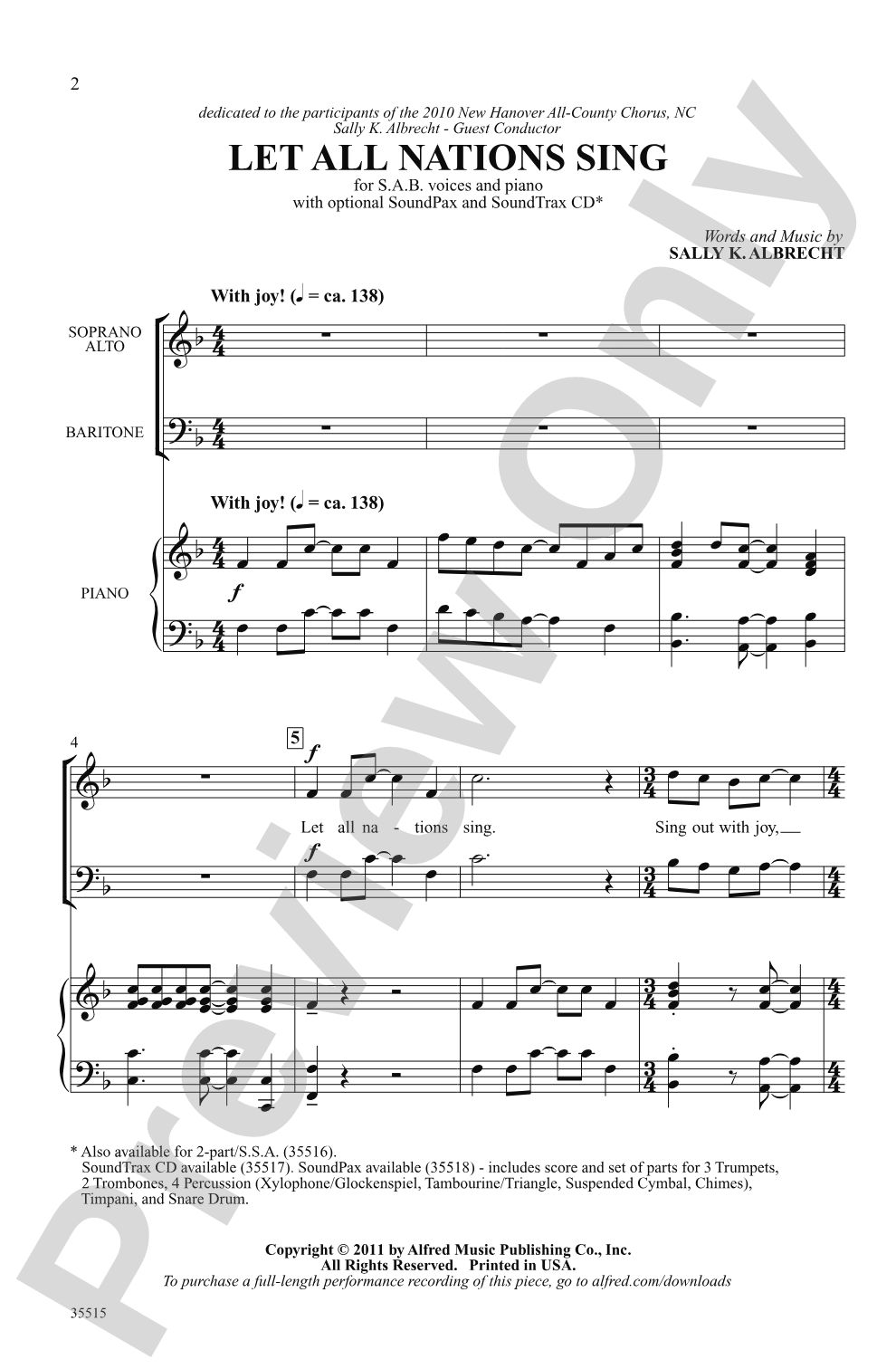
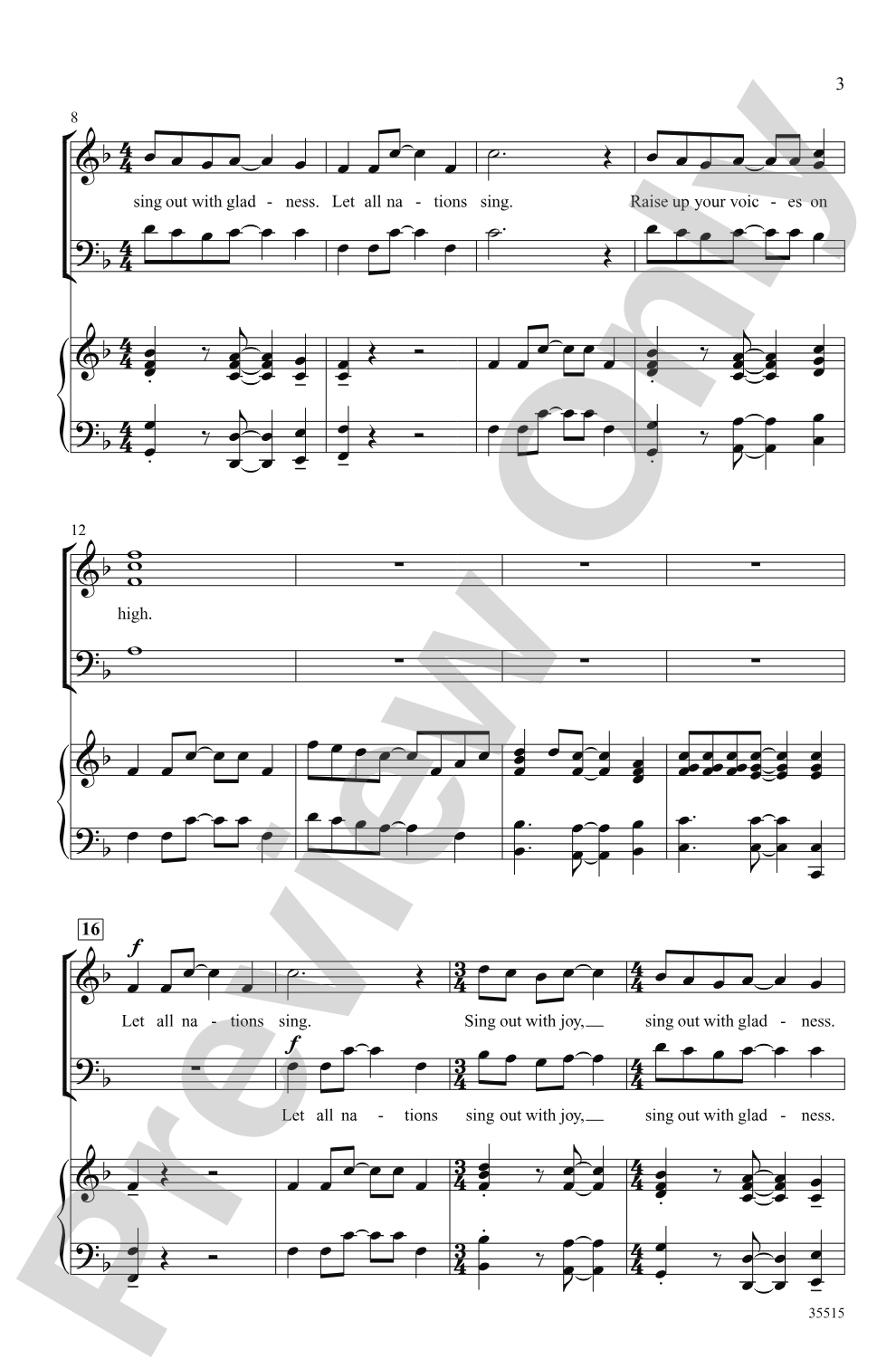

Let All Nations Sing: SAB Choral Octavo
Words and music by Sally K. Albrecht
Item: 00-PO-0000902
$2.25
Minimum order quantity: 20 copies
Pickup currently not available
Related Items
Let All Nations Sing: SoundTrax Digital Audio Download |
$26.99
|
View | |
Let All Nations Sing: 2-Part / SSA Choral Octavo |
$2.25
|
View | |
Let All Nations Sing: Choral SoundPax |
$40.00
|
View | |
Let All Nations Sing: SAB Choral Octavo |
$2.25
|
View | |
Let All Nations Sing: 2-Part / SSA Choral Octavo |
$2.25
|
View | |
Let All Nations Sing: Choral Octavo SoundTrax CD |
$26.99
|
View | |
Let All Nations Sing: Choral SoundPax |
$40.00
|
View |
Description
This joyous and majestic fanfare features lots of echoes for effective singing (and easy learning). Appropriate for general and holiday use, school and church.


Let All Nations Sing: SAB Choral Octavo isn't in MakeMusic Cloud just yet...but it could be. Let us know you'd like to see it, and you'll help shape what comes next. In the meantime, start a free trial and dive into thousands of interactive titles your students can play along with today.
Request This Title
Tell us you want it.
Start Your Free Trial
Explore everything that's ready to play right now.
Sample Audio
1
Audio File
--:--
0:00
0:00
Sample Video
No sample videos found.
Additional Details
Series:
Alfred Choral Designs
Publisher:
Alfred Music
Page Count:
8
SKU:
00-PO-0000902
More about this title
About the Composer: Sally K. Albrecht
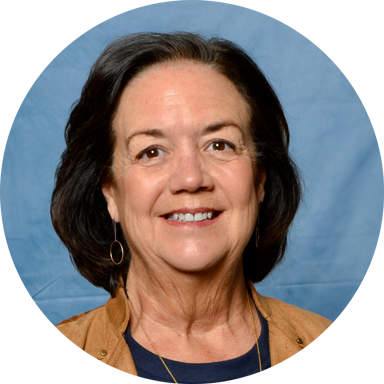
Sally K. Albrecht has shaped choral music education for over thirty years, first as Director of School Choral, Vocal, and Elementary Publications at major publishers including Alfred Music, then as a sought-after clinician and conductor at festivals nationwide. Her credentials span both coasts and institutional settings: she earned degrees from Rollins College, the University of Miami (where she studied Drama and Accompanying), and taught in music departments at Oakland University, Jersey City State College, and Meredith College. Since 1987, she has been an annual recipient of the ASCAP Special Music Award.
With more than 600 choral publications and 75 songbooks and musicals in print, Albrecht has become synonymous with accessible, singable writing for school and church choirs. Her particular expertise in choral movement and kinesthetic learning shapes every score she creates. She and her husband, composer Jay Althouse, live in Wake Forest, North Carolina, where she continues to influence music education through her prolific output and leadership roles, including her 2021 Distinguished Alumna Awards from both Rollins College and the University of Miami Frost School of Music.
Why we love this
Albrecht has engineered this fanfare to teach itself. The echo writing does triple duty: it reinforces melodic lines so students internalize the tune faster, creates natural opportunities for part independence without overwhelming singers, and generates genuine excitement in performance. For directors juggling concert prep with genuine learning outcomes, this is exactly the kind of score that works.
What to expect
A celebration that unfolds with architectural grace. The echoes create a sense of call and response, as if voices are answering one another across space, building toward a joyous proclamation that feels both intimate and grand.
Who it's for
This works for developing choirs that have basic part security but benefit from scaffolded learning. It's equally at home in school settings building toward concert season or churches seeking jubilant repertoire with immediate impact.
How to get the most out of it
- Lean into the echo moments as opportunities for dynamic contrast. Let the first phrase bloom fully, then pull back slightly on the repeat so the architectural design reads clearly to listeners.
- Treat the fanfare character as invitation rather than bombast. The majestic quality comes from precision and lift in the line, not from singing louder.
- Use the recorded accompaniment in sectional rehearsals to lock individual parts, then remove it gradually as singers gain confidence in their independence.
How to use it
Open a holiday concert or spring celebration with this piece to establish uplifted energy from the first notes. Its general-purpose text allows flexible placement throughout the year, and the eight-page length makes it substantial enough to anchor a concert segment without consuming rehearsal time disproportionately.
Skills your students will build
- Singing echo entrances with rhythmic precision
- Maintaining line independence when other parts are active
- Dynamic shaping within a fanfare style
- Sustaining pitch clarity at higher tessitura