Lavender's Blue Cover Image

Lavender's Blue: String Orchestra Conductor Score

$7.00 USD
Sale price  $7.00 USD Regular price 
Skip to product information
Lavender's Blue Cover Image

Lavender's Blue: String Orchestra Conductor Score

Traditional / arr. Loreta Fin

Grade: 1.5

Item: 76-45309S

$7.00
Shipped

One moment…

Description
Based on the traditional folk tune used in the 2015 Disney film, Cinderella, this simple arrangement is divided into 3 violin, 3 viola, 3 cello, and 2 double bass parts. It would be ideal for an ensemble of mixed abilities: every instrument can either play the melody, or one of the harmony or bass line parts. Alternatively, students can take turns picking one of the parts and changing lines during rehearsals---or even through the performance, as the 3 parts appear on the page as either A, B, or C. Written in D Major, it is in Rondo form, and explores the use of pizzicato, accidentals, and minor tonalities between the well-known melodic sections.

Lavender's Blue: String Orchestra Conductor Score isn't in MakeMusic Cloud just yet...but it could be. Let us know you'd like to see it, and you'll help shape what comes next. In the meantime, start a free trial and dive into thousands of interactive titles your students can play along with today.

Sample Pages

Sample Audio
No sample audio found.
Sample Video
Additional Details
Series: Wilfin String Orchestra: Young String Ensemble Series
Publisher: Wilfin Music
Page Count: 16
UPC: 038081520285
SKU: 76-45309S

More about this title

About the Arranger: Loreta Fin
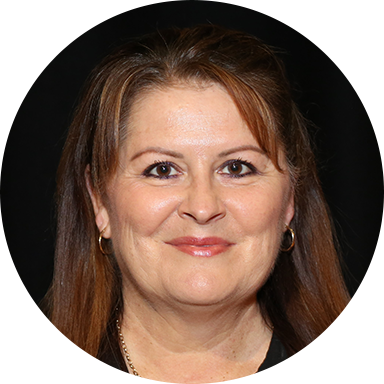
Loreta Fin

Loreta Fin is an Australian violist and conductor with deep roots in string education and performance. A graduate of the Sydney Conservatorium of Music, she served as Principal Viola with the Queensland Pops Orchestra for over 25 years while building a reputation as an adjudicator at major Australian competitions and presenter at national music conferences. Her work as Director of Strings at Somerville House School in Brisbane since 1993 and her leadership roles within the Australian Strings Association have shaped string pedagogy across the country.

Beyond performance and administration, Fin is a prolific composer with over 100 works for string orchestra published worldwide. Her contributions to Australian music education earned her the National Award for Services to Music and String Teaching, and she has conducted honours ensembles and international projects including the Miri Music Project in Malaysia. She currently serves as State Advisor for Strings and examiner with the Australian Music Examinations Board.

Why we love this

Fin's arrangement solves a real programming need by offering a film-familiar melody in a genuinely flexible format. The three independent parts labeled A, B, and C let mixed-ability orchestras find their footing without simplification, and the strategic use of pizzicato, modal color, and minor key passages between the main theme gives student musicians textural variety to discover and execute.

What to expect

Lavender's Blue carries the gentle, lyrical warmth of its folk origins while Fin's arrangement adds harmonic color and textural play that keeps ears engaged. The pizzicato moments feel playful against the legato sections, and the minor key excursions bring shadow and intrigue before the melody returns, creating a satisfying arc within a short piece.

Who it's for

Young string orchestras with mixed reading levels will thrive here. Every player can access the music their part demands, whether they're playing the recognizable tune or a supporting harmony line. Ensembles preparing for winter or spring concerts will appreciate a piece that connects with student audiences through Disney familiarity while teaching genuine orchestration concepts.

How to get the most out of it

  • Balance the pizzicato passages carefully; with multiple parts playing pizzicato simultaneously, clarity matters more than volume. Younger players often dig in too hard.
  • Treat the minor tonality sections as distinct character moments rather than transitions. Slight tempo adjustment or dynamic shape here can mark the structural sections without losing the rondo's forward motion.
  • Rotate parts during sectional rehearsals so each violinist, violist, and cellist experiences melody, harmony, and bass. This approach builds ensemble listening and prevents part assignment from becoming locked in early.
  • Keep the opening D Major section warm and songlike; the folk tune works best when it breathes like a melody, not a exercise.

How to use it

Program this as an accessible opener for a full orchestra concert, or pair it with other string-focused repertoire to showcase your ensemble's range in a single set. Its manageable length and film connection make it ideal for family concerts or educational performances where engagement with non-traditional audiences matters.

Skills your students will build

  • Reading three independent parts and selecting their level of difficulty
  • Playing pizzicato with clear articulation and controlled dynamics
  • Navigating accidentals and brief excursions into minor tonality
  • Ensemble balance between melody, harmony, and bass lines
  • Rondo form recognition and phrase structure

You May Also Like