

Laudate Dominum: 2-Part / SSA Choral Octavo
By Andy Beck
Item: 00-PO-0006897
$2.05
Minimum order quantity: 20 copies
Pickup currently not available
Description
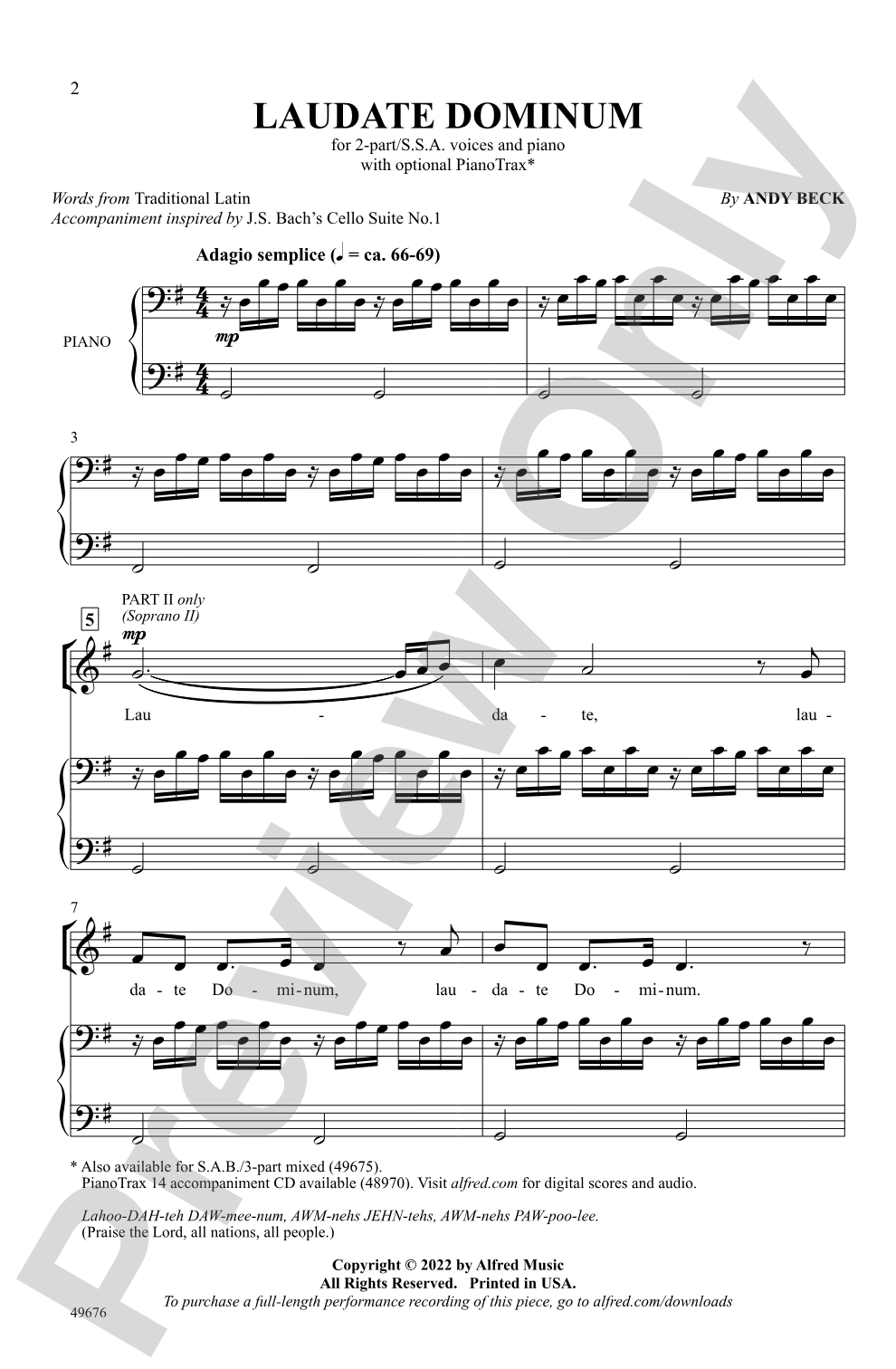
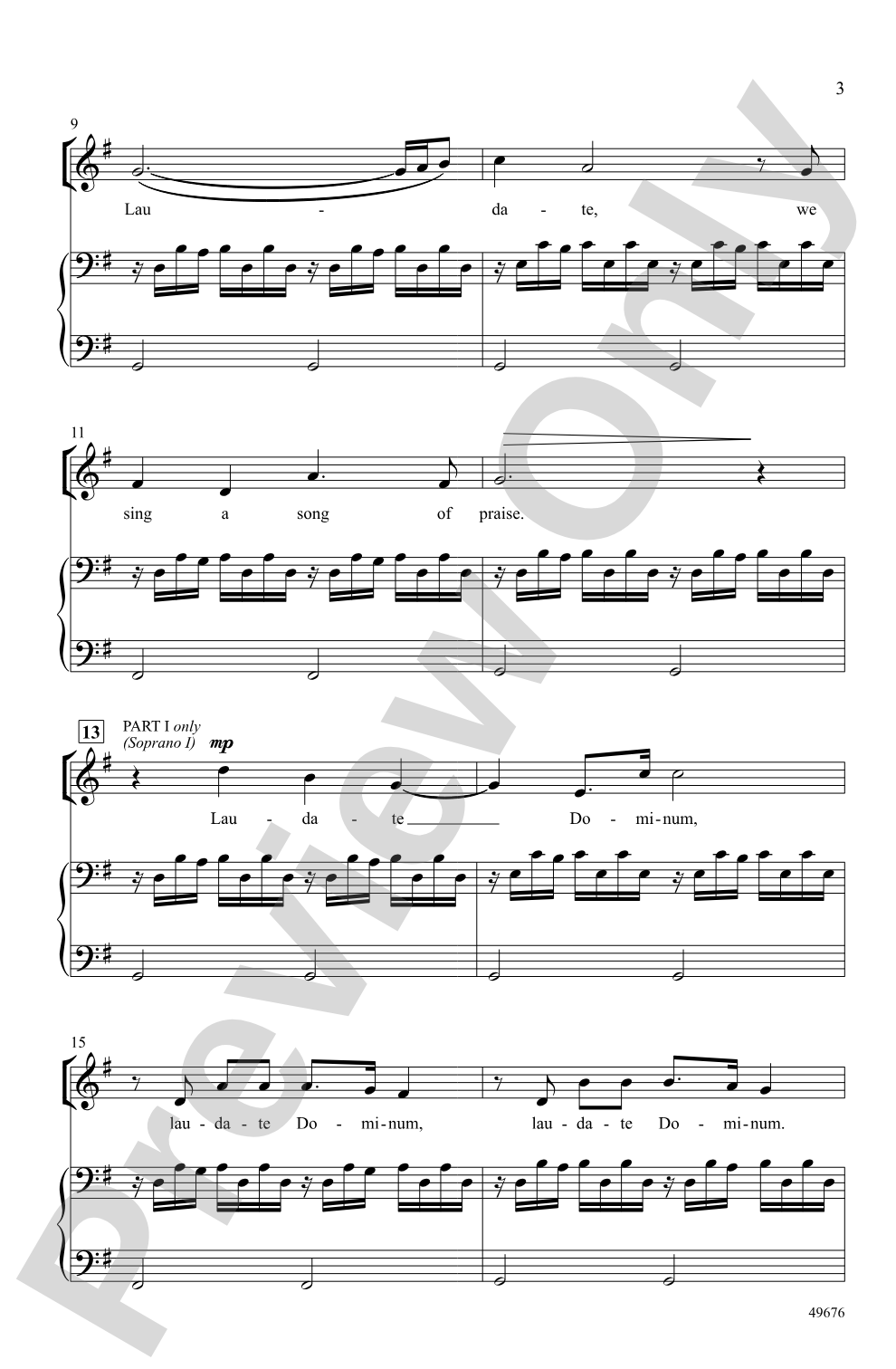
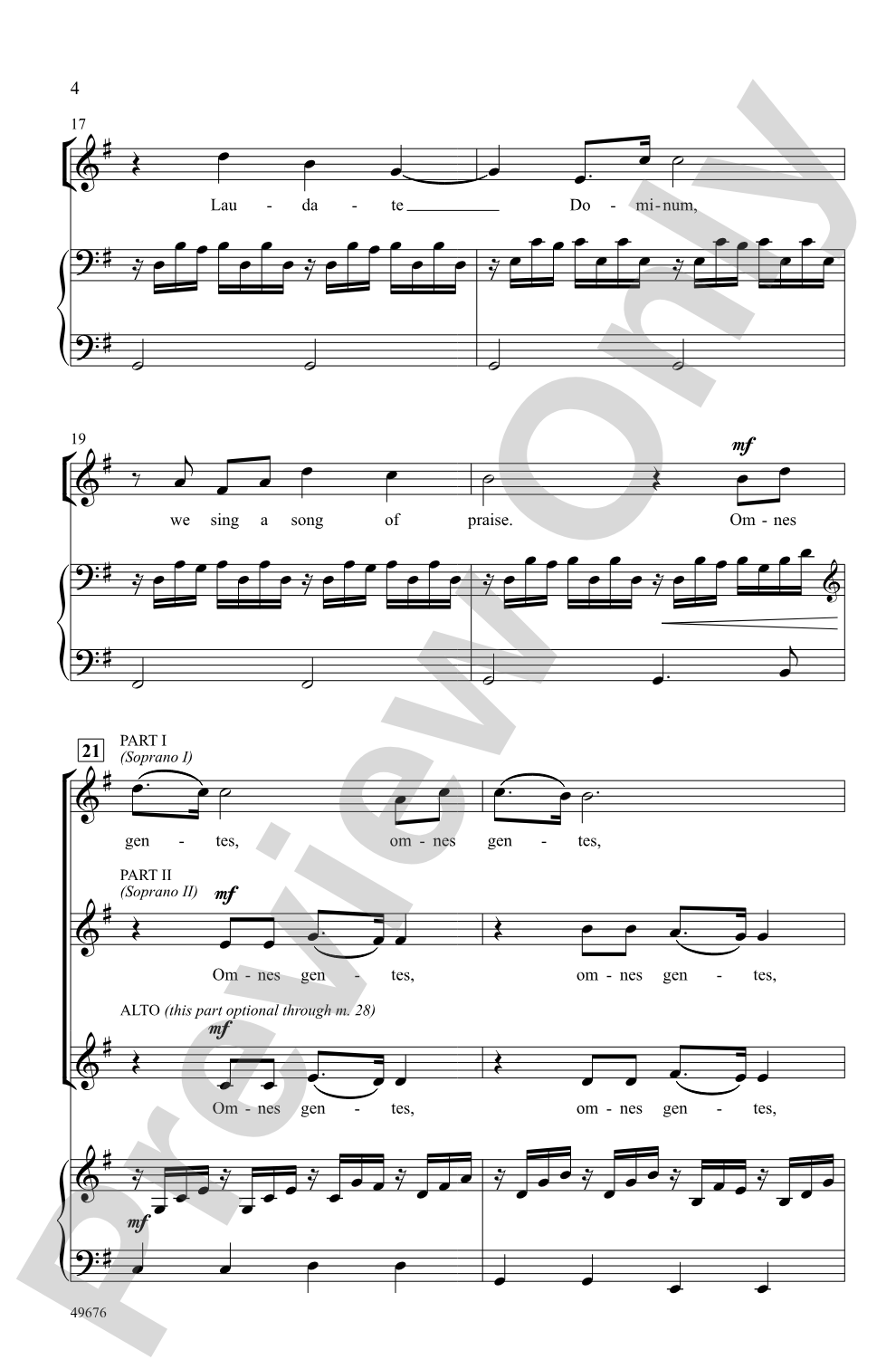
Lyrical voices float over a Bach-inspired piano accompaniment in this beautiful setting built on five common Latin words. Three independent melodies are introduced one at a time and eventually layered to create artful polyphony that is easily achieved. Cue-sized notes in the SAB/3-Part Mixed provide options for changing voices, and the treble arrangement can be sung in either two or three parts. An ideal vehicle for improving vocal production and building musicianship.


Discover MakeMusic Cloud: thousands of interactive titles your students can play along with today.
Sample Audio
1
Audio File
--:--
0:00
0:00
Sample Video
1 / 2
Additional Details
Series:
Alfred Choral Designs
Publisher:
Alfred Music
Page Count:
12
SKU:
00-PO-0006897
More about this title
About the Composer: Andy Beck

Andy Beck directs choral publications at Alfred Music and has composed and arranged more than 450 choral works now in print. His writing spans sacred music, secular repertoire, vocal resources, and children's musicals, with performances by choirs worldwide documented regularly on YouTube. Beck holds degrees in Music Education from Ithaca College and Northwest Missouri State University and serves as guest conductor, clinician, and adjudicator for honor choirs and all-state groups across the country.
Beyond his prolific output as a composer, Beck is an accomplished tenor who performs with the North Carolina Master Chorale Chamber Choir and brings deep expertise in vocal pedagogy. His instructional materials, including Sing at First Sight and Vocalize! 45 Vocal Warm-Ups That Teach Technique, reflect his commitment to music literacy and choral artistry. He has been an Alfred Music studio singer since 1992 and regularly directs musical theatre alongside his work as a clinician and commissioned composer for ensembles of all ages.
Why we love this
Beck's ear for accessible polyphony shines here. The way three independent melodies layer gradually builds student confidence in voice independence without overwhelming them, and the cue-sized notes give you real flexibility across different voicing contexts during a single rehearsal season.
What to expect
Lyrical and contemplative, with a sense of voices interweaving like light through stained glass. The Bach-inspired accompaniment anchors the piece in classical tradition while the text sets gently and naturally, allowing singers to focus on beautiful vocal production rather than wrestling with awkward word-setting.
Who it's for
This setting works beautifully for treble choirs in middle school through early high school, offering genuine musical challenge without requiring an advanced choir. It also fits well in mixed ensembles seeking repertoire that showcases upper voices with integrity.
How to get the most out of it
- Introduce each melodic line separately during the first read-through. Let singers hear how the voices interlock before attempting to balance all three simultaneously.
- Shape the Bach-inspired accompaniment with intentional phrasing so the piano doesn't become merely harmonic filler. The keyboard part rewards expressive playing and lifts the overall musicianship.
- Use the optional SAB cues to rotate singers between parts in rehearsal. Moving a strong singer from part one to part two and back again accelerates their understanding of how the harmony functions.
- Focus on vowel consistency across the two or three parts you choose. Unified vowel shapes make the polyphony sound cohesive rather than fragmented.
How to use it
Program this as a concert opener or a graceful contrast between more energetic pieces. Its introspective character and moderate length make it ideal for a spring concert focused on sacred music, and its pedagogical strengths make it equally valuable during a festival season where adjudicators will hear careful voice leading and clean intonation.
Skills your students will build
- Singing independent melodic lines within a polyphonic texture
- Controlling vowel shapes and tone quality across multiple voice parts
- Listening to and balancing three-part harmony
- Building vocal stamina through sustained, lyrical singing
- Reading and executing layered melodic entrances and cue-sized optional notes