

Laudate Dominum: SAB / 3-Part Mixed Choral Octavo
By Andy Beck
Item: 00-PO-0006896
$2.05
Minimum order quantity: 20 copies
Pickup currently not available
Description
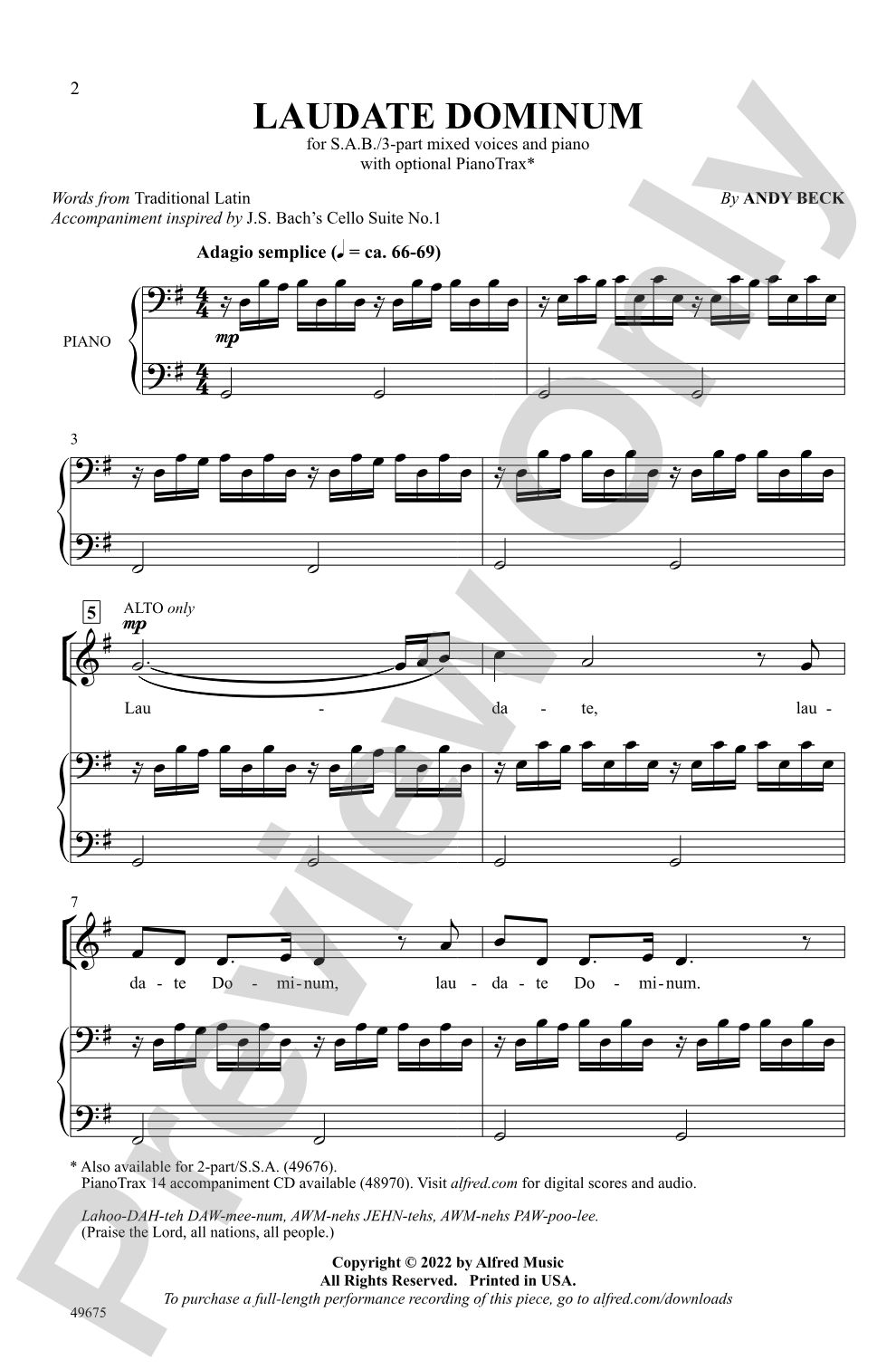
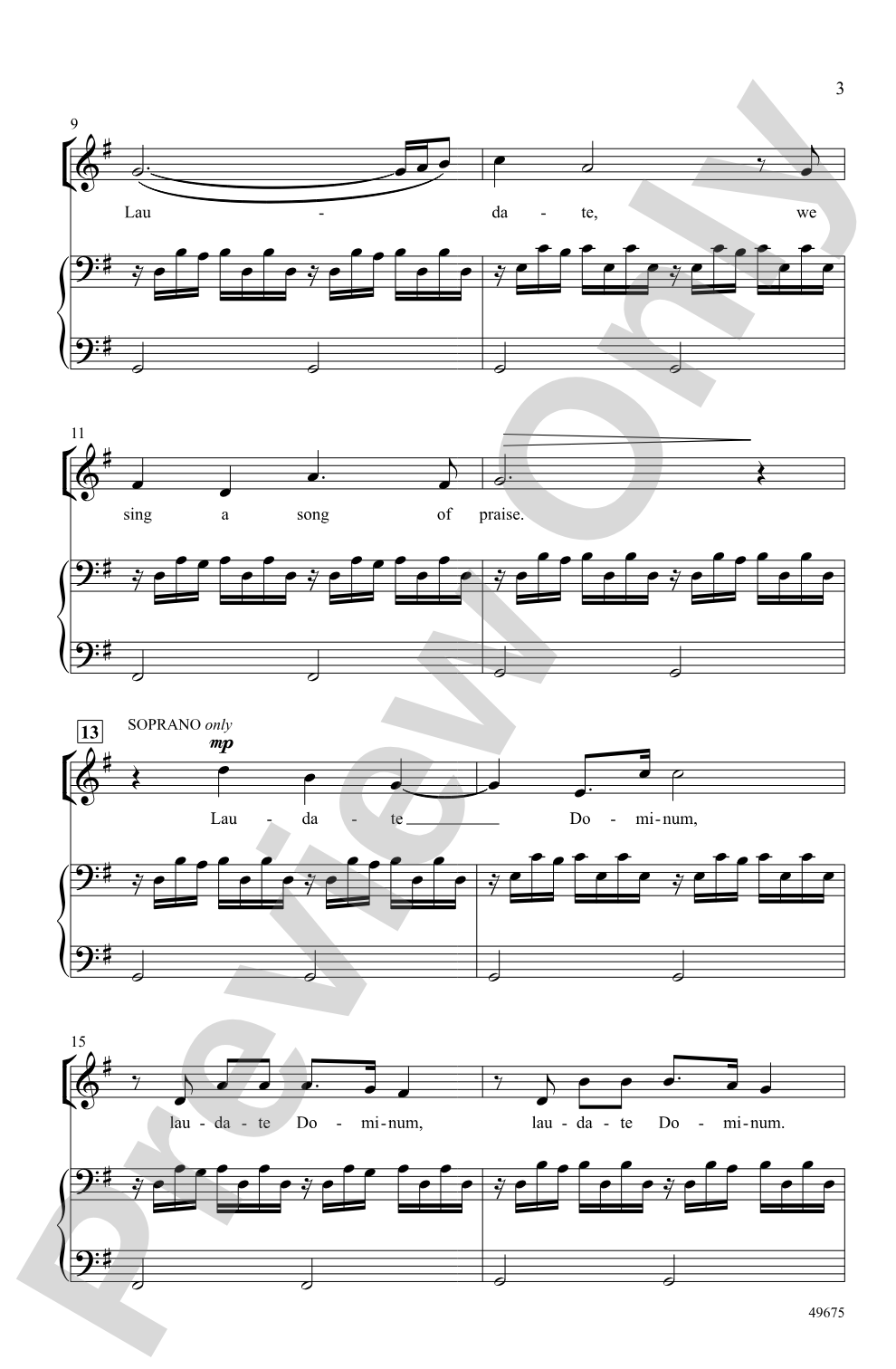
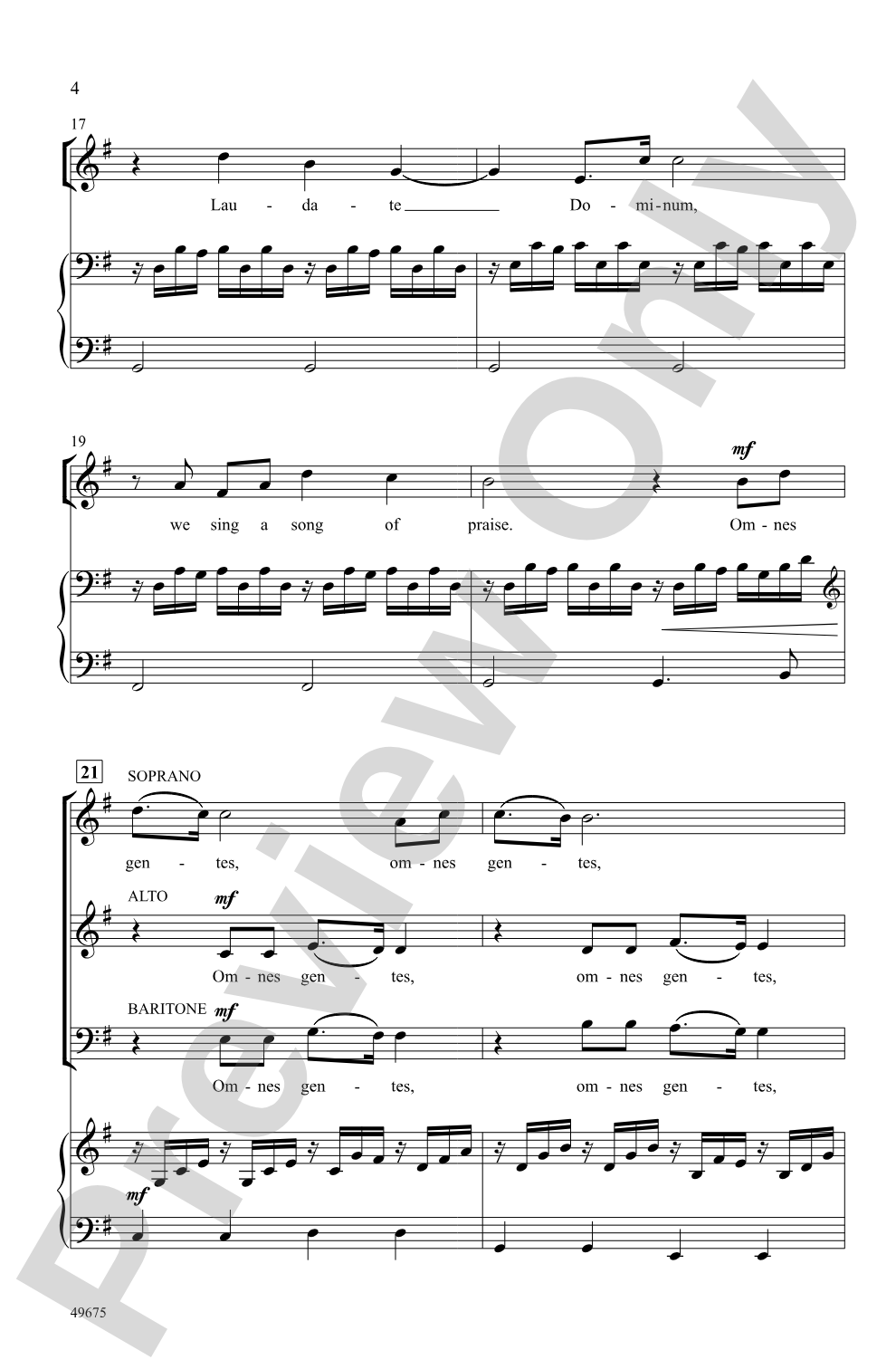
Lyrical voices float over a Bach-inspired piano accompaniment in this beautiful setting built on five common Latin words. Three independent melodies are introduced one at a time and eventually layered to create artful polyphony that is easily achieved. Cue-sized notes in the SAB/3-Part Mixed provide options for changing voices, and the treble arrangement can be sung in either two or three parts. An ideal vehicle for improving vocal production and building musicianship.


Discover MakeMusic Cloud: thousands of interactive titles your students can play along with today.
Sample Audio
1
Audio File
--:--
0:00
0:00
Sample Video
1 / 2
Additional Details
Series:
Alfred Choral Designs
Publisher:
Alfred Music
Page Count:
12
SKU:
00-PO-0006896
More about this title
About the Composer: Andy Beck

Andy Beck directs choral publications at Alfred Music and has composed and arranged over 450 choral works now in widespread use. His output spans sacred and secular repertoire, vocal resources for sight-singing and technique development, and children's musicals that have found their way into classrooms and concert halls across the country. His music appears regularly on YouTube, performed by choirs of every age and ability level.
Beyond the page, Beck remains active as a guest conductor, adjudicator, and clinician working with honor choirs and all-state ensembles throughout the Southeast and beyond. A trained tenor with degrees in Music Education from Ithaca College and Northwest Missouri State University, he brings classroom experience and performance artistry to everything he publishes. Since 1992 he has contributed as a studio singer for Alfred, and he continues to direct and perform in musical theatre and chamber choral settings, grounding his compositional work in the real demands of singers and directors.
Why we love this
Beck's use of cumulative layering here rewards careful rehearsal and gives singers a genuine sense of compositional architecture. The Bach-inspired harmonic language feels elevated without demanding advanced music reading, and the flexibility built into the arrangement (cued notes, optional parts) lets you shape it to match your choir's current strength without compromising the musical intent.
What to expect
Reverent and contemplative, with voices gradually emerging from stillness into luminous harmony. The Bach-inspired framework grounds the piece in musical tradition while the lyrical melody lines feel contemporary and singable, creating a setting that honors the Latin text without sounding archaic or overly academic.
Who it's for
Any choir working to strengthen vocal production and musicianship through repertoire that actually teaches. It serves concert and festival contexts equally well and works for intermediate choirs that are ready for three independent voice parts but haven't yet mastered complex meters or extended ranges.
How to get the most out of it
- Introduce each melody independently before combining them. This clarifies the voice leadings and builds confidence in sections that will later share the stage.
- Pay attention to the piano part as a model for phrasing and articulation. The accompaniment reveals how Bach might have shaped these harmonic progressions, and your singers can mirror that clarity.
- Use the cued notes strategically based on voice distribution. If you have strong tenors, keep the cues light; if sopranos need support, lean into them during early rehearsals and phase them out as comfort grows.
- Balance the polyphony by rotating which voice gets the spotlight during different sections. Even when all three lines sound together, subtle dynamic shaping keeps the texture clear rather than muddy.
How to use it
This pairs naturally with other sacred works in a concert built around text and tradition. Its moderate length and clear structure also make it an excellent choice for festival competitions where you want to demonstrate vocal control and ensemble balance without overwhelming the audience or your singers' stamina.
Skills your students will build
- Independent voice leading and awareness of harmonic function
- Sustaining lyrical tone while balancing three simultaneous melodic lines
- Reading and executing cued notes for flexibility in mixed-voice arrangements
- Phrasing over longer musical phrases without unnecessary breaks
- Latin diction and sacred text interpretation