
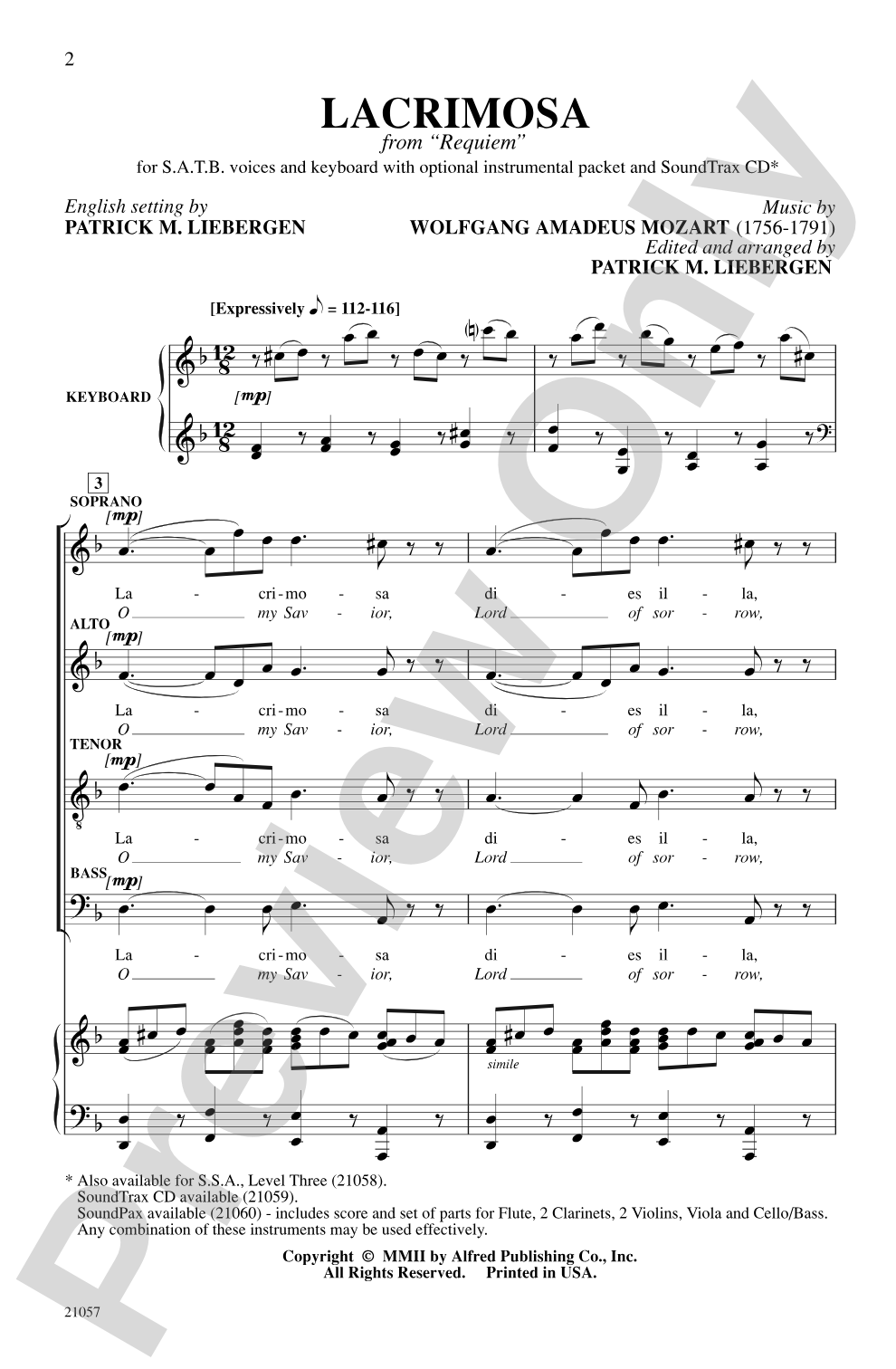
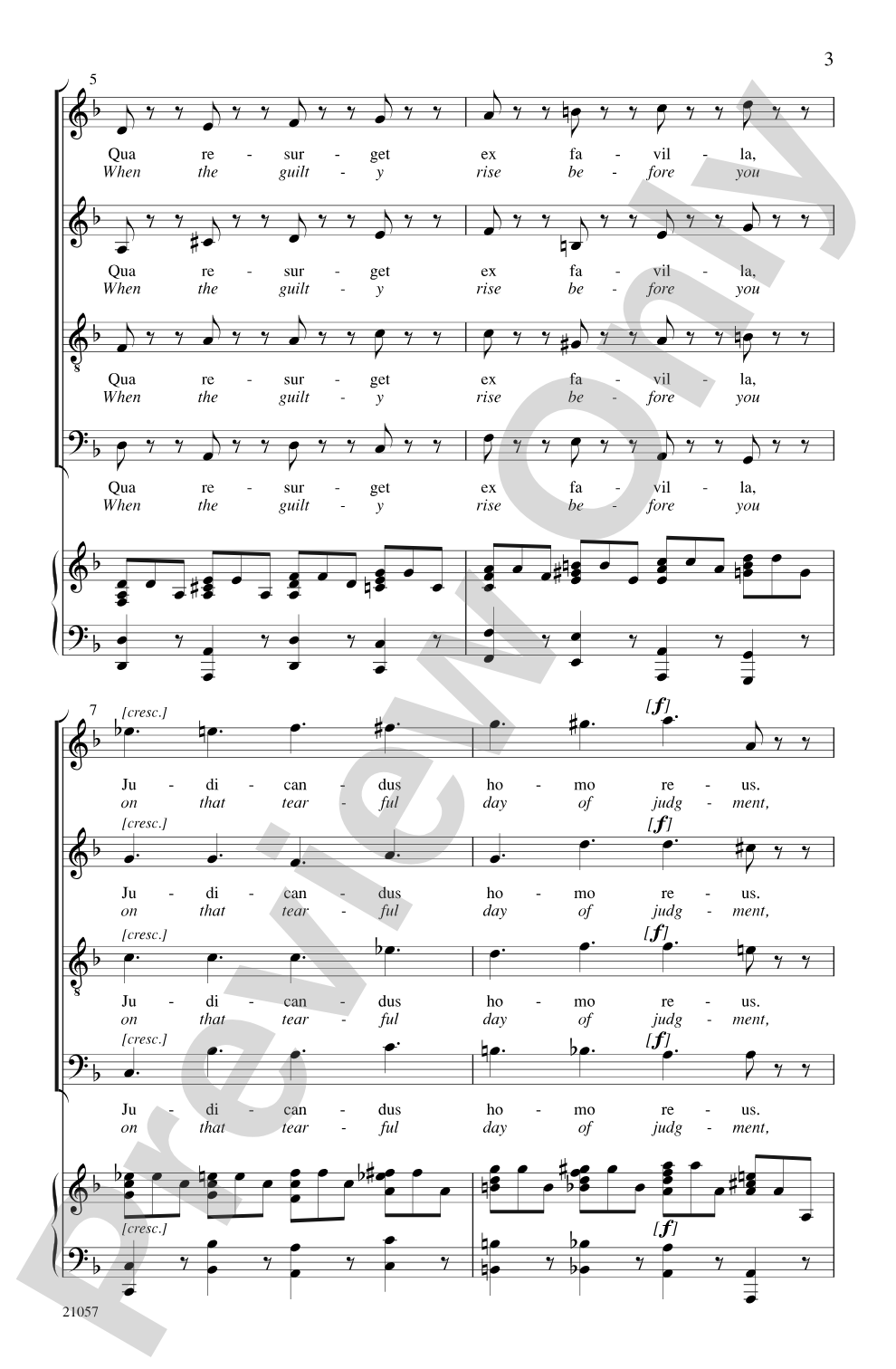

Lacrimosa (from Requiem): SATB Choral Octavo
Music by Wolfgang Amadeus Mozart / arr. Patrick M. Liebergen
Item: 00-PO-0002887

$2.25
Minimum order quantity: 20 copies
Pickup currently not available
Related Items
Lacrimosa (from Requiem): SSA Choral Octavo |
$2.25
|
View | |
Lacrimosa (from Requiem): Choral SoundPax |
$20.00
|
View | |
Lacrimosa (from Requiem): SATB Choral Octavo |
$2.25
|
View | |
Lacrimosa (from Requiem): SSA Choral Octavo |
$2.25
|
View | |
Lacrimosa (from Requiem): Choral Octavo SoundTrax CD |
$27.99
|
View | |
Lacrimosa (from Requiem): Choral SoundPax |
$20.00
|
View |
Description
A well-edited and newly engraved edition of the choral masterwork from one of Mozart's last works, his famous "Requiem." As always with Dr. Liebergen's editions, the publication includes a Latin pronunciation guide and an Editor's Note, complete with rehearsal suggestions. A masterpiece of choral literature for festivals, concerts, contests, and adjudications. Flexible SoundPax allows for many combinations of woodwinds, strings.


Don't just read it, hear it, play along with it, and watch your students grow with it. In MakeMusic Cloud, Lacrimosa (from Requiem): SATB Choral Octavo comes alive with professional accompaniment, adjustable tempo, and built-in practice tools that turn solo practice into real progress.
Open in the Player
Jump straight in and assign it today.
Start Your Free Trial
Open this title and explore the full library in minutes.
Sample Audio
1
Audio File
--:--
0:00
0:00
Sample Video
No sample videos found.
Additional Details
Series:
Alfred Archive Edition: Alfred Choral Designs
Publisher:
Alfred Music
Page Count:
8
SKU:
00-PO-0002887
More about this title
About the Composer: Wolfgang Amadeus Mozart
Wolfgang Amadeus Mozart (1756-1791) composed during the Classical era with a facility for melody and harmonic sophistication that shaped European music for generations. His final work, the Requiem, represents the apex of his sacred choral writing. Mozart died before completing it; his student Franz Xaver Süssmayr finished the orchestration based on Mozart's sketches.
Why we love this
Liebergen's edition strips away the complications that can bog down rehearsal of this essential work. The Latin pronunciation guide and rehearsal suggestions give directors immediate access to what makes the "Lacrimosa" sing, while the flexible SoundPax accompaniment lets you shape the orchestration to your ensemble's strengths. Programming this movement signals artistic maturity to adjudicators and audiences alike.
What to expect
The "Lacrimosa" unfolds with profound stillness; Mozart's chromaticism and harmonic suspensions create a prayer that feels both personal and universal. The text painting is restrained but devastating. By the "Amen," the movement transcends mourning and touches something transcendent.
Who it's for
Intermediate to advanced SATB choirs preparing festival repertoire, contest entries, or concert programs that demand serious choral literature. Directors seeking a reliable, well-prepared edition with built-in rehearsal support will find Liebergen's approach invaluable. This works equally well in academic settings and semi-professional ensembles.
How to get the most out of it
- Balance the four voice parts carefully through the opening homophonic phrases; sopranos and altos should anchor the harmonic motion without drowning the inner voices. Check intonation in sustained chords by sectional rehearsal.
- Observe the Latin pronunciation guide closely, particularly the vowel coloration in "Lacrimosa" and the diphthongs in "dies illa." Clarity of text strengthens the emotional impact exponentially.
- Shape the dynamic arc across the full movement rather than treating it as isolated phrases. The "Amen" section builds from the previous material; let that continuity inform your tempo relationships.
- Experiment with the SoundPax accompaniment options early in rehearsal to establish how strings, woodwinds, or combined forces support your voices. Different combinations can highlight different voice leading.
How to use it
Position this as a centerpiece in a concert of sacred choral masterworks, or pair it with other movements from the Requiem for a sustained liturgical program. In a mixed concert setting, it provides weight and gravity that anchors lighter repertoire around it. Contest programs benefit enormously from the polish and gravitas this movement commands.
Skills your students will build
- Latin diction and clarity of sacred text
- Voice leading through chromatic harmony and harmonic suspensions
- Balancing four independent voice parts with equal weight
- Sustained legit legato singing across phrase lengths
- Ensemble intonation in extended harmonic progressions
- Interpreting Classical-era text painting and emotional nuance