
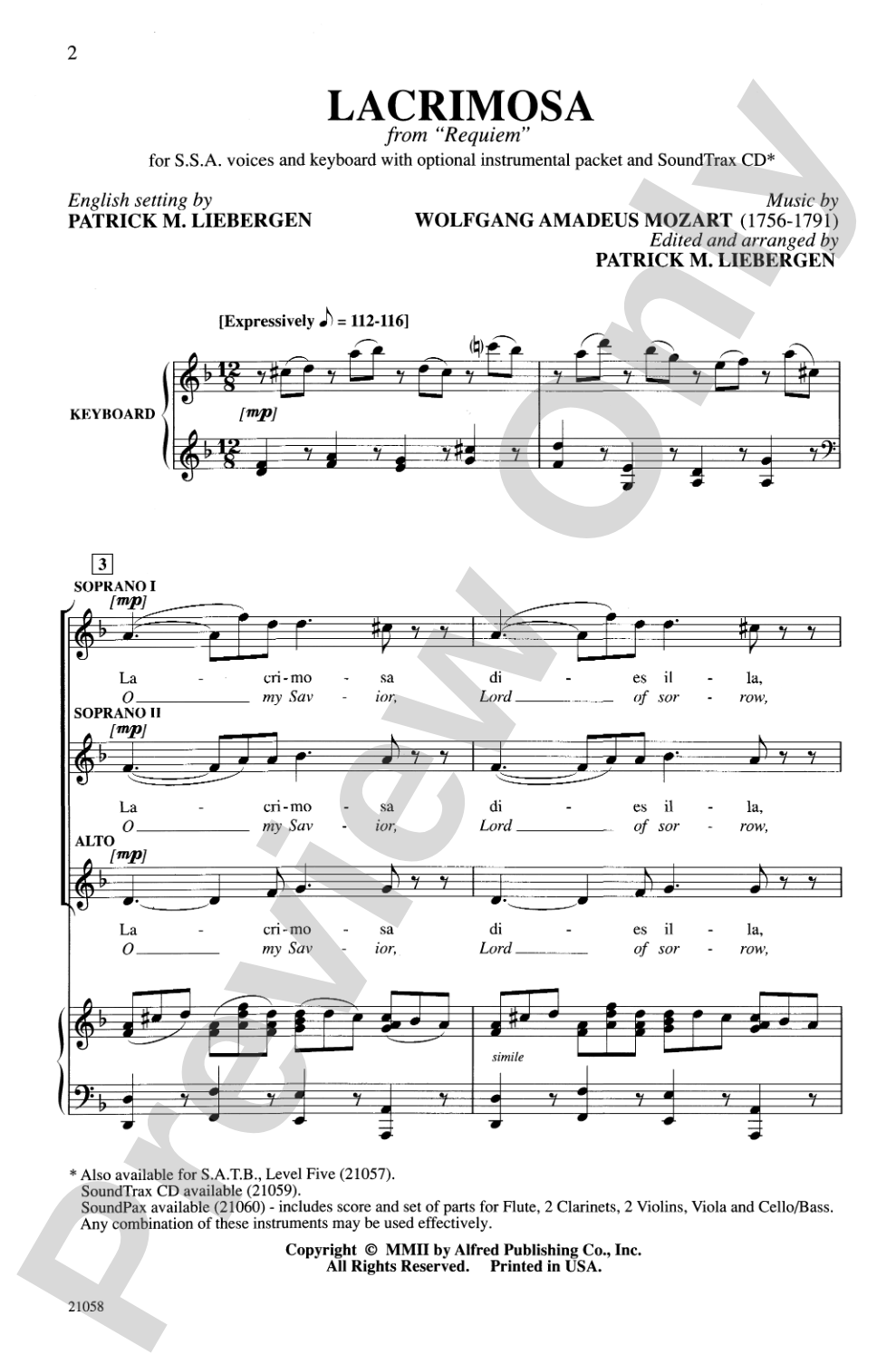
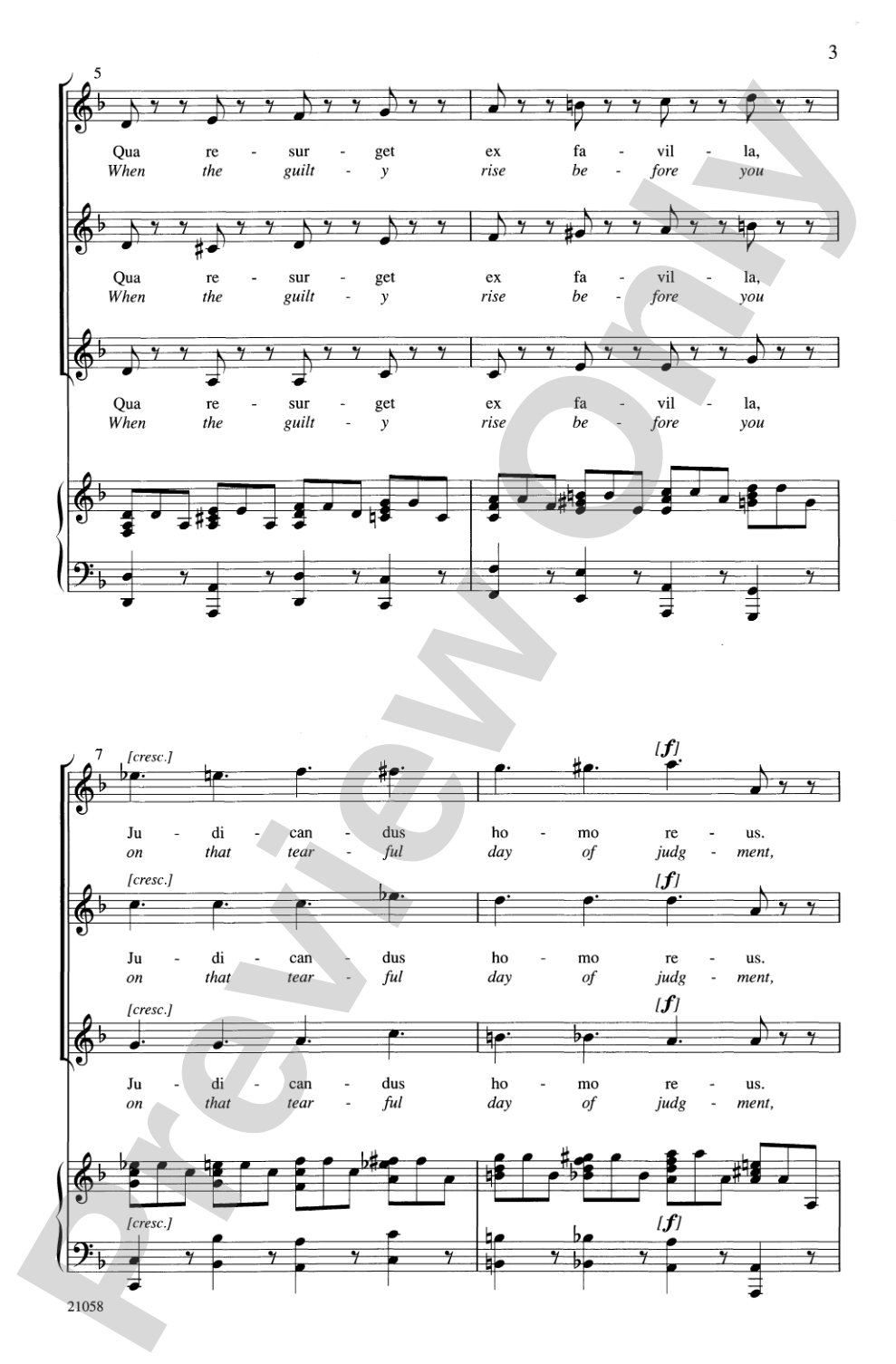

Lacrimosa (from Requiem): SSA Choral Octavo
Music by Wolfgang Amadeus Mozart / arr. Patrick M. Liebergen
Item: 00-PO-0002192

$2.25
Minimum order quantity: 20 copies
Pickup currently not available
Related Items
Lacrimosa (from Requiem): SATB Choral Octavo |
$2.25
|
View | |
Lacrimosa (from Requiem): Choral SoundPax |
$20.00
|
View | |
Lacrimosa (from Requiem): SATB Choral Octavo |
$2.25
|
View | |
Lacrimosa (from Requiem): SSA Choral Octavo |
$2.25
|
View | |
Lacrimosa (from Requiem): Choral Octavo SoundTrax CD |
$27.99
|
View | |
Lacrimosa (from Requiem): Choral SoundPax |
$20.00
|
View |
Description
A well-edited and newly engraved edition of the choral masterwork from one of Mozart's last works, his famous "Requiem." As always with Dr. Liebergen's editions, the publication includes a Latin pronunciation guide and an Editor's Note, complete with rehearsal suggestions. A masterpiece of choral literature for festivals, concerts, contests, and adjudications. Flexible SoundPax allows for many combinations of woodwinds, strings.


Don't just read it, hear it, play along with it, and watch your students grow with it. In MakeMusic Cloud, Lacrimosa (from Requiem): SSA Choral Octavo comes alive with professional accompaniment, adjustable tempo, and built-in practice tools that turn solo practice into real progress.
Open in the Player
Jump straight in and assign it today.
Start Your Free Trial
Open this title and explore the full library in minutes.
Sample Audio
1
Audio File
--:--
0:00
0:00
Sample Video
No sample videos found.
Additional Details
Series:
Alfred Archive Edition: Alfred Choral Designs
Publisher:
Alfred Music
Page Count:
8
SKU:
00-PO-0002192
More about this title
About the Composer: Wolfgang Amadeus Mozart
Wolfgang Amadeus Mozart (1756-1791) composed with astonishing fluency across every genre, from opera and symphony to chamber music and sacred works. His Requiem, left incomplete at his death and finished by Franz Xaver Süssmayr, stands as one of the most performed large-scale choral works in the repertoire and demonstrates Mozart's gift for combining profound emotional depth with crystalline musical clarity.
For choral directors, Mozart's sacred music offers an essential study in how to balance accessibility with sophistication. The Lacrimosa, in particular, exemplifies his ability to set Latin text with both textual clarity and musical drama, making it invaluable for singers developing interpretive maturity and for audiences seeking music of genuine spiritual weight.
Why we love this
Patrick Liebergen's edition brings professional standards to classroom and concert use: the newly engraved score is clean and legible, the Latin pronunciation guide removes a common pedagogical barrier, and the included rehearsal suggestions reflect decades of choral teaching experience. SSA voicing opens this cornerstone work to treble choirs and mixed ensembles alike, while the flexible SoundPax accompaniment option allows you to customize instrumentation to match what your ensemble can access.
What to expect
The Lacrimosa unfolds like a prayer set to music; Mozart's gently rising melodies and suspenseful harmonic movement create an atmosphere of tender lamentation. The piece holds genuine emotional weight without requiring dramatic virtuosity, drawing singers into contemplative and reverent expression.
Who it's for
This edition suits advanced treble choirs, competitive show choirs, festival and contest programs, and mixed ensembles seeking a sacred masterwork that challenges without overwhelming singers. It works equally well for a specialized sacred concert or as a centerpiece of a larger Requiem program.
How to get the most out of it
- Shape the opening phrase as a single arc of grief; resist the impulse to break at bar lines. Let the text 'Lacrimosa dies illa' breathe as one continuous thought.
- The recorded accompaniment can anchor unfamiliar harmonic terrain, but singers should practice without it early so they develop independence in the modal harmony.
- Pay close attention to Liebergen's editorial markings for dynamics and phrasing; they reflect historically informed performance practice while remaining singable for student voices.
- Balance the three voice parts carefully so no single line dominates. The piece's power comes from the blend of voices moving through complex harmony, not from any one part standing out.
How to use it
Feature this as the emotional anchor of a concert devoted to Mozart sacred works or as part of a larger Requiem performance alongside other movements. It also stands alone as a powerful closer to a program exploring themes of mortality and remembrance, particularly effective for memorial services or artistic collaborations between choral and instrumental ensembles.
Skills your students will build
- Reading accidentals and chromatic movement in Classical harmonic language
- Sustaining long phrases with proper breath management and line integrity
- Performing Latin text with clear vowel formation and diction
- Balancing three-part voicing in non-homophonic textures
- Interpreting expressive markings and editorial performance suggestions from authoritative sources