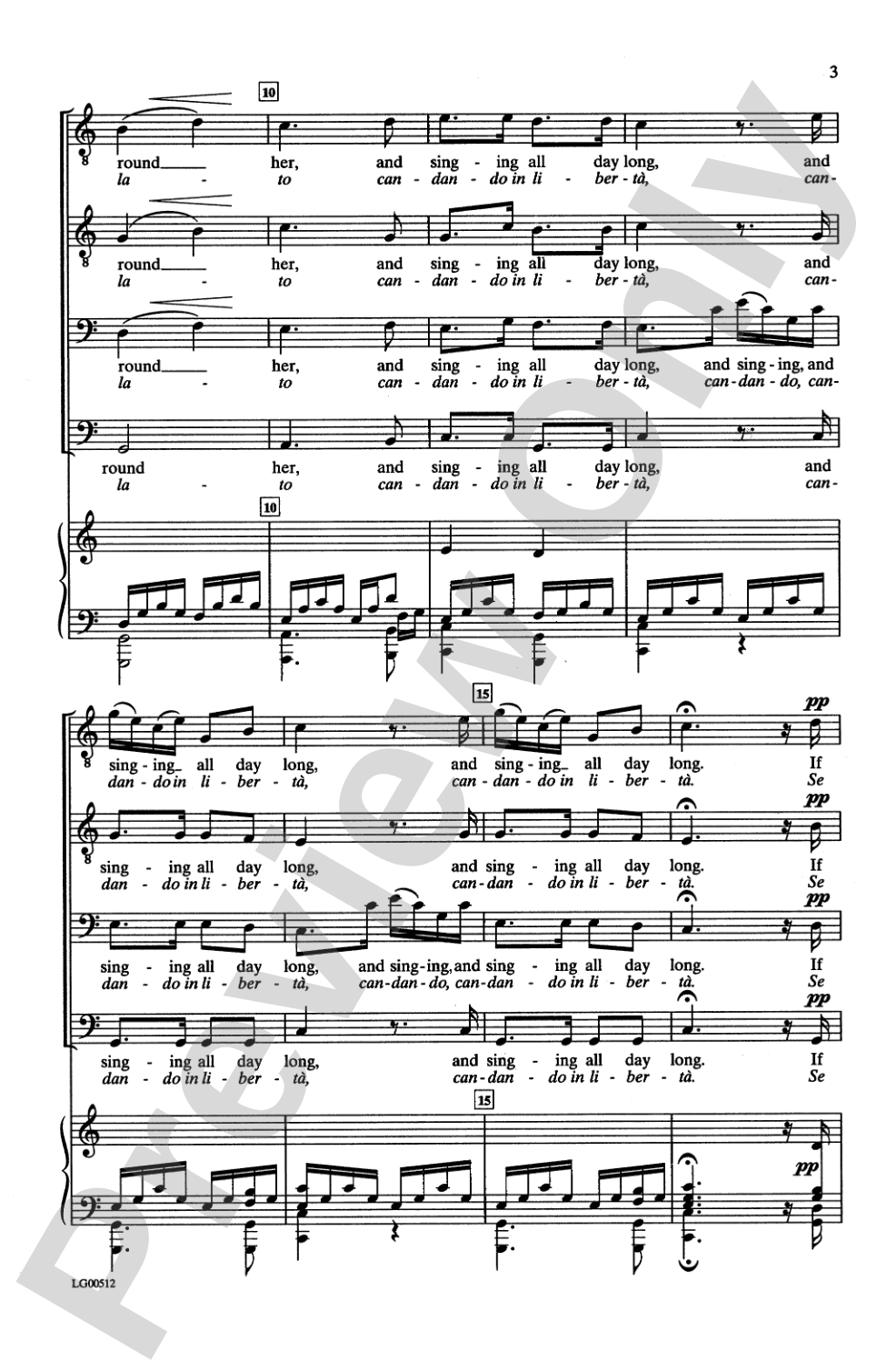
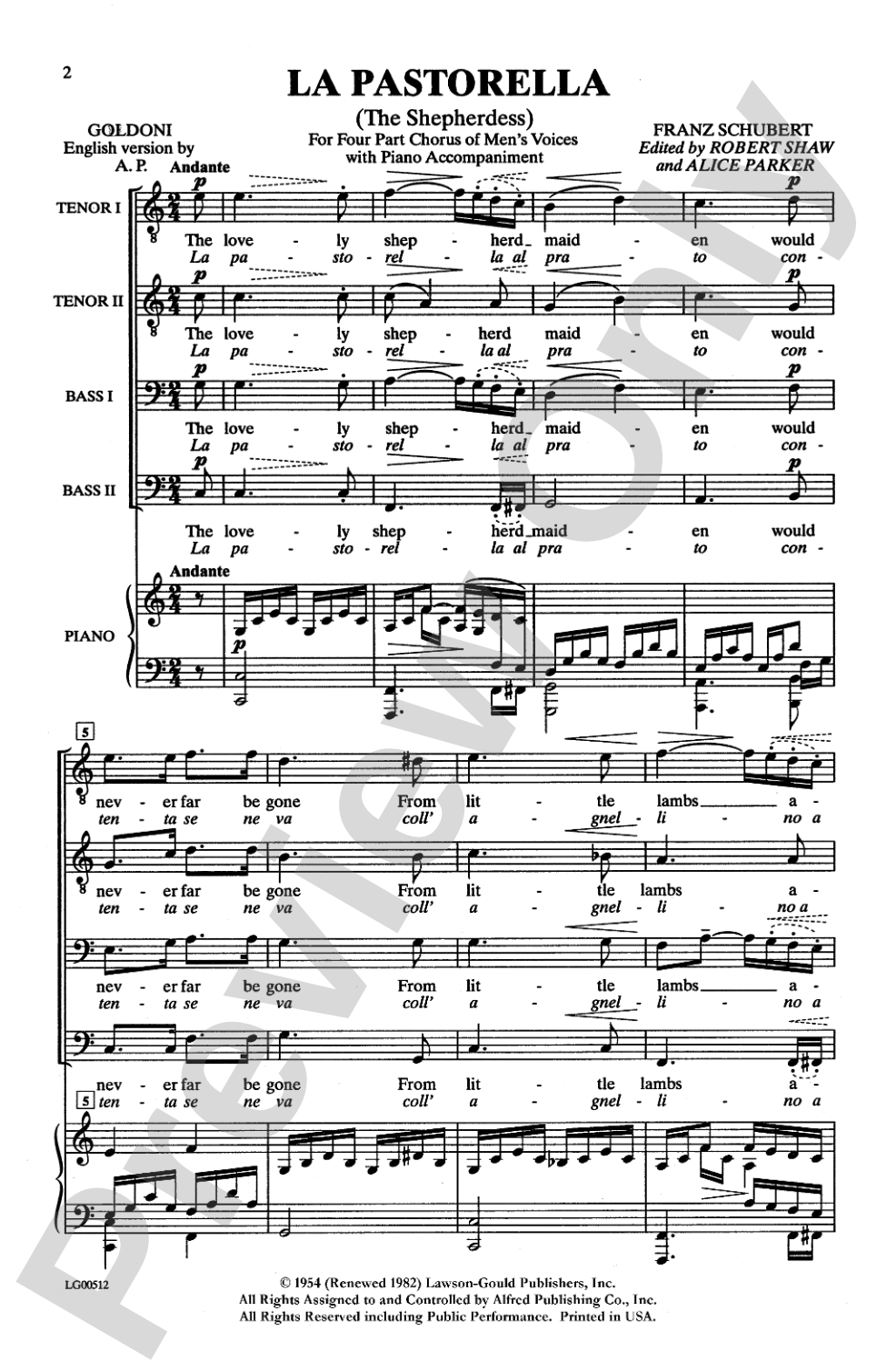
La Pastorella (The Shepherdess) Sheet Music Preview

La Pastorella (The Shepherdess): TTBB Choral Octavo

(The Shepherdess)

By Franz Schubert / ed. Robert Shaw and Alice Parker

Item: 00-PO-0002995

Digital Download
$2.25

Minimum order quantity: 20 copies

Description

La Pastorella (The Shepherdess): TTBB Choral Octavo isn't in MakeMusic Cloud just yet...but it could be. Let us know you'd like to see it, and you'll help shape what comes next. In the meantime, start a free trial and dive into thousands of interactive titles your students can play along with today.

Sample Audio
No sample audio found.
Sample Video
Additional Details
Series: Alfred Archive Edition: Lawson-Gould Music Publishers
Publisher: Alfred Music
Page Count: 8
SKU: 00-PO-0002995

More about this title

About the Composer: Franz Schubert

Franz Schubert (1797-1828) bridged Classical and Romantic sensibilities in ways that few composers of his era managed. Though he wrote nine symphonies and substantial chamber music, he had an almost unmatched gift for the lied, the German art song, which shaped the way Romantic composers thought about melody and harmony. His influence extends far beyond solo vocal music; his choral works reveal the same gift for emotional directness and harmonic sophistication that made his songs immortal.

Schubert composed prolifically across every genre and died at just 31 years old, leaving behind a catalog of over 600 works. He spent much of his life in Vienna, where he moved in circles of poets, painters, and musicians who valued intimacy and artistic integrity over public spectacle. His secular choral works, written often for amateur and semi-professional singers, reflect that same philosophy: they demand musicality and ensemble awareness, not virtuosity.

Why we love this

Schubert's treatment of the male voice quartet texture is deceptively sophisticated; the part-writing sounds straightforward but requires genuine blend and musical sensitivity to unlock. Directors appreciate that this piece works equally well as a concert showcase or as a teaching tool for cohesion and balance in the lower voices.

What to expect

Pastoral and intimate, evoking a rural European landscape without resorting to obvious pictorialism. The music has a gentle, conversational quality, as if listeners are overhearing a moment of quiet reflection among shepherds.

Who it's for

Male voice choirs and mixed choirs with strong tenor and baritone sections will find this an ideal addition to their concert repertoire. It suits singers comfortable with moderate harmonic complexity and those ready to move beyond unison or simple homophony into genuine quartet writing.

How to get the most out of it

  • Balance the soprano voice when it carries the main melody; the tenors and baritones should recede enough to let the line sing clearly without sounding timid.
  • Shape phrases through the harmonic rhythm rather than relying on dynamic shifts. Schubert's chord changes often signal natural breath points and emotional peaks.
  • Attend closely to vowel consistency across the quartet. Clarity matters more than volume in this texture, especially in divisi passages.
  • Let the accompaniment breathe; resist the urge to keep all voices locked in strict tempo if the piece calls for slight expressive flexibility.

How to use it

This octavo works beautifully in a concert pairing Schubert's secular choral works with chamber music or art songs. It also fits naturally into a program exploring the male voice tradition in European classical music, where it can bridge early 19th-century Austrian salon culture with later part-song traditions.

Skills your students will build

  • Part-singing independence in four-part harmony
  • Schubert's harmonic language and chromatic voice-leading
  • Blend and balance in TTBB texture
  • Phrasing through harmonic change rather than text alone
  • Interpretive choices in Classical-Romantic sacred and secular vocal music

You May Also Like