
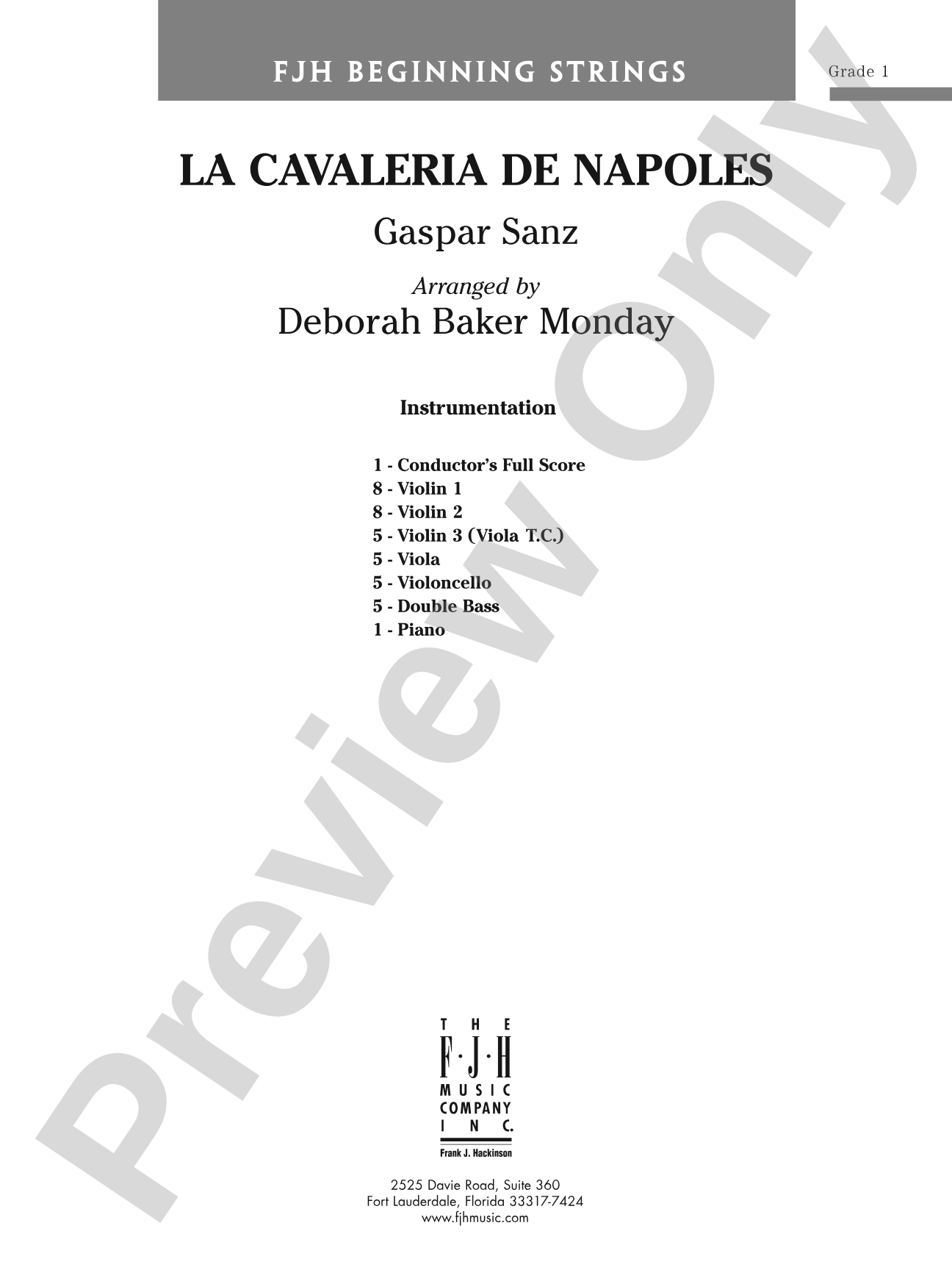
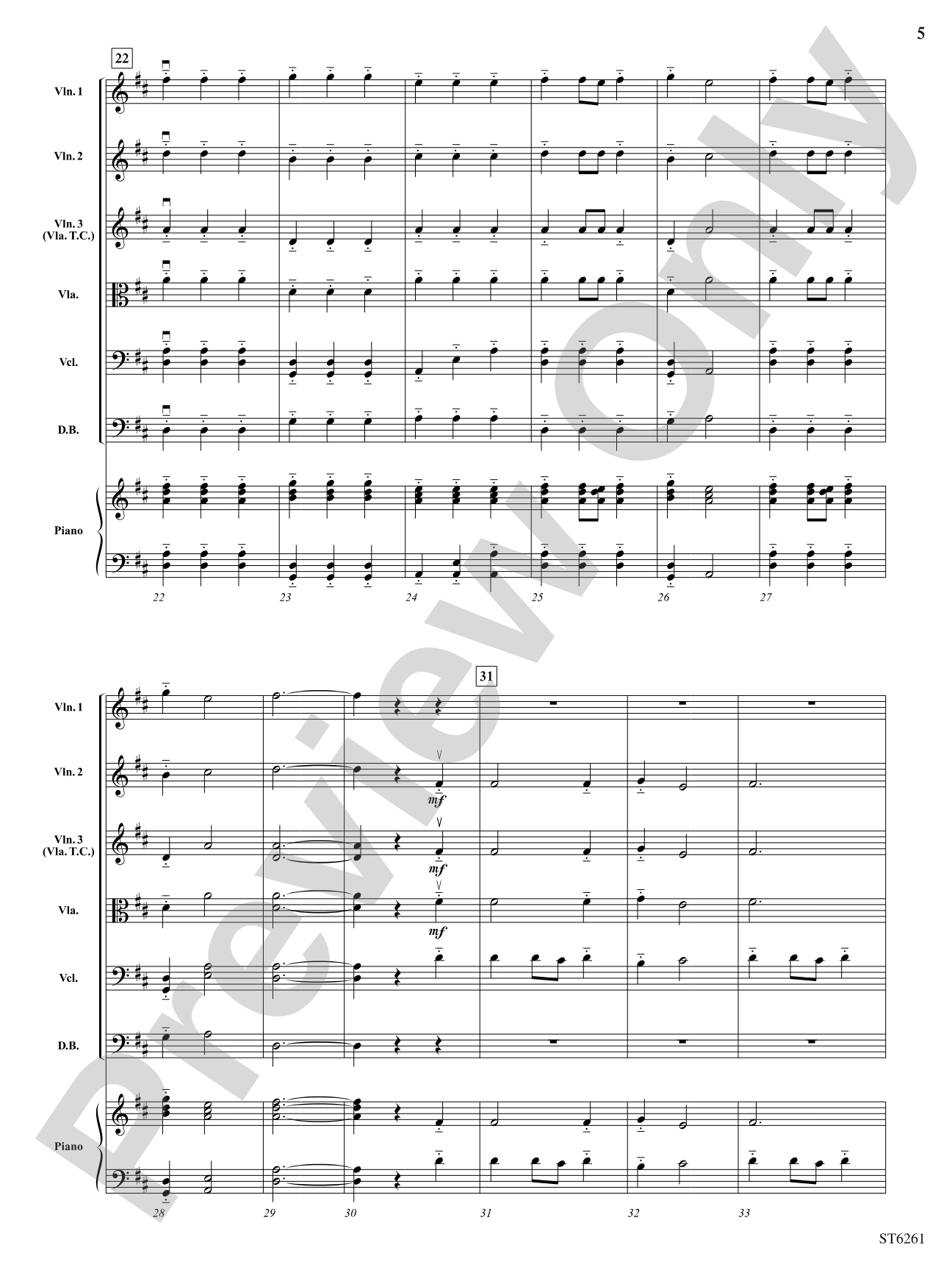
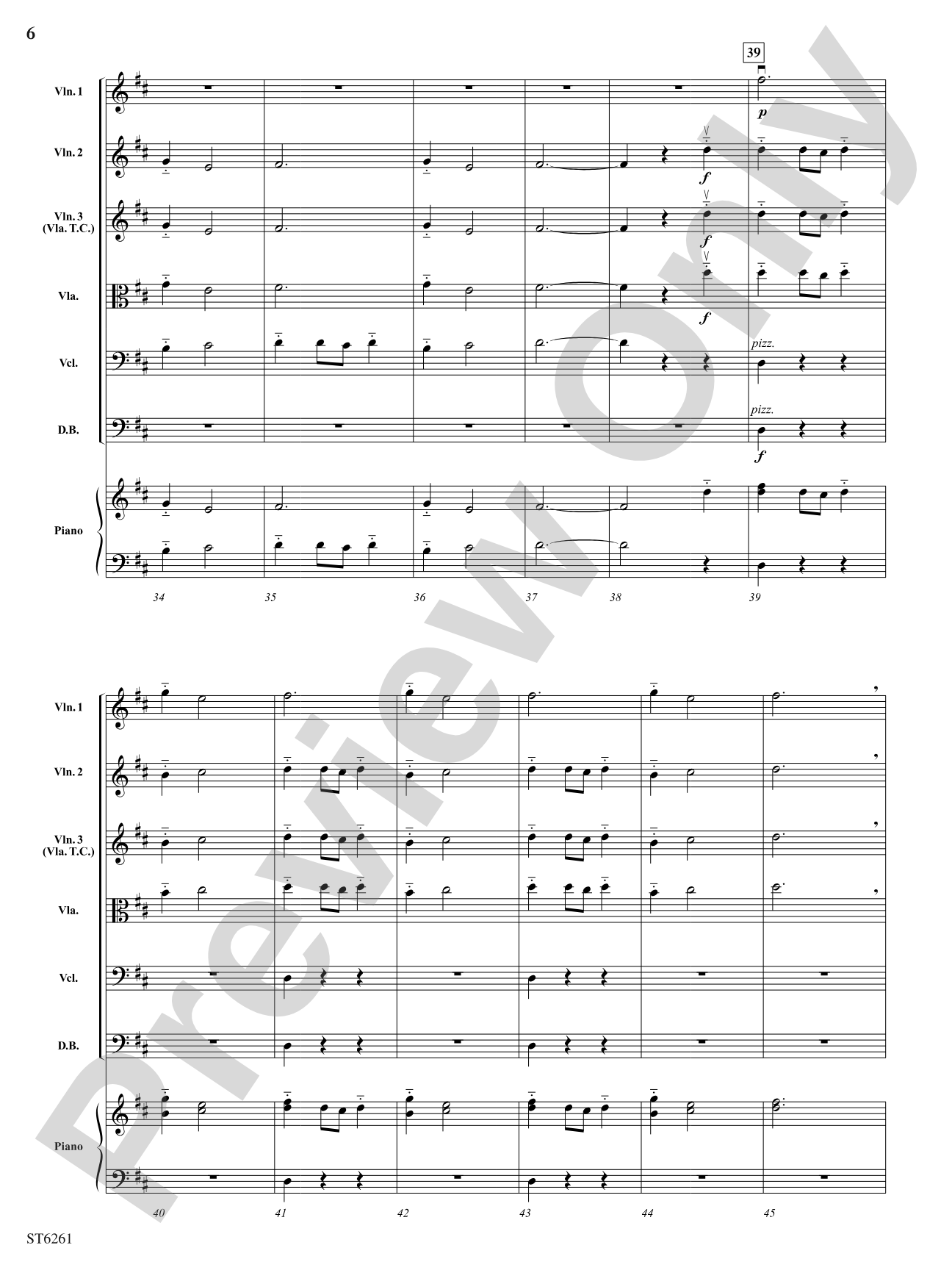
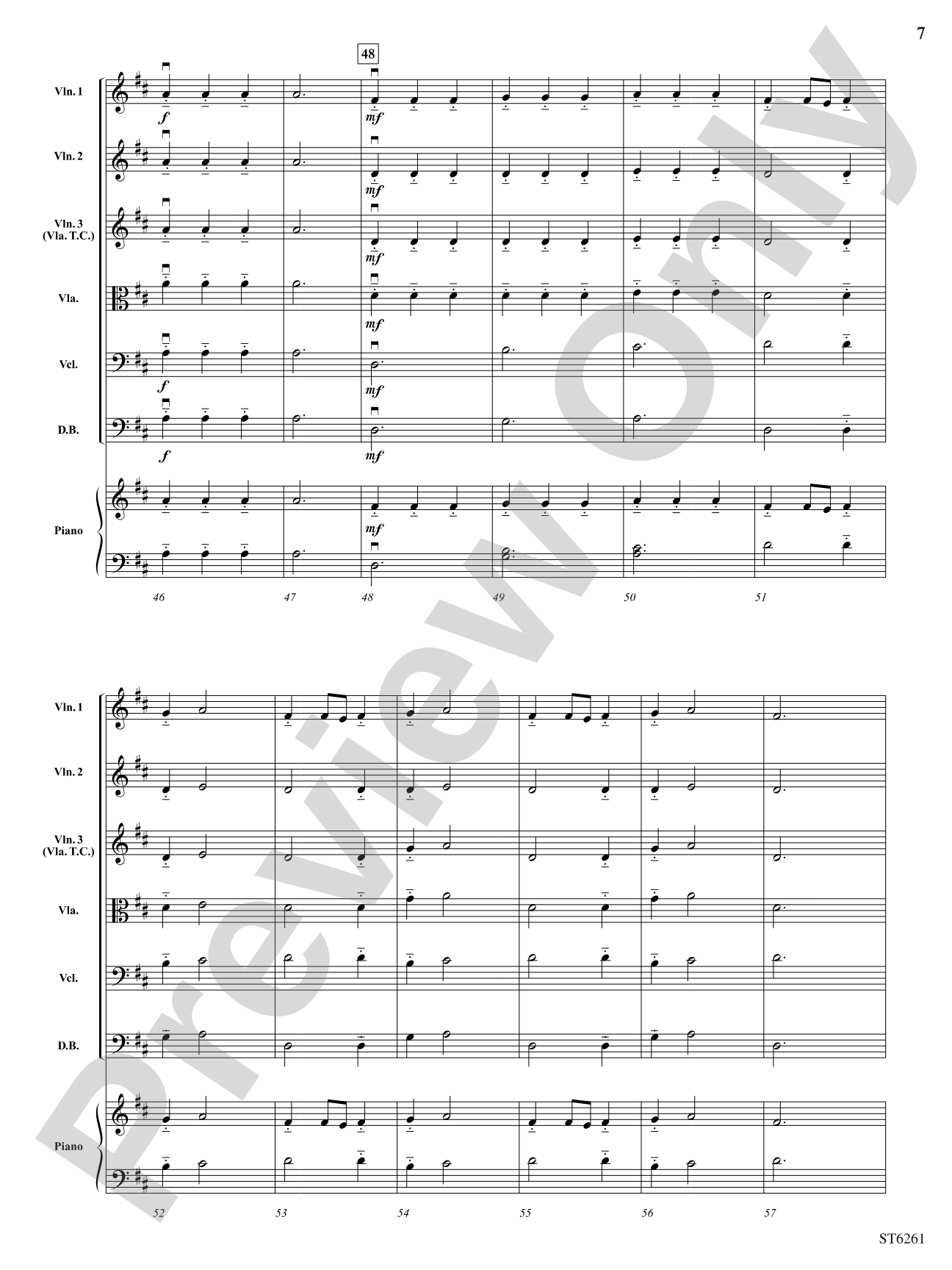
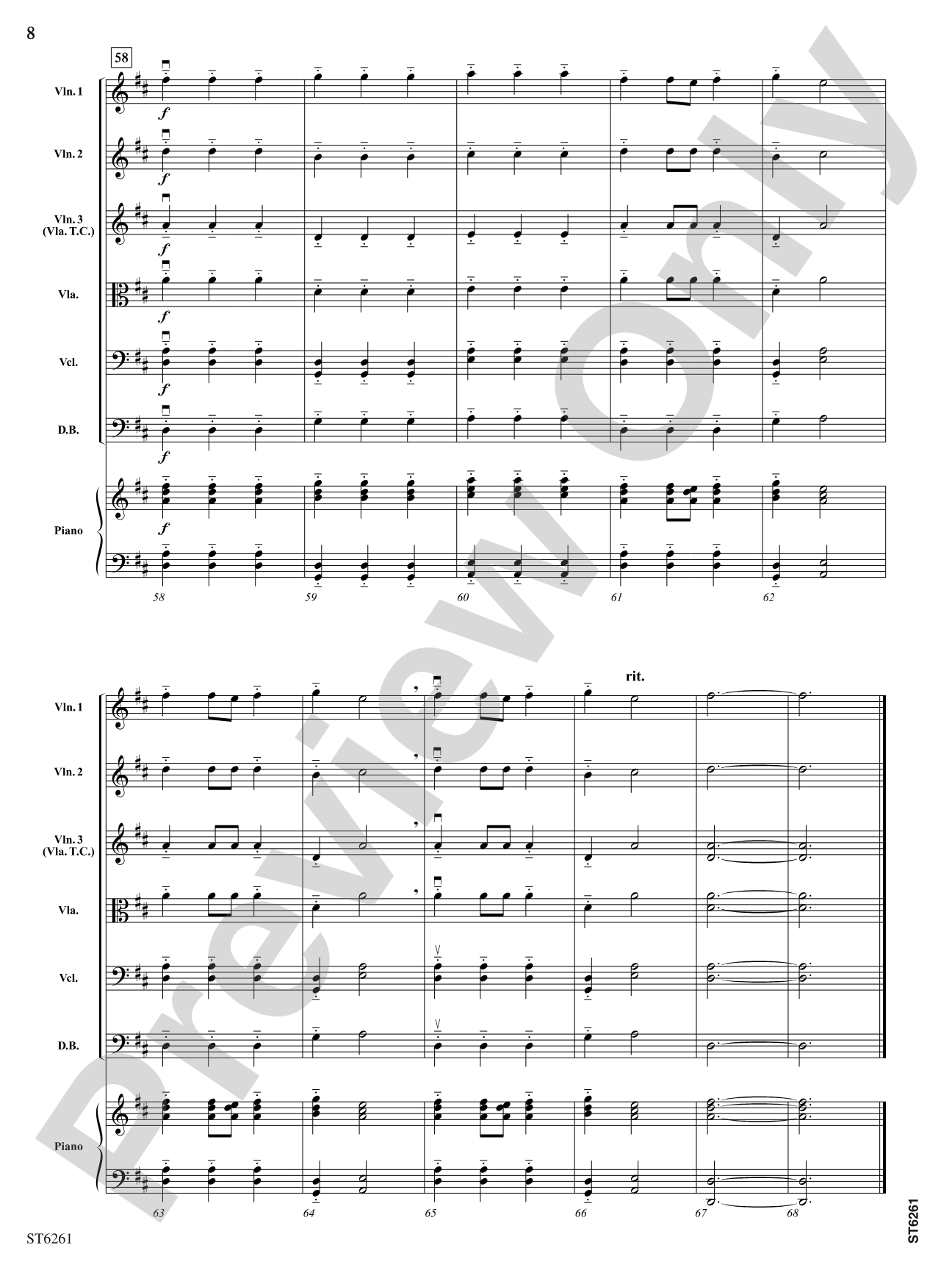

La Cavaleria de Napoles: String Orchestra Conductor Score & Parts
By Gaspar Sanz / arr. Deborah Baker Monday
Grade: 1
Item: 98-DST6261
$40.00
Pickup currently not available
Buy Extra Parts (Digital PDF Download)
| Product | Price | Quantity |
|---|---|---|
| La Cavaleria de Napoles: Score | $5.00 | |
| La Cavaleria de Napoles: Violin 1 | $7.00 | |
| La Cavaleria de Napoles: Violin 2 | $7.00 | |
| La Cavaleria de Napoles: Violin 3 (Viola T.C.) | $7.00 | |
| La Cavaleria de Napoles: Viola | $7.00 | |
| La Cavaleria de Napoles: Violoncello | $7.00 | |
| La Cavaleria de Napoles: Double Bass | $7.00 | |
| La Cavaleria de Napoles: Piano | $7.00 |
Parts Added to Cart!
Description
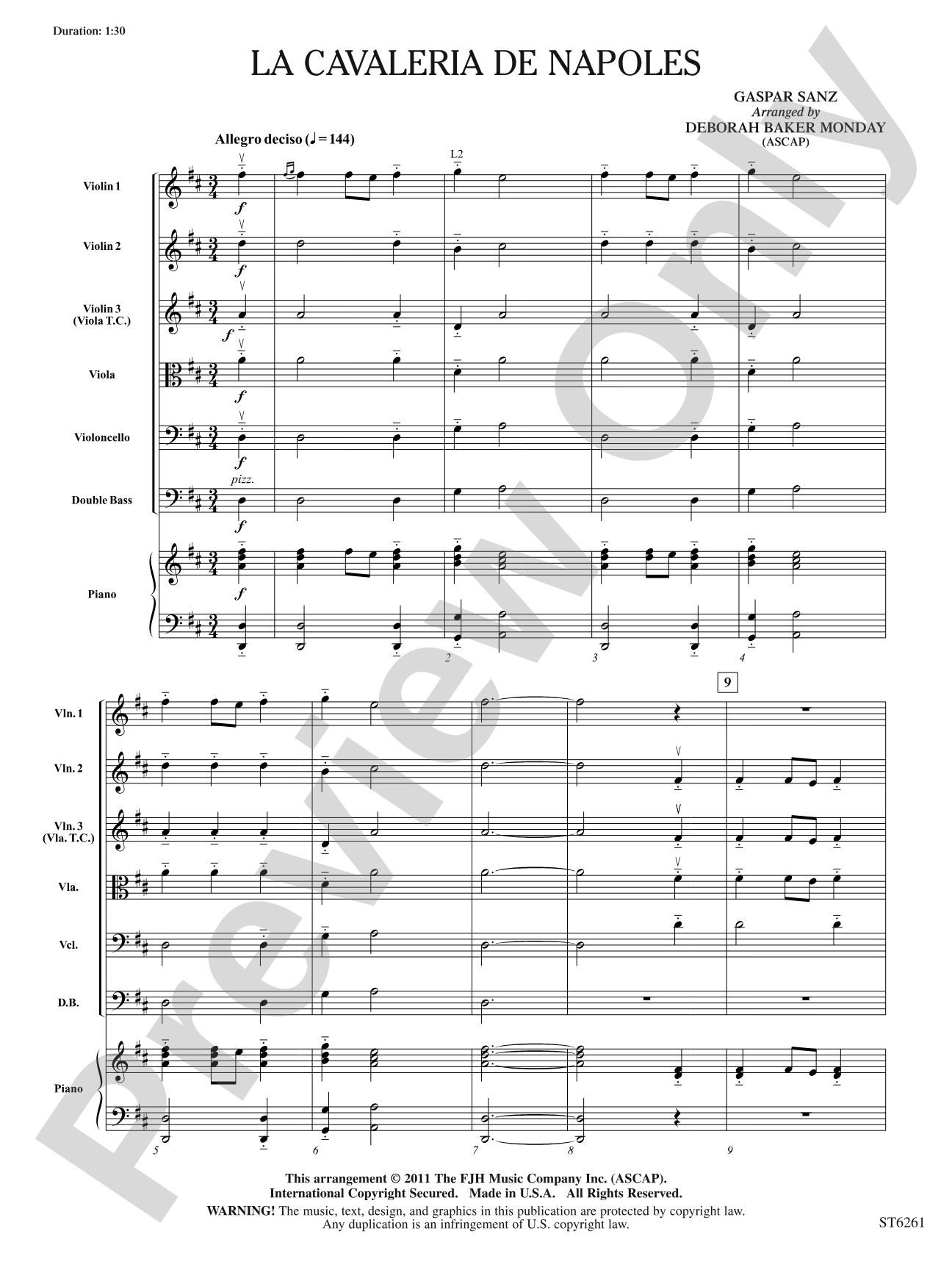
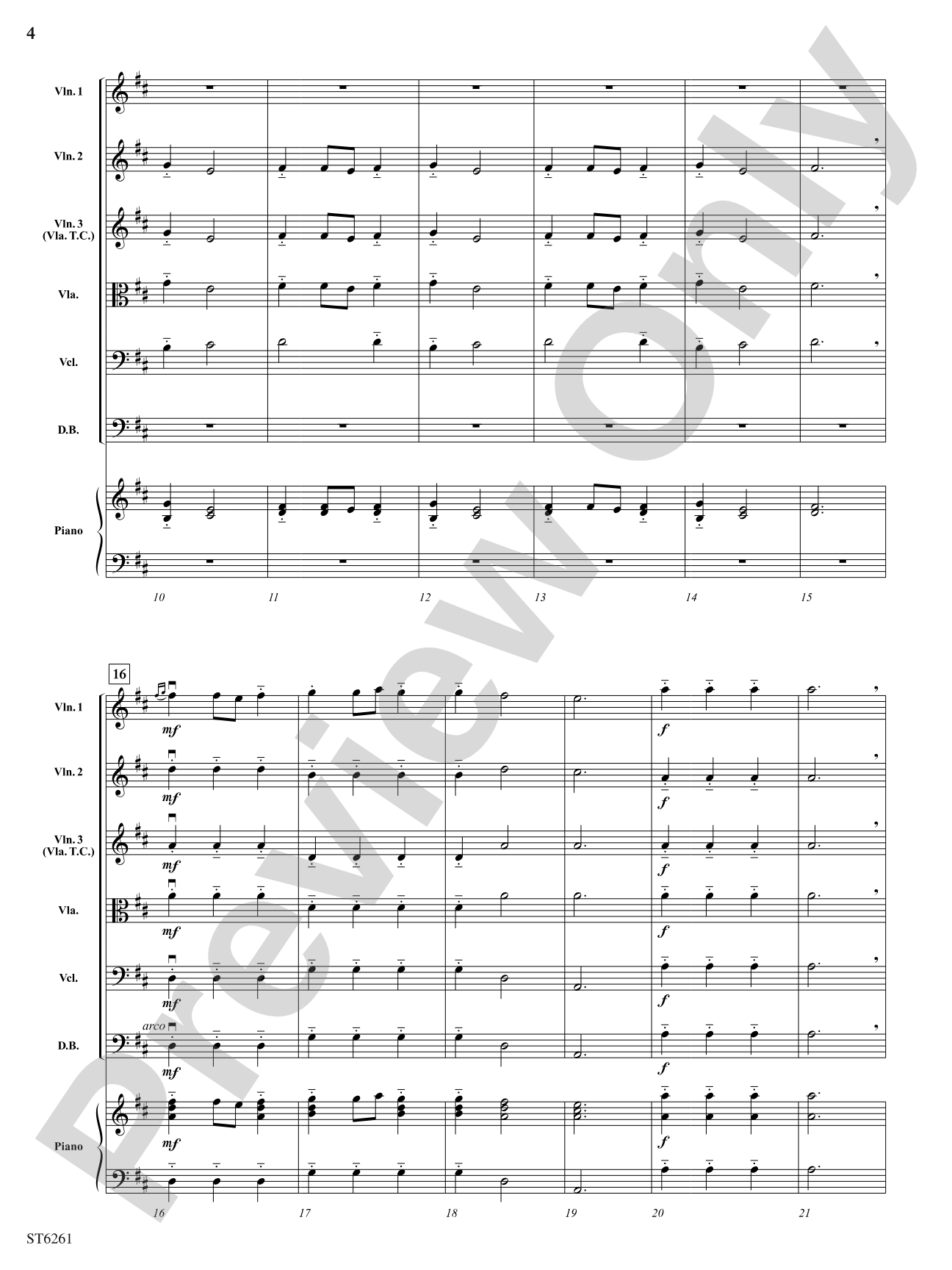
This ideal concert opener is also a wonderful vehicle to teach low 2 fingerings to violinists. Originally from Gaspar Sanz's Suite Española, the entire piece is based on several variations on a continuous bass line. Exciting and stately, this work is sure to grab hold of your audience!


La Cavaleria de Napoles: String Orchestra Conductor Score & Parts isn't in MakeMusic Cloud just yet...but it could be. Let us know you'd like to see it, and you'll help shape what comes next. In the meantime, start a free trial and dive into thousands of interactive titles your students can play along with today.
Request This Title
Tell us you want it.
Start Your Free Trial
Explore everything that's ready to play right now.
Sample Audio
1
Audio File
--:--
0:00
0:00
Sample Video
No sample videos found.
Additional Details
Series:
FJH Beginning Strings
Publisher:
The FJH Music Company, Inc.
SKU:
98-DST6261
More about this title
About the Composer: Gaspar Sanz
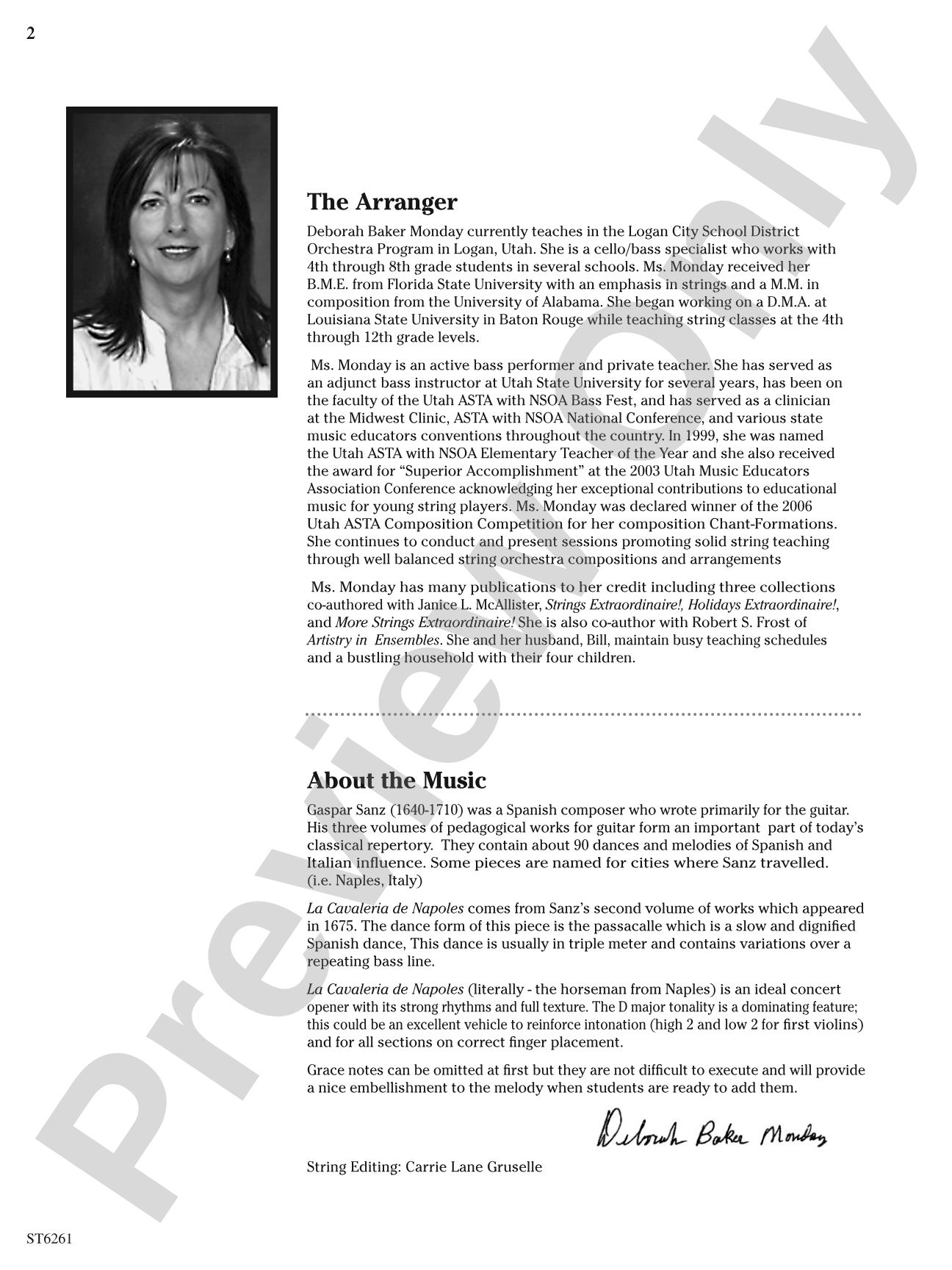
Gaspar Sanz was a Spanish guitarist and composer of the 17th century whose music bridged the Renaissance and Baroque periods. His Suite Española remains a foundational work in the classical guitar repertoire, prized for its clarity, elegant phrasing, and distinctly Iberian character. Though he wrote primarily for guitar, his compositions have proven remarkably adaptable to other instrumental settings, revealing the strength of their underlying harmonic and melodic architecture.
Sanz's approach to composition emphasized variation and ornamentation within structured frameworks. His use of repeating bass lines as generative devices influenced pedagogical thinking about how to build extended works from economical musical material. For student musicians, his works offer accessible entry points into Baroque style without sacrificing musical substance or historical authenticity.
Why we love this
Opening your concert with La Cavaleria de Napoles signals confidence and taste. It's stately enough to command attention yet straightforward enough that your first rehearsals can focus on genuine musical execution rather than decoding complex rhythms. The pedagogical bonus of embedding low second finger work into a piece this engaging means your violinists are building technical facility while playing something genuinely worth hearing.
What to expect
Spanish court dances filtered through Baroque formality. The repeated bass line creates a sense of inevitable forward motion beneath variations that bloom and settle like light moving across a tiled floor. Excitement builds not from speed but from the accumulation of melodic figures over that steady harmonic bed.
Who it's for
Grade 1 string orchestras ready to move beyond simple rhythms and into structured variation technique. Directors seeking accessible concert openers that introduce Baroque compositional thinking while teaching specific technical challenges to violinists.
How to get the most out of it
- Establish the bass line as the organizational core of your ensemble. Have cellos and basses lock in the repeated figures first; everything else aligns around that anchor.
- Bring out the stepwise motion in upper voices to clarify the counterpoint. These aren't padding parts; they're the melody's dialogue partners.
- Trust the stateliness. Resist the urge to rush the opening sections. The excitement builds through the variations, not through tempo.
- Articulate the low second finger shifts cleanly during sectional work before full ensemble rehearsals. Isolate the passage, get it secure, then integrate it back into context.
How to use it
Lead your concert with this. Its brief duration and immediate impact make it perfect for setting an energetic, refined tone before larger works. The clear historical context also serves a curricular purpose: it's a natural teaching point about how Baroque composers built large structures from economical materials.
Skills your students will build
- Low second finger intonation and secure shifting on the violin
- Reading and maintaining a continuous bass line figure across multiple measures
- Recognizing and executing Baroque articulation and phrasing within a repeating harmonic structure
- Listening for counterpoint and balancing melodic layers above a stable harmonic foundation