
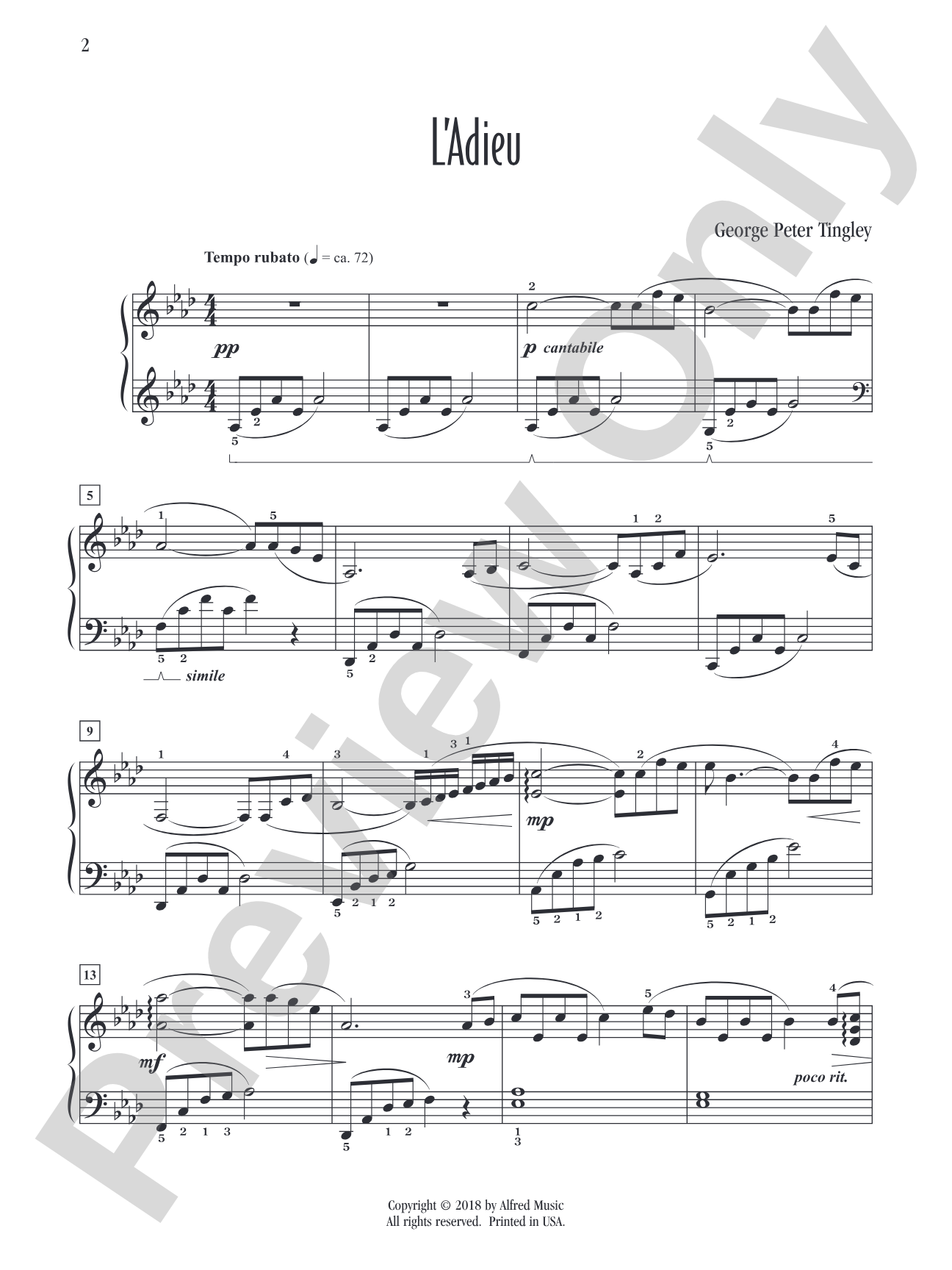

L'Adieu: Piano
By George Peter Tingley
Level: Late Intermediate
Item: 00-PS-0016056
$3.99
Pickup currently not available
Related Items
L'Adieu: Piano Solo Sheet |
$3.50
|
View |
Description
The late intermediate solo contains a beautiful lyrical melody over a left hand that features broken chords, cross-overs, and rolled chords. Written in the key of A-flat major, the melody includes scale figures and arpeggiated chords. The use of rubato enhances the character and mood of the piece. A Federation Festivals 2020-2024 selection. A Federation Festivals 2024-2028 selection.


L'Adieu: Piano isn't in MakeMusic Cloud just yet...but it could be. Let us know you'd like to see it, and you'll help shape what comes next. In the meantime, start a free trial and dive into thousands of interactive titles your students can play along with today.
Request This Title
Tell us you want it.
Start Your Free Trial
Explore everything that's ready to play right now.
Sample Audio
No sample audio found.
Sample Video
No sample videos found.
Additional Details
Series:
Signature Series
Publisher:
Alfred Music
Page Count:
4
SKU:
00-PS-0016056
More about this title
About the Composer: George Peter Tingley
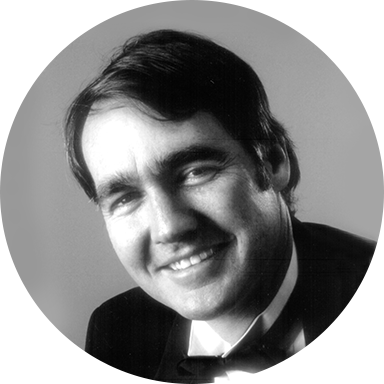
George Peter Tingley grew up in Oakland, California, where early exposure to records shaped his musical development as much as formal training. He studied violin before turning to piano at age 10, eventually earning degrees in Piano Performance from California State University, Hayward, and in Music Theory from USC. His formative years included private composition study with the legendary Nadia Boulanger in Paris during the 1970s.
Based in Point Richmond, California, Tingley has been writing for music education since 1989 and now has over 75 published piano pieces to his name. His solo Reverie (Alfred, 1991) remains widely known, and his duet collection Fiddle and the Tuba is listed in the National Federation of Music Clubs bulletin. Beyond education, he composed Kristi's Theme for Olympic figure-skating champion Kristi Yamaguchi in 1992; the piece was orchestrated and recorded with Tingley as piano soloist, and Yamaguchi has performed it in live and televised skating programs.
Why we love this
Tingley's gift for lyrical writing shines in this A-flat major solo, which offers exactly what late intermediate pianists need: a songlike melody that invites genuine musicality without technical overload. The left hand architecture (broken chords, cross-overs, rolls) keeps both hands engaged and building, making this rewarding to teach and satisfying to perform. Its dual Federation Festivals selection status confirms it works across competitive contexts and concert programming alike.
What to expect
L'Adieu (The Farewell) lives up to its title with a gentle, contemplative character sustained by its lyrical melody and warm harmonic language in A-flat major. The piece breathes through rubato and blooms under the influence of rolled chords and shifted left hand figures, creating a sense of intimate reflection that rewards both careful listening and sensitive interpretation.
Who it's for
Late intermediate pianists preparing for recitals, festival competitions, or examination programs will find this piece approachable and musically rewarding. It suits students who have solid hand independence and are ready to explore expressive rubato and pedal control without needing to navigate complex rhythmic or harmonic challenges.
How to get the most out of it
- Shape the melody with a sense of song; imagine a vocalist singing the line, and let that phrasing guide your pedal and rubato choices.
- Experiment with the rubato marking early in preparation. Try hesitating slightly on high notes of the melody, then moving forward again, to avoid sounding stiff or mechanical.
- Balance the texture so the broken chord patterns in the left hand support rather than compete; these figures are accompaniment, not equal voices.
- Work the rolled chords deliberately and slowly before tempo to understand their exact spacing, ensuring they sit cleanly under the melody's phrasing.
How to use it
This solo fits naturally into a recital program where you want a moment of intimate lyricism; it pairs especially well alongside more energetic pieces or contrasting works in brighter keys. Its Federation Festivals credentials make it a reliable choice for regional and state competitions, and its four-page length allows flexible programming without dominating a concert format.
Skills your students will build
- Pedal control and timing to support rubato without blurring harmonic clarity
- Expressive use of rubato and tempo flexibility in a lyrical context
- Left hand independence in managing broken chords, cross-overs, and rolled chord figures simultaneously
- Balance between melody and accompaniment when both hands carry figural material
- Interpretation of scale passages and arpeggiated chords as musical phrases, not technical displays