
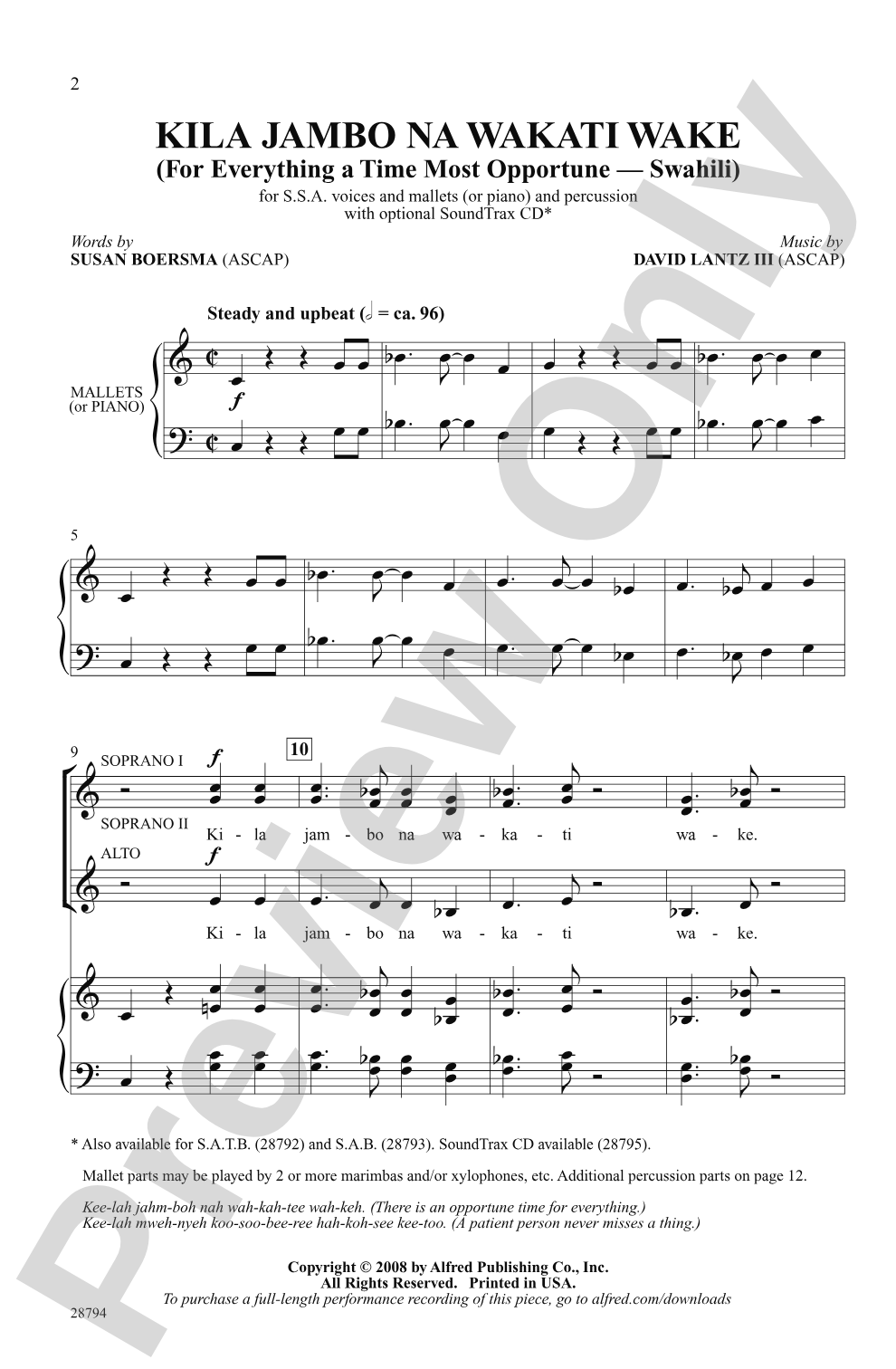

Kila Jambo na Wakati Wake (For Everything a Time Most Opportune - Swahili): SSA Choral Octavo
(For Everything a Time Most Opportune -- Swahili)
Words by Susan Boersma, music by David Lantz III
Item: 00-PO-0000582
$1.75
Minimum order quantity: 20 copies
Pickup currently not available
Related Items
Kila Jambo na Wakati Wake: SoundTrax Digital Audio Download |
$24.95
|
View | |
Kila Jambo na Wakati Wake (For Everything a Time Most Opportune - Swahili): SATB Choral Octavo |
$1.75
|
View | |
Kila Jambo na Wakati Wake (For Everything a Time Most Opportune - Swahili): SAB Choral Octavo |
$1.75
|
View | |
Kila Jambo na Wakati Wake: SAB Choral Octavo |
$1.75
|
View | |
Kila Jambo na Wakati Wake: SSA Choral Octavo |
$1.75
|
View | |
Kila Jambo na Wakati Wake: Choral Octavo SoundTrax CD |
$24.95
|
View |
Description
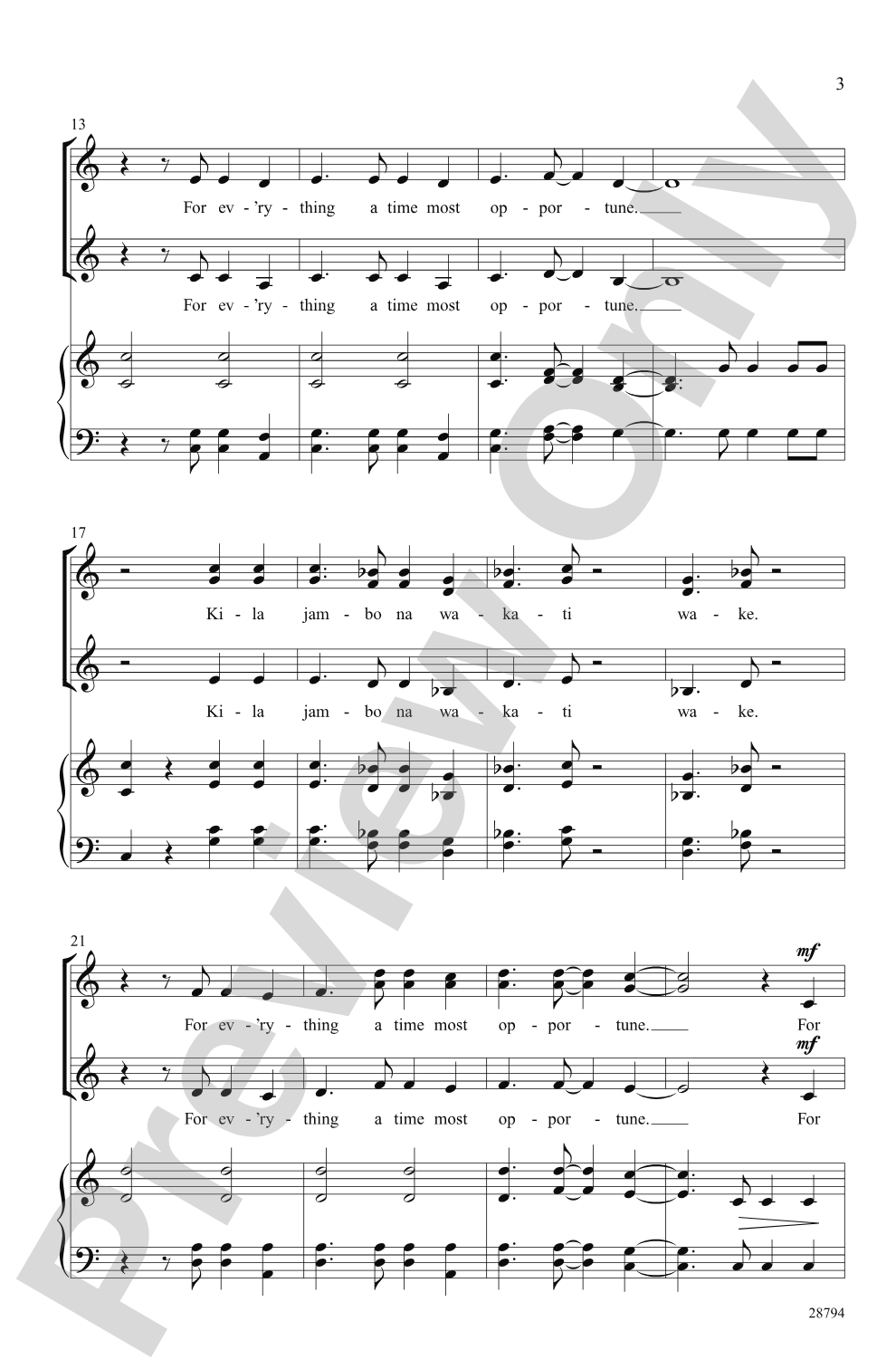
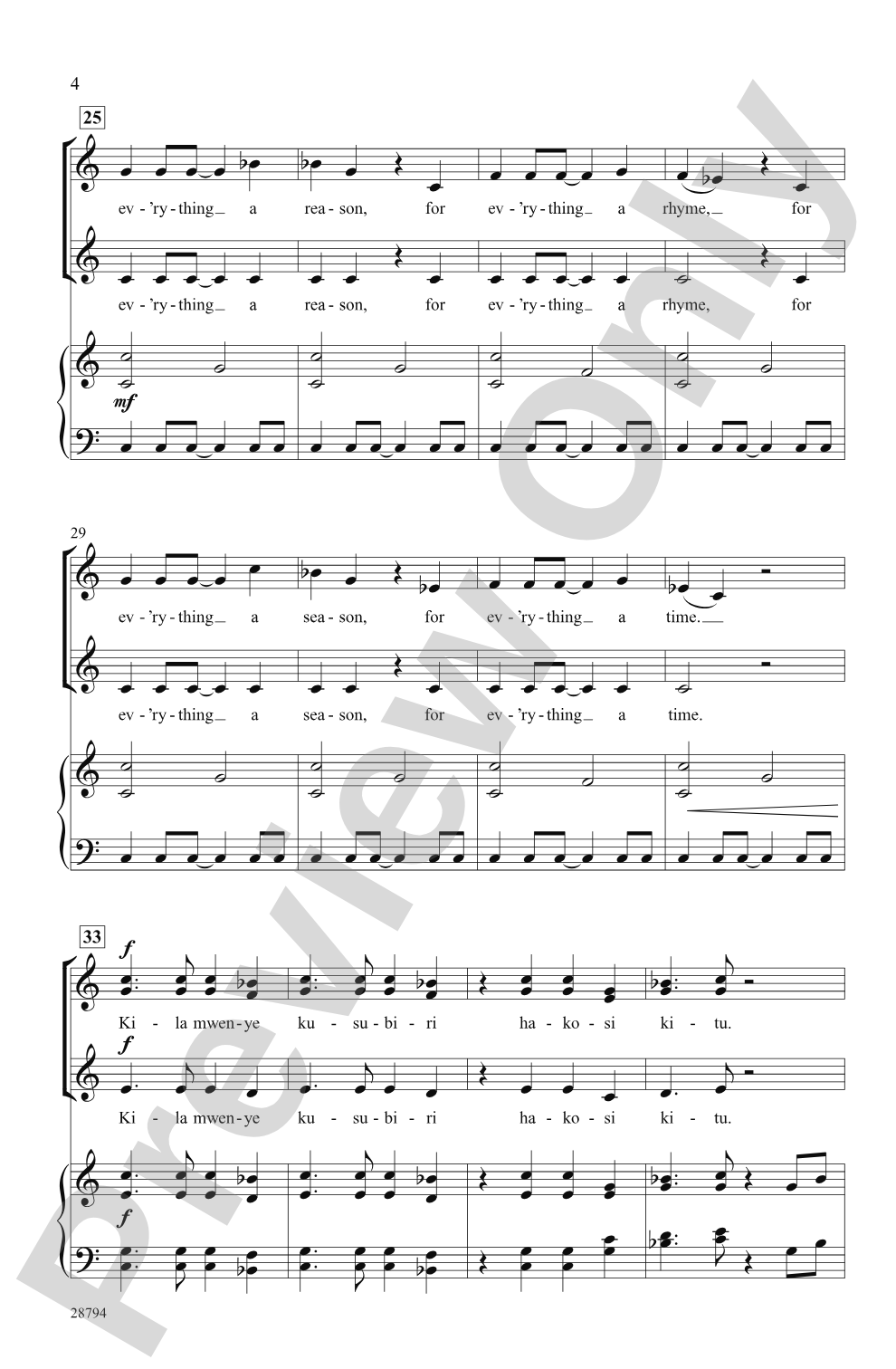
In this rhythmic African choral the choir calls percussive phrases alternating between Swahili and English lyrics. The creative piano part may be doubled or replaced by mallet instruments, and non-pitched percussion repeats a steady pattern adding even more intensity. Exuberant!


Kila Jambo na Wakati Wake (For Everything a Time Most Opportune - Swahili): SSA Choral Octavo isn't in MakeMusic Cloud just yet...but it could be. Let us know you'd like to see it, and you'll help shape what comes next. In the meantime, start a free trial and dive into thousands of interactive titles your students can play along with today.
Request This Title
Tell us you want it.
Start Your Free Trial
Explore everything that's ready to play right now.
Sample Audio
1
Audio File
--:--
0:00
0:00
Sample Video
No sample videos found.
Additional Details
Series:
Alfred Choral Designs
Publisher:
Alfred Music
Page Count:
12
SKU:
00-PO-0000582
More about this title
About the Composer: David Lantz
David Lantz is a prolific composer and arranger whose work spans choral music, instrumental arrangements, and educational compositions for young musicians. His pieces are known for their accessibility, rhythmic vitality, and ability to engage singers of all levels while maintaining musical substance.
Why we love this
This piece brings genuine rhythmic energy and cultural authenticity without requiring specialized training or unusual instrumentation. The flexible percussion writing (piano optional, mallets encouraged) means you can shape the sound to match what your ensemble and accompaniment resources allow, and the alternating Swahili and English lyrics give singers meaningful language work alongside their music-making.
What to expect
Infectious and celebratory, with the rhythmic drive of call and response grounded in Swahili language and percussion patterns. The alternating languages and the interplay between choir and instrumental rhythm create forward momentum that feels both grounded and joyful, inviting singers to lock into a shared pulse.
Who it's for
Choirs with at least basic rhythmic facility and comfort with African musical idioms will engage fully with this piece. It suits upper elementary through adult ensembles and works especially well for groups seeking repertoire that celebrates cultural diversity while maintaining accessible ranges and straightforward vocal writing.
How to get the most out of it
- Anchor the rhythmic phrases with precision percussion; even if the piano is your primary accompaniment, a steady non-pitched pattern transforms the piece from pleasant to truly exuberant.
- Work the call and response between choir and percussive figures as a dialogue, not a backdrop. The Swahili and English phrases should feel like they're answering one another.
- If adding mallet instruments, let them double or replace the piano part gradually during rehearsal so singers hear how the texture shifts and can adjust their own intensity accordingly.
- Shape the dynamics across phrases rather than holding a single level; this piece thrives on building momentum through the rhythmic interplay.
How to use it
Program this alongside other world music selections to build a culturally rich concert arc, or use it as an uplifting closer that leaves audiences with memorable rhythmic energy. It also serves as an excellent choice for pops concerts, family events, or any program where you want to highlight your ensemble's versatility and the joy of collaborative music-making.
Skills your students will build
- Steady-pulse maintenance in rhythmic call and response
- Singing in Swahili with accurate pronunciation and phrasing
- Ensemble awareness with alternating vocal and percussion parts
- Dynamic control and phrase shaping in a percussion-driven context
- Cross-cultural musical understanding through authentic repertoire