

Keep Your Head Up: 2-Part Choral Octavo
Words and music by Andy Grammer / arr. Andy Beck
Item: 00-PO-0007565
$2.35
Minimum order quantity: 20 copies
Pickup currently not available
Related Items
Keep Your Head Up: SATB Choral Octavo |
$2.35
|
View | |
Keep Your Head Up: 3-Part Mixed Choral Octavo |
$2.35
|
View | |
Keep Your Head Up: TTB Choral Octavo |
$2.35
|
View | |
Keep Your Head Up: SoundTrax Digital Audio Download |
$29.99
|
View | |
Keep Your Head Up: SATB Choral Octavo |
$2.35
|
View | |
Keep Your Head Up: 3-Part Mixed Choral Octavo |
$2.35
|
View | |
Keep Your Head Up: TTB Choral Octavo |
$2.35
|
View | |
Keep Your Head Up: 2-Part Choral Octavo |
$2.35
|
View | |
Keep Your Head Up: Choral Octavo SoundTrax CD |
$29.99
|
View |
Description
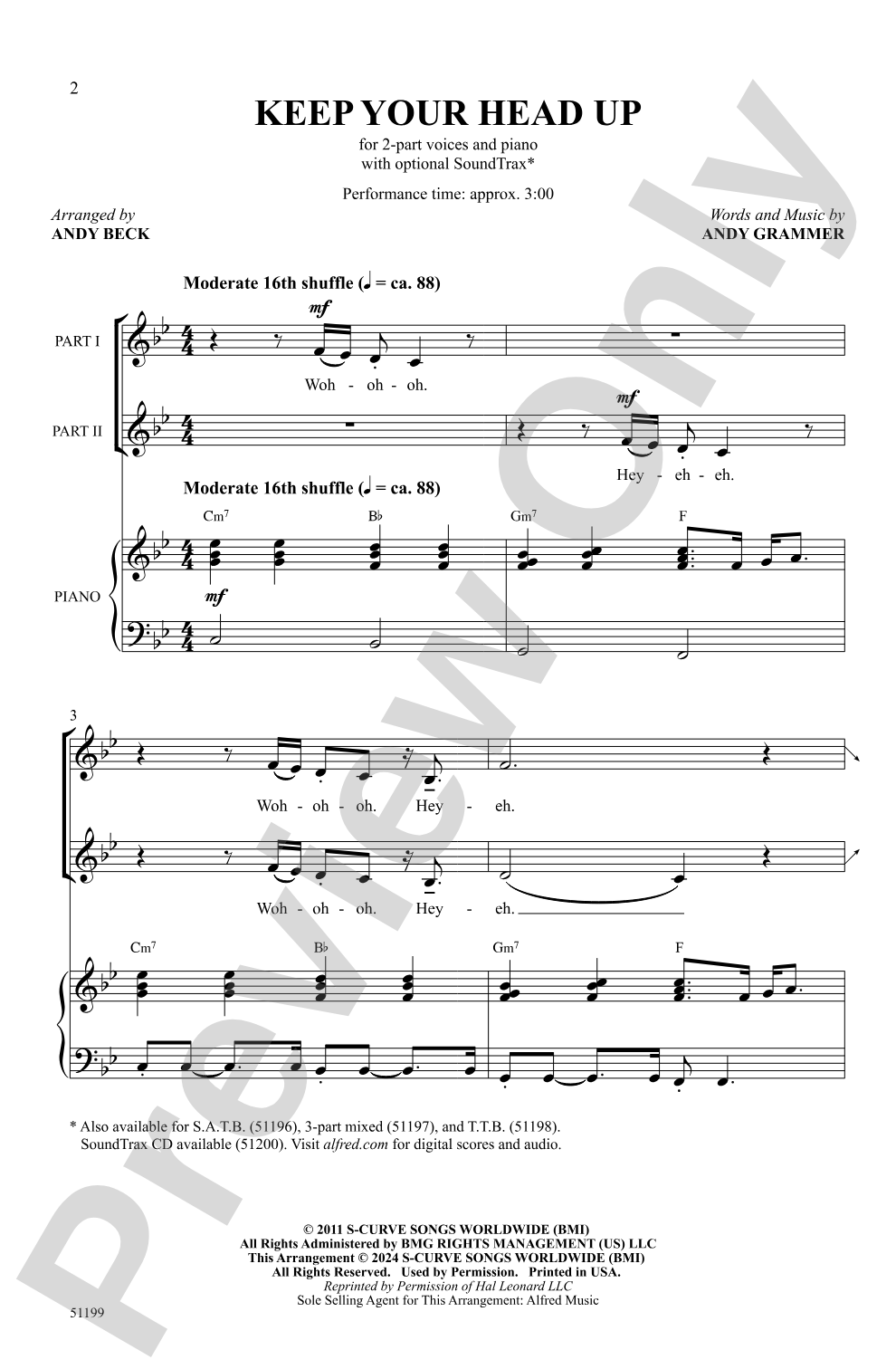
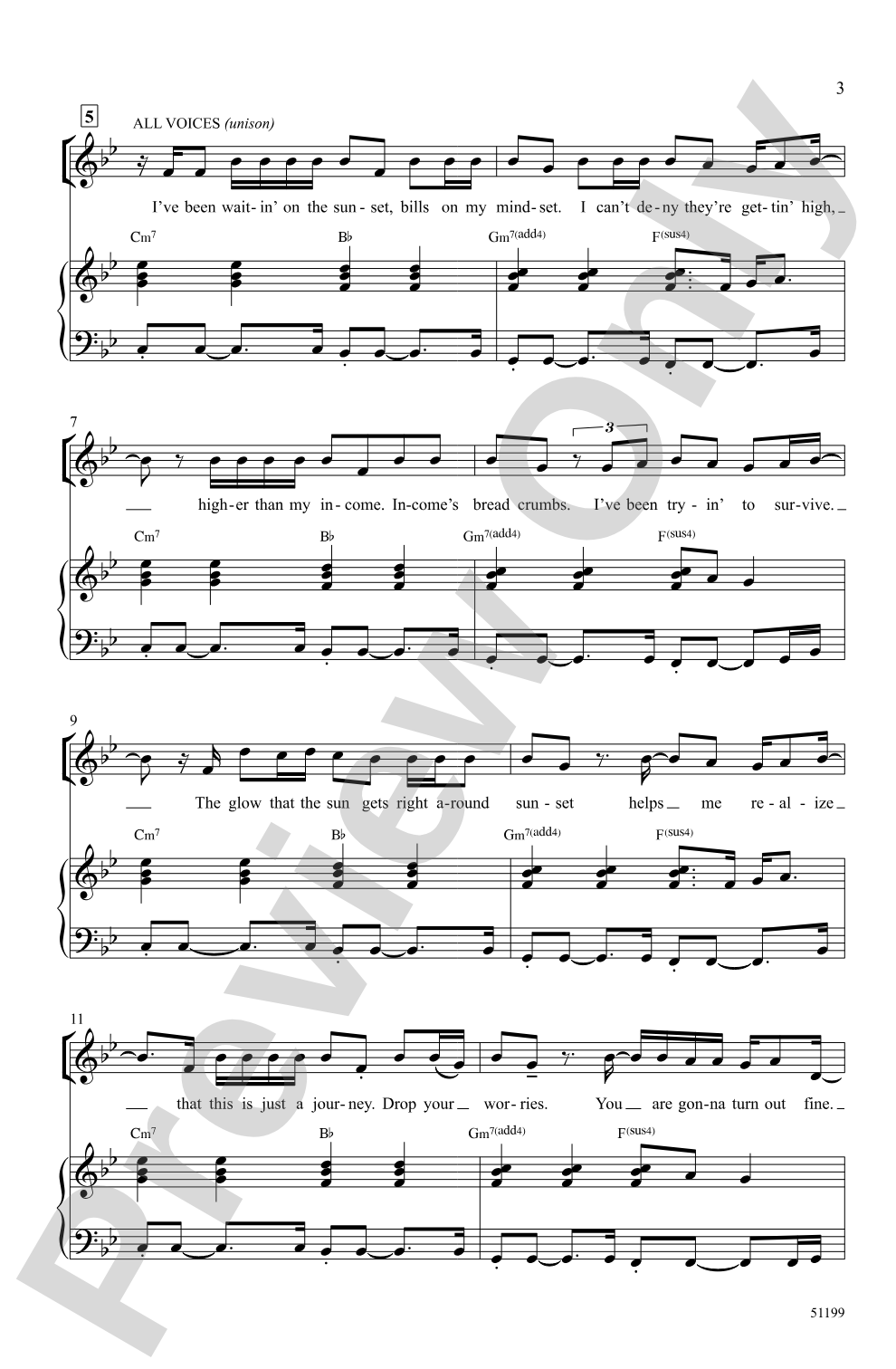
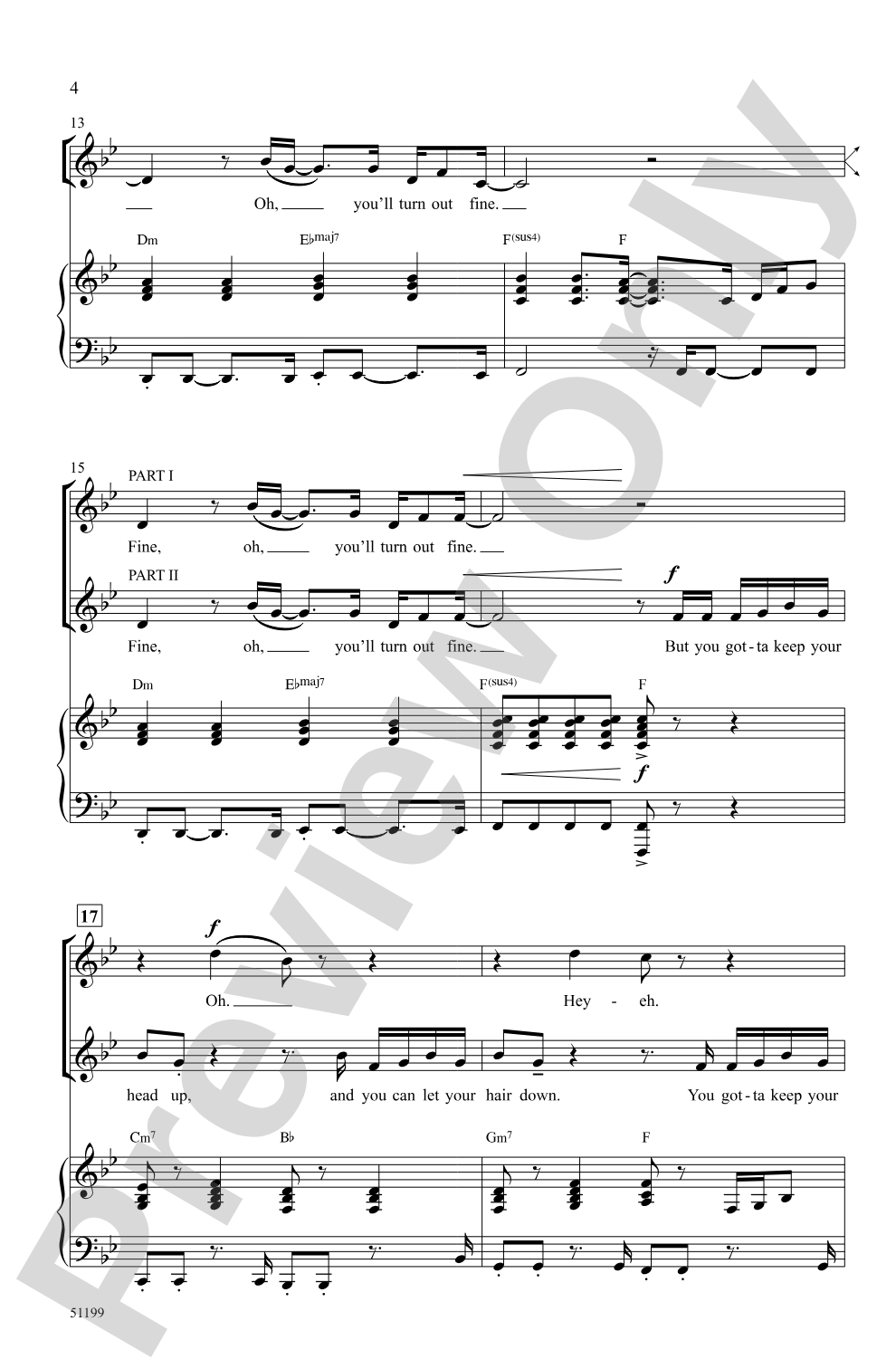
Andy Grammer's signature song encourages perseverance and a positive mindset in the face of life's ups and downs. The rhythmic accompaniment provides a hip backdrop for energetic vocal lines that pass the melody around to various voice parts. A great conversation starter for social-emotional learning topics. "Only rainbows after rain, the sun will always come again."


Discover MakeMusic Cloud: thousands of interactive titles your students can play along with today.
Sample Audio
1
Audio File
--:--
0:00
0:00
Sample Video
Additional Details
Series:
Alfred Pop Choral Series
Publisher:
Alfred Music
Page Count:
12
SKU:
00-PO-0007565
More about this title
About the Composer: Andy Grammer
Andy Grammer built his career on songs that speak directly to resilience and hope. His 2011 debut single "Keep Your Head Up" became an anthem for audiences seeking encouragement during difficult moments, proving that pop songwriting and genuine emotional substance can coexist. In the classroom and rehearsal room, his music resonates because it treats young singers as thoughtful people capable of grappling with real life experiences.
Grammer's background as a performer and songwriter gives him insight into what makes a melody stick and what gives singers confidence on stage. His compositions have a natural accessibility that doesn't sacrifice musicality, making them valuable tools for building choir programs that connect with student life.
Why we love this
This arrangement captures why the song endures while making it genuinely singable for a two-part choir. The rhythmic drive in the accompaniment does real work, anchoring the piece and giving singers something to lock into, while the melody rotation keeps energy high and ensures everyone gets a moment in the spotlight. It's the kind of piece that builds ensemble cohesion because students care about the message they're singing.
What to expect
Buoyant and purposeful. The arrangement has enough contemporary rhythmic flavor to feel current without becoming dated, and the melody sits comfortably for young voices while maintaining genuine musicality. There's an infectious optimism here that feels earned rather than hollow.
Who it's for
Two-part choirs at the middle school and early high school levels will find this accessible and engaging. It works equally well for mixed choirs using the 2-part voicing or for treble ensembles seeking contemporary material with substance beyond the surface.
How to get the most out of it
- Establish the groove early in rehearsal by having the rhythm section and accompanying singers lock the beat before adding the melody. This piece lives in its forward momentum.
- Emphasize the lyrical moments between rhythmic sections. The contrast between energetic passages and more intimate phrases prevents the arrangement from becoming one-dimensional.
- Layer in dynamics based on the melody's path through the voicing. When the melody passes to a new group, lift slightly into it; this clarifies the part exchanges without requiring constant hand signals during performance.
- Use the recorded accompaniment in early rehearsals to establish tempo and feel, then eventually pull it back so singers own the rhythmic foundation themselves.
How to use it
Program this as a concert centerpiece that draws responsive applause or pair it with other contemporary pieces exploring resilience and growth mindset. It also serves beautifully as a bridge between your classical repertoire and more casual concert segments, signaling to audiences that your choir takes emotional honesty seriously regardless of genre.
Skills your students will build
- Maintaining rhythmic precision in syncopated accompaniment patterns
- Following melody as it exchanges between voice parts
- Balancing pop styling with vocal blend and tone quality
- Expressing emotional narrative through dynamic shaping
- Responding to contemporary songwriting structures