Kaboom! Cover Image

Kaboom!: Concert Band Conductor Score & Parts

$58.00 USD
Sale price  $58.00 USD Regular price 
Skip to product information
Kaboom! Cover Image

Kaboom!: Concert Band Conductor Score & Parts

By Vince Gassi

Grade: 2.5 (Medium Easy)

Item: 00-45995

makemusic Cloud badge

Need it now?

Buy Digital Version
$58.00
Shipped

One moment…

Description
Two notes . . . then two more. A counter-statement . . . then another. Ideas develop and unravel. Percussion punctuates, brass recapitulates, woodwinds decorate. Like a lit fuse, Vince Gassi's new work will fascinate, enervate, and captivate---drawing you to the very end . . . and then . . . KABOOM! (2:50)

Don't just read it, hear it, play along with it, and watch your students grow with it. In MakeMusic Cloud, Kaboom!: Concert Band Conductor Score & Parts comes alive with professional accompaniment, adjustable tempo, and built-in practice tools that turn solo practice into real progress.

Sample Pages

Sample Audio
0:00
0:00
Sample Video
Additional Details
Series: Young Symphonic
Publisher: Alfred Music
Page Count: 212
UPC: 038081524641
SKU: 00-45995

More about this title

About the Composer: Vince Gassi
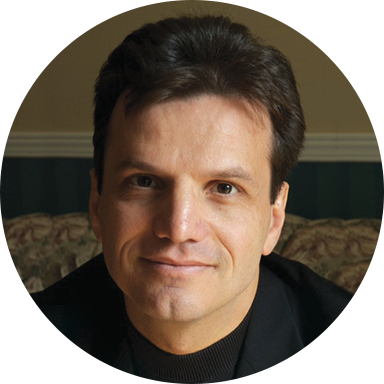
Vince Gassi

Vince Gassi has published over 100 works since joining Alfred Music in 2006, establishing himself as a prolific composer whose pieces regularly appear on international concert and festival programs. He holds a Bachelor of Music from the University of Western Ontario and a Ph.D. from York University in Toronto, with additional study in composition and arranging at the Dick Grove School of Music in Los Angeles.

For more than two decades, Gassi taught instrumental music at elementary and secondary levels while building a reputation as a guest conductor, adjudicator, and clinician across the United States and Canada. His workshops on creative engagement and digital workflows for music directors reflect his commitment to both compositional craft and music education practice. His works have been performed and recorded throughout North America, Europe, and Japan, with frequent performances at the Midwest Clinic in Chicago.

Why we love this

Gassi's compositional voice here is rhythmically propulsive and orchestrationally clever without overwhelming a Grade 2.5 ensemble. The piece works equally well in concert settings and festival competitions because it balances accessibility with genuine musical substance, giving young musicians something genuinely enjoyable to play rather than merely educational.

What to expect

The piece unfolds like a detonation in slow motion. What begins as simple, repetitive material gradually accumulates texture and momentum through orchestral shifts and rhythmic layering, building tension that finally releases in the title moment. It's energetic without being chaotic, structured enough to teach form but playful enough to keep young musicians engaged.

Who it's for

Young concert bands at the Grade 2.5 level who are ready for pieces with real forward motion and motivic development but still need accessible ranges and straightforward ensemble writing. Directors programming festivals or concerts will find this works for both contexts.

How to get the most out of it

  • Anchor the opening two-note gesture with absolute rhythmic precision in the full ensemble; this motive becomes the piece's DNA, so lock it in before anything else develops.
  • Highlight the percussion punctuation as active commentary rather than mere accompaniment; these moments drive the structural momentum forward and deserve clear articulation.
  • Balance the brass recapitulations against woodwind decorative lines by using dynamic contrast rather than volume alone; the texture will feel cleaner and the form more transparent.
  • Build toward the final climax gradually across the last section; resist the urge to play the ending fortissimo early, or the actual KABOOM loses its accumulated energy.

How to use it

This works as a concert opener that immediately grabs attention or as a mid-program energizer that shifts the mood. It's also an excellent festival selection because it showcases musicianship and ensemble control at an accessible level while avoiding the overplayed standards.

Skills your students will build

  • Motivic development and recognition of how simple ideas expand through orchestration
  • Rhythmic precision in repetitive material that serves structural purposes
  • Dynamic control and balance across woodwind, brass, and percussion textures
  • Listening for architectural form (exposition, development, climax) in a compact timeframe

You May Also Like
