
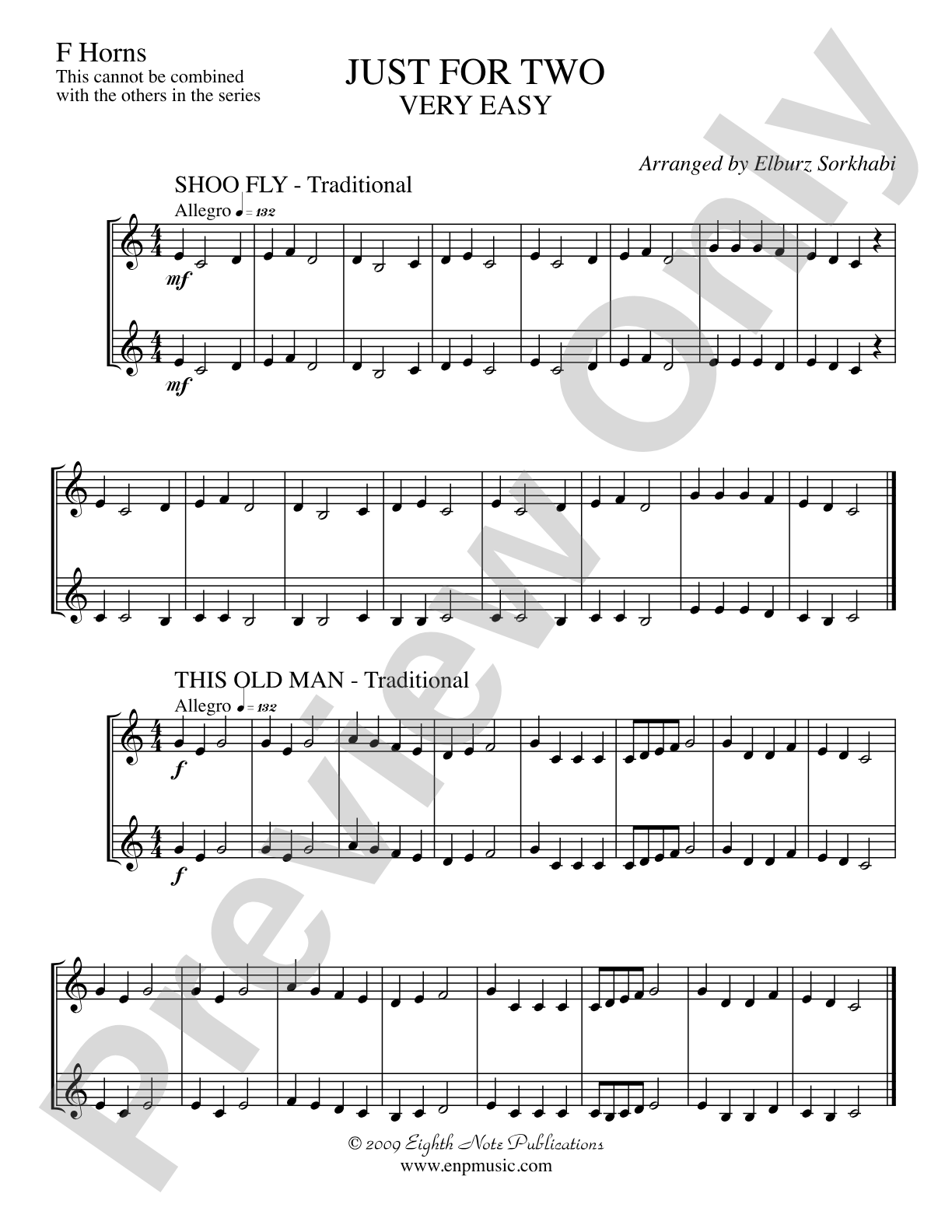
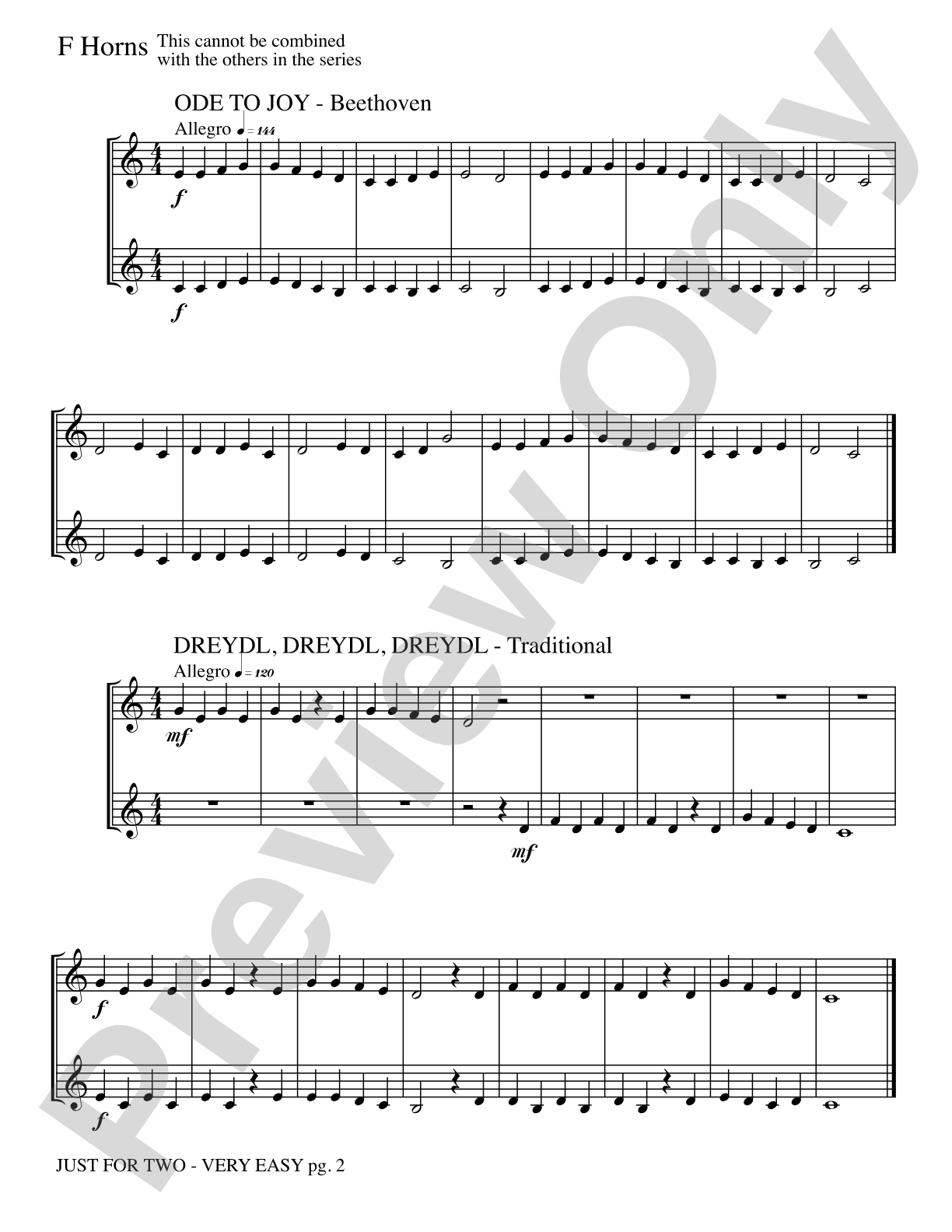
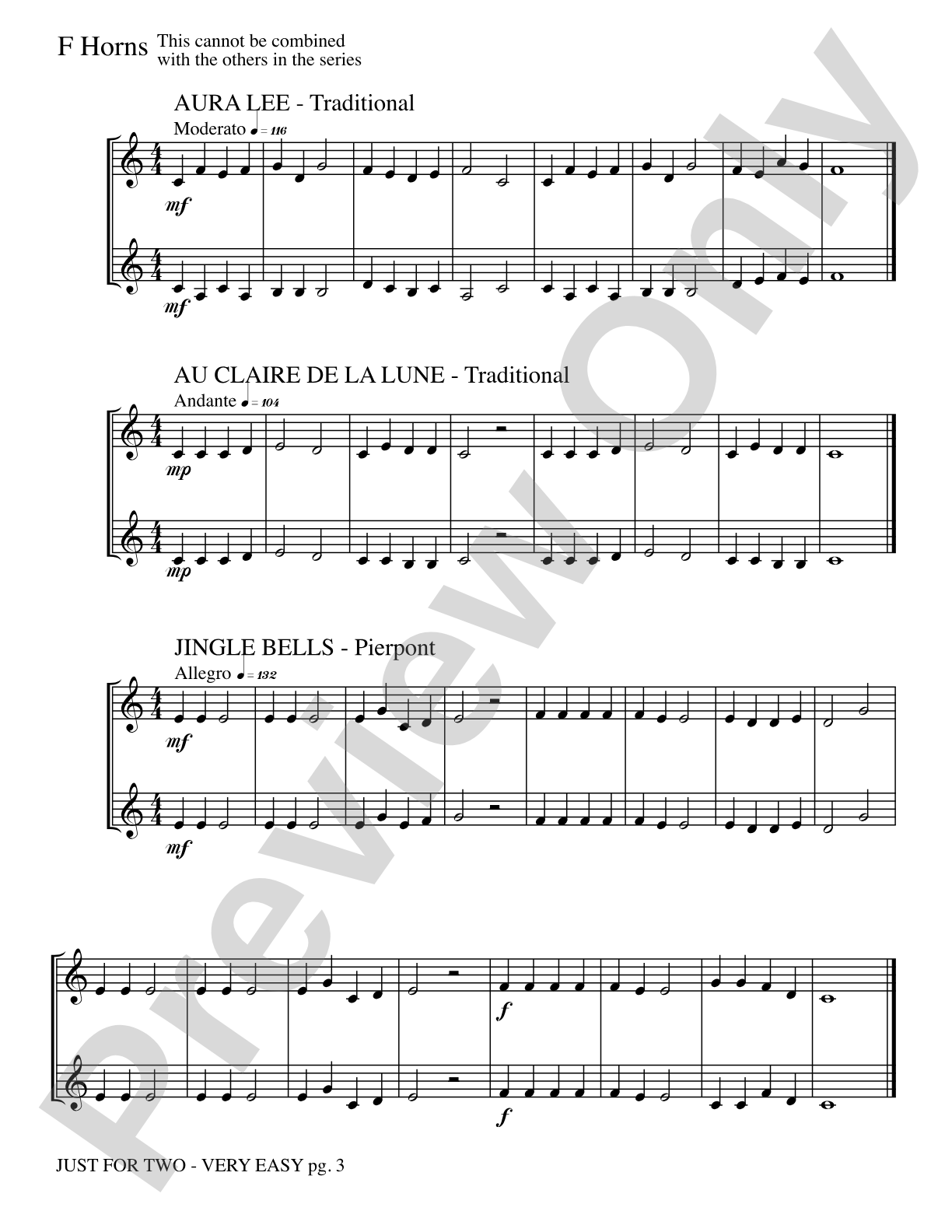
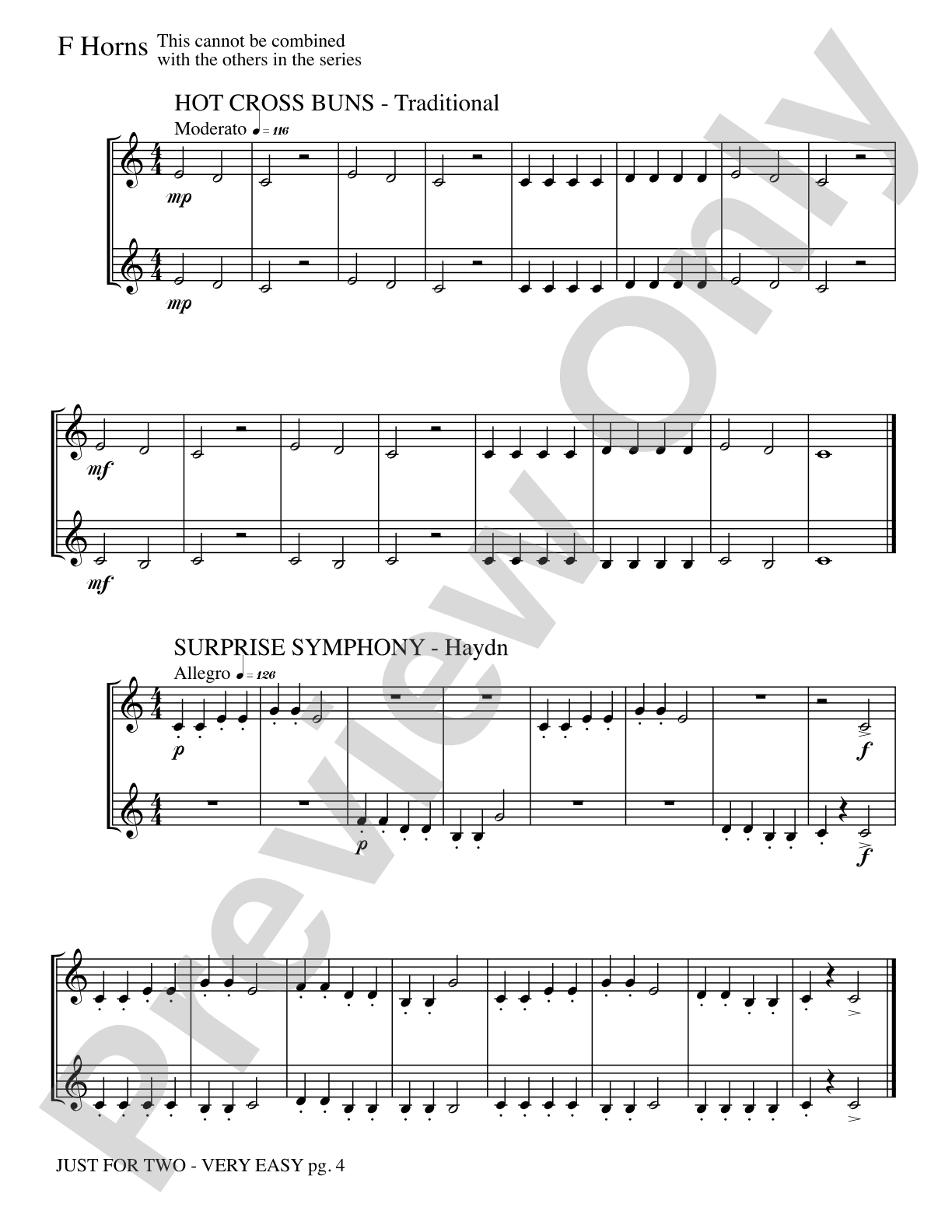
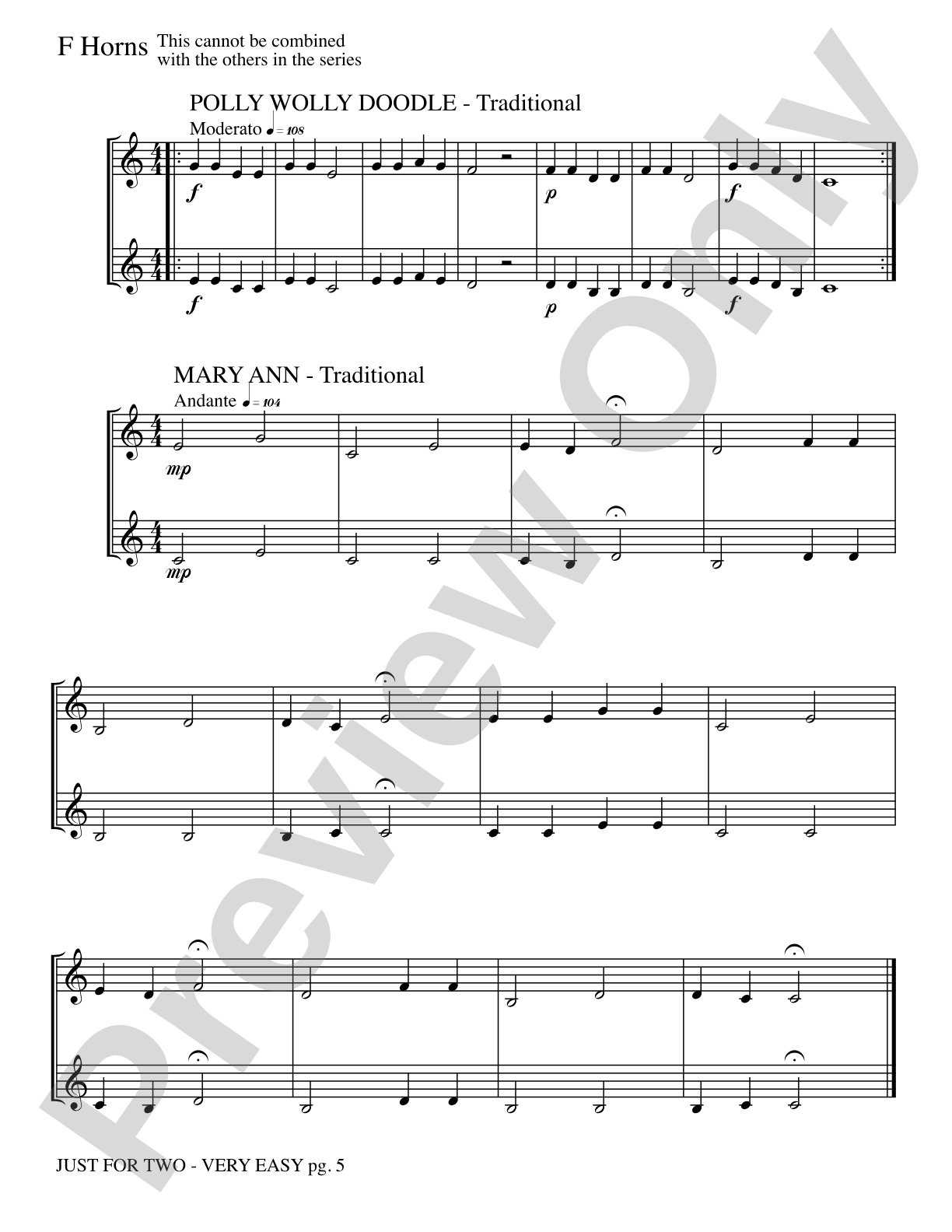
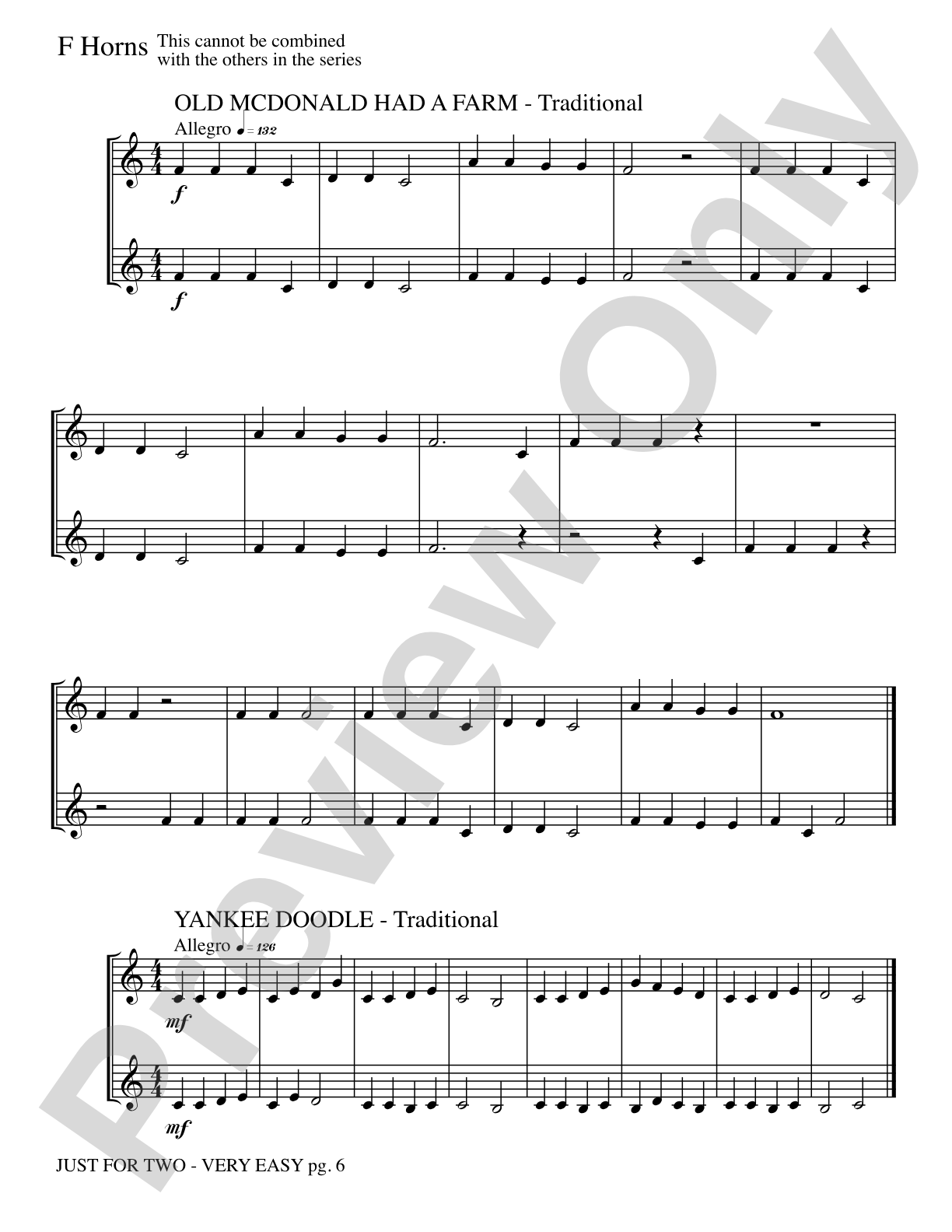
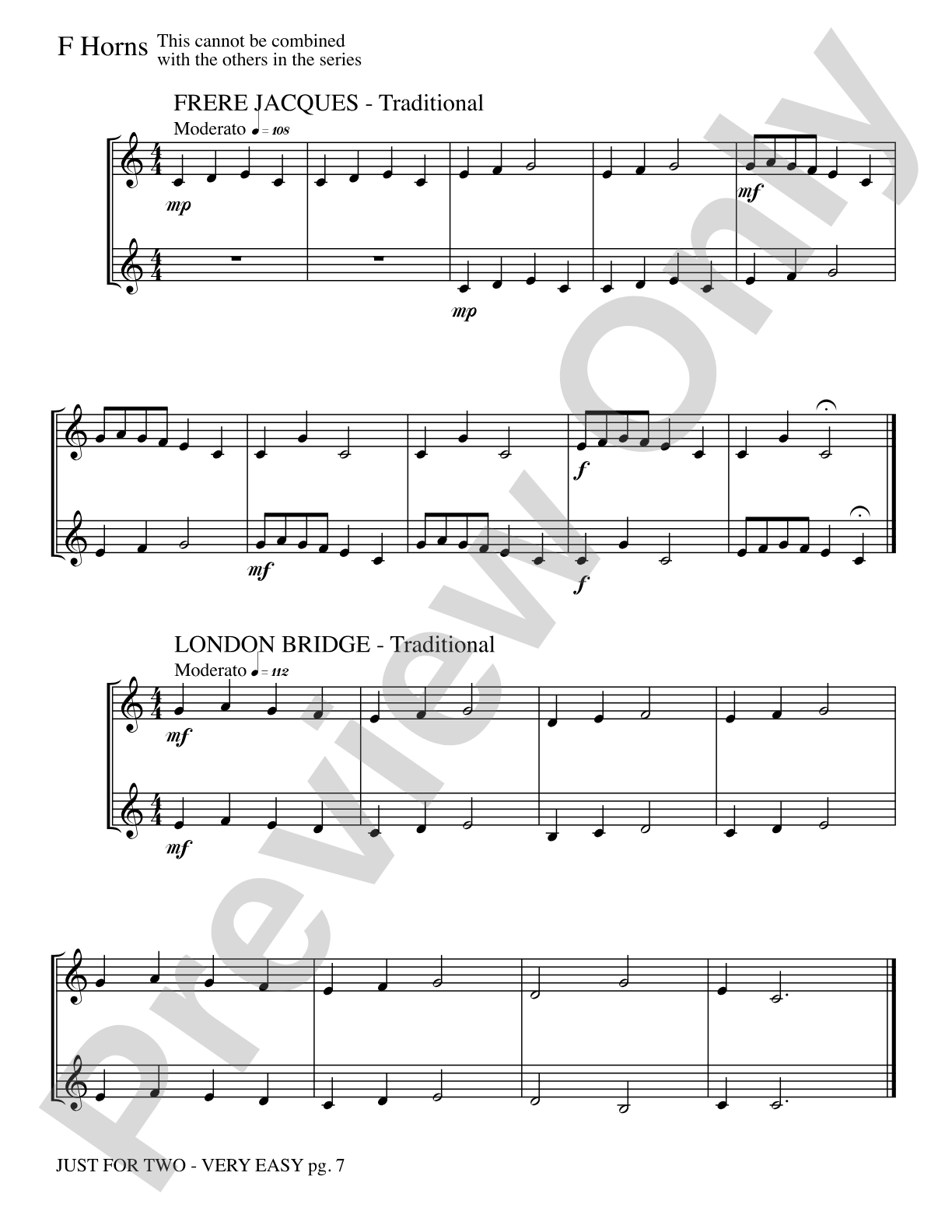
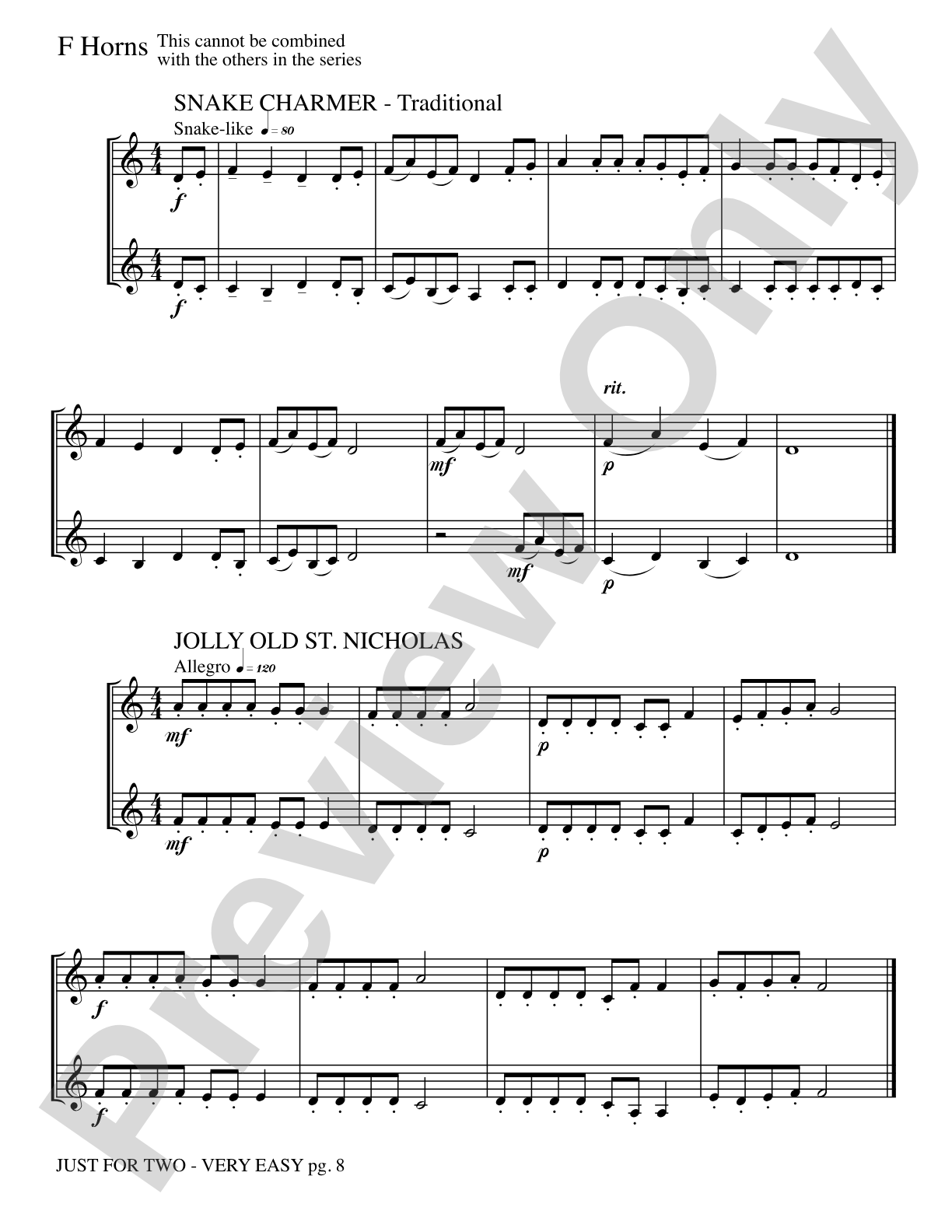

Just for Two (stand alone version): 2 F Horns Book
Various / arr. Elburz Sorkhabi
Level: Very Easy
Item: 81-PK-0000032
$10.00
One moment…
Description
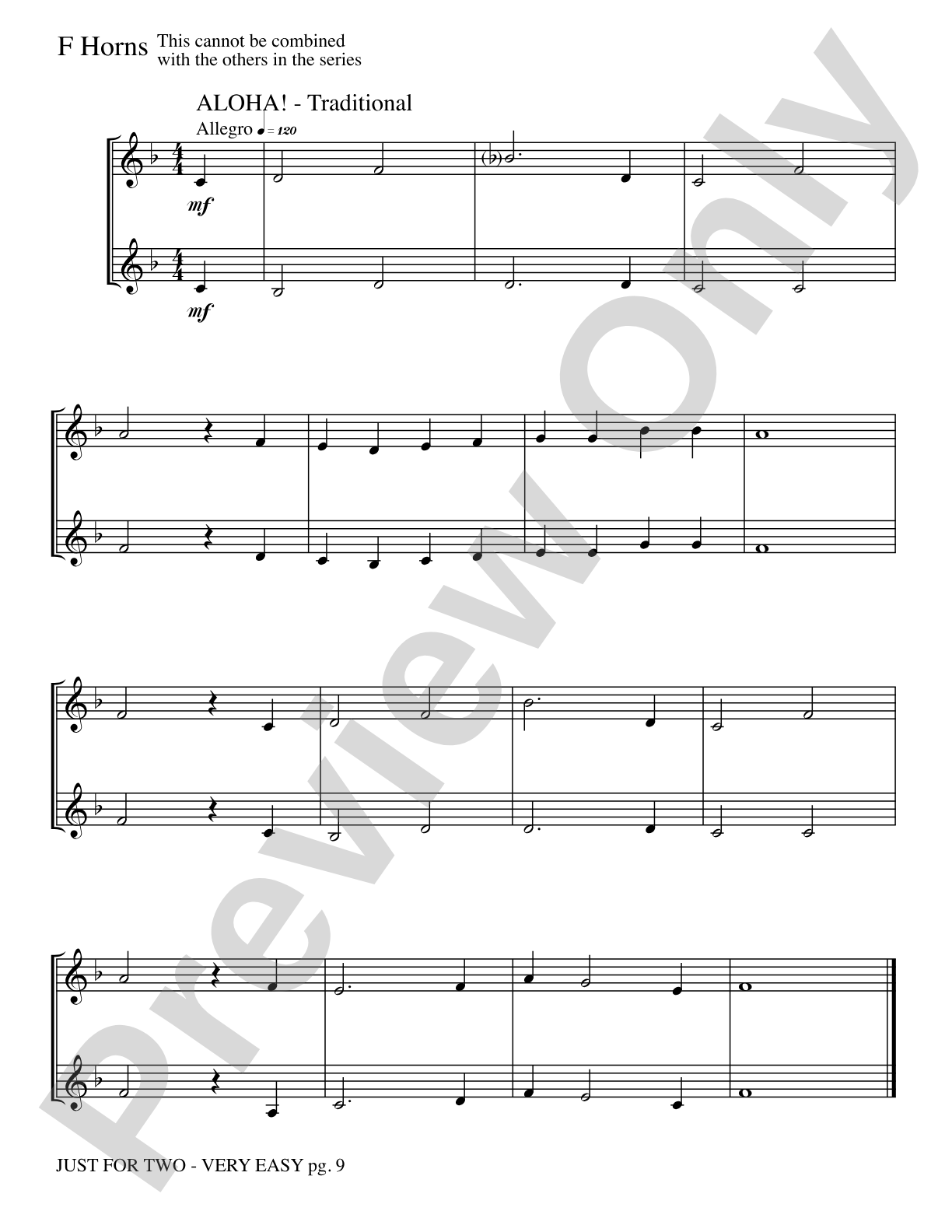
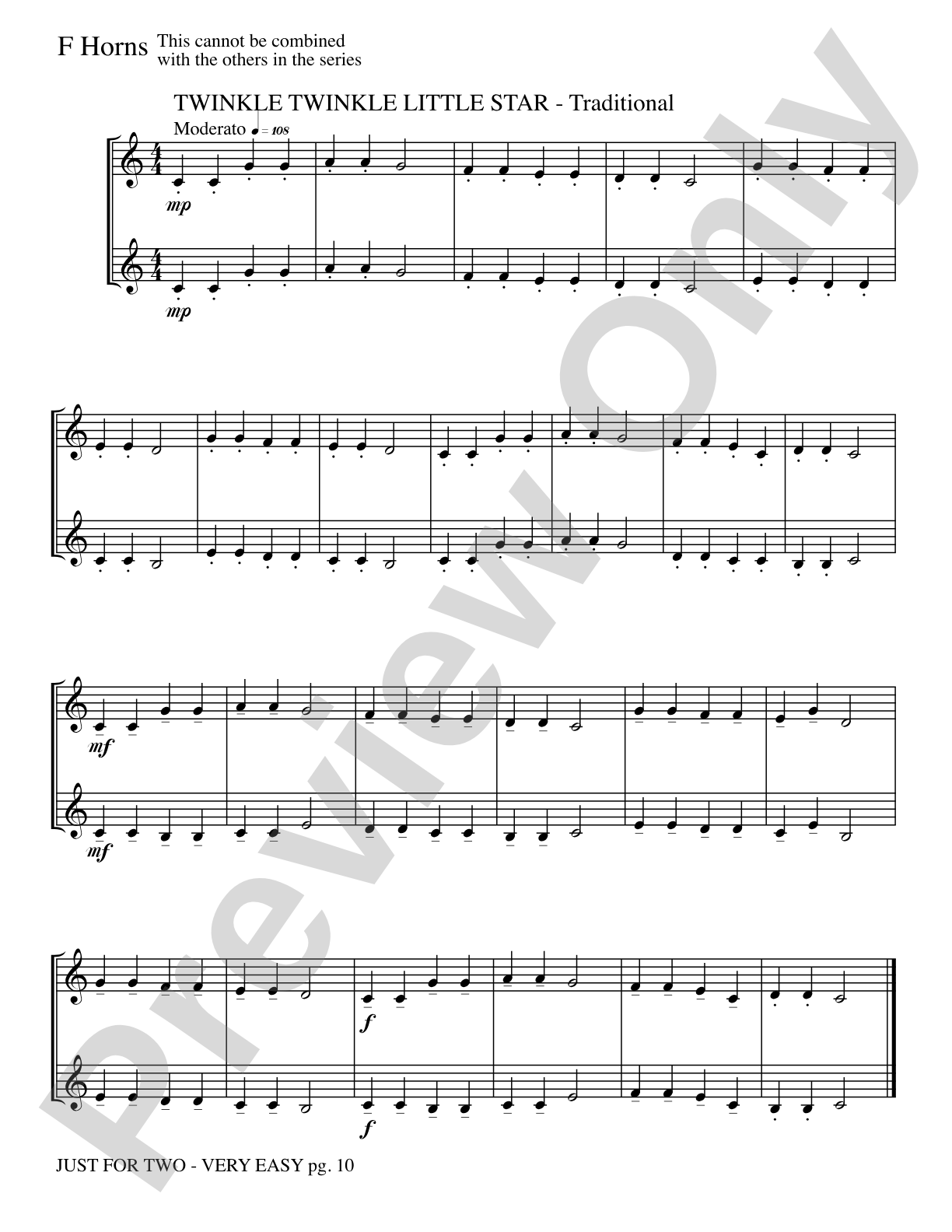
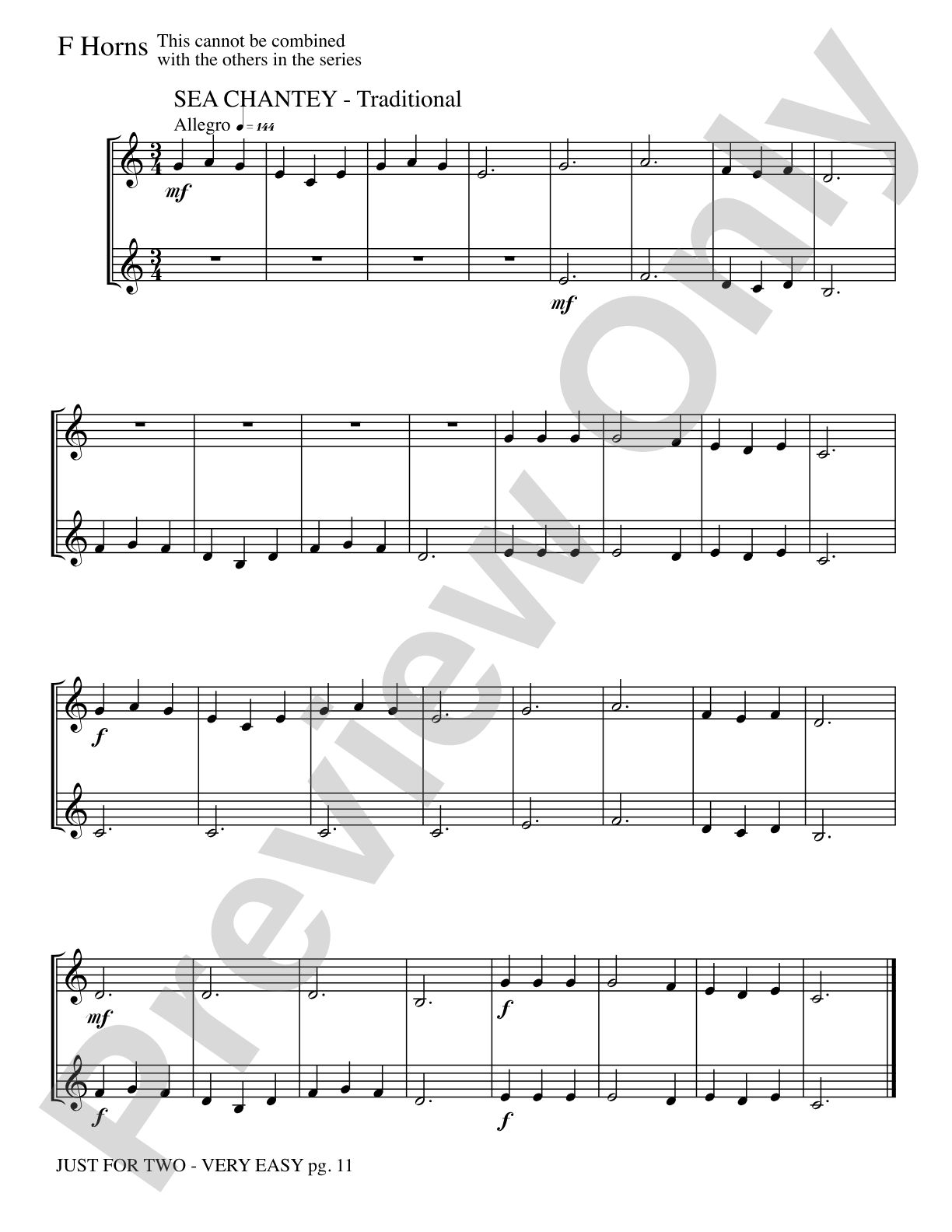
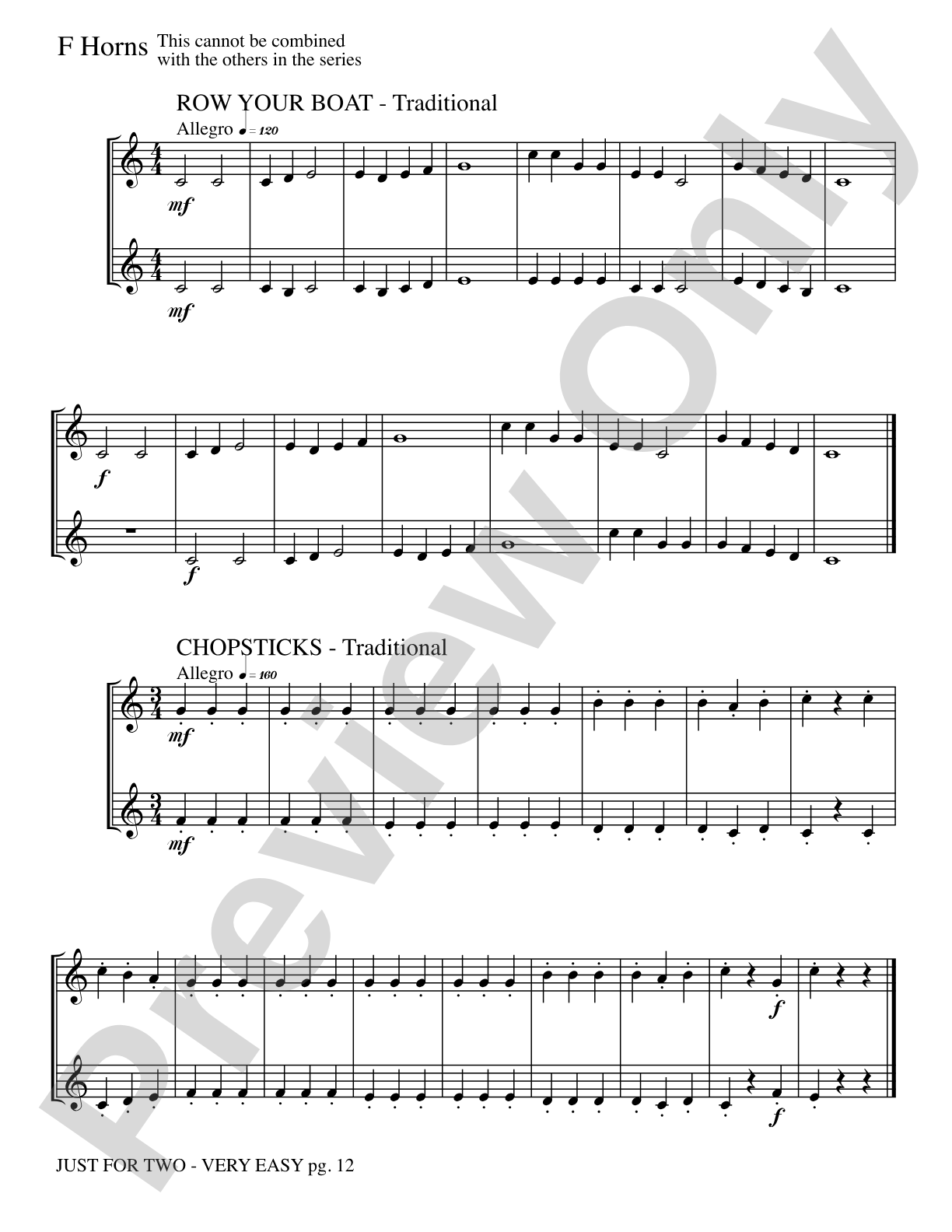
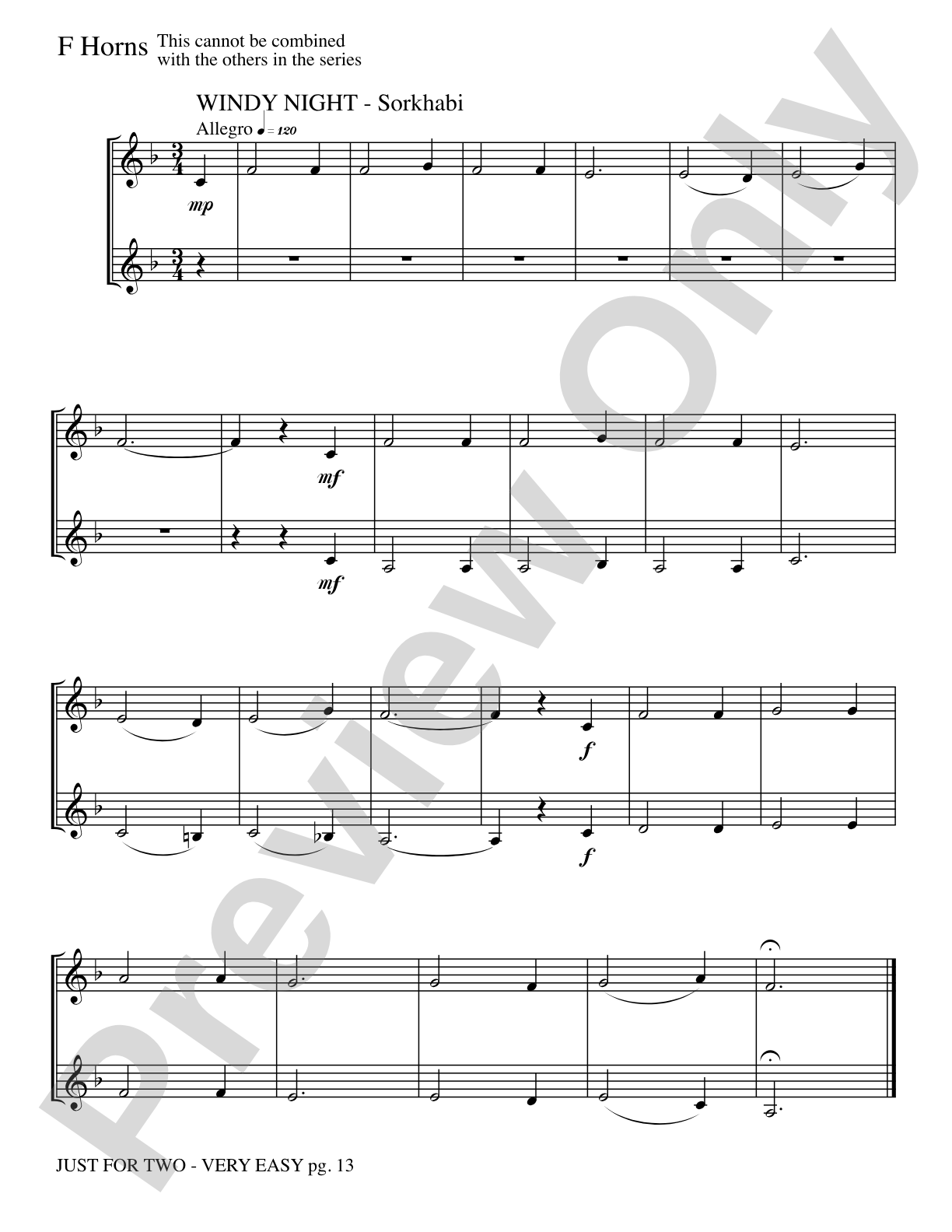
This is a collection of over 20 short arrangements of well-loved children's pieces, classical works, and folk songs that are ideal for beginner musicians. Students in the first year of playing can enjoy the fun of playing these Horn in F duets. Pieces include: Shoo Fly * This Old Man * Ode to Joy * Dreydl * Aura Lee * Au Claire de la Lune * Jingle Bells * Hot Cross Buns * Surprise Symphony * Polly Wolly Doodle * Mary Ann * Old McDonald * Yankee Doodle * Frere Jacques* *London Bridge * Snake Charmer * Jolly Old St. Nicholas * Aloha! * Twinkle, Twinkle * Sea Chantey * Row Your Boat * Chopsticks. This version is not compatible with the rest of the Just for Two series. Please use 81-HE3938 if you're looking for an F Horn book that is compatible with other instrument books in the series.


Just for Two (stand alone version): 2 F Horns Book isn't in MakeMusic Cloud just yet...but it could be. Let us know you'd like to see it, and you'll help shape what comes next. In the meantime, start a free trial and dive into thousands of interactive titles your students can play along with today.
Request This Title
Tell us you want it.
Start Your Free Trial
Explore everything that's ready to play right now.
Sample Audio
1
Aloha
--:--
2
Aura Lee
--:--
3
Chopsticks
--:--
4
Claire de la Lune
--:--
5
Dreydl
--:--
6
Frere Jacques
--:--
7
Hot Cross Buns
--:--
8
Jingle Bells
--:--
9
Jolly Old St Nicholas
--:--
10
London Bridge
--:--
11
Mary Ann
--:--
12
Ode to Joy
--:--
13
Old McDonald
--:--
14
Polly Wolly Doodle
--:--
15
Row Your Boat
--:--
16
Sea Chantey
--:--
17
Shoo Fly
--:--
18
Snake Charmer
--:--
19
Surprise Symphony
--:--
20
This Old Man
--:--
21
Twinkle Twinkle
--:--
22
Windy Night
--:--
23
Yankee Doodle
--:--
Aloha
0:00
0:00
Sample Video
No sample videos found.
Additional Details
Series:
Eighth Note Publications
Publisher:
Eighth Note Publications
Page Count:
16
SKU:
81-PK-0000032
Instrumentation:
2 F Horns
More about this title
Why we love this
Sorkhabi has crafted an arrangement collection that respects the reality of first-year horn players: they need music that sounds complete and satisfying even within strict technical limits. Every piece here works within the genuine capabilities of beginners, which means students actually finish what they start and feel genuine accomplishment. The mix of familiar folk tunes, classical snippets, and children's songs gives players real choice in what excites them.
What to expect
Warm and approachable. You recognize the melodies instantly, which builds confidence, while the careful voicing keeps both players engaged and necessary to the sound. Each piece unfolds simply but never feels patronizing.
Who it's for
First-year horn students who need engaging duet repertoire at their actual level of development. These pieces work equally well in private lessons, small group settings, or as supplementary material in a beginning band program where horns need focused practice time together.
How to get the most out of it
- Balance the two parts by listening to your partner's volume as closely as you listen to your own sound. Duet playing teaches ensemble awareness faster than any unison exercise.
- Mark the breath marks in pencil before your first rehearsal. Even simple melodies require planning when you're still building breath control.
- Keep the tempo steady by tapping your foot or using the other player as your anchor. Consistency matters more than speed at this level.
- Assign permanent parts in early rehearsals so each player can build confidence without switching roles frequently.
How to use it
Use these duets as stand-alone repertoire for horn sectionals or as a performance option for studio recitals where pairing young players creates ensemble experience without the complexity of larger group coordination. They also work well interspersed across the school year whenever you need quality practice material that doesn't require additional instrumentation.
Skills your students will build
- Reading in treble clef on the staff
- Maintaining steady tempo with a partner
- Balancing volume between two equal parts
- Phrase shaping within a simple melodic line
- Coordinating entries and releases with another player
- Building endurance through multiple short pieces