

Jubilate!: 3-Part Mixed Choral Octavo
Words and music by Victor C. Johnson
Item: 00-PO-0007884
$2.50
Minimum order quantity: 20 copies
Pickup currently not available
Description
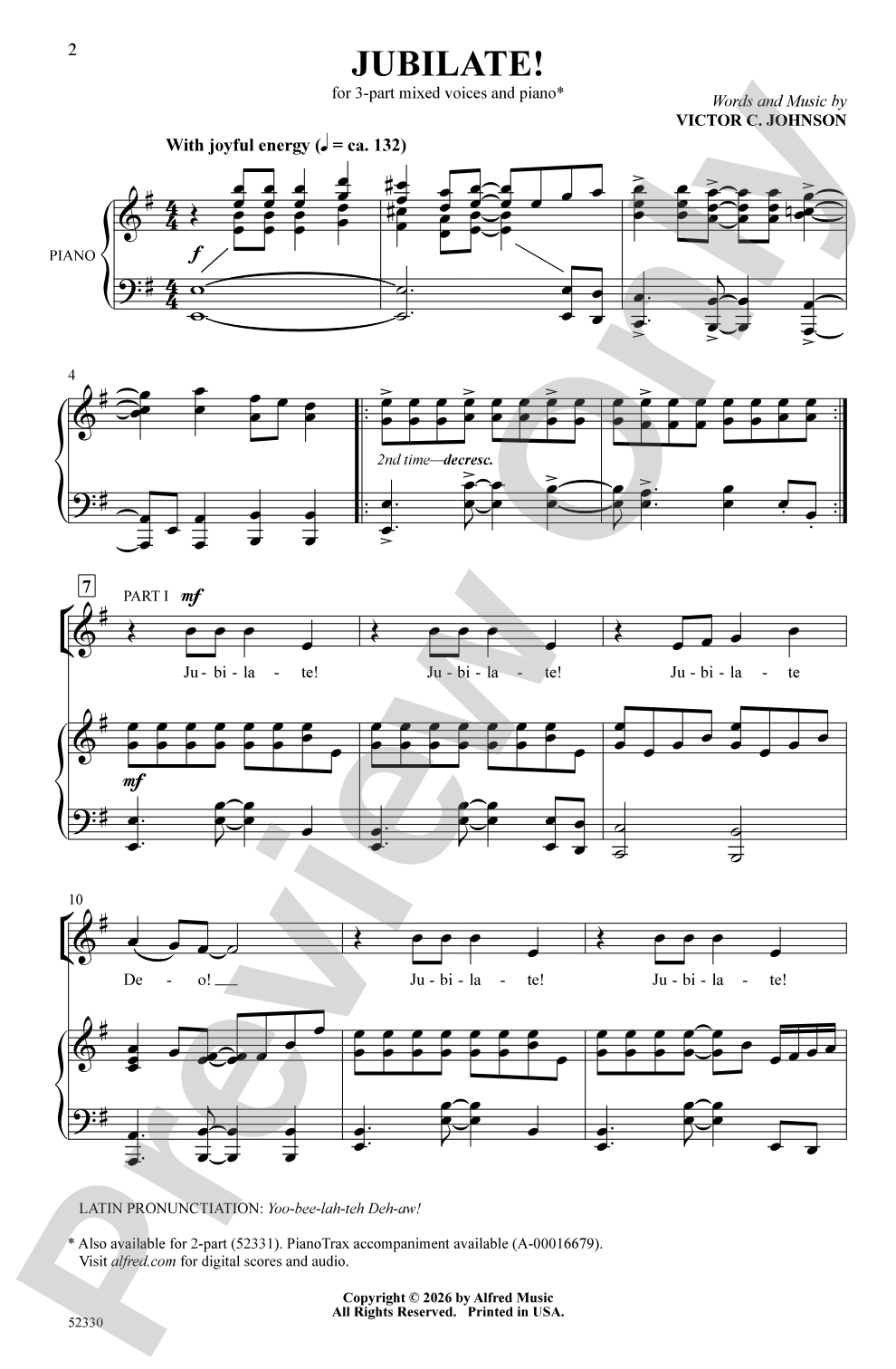
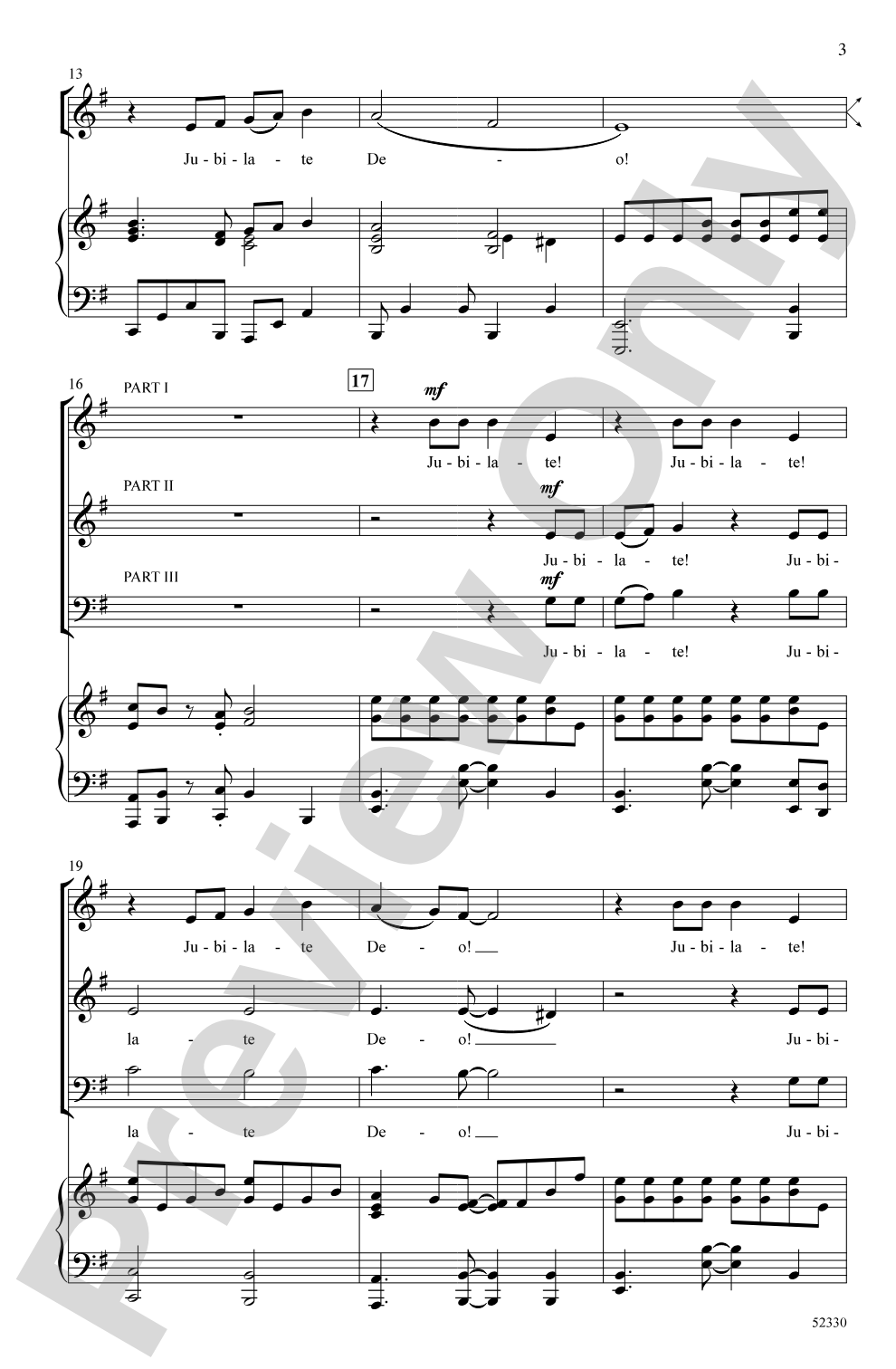
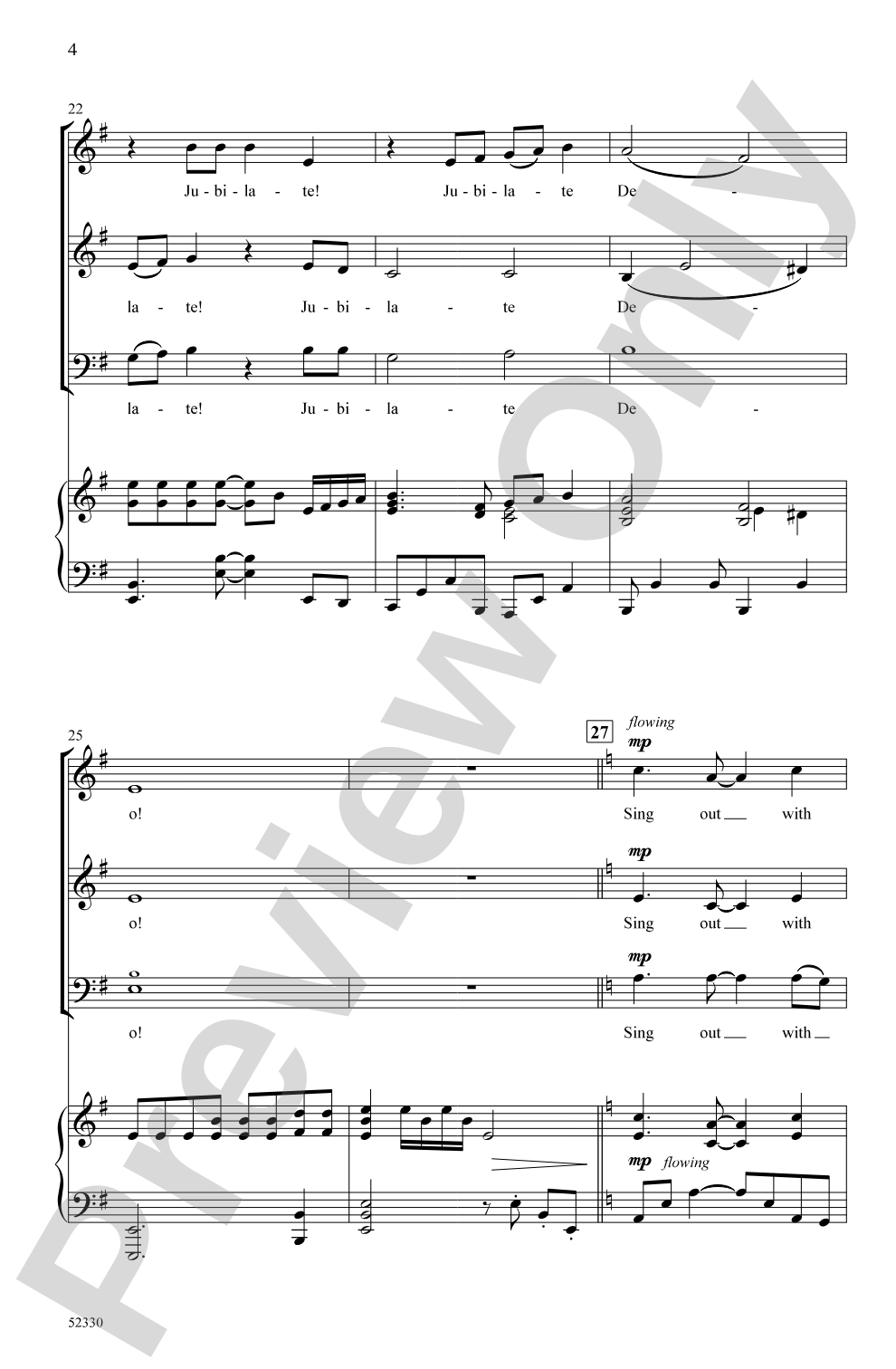
Here's a joyful, syncopated celebration that maintains its driving tempo from start to finish. This dynamic minor-key opener introduces a "Jubilate Deo" theme in unison, then develops it further with a complementary counterline texture. Contrasting English-language sections unfold with some stacked harmony, propelling the piece to a majestic modulation and a final descant-topped refrain. Uncomplicated in rehearsal, impressive in concert.


Jubilate!: 3-Part Mixed Choral Octavo isn't in MakeMusic Cloud just yet...but it could be. Let us know you'd like to see it, and you'll help shape what comes next. In the meantime, start a free trial and dive into thousands of interactive titles your students can play along with today.
Request This Title
Tell us you want it.
Start Your Free Trial
Explore everything that's ready to play right now.
Sample Audio
1
Audio File
--:--
0:00
0:00
Sample Video
Additional Details
Series:
Alfred Choral Designs
Publisher:
Alfred Music
Page Count:
12
SKU:
00-PO-0007884
More about this title
About the Composer: Victor C. Johnson

Victor C. Johnson, a Dallas native, serves as School Choral Editor for Sing!, the educational publishing arm of Choristers Guild. His compositional output spans over 500 works across choral literature, vocal solos, and keyboard collections, establishing him as one of the most widely performed contemporary composers in school and church choral programs.
Johnson spent 18 years as choral director at Ft. Worth Academy of Fine Arts, where he led the Academy Singers and Academy Men's Choir while serving as Artistic Director for both the Singing Girls of Texas and Children's Choir of Texas. Since 2022, he has conducted the Dallas Symphony Children's Chorus Mixed Ensemble, a resident ensemble for the Dallas Symphony Orchestra comprising high school students. His professional memberships include the American Choral Directors Association, Texas Music Educators Association, National Association for Music Education, and ASCAP.
Why we love this
Johnson builds this piece on syncopation and forward momentum that keeps singers engaged and audiences energized. The unison opening paired with complementary counterlines means you get textural interest without stretching rehearsal time on complex voice-leading; SAB voicing handles the modulation and descant moment cleanly and effectively.
What to expect
Energy and celebration propel this piece from its opening unison cry through to the final refrain. The minor key adds unexpected depth to the jubilation, creating a joyful piece with real character rather than surface sparkle. By the modulation and descant finale, the piece achieves something majestic without losing its syncopated, driving character.
Who it's for
This piece works for intermediate to advanced SAB choirs seeking repertoire that sounds more complex than it is to prepare. It suits both concert and festival settings where you need material with genuine musical substance that doesn't demand months of rehearsal.
How to get the most out of it
- Lock the pulse early in rehearsals. The syncopation sits most securely when singers feel the underlying beat underneath the rhythmic surface.
- Shape the stacked harmony sections with clear dynamic direction rather than static block chords. This keeps the propulsive energy moving forward even during harmonically dense moments.
- Balance the descant-topped refrain so it crowns the final section without overshadowing the harmonic foundation beneath it. A light touch in the soprano part lets the ensemble bloom.
How to use it
This sits well as an opening number for a concert, setting an immediate tone of vitality and engagement. It also works as a strong contest or festival selection where a piece needs to demonstrate both musicality and accessible rehearsal demands.
Skills your students will build
- Maintaining rhythmic independence while singing syncopated lines against a steady pulse
- Balancing unison and counterline textures in the same phrase
- Reading and executing key modulations in SAB voicing
- Layering and blending harmony within stacked chord sections
- Creating shape and direction in short-phrased material