

Journey in Peace: 2-Part Choral Octavo
Incorporating a Traditional Hebrew Prayer
Music by Andy Beck and Ben Cohn
Item: 00-PO-0002222
$2.25
Minimum order quantity: 20 copies
Pickup currently not available
Related Items
Journey in Peace: SoundTrax Digital Audio Download |
$22.95
|
View | |
Journey in Peace: SAB Choral Octavo |
$2.25
|
View | |
Journey in Peace: SATB Choral Octavo |
$1.65
|
View | |
Journey in Peace: SAB Choral Octavo |
$2.25
|
View | |
Journey in Peace: 2-Part Choral Octavo |
$2.25
|
View | |
Journey in Peace: Choral Octavo SoundTrax CD |
$22.95
|
View |
Description
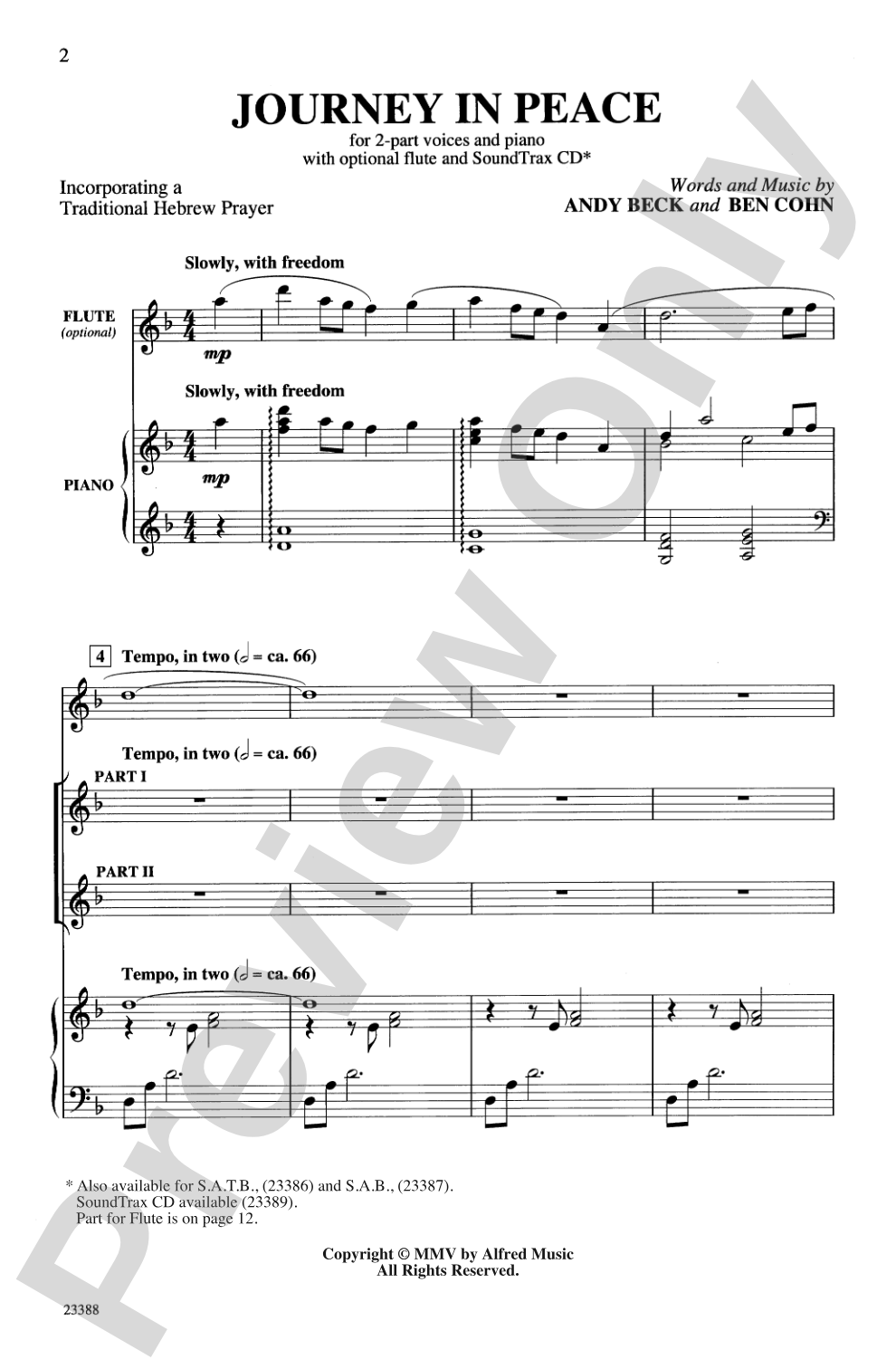
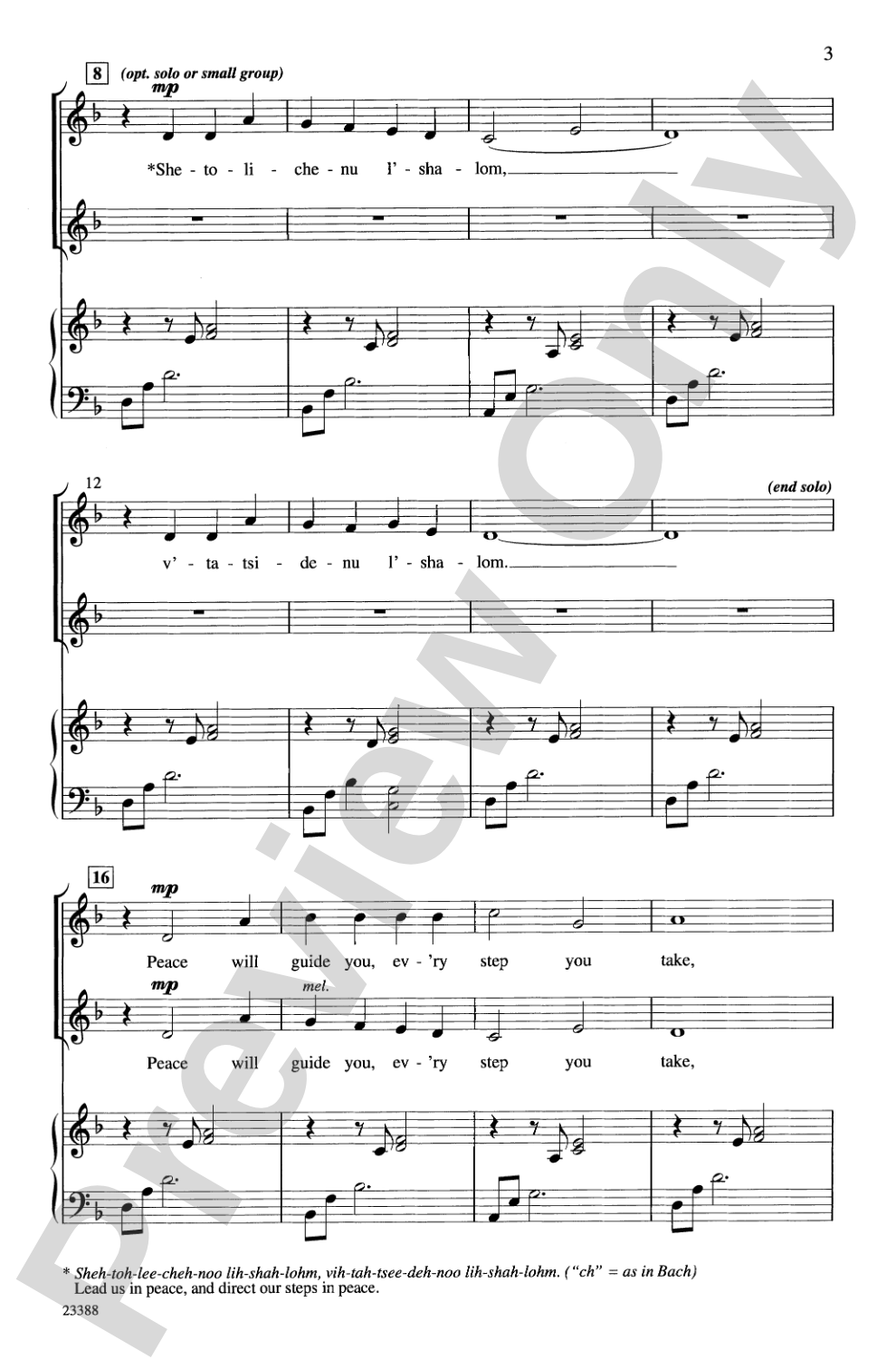
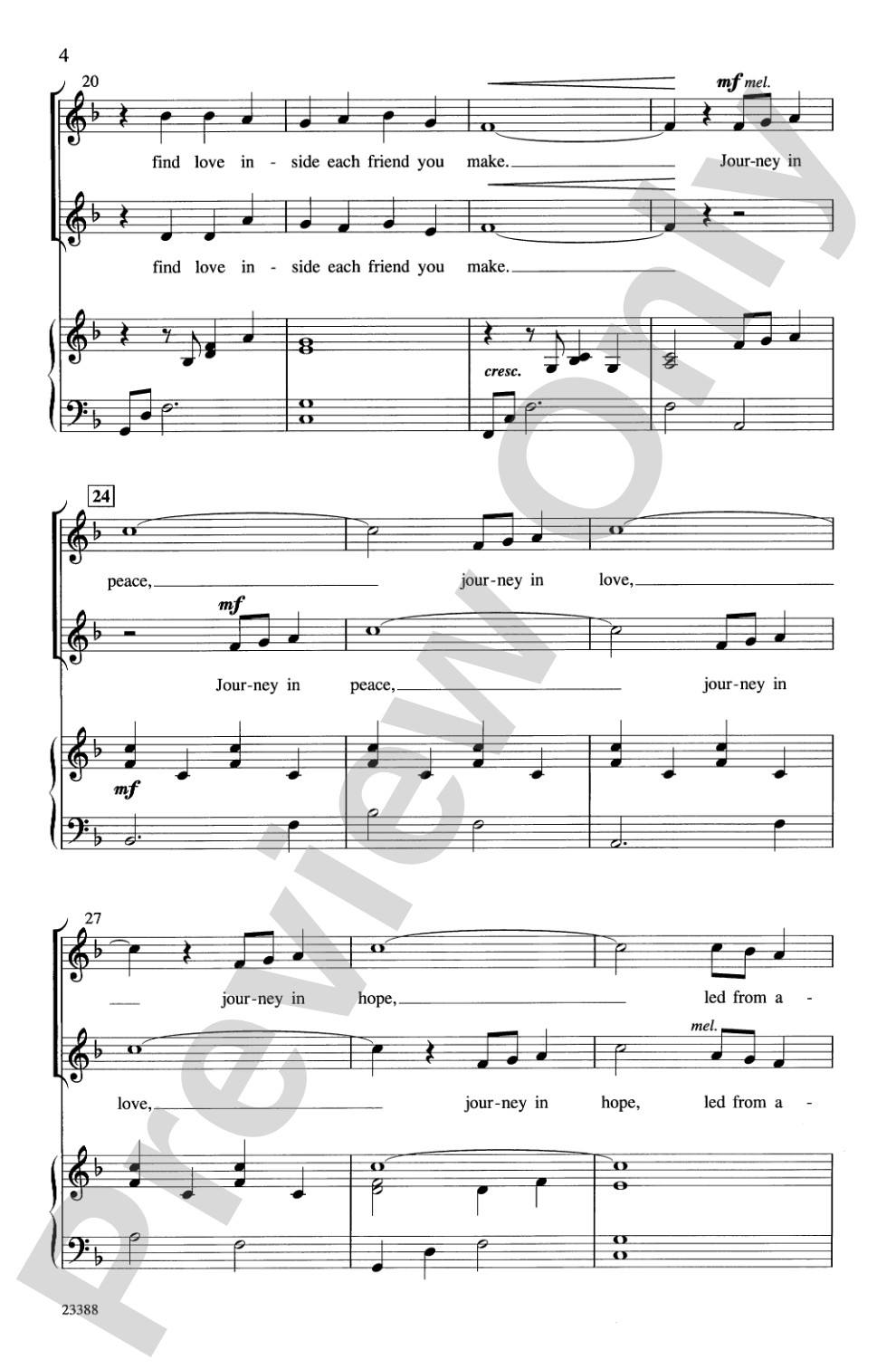
A traditional Hebrew prayer and a delicate flute solo appear occasionally in this tranquil, sensitive ballad appropriate for any age singers at any time of year. "Journey in peace, . . . love, . . . and hope, . . . led from above" is echoed back and forth, accompanied by gentle contemporary harmonies that will leave your audience breathless. The addition of sign language (from the DVD or VHS video) and the SoundTrax CD will garner even more emotion. Staging is featured on "Follow Me to the Top!" DVD #23853, VHS #23855.


Journey in Peace: 2-Part Choral Octavo isn't in MakeMusic Cloud just yet...but it could be. Let us know you'd like to see it, and you'll help shape what comes next. In the meantime, start a free trial and dive into thousands of interactive titles your students can play along with today.
Request This Title
Tell us you want it.
Start Your Free Trial
Explore everything that's ready to play right now.
Sample Audio
1
Audio File
--:--
0:00
0:00
Sample Video
No sample videos found.
Additional Details
Series:
Alfred Archive Edition: Alfred Choral Designs
Publisher:
Alfred Music
Page Count:
12
SKU:
00-PO-0002222
Instrumentation:
Opt. Flute
More about this title
About the Composer: Andy Beck

Andy Beck directs choral publications at Alfred Music and has composed and arranged over 450 works for voices, ranging from sacred pieces to full musicals. His output spans choral literature, vocal technique resources, and sight-singing curricula, all widely performed by singers across the globe. He regularly serves as guest conductor, choreographer, and clinician for all-state and honor choirs throughout the United States and has been commissioned to create music for ensembles of every age level.
Beck holds degrees in Music Education from Ithaca College and Northwest Missouri State University. A trained tenor, he has performed with the North Carolina Master Chorale Chamber Choir and worked as a studio singer for Alfred Music since 1992. His dual commitment to composing, conducting, and music literacy informs every publication he shepherds through Alfred's catalog.
Why we love this
This piece does something rare: it pairs a universally recognized Hebrew prayer with contemporary harmonic language that feels both intimate and accessible to young singers. The interplay between treble voices and that optional flute creates a sonic transparency that invites audiences into the emotional core of the text, and the availability of sign language integration transforms this from a song into a full theatrical moment.
What to expect
Tranquil and deeply introspective, with moments of quiet tenderness created by the optional flute and gentle harmonic motion. The repetition of the prayer's text feels meditative rather than redundant, creating space for reflection and emotional connection that lingers after the final note.
Who it's for
Two-part choirs of any age will find this accessible and singable, whether they're intermediate singers just developing blend or experienced choirs seeking a meaningful sacred work. Directors programming peace-themed concerts, interfaith events, or end-of-year celebrations will find this piece both emotionally resonant and manageable for most ensemble levels.
How to get the most out of it
- Bring the flute soloist into rehearsals early to establish the piece's harmonic foundation; their delicate line sets the emotional tone for everything the choir sings.
- Shape the echo phrases ("Journey in peace, . . . love, . . . and hope") with breath and intent, treating them as responses rather than mere repetitions.
- If incorporating sign language, integrate it gradually during rehearsal so singers develop muscle memory and can perform with full vocal commitment while moving.
- Balance the contemporary harmonies by supporting younger singers with clear doubling in the lower part; let the upper voices carry the lyrical line.
How to use it
This works beautifully as a centerpiece in concerts celebrating cultural heritage, peacebuilding, or spiritual themes, and its twelve-page length makes it manageable alongside more substantial works. Consider pairing it with other world-music selections or using it as a closing piece that leaves audiences in a contemplative state.
Skills your students will build
- Singing contemporary harmonic structures built on traditional melodic material
- Responding to textual repetition with musical and emotional nuance rather than mechanical repetition
- Blending two-part voicing with careful balance of upper and lower lines
- Integrating choreography or sign language while maintaining vocal focus and phrasing