

Jingle Bells: SAB Choral Octavo
Words and music by James Pierpont / arr. Alan Billingsley
Item: 00-PO-0005582
$2.15
Minimum order quantity: 20 copies
Pickup currently not available
Related Items
Jingle Bells: SoundTrax Digital Audio Download |
$29.99
|
View | |
Jingle Bells: SATB Choral Octavo |
$2.15
|
View | |
Jingle Bells: 2-Part Choral Octavo |
$2.00
|
View | |
Jingle Bells: Choral SoundPax |
$45.00
|
View | |
Jingle Bells: SATB Choral Octavo |
$2.15
|
View | |
Jingle Bells: SAB Choral Octavo |
$2.15
|
View | |
Jingle Bells: 2-Part Choral Octavo |
$2.00
|
View | |
Jingle Bells: Choral Octavo SoundTrax CD |
$29.99
|
View | |
Jingle Bells: Choral SoundPax |
$45.00
|
View |
Description
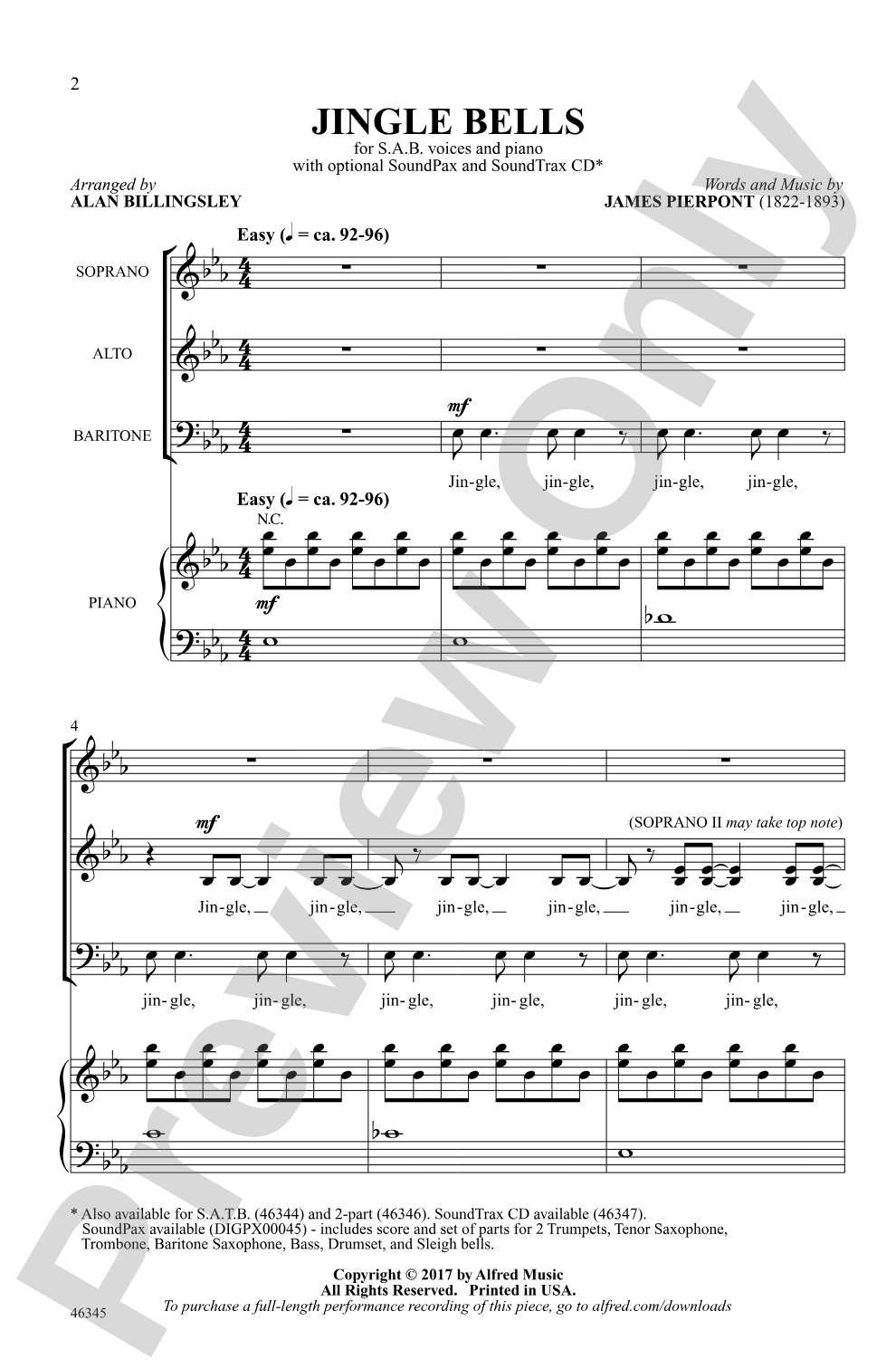
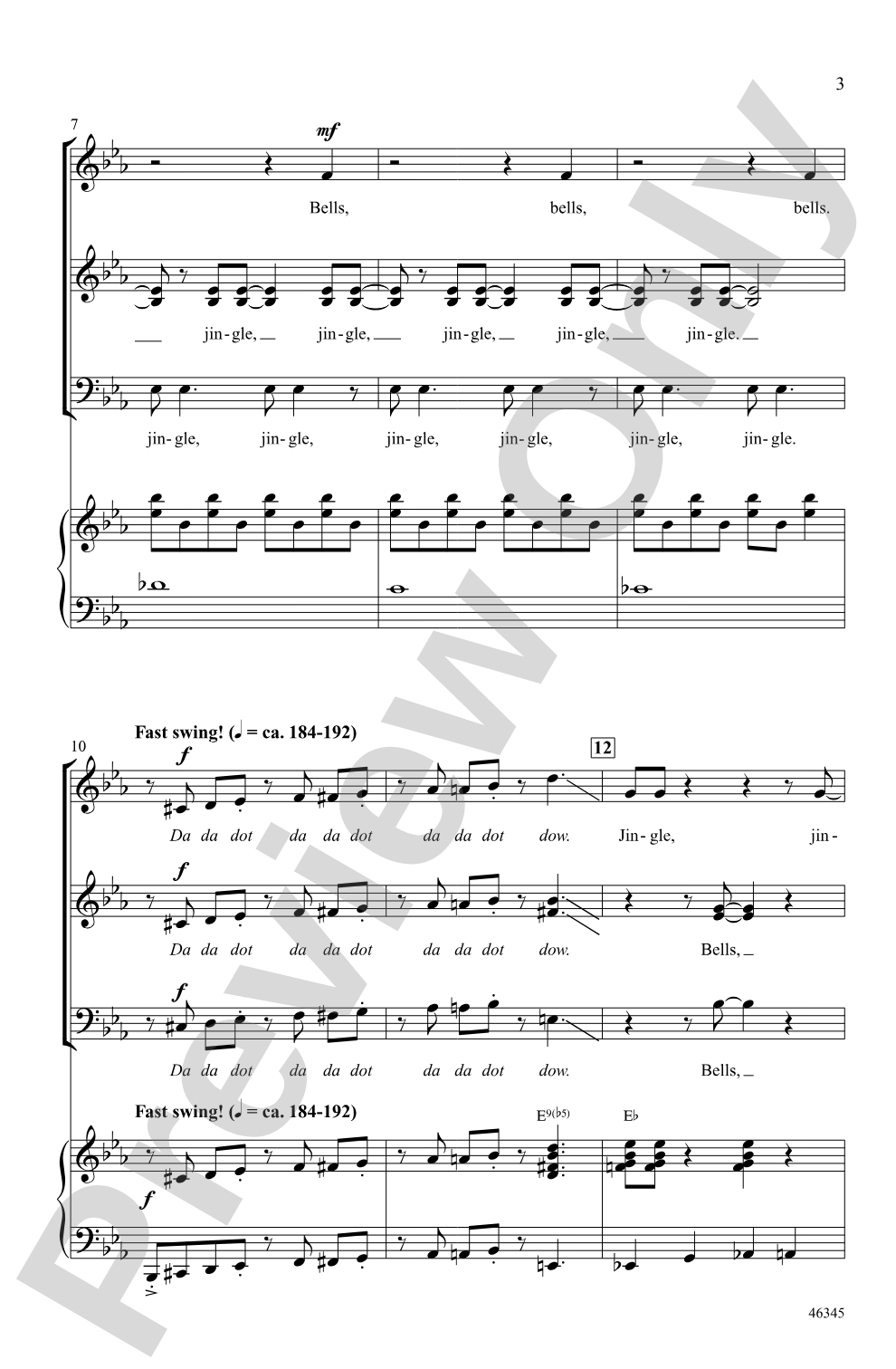
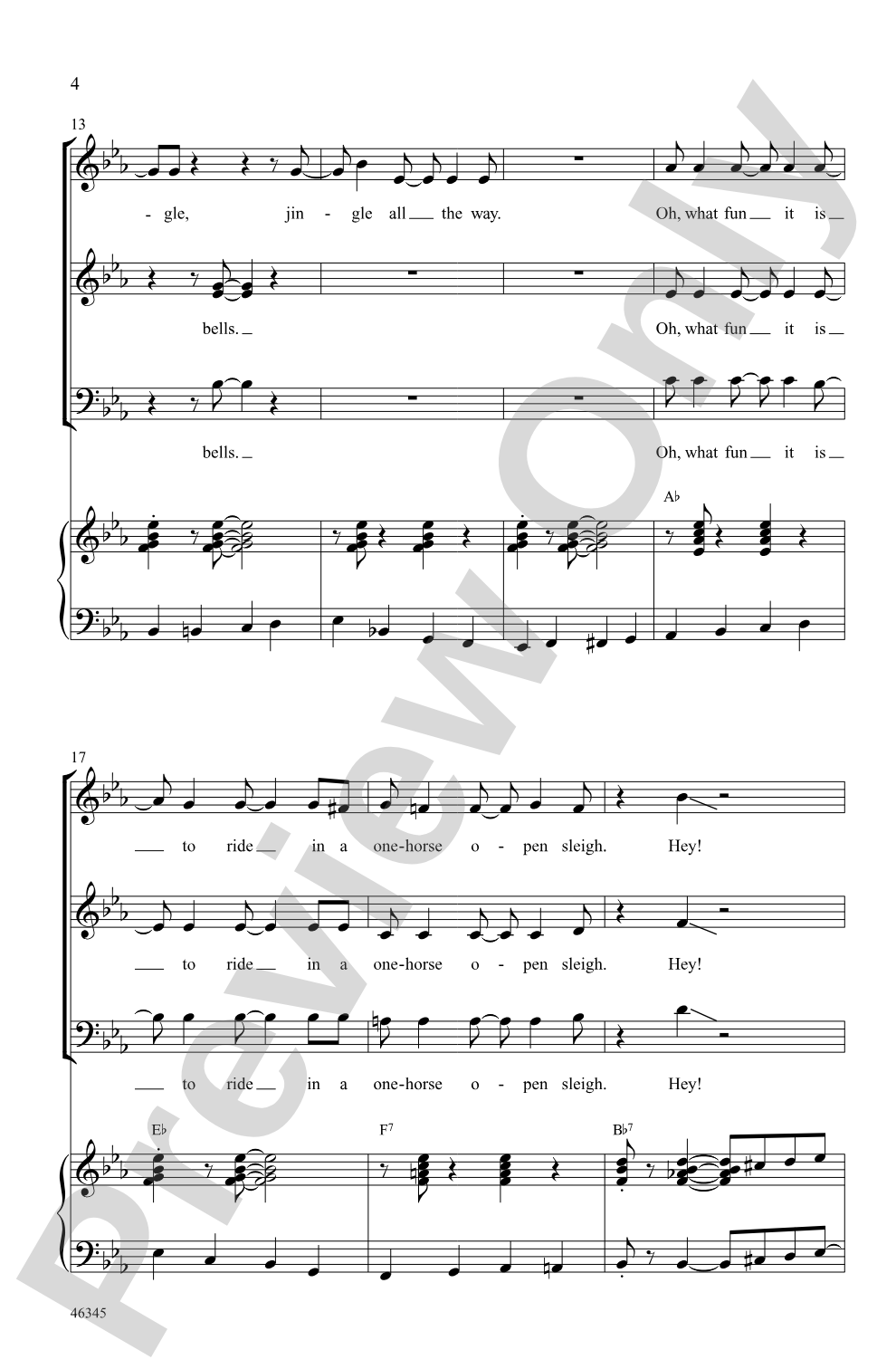
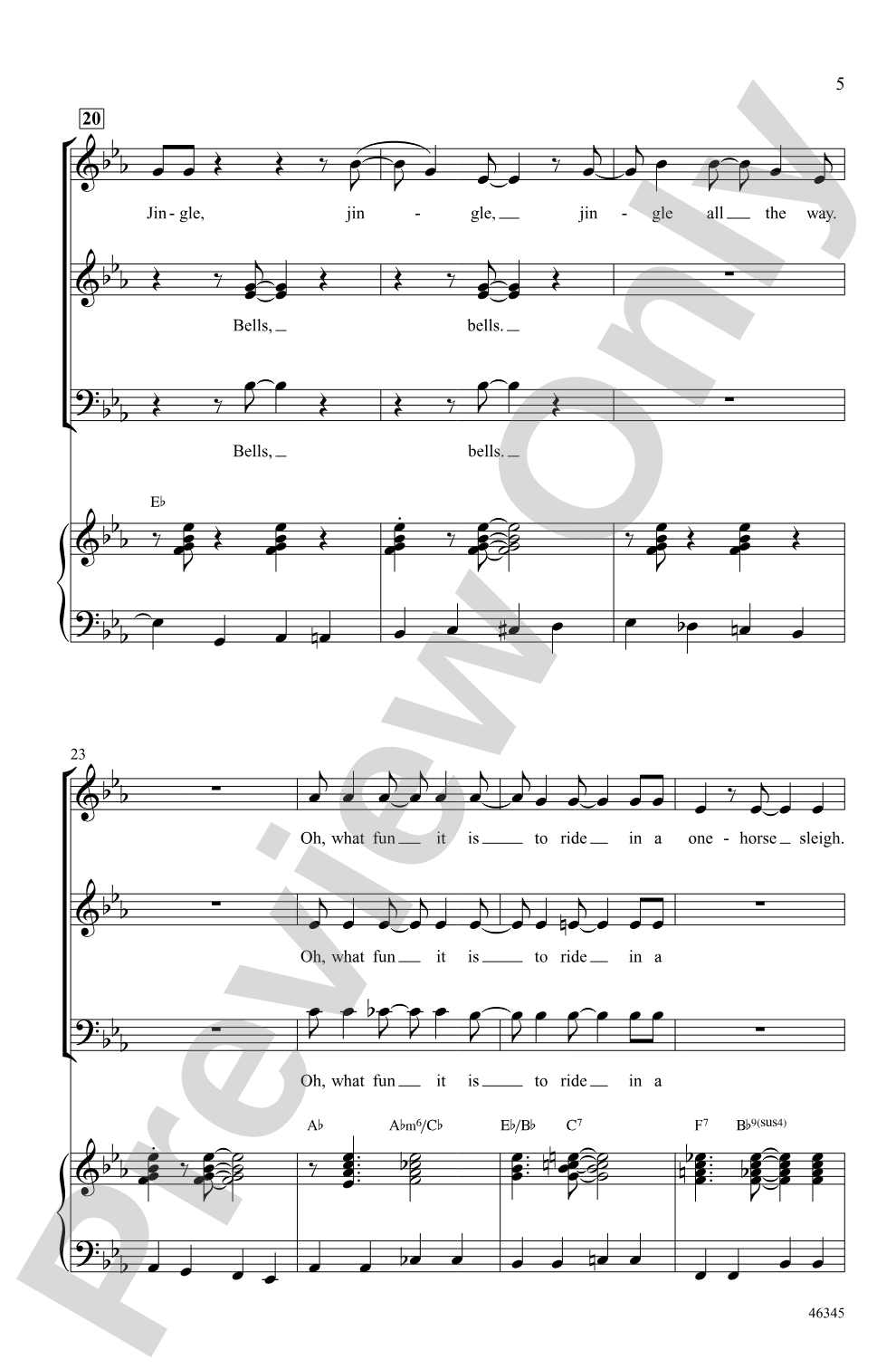
This fresh take on the ever-popular winter song could have been called "Jazzy Jingle Bells!" After a suspenseful introduction, syncopated rhythms and tight vocal harmonies permeate the remainder of this swingin' arrangement. Use the optional horns and rhythm SoundTrax CD or play the SoundPax parts with your live jazz band. A powerhouse spotlight selection!


Jingle Bells: SAB Choral Octavo isn't in MakeMusic Cloud just yet...but it could be. Let us know you'd like to see it, and you'll help shape what comes next. In the meantime, start a free trial and dive into thousands of interactive titles your students can play along with today.
Request This Title
Tell us you want it.
Start Your Free Trial
Explore everything that's ready to play right now.
Sample Audio
1
Audio File
--:--
0:00
0:00
Sample Video
No sample videos found.
Additional Details
Series:
Alfred Choral Designs
Publisher:
Alfred Music
Page Count:
20
SKU:
00-PO-0005582
More about this title
About the Composer: James Pierpont
James Pierpont (1822-1893) composed one of the most enduring melodies in American music. Originally titled "One Horse Open Sleigh," his 1850 song became known as "Jingle Bells" and has since anchored countless holiday celebrations across generations of singers and listeners.
Pierpont's gift for writing memorable, singable melodies made his work accessible to amateur and professional musicians alike. His composition remains a staple of choral repertoire, inspiring arrangements across every musical style and ensemble size.
Why we love this
Alan Billingsley's arrangement treats a familiar melody with genuine rhythmic sophistication, eschewing predictable treatment without losing the song's warmth. The syncopated harmonies and jazz sensibility give choirs a chance to perform a holiday standard that feels fresh and energetic rather than nostalgic or safe. Programming this puts singers in command of a recognizable crowd-pleaser while keeping rehearsals focused on real musical challenges.
What to expect
The opening builds intrigue with a lean, suspenseful texture before erupting into swinging syncopation and close harmonies. Energy and humor propel the arrangement forward; this is a performance that lands with immediacy and gets people smiling, not sighing.
Who it's for
This octavo works for treble-heavy choirs, community ensembles, and school groups seeking a holiday selection that combines accessibility with musical substance. The SAB voicing makes it practical for mixed ensembles without requiring soprano or bass depth, and the jazz sensibility appeals to singers ready to move beyond traditional carol arrangements.
How to get the most out of it
- Shape the suspenseful introduction carefully so the transition into syncopated material lands with punch rather than feeling abrupt.
- Balance the tight vocal harmonies by isolating each part section before blending; the swing feel depends on rhythmic precision across all three lines.
- Consider whether you'll use the optional horns and recorded accompaniment or feature a live jazz band; commit to that choice early so rehearsal focuses on matching that ensemble's feel.
- Anchor the syncopation by having your rhythm section (if using SoundPax parts with live musicians) lock the groove solidly; vocalists will ride more confidently on top of a secure pulse.
How to use it
Program this as a centerpiece winter concert selection rather than a filler encore. Its distinctive style makes an effective contrast in a set with slower, traditional carols, and the "powerhouse spotlight" quality means it can close a concert on high energy. The optional instrumental flexibility lets you tailor the arrangement to your available resources without compromising the core choral writing.
Skills your students will build
- Reading and performing syncopated rhythms in a jazz/swing style
- Balancing close SAB harmonies with clear part independence
- Maintaining rhythmic precision while singing in a syncopated texture
- Interpreting stylistic articulation and phrasing in a non-traditional choral context
- Ensemble coordination with optional brass parts or recorded accompaniment