
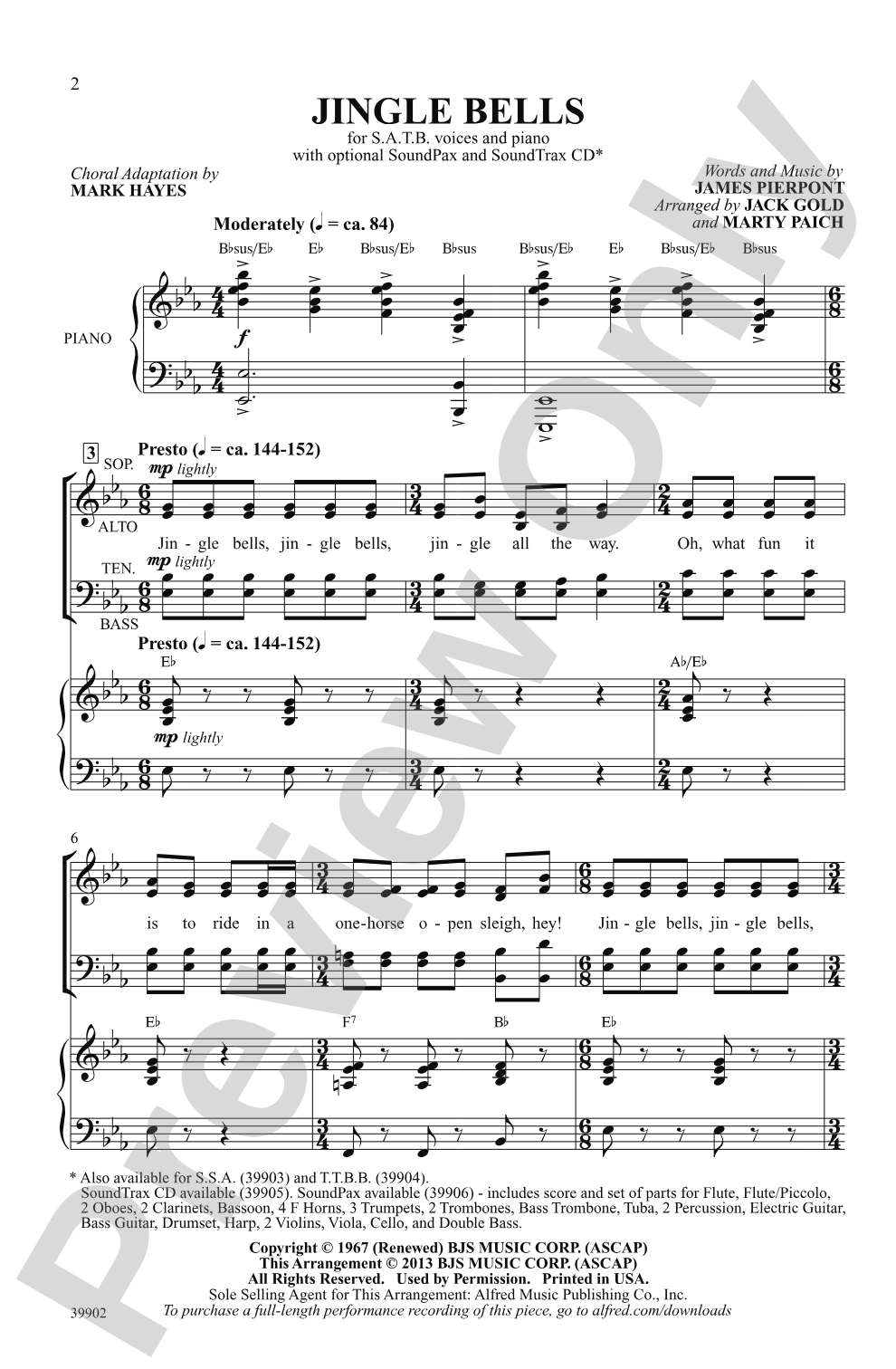
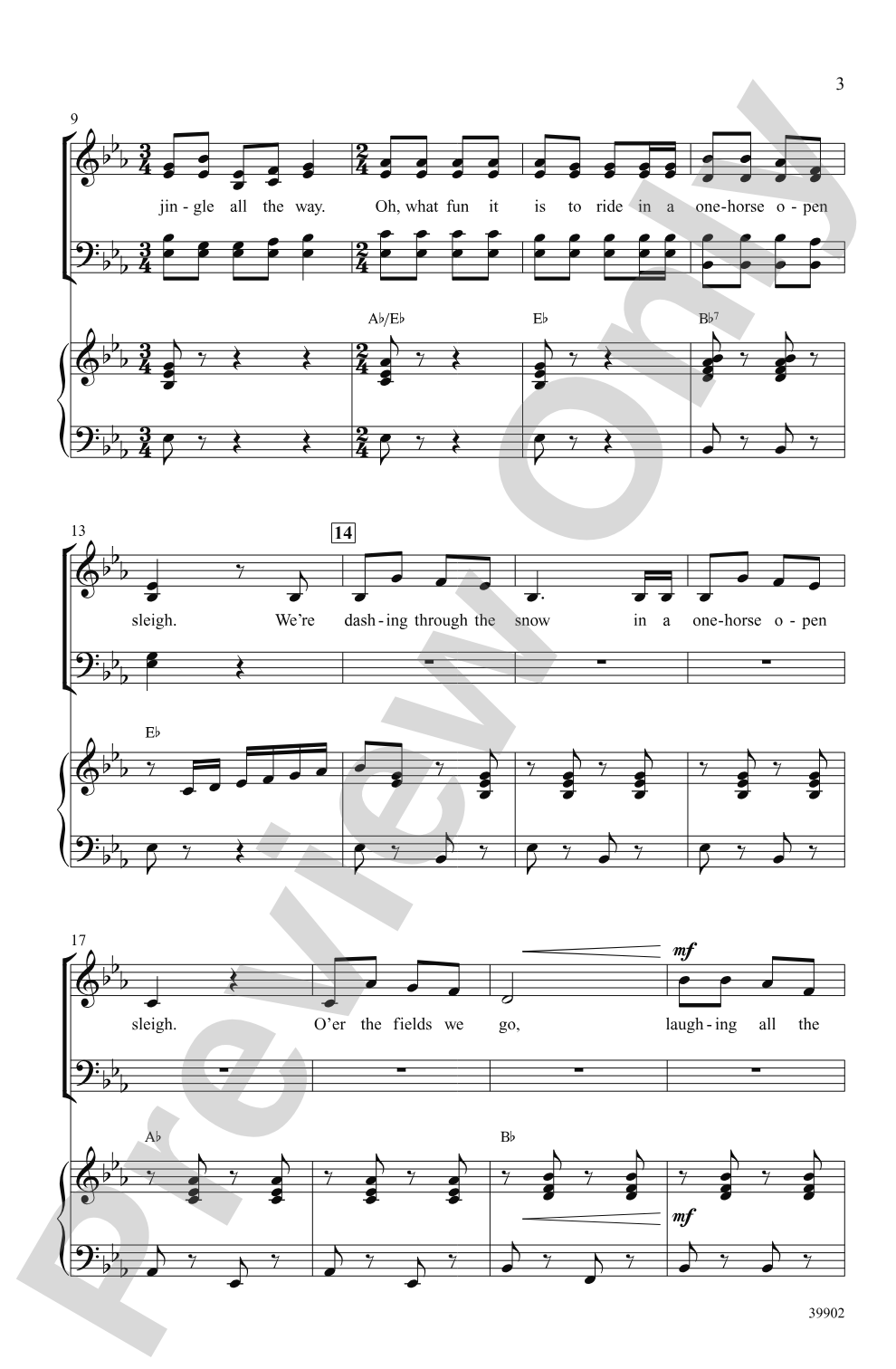

Jingle Bells: SATB Choral Octavo
As Recorded by Barbra Streisand
Words and music by James Pierpont / arr. Jack Gold and Marty Paich, choral setting by Mark Hayes
Item: 00-PO-0001690

$2.10
Minimum order quantity: 20 copies
Pickup currently not available
Related Items
Jingle Bells: SoundTrax Digital Audio Download |
$29.99
|
View | |
Jingle Bells: SSA Choral Octavo |
$2.10
|
View | |
Jingle Bells: TTBB Choral Octavo |
$1.90
|
View | |
Jingle Bells: SATB Choral Octavo |
$2.10
|
View | |
Jingle Bells: SSA Choral Octavo |
$2.10
|
View | |
Jingle Bells: TTBB Choral Octavo |
$1.90
|
View | |
Jingle Bells: Choral Octavo SoundTrax CD |
$29.99
|
View | |
Jingle Bells: Choral SoundPax |
$60.00
|
View |
Description
From Barbra Streisand's Quintuple Platinum A Christmas Album, this holiday favorite really sparkles in a new choral adaptation by Mark Hayes.


Don't just read it, hear it, play along with it, and watch your students grow with it. In MakeMusic Cloud, Jingle Bells: SATB Choral Octavo comes alive with professional accompaniment, adjustable tempo, and built-in practice tools that turn solo practice into real progress.
Open in the Player
Jump straight in and assign it today.
Start Your Free Trial
Open this title and explore the full library in minutes.
Sample Audio
1
Audio File
--:--
0:00
0:00
Sample Video
Additional Details
Series:
Alfred Pop Choral Series
Publisher:
Alfred Music
Page Count:
12
SKU:
00-PO-0001690
More about this title
About the Composer: James Pierpont
James Pierpont (1822-1893) composed 'Jingle Bells' in 1857, originally titled 'One Horse Open Sleigh.' Written in Medford, Massachusetts, the song emerged from Pierpont's gift for creating straightforward, memorable melodies that would outlast their era by generations. Though he wrote numerous songs and vocal works throughout his career, this single composition became his lasting legacy in American musical culture and remains the most recognized secular Christmas song worldwide.
As a composer and organist working in nineteenth-century New England, Pierpont understood how to craft music that appealed to amateur singers and everyday musicians. His ear for simplicity and charm made 'Jingle Bells' accessible to singers of all levels, a quality that has made it an enduring favorite in school choirs, community ensembles, and holiday programs for over 165 years.
Why we love this
Mark Hayes brings sophisticated, modern choral color to a melody so familiar that it risks sounding tired. This adaptation respects the melody's straightforward charm while adding the kind of harmonic interest and rhythmic energy that keeps audiences engaged. It's a genuinely singable arrangement that doesn't condescend to the material or the singers.
What to expect
This arrangement captures the brightness and infectious energy of Streisand's recording without losing the carol's fundamental joy. The voices move with rhythmic buoyancy, and Hayes's harmonic choices feel modern and warm, never clinical. It sparkles.
Who it's for
Any choir with solid SATB balance and basic sight-reading skills can tackle this arrangement. It works equally well for holiday concerts with high school choirs, community choruses, or church music programs that want a fresh take on a beloved standard.
How to get the most out of it
- Lean into the rhythmic vitality of the arrangement; the accompaniment drives the text forward, so encourage your singers to feel the pulse rather than push against it.
- Balance upper and lower voices carefully in sections where Hayes layers the melody and counter-lines. The sopranos should sing with brightness, not dominance.
- Use the recorded accompaniment in early rehearsals to establish the harmonic foundation and overall groove, then gradually build independence from it.
- Shape the piece with dynamic contrast. This adaptation gives you room to play with energy levels, so exploit the opportunities to pull back and build again.
How to use it
Slot this into the second half of a holiday concert when audience energy is still high and you want a moment of pure fun. It pairs well with more reverent carols earlier in the program, providing tonal and emotional contrast. It also works beautifully as a concert closer if your choir can deliver the final moments with real conviction.
Skills your students will build
- Rhythmic independence between voice parts
- Singing contemporary choral harmony (extended tertian and chromatic movement)
- Balancing clarity with blend in stacked textures
- Shaping a familiar melody to sound fresh through dynamic and textural control