
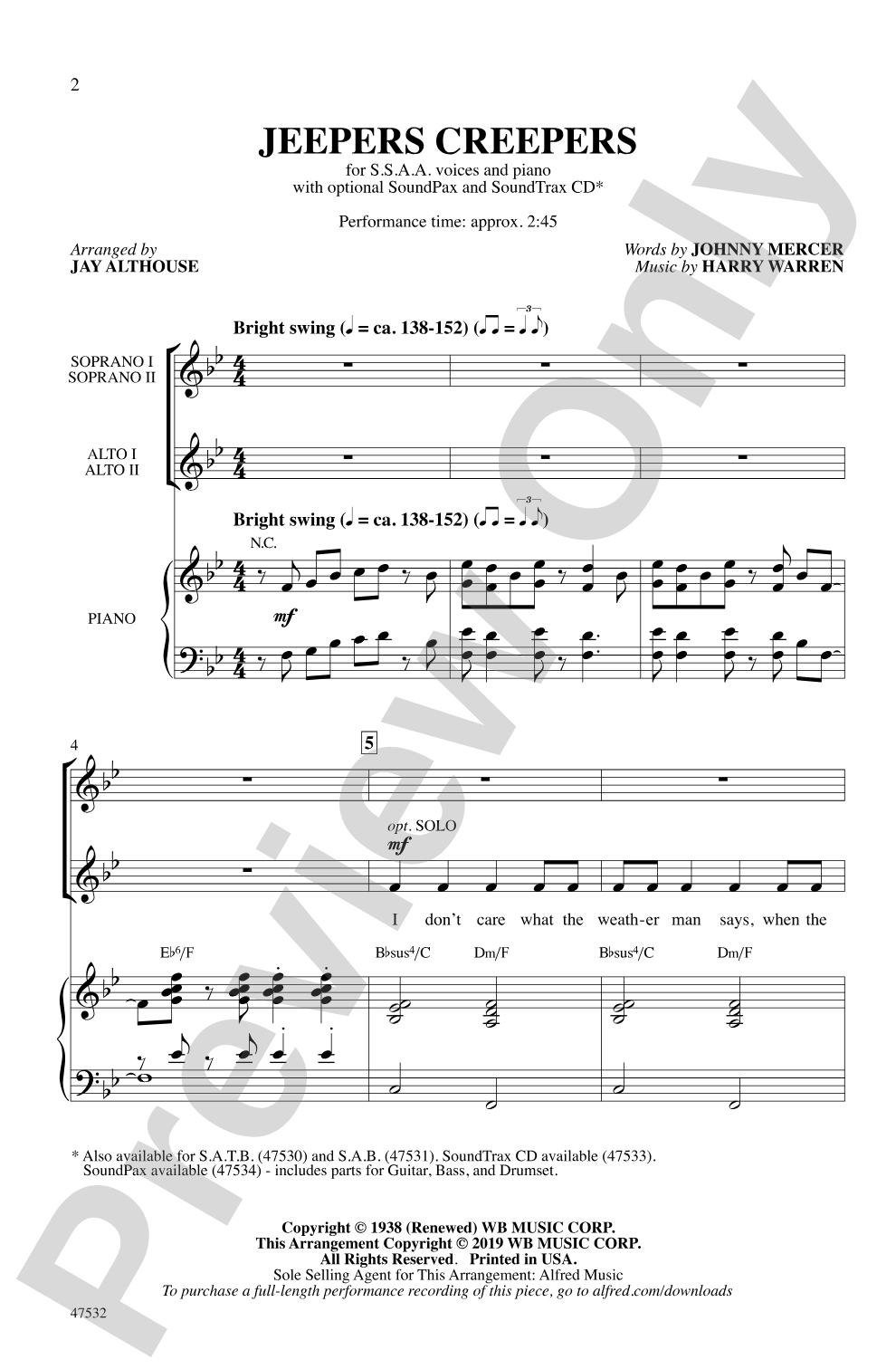

Jeepers Creepers: SSAA Choral Octavo
Words by Johnny Mercer, music by Harry Warren / arr. Jay Althouse
Item: 00-PO-0005915
$2.10
Minimum order quantity: 20 copies
One moment…
Related Items
Jeepers Creepers: SoundTrax Digital Audio Download |
$27.99
|
View | |
Jeepers Creepers: SATB Choral Octavo |
$2.10
|
View | |
Jeepers Creepers: SAB Choral Octavo |
$2.10
|
View | |
Jeepers Creepers: Choral SoundPax |
$15.00
|
View | |
Jeepers Creepers: SATB Choral Octavo |
$2.10
|
View | |
Jeepers Creepers: SAB Choral Octavo |
$2.10
|
View | |
Jeepers Creepers: SSAA Choral Octavo |
$2.10
|
View | |
Jeepers Creepers: Choral Octavo SoundTrax CD |
$27.99
|
View | |
Jeepers Creepers: Choral SoundPax |
$15.00
|
View |
Description
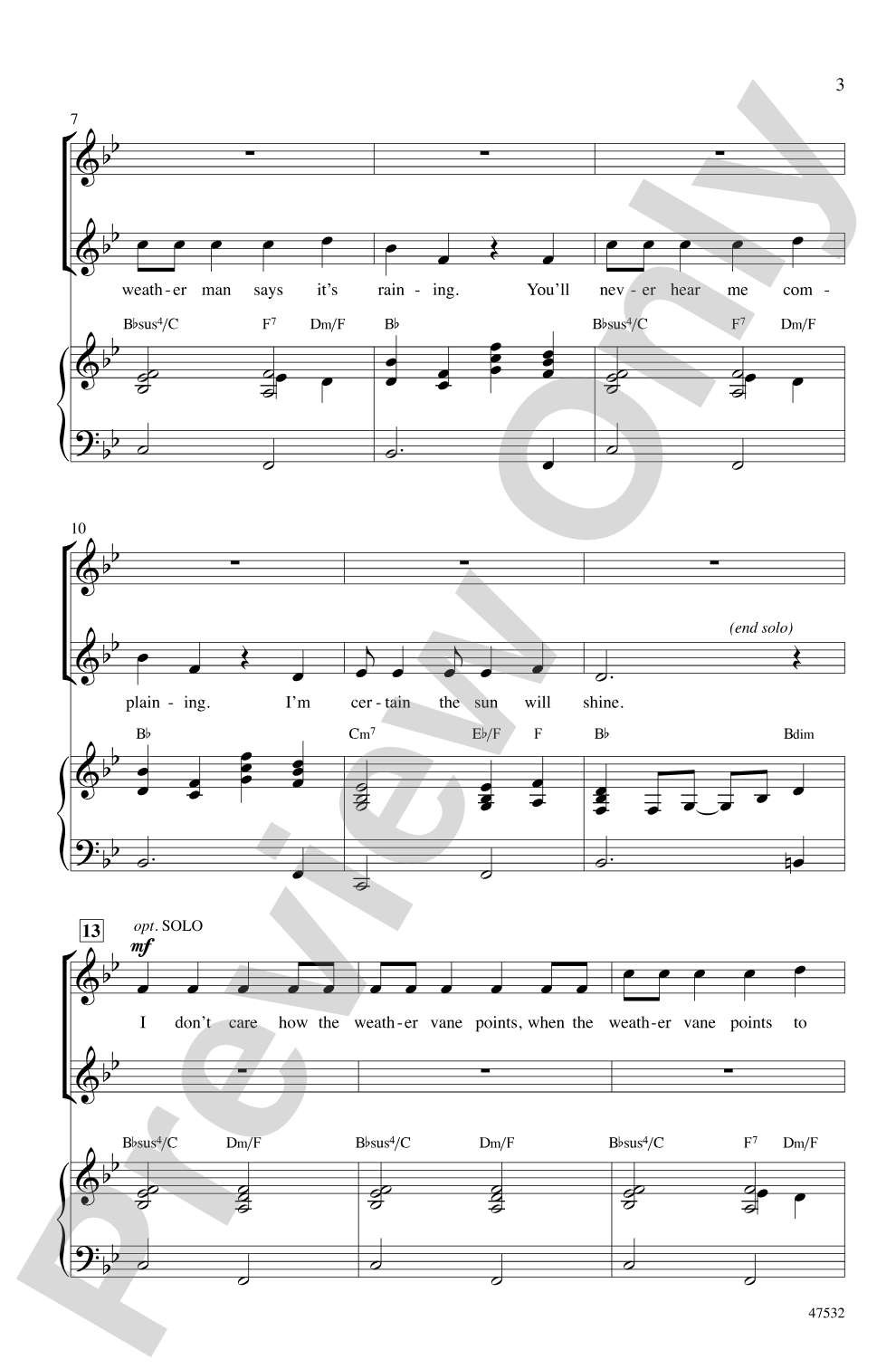
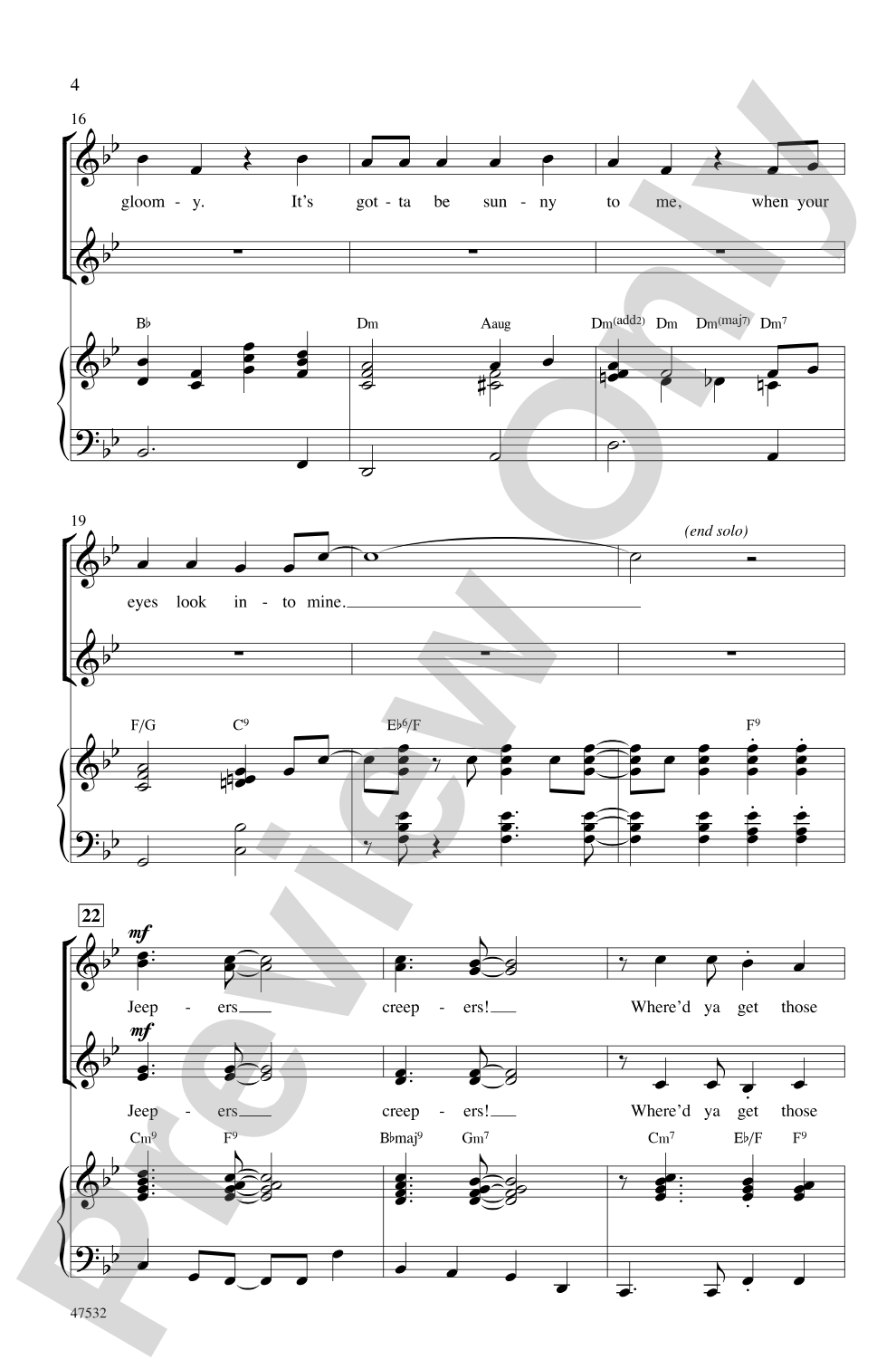
This Johnny Mercer, Harry Warren tune was premiered by jazz legend Louis Armstrong and nominated for an Academy Award in 1938. The lighted-hearted, innocently flirtatious song has since become an iconic standard. Jay's fantastic arrangement includes the opening verse, some easy scat singing, and plenty of jazz sonorities throughout. Add the rhythm section SoundPax for even more style.


Jeepers Creepers: SSAA Choral Octavo isn't in MakeMusic Cloud just yet...but it could be. Let us know you'd like to see it, and you'll help shape what comes next. In the meantime, start a free trial and dive into thousands of interactive titles your students can play along with today.
Request This Title
Tell us you want it.
Start Your Free Trial
Explore everything that's ready to play right now.
Sample Audio
1
Audio File
--:--
0:00
0:00
Sample Video
No sample videos found.
Additional Details
Series:
Alfred Pop Choral Series
Publisher:
Alfred Music
Page Count:
12
SKU:
00-PO-0005915
More about this title
About the Composer: Harry Warren
Harry Warren (1893-1981) was one of the most prolific composers of the Great American Songbook, with over 800 published songs to his name. Working primarily in film and theater during Hollywood's golden age, Warren created melodies that balanced sophisticated harmonic language with immediate accessibility, making songs like "Jeepers Creepers," "Chattanooga Choo Choo," and "That's Amore" endure across generations.
Warren's gift for crafting singable, memorable tunes with jazz inflection made his work ideal for both professional singers and student ensembles. His songs became standards precisely because they sit naturally in the voice while offering room for interpretation and stylistic flexibility.
Why we love this
Jay Althouse's arrangement captures the playful, flirtatious spirit of the original while keeping the vocal writing accessible for secondary choirs. The inclusion of scat singing adds an element of fun and stylistic authenticity without overwhelming singers unfamiliar with jazz idiom, and the harmonic jazz sonorities keep the arrangement fresh and engaging rather than dated.
What to expect
Breezy and charming, with a wink built into every phrase. The scat singing and jazz harmonies give the piece a sophisticated edge while maintaining the innocent fun of the original tune, creating moments of genuine playfulness on stage.
Who it's for
This arrangement works beautifully for SSAA choirs seeking stylistically diverse repertoire that sits comfortably in lighter voices while introducing jazz harmony and vocal techniques. It appeals to directors building a concert that spans from classic American standards to contemporary arrangements, and to students encountering the Great American Songbook for the first time.
How to get the most out of it
- Balance the scat section carefully; it should sit slightly behind the melody so the lyrics remain clear and the jazz flavor enhances rather than obscures the tune.
- Lean into the rhythm section accompaniment (or add the SoundPax rhythm parts) to establish the swing feel and give singers a clear pulse for the syncopated passages.
- Shape the opening verse to showcase the song's gentle flirtatiousness; allow space between phrases rather than pushing the tempo, letting the lyrics breathe.
- Experiment with microphone placement or acoustic staging if performing with amplification; the close harmonies in jazz voicing benefit from clarity on vowel sounds.
How to use it
Position this as a palate cleanser in the second half of a concert, perhaps paired with other standards or light jazz selections to create a "Great American Songbook" set. It also works well as a closer for a lighter show or as a feature arrangement when you want to showcase your singers' rhythmic precision and stylistic versatility.
Skills your students will build
- Jazz harmony interpretation and voicing balance
- Scat singing fundamentals and rhythmic precision
- Swing feel and syncopated rhythm reading
- Stylistic flexibility moving between lyrical and jazz idioms
- Diction clarity in close harmony arrangements