
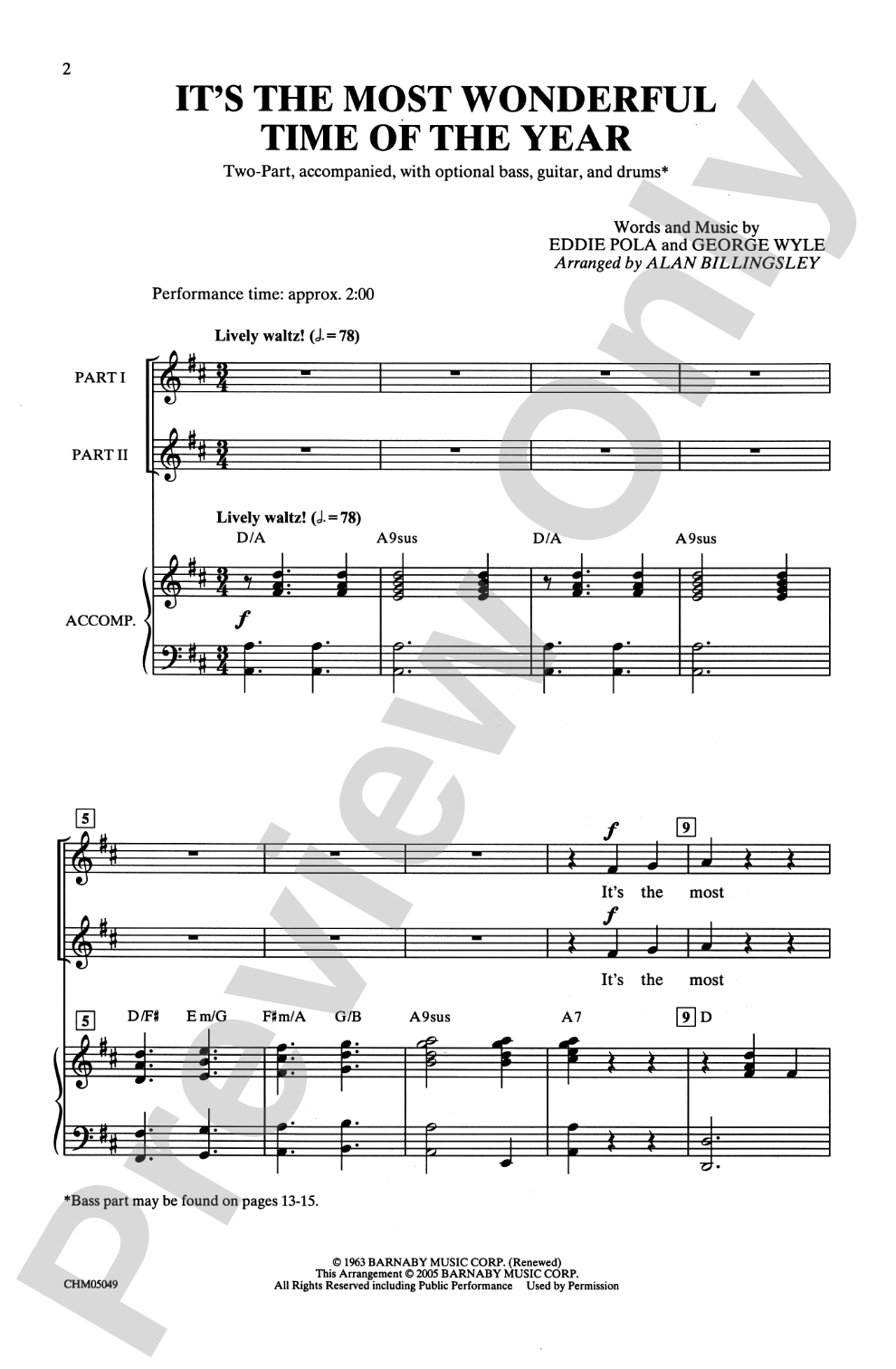
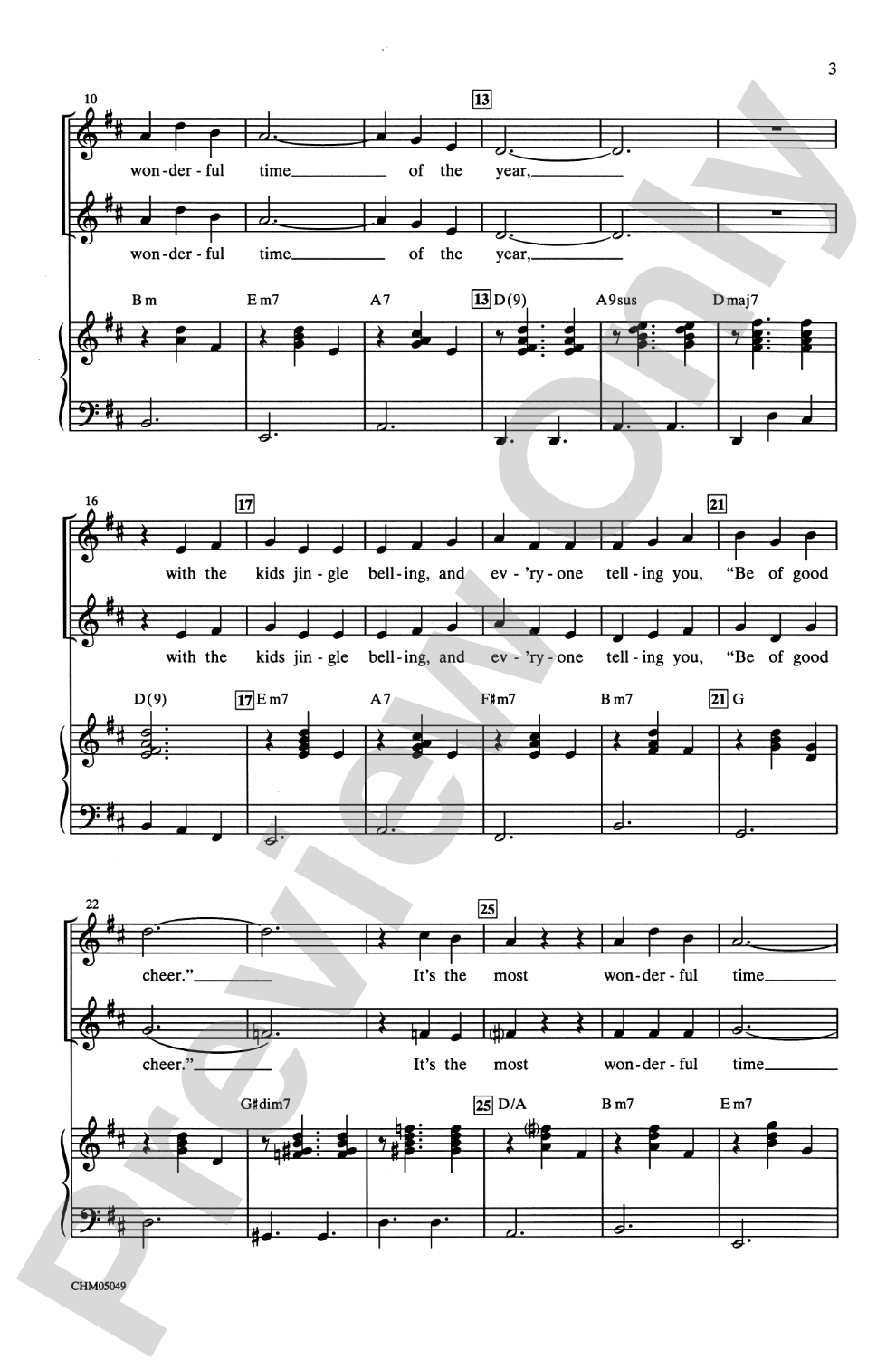
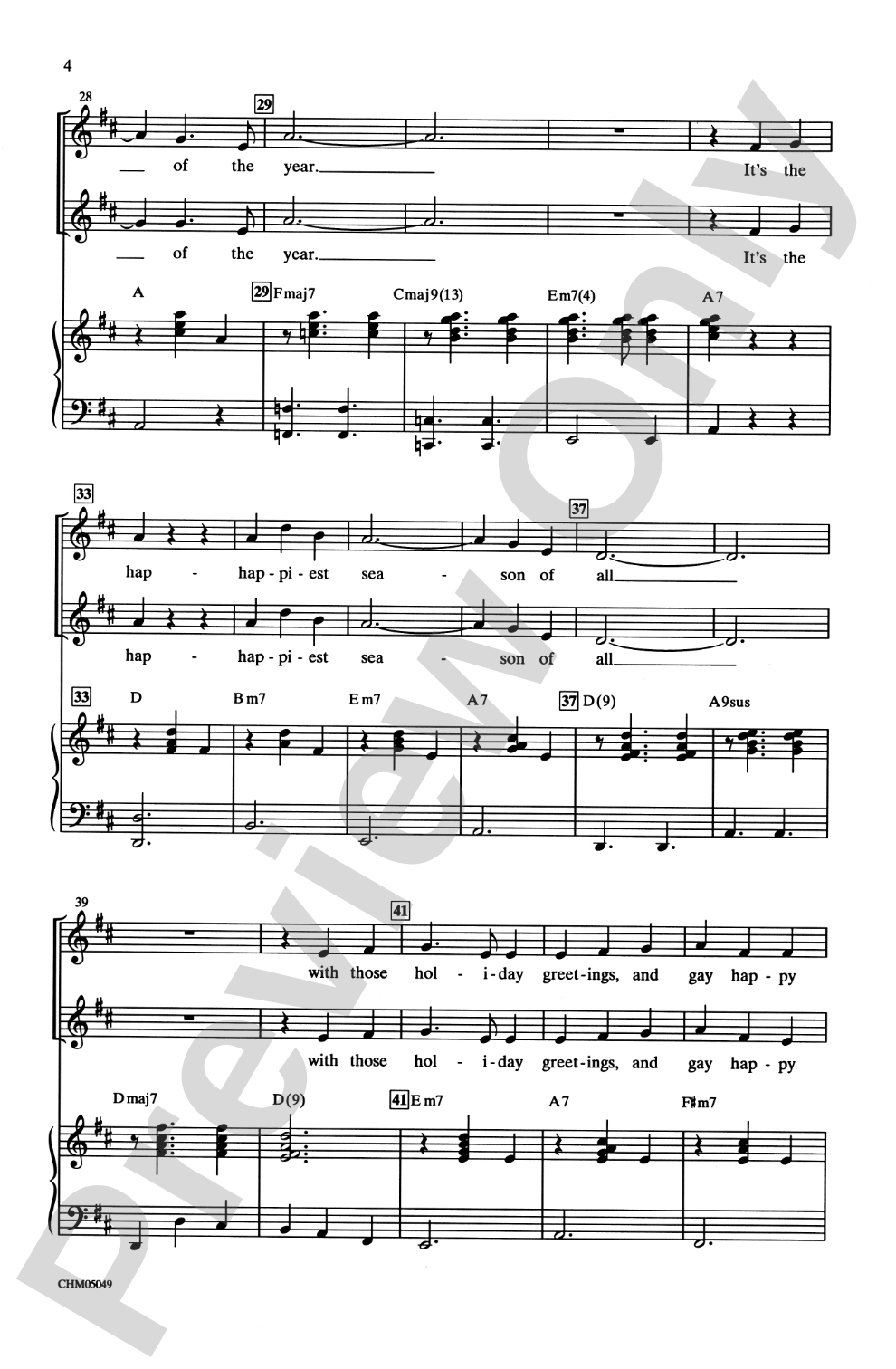

It's the Most Wonderful Time of the Year: 2-Part Choral Octavo
Words and music by Eddie Pola and George Wyle / arr. Alan Billingsley
Level: Moderately Difficult
Item: 00-PO-0007682
$2.25
Minimum order quantity: 20 copies
Pickup currently not available
Related Items
It's the Most Wonderful Time of the Year: SATB Choral Octavo |
$2.25
|
View | |
It's the Most Wonderful Time of the Year: 3-Part Mixed Choral Octavo |
$2.25
|
View | |
It's the Most Wonderful Time of the Year: Choral Instrumental Parts |
$15.00
|
View | |
It's the Most Wonderful Time of the Year: SATB Choral Octavo |
$2.25
|
View | |
It's the Most Wonderful Time of the Year: 3-Part Mixed Choral Octavo |
$2.25
|
View | |
It's the Most Wonderful Time of the Year: 2-Part Choral Octavo |
$2.25
|
View | |
It's the Most Wonderful Time of the Year: Choral Instrumental Parts |
$15.00
|
View | |
It's the Most Wonderful Time of the Year: Choral Octavo SoundTrax CD |
$27.99
|
View |
Description
Year-in and year-out this is certainly one of the most programmed of all the secular holiday songs heard each and every year! It's brought to life in this extraordinary setting by Alan Billingsley.


It's the Most Wonderful Time of the Year: 2-Part Choral Octavo isn't in MakeMusic Cloud just yet...but it could be. Let us know you'd like to see it, and you'll help shape what comes next. In the meantime, start a free trial and dive into thousands of interactive titles your students can play along with today.
Request This Title
Tell us you want it.
Start Your Free Trial
Explore everything that's ready to play right now.
Sample Audio
No sample audio found.
Sample Video
No sample videos found.
Additional Details
Series:
Alfred Pop Choral Series
Publisher:
Alfred Music
Page Count:
16
SKU:
00-PO-0007682
More about this title
About the Composer: Eddie Pola
Eddie Pola was a composer and songwriter whose work defined the sound of mid-20th century American pop and holiday music. His collaborations with George Wyle produced some of the era's most enduring seasonal standards, songs that have remained fixtures in holiday programming for generations. Pola's gift for accessible melody and memorable hooks made his compositions natural choices for choral arrangers seeking material with broad appeal and built-in audience recognition.
Why we love this
Alan Billingsley transforms this perennial favorite into a setting that respects the song's nostalgic charm while giving your choir something genuinely rewarding to sing. The 2-part voicing sits comfortably across mixed voices without sacrificing musicality, and the arrangement's clarity means your singers can focus on the joy of the piece rather than wrestling with complexity. This is a crowd-pleaser that doesn't require apologies from the podium.
What to expect
Warm nostalgia wrapped in contemporary arranging sensibility. The 2-part writing creates an intimate feel even in larger ensembles, and Billingsley's harmonic choices add gentle sophistication beneath the song's familiar contour. Singing this feels like stepping into a cherished memory with your friends.
Who it's for
This octavo works equally well for middle school choirs building confidence in part-singing and high school groups seeking holiday pops material that feels sophisticated rather than simplistic. Directors programming multi-generational audiences will find that this piece speaks to listeners across age groups without condescension.
How to get the most out of it
- Shape the melody with subtle dynamic swells through each phrase rather than singing at a steady level; the arrangement responds beautifully to this kind of sculpting and keeps the nostalgia from feeling flat.
- Balance the two parts carefully during sections where they move independently; Billingsley's voicing benefits from singers hearing both lines clearly rather than one dominating.
- Record a rehearsal with the available accompaniment early on so singers develop secure memory of their parts; this frees them to focus on expression rather than note-reading in performance.
- Let the recorded accompaniment set a comfortable tempo for your group; fighting the track will only create tension that undermines the warmth of the piece.
How to use it
Build your December concert around this as an anchor piece, perhaps opening a second half devoted to holiday pops standards. Pair it with other secular holiday songs at similar difficulty levels, or use it as the emotional center of a mixed program that moves between classical carols and contemporary pieces. The 16-page octavo gives it enough substance to anchor a concert while its accessibility means you can learn it efficiently alongside heavier repertoire.
Skills your students will build
- Part-singing independence in 2-part voicing
- Dynamic shaping and phrase sculpting
- Balancing blend when parts move in different rhythmic patterns
- Singing with stylistic awareness in pop/contemporary idioms
- Maintaining expressive singing while singing with recorded accompaniment