
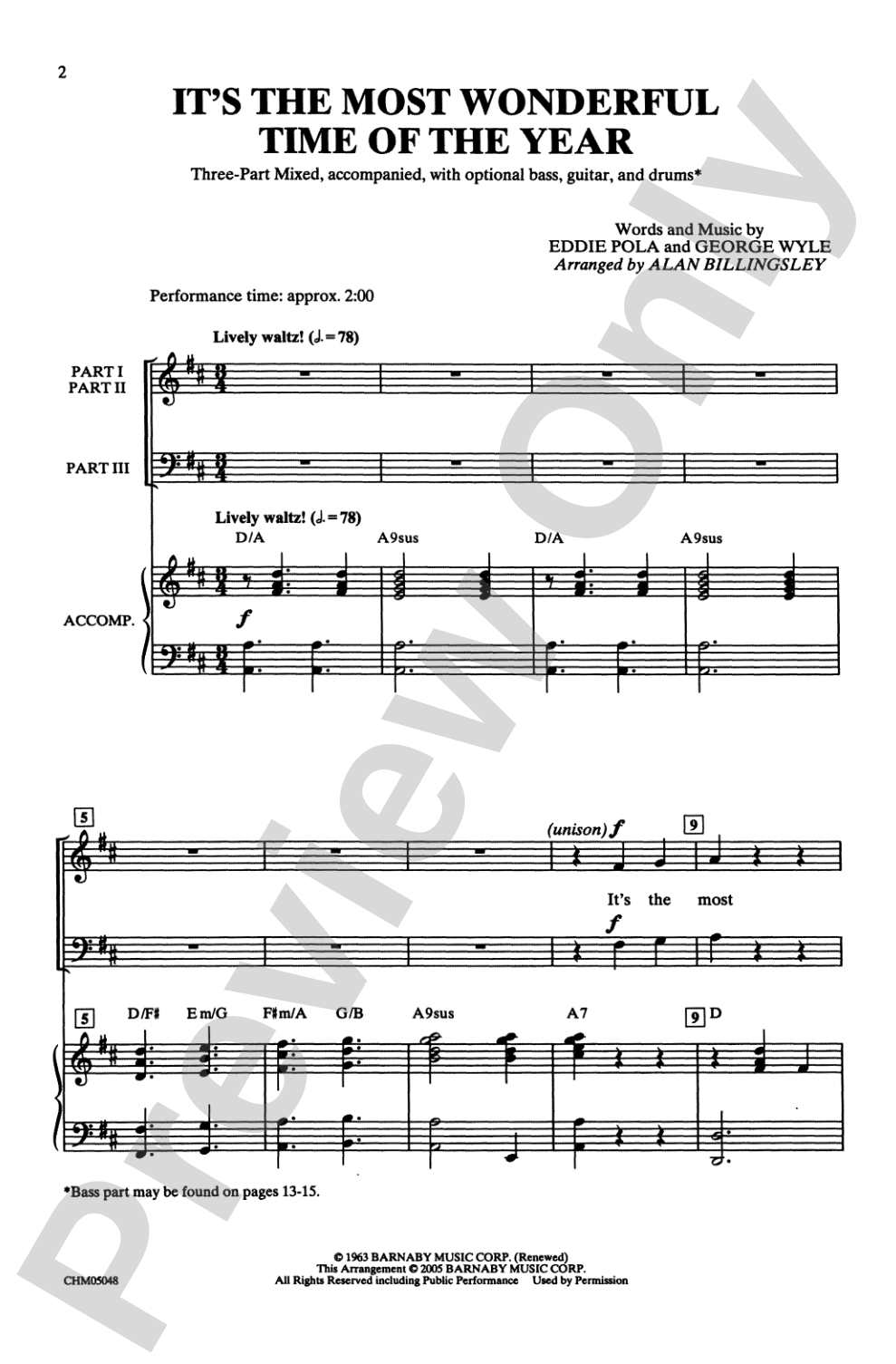
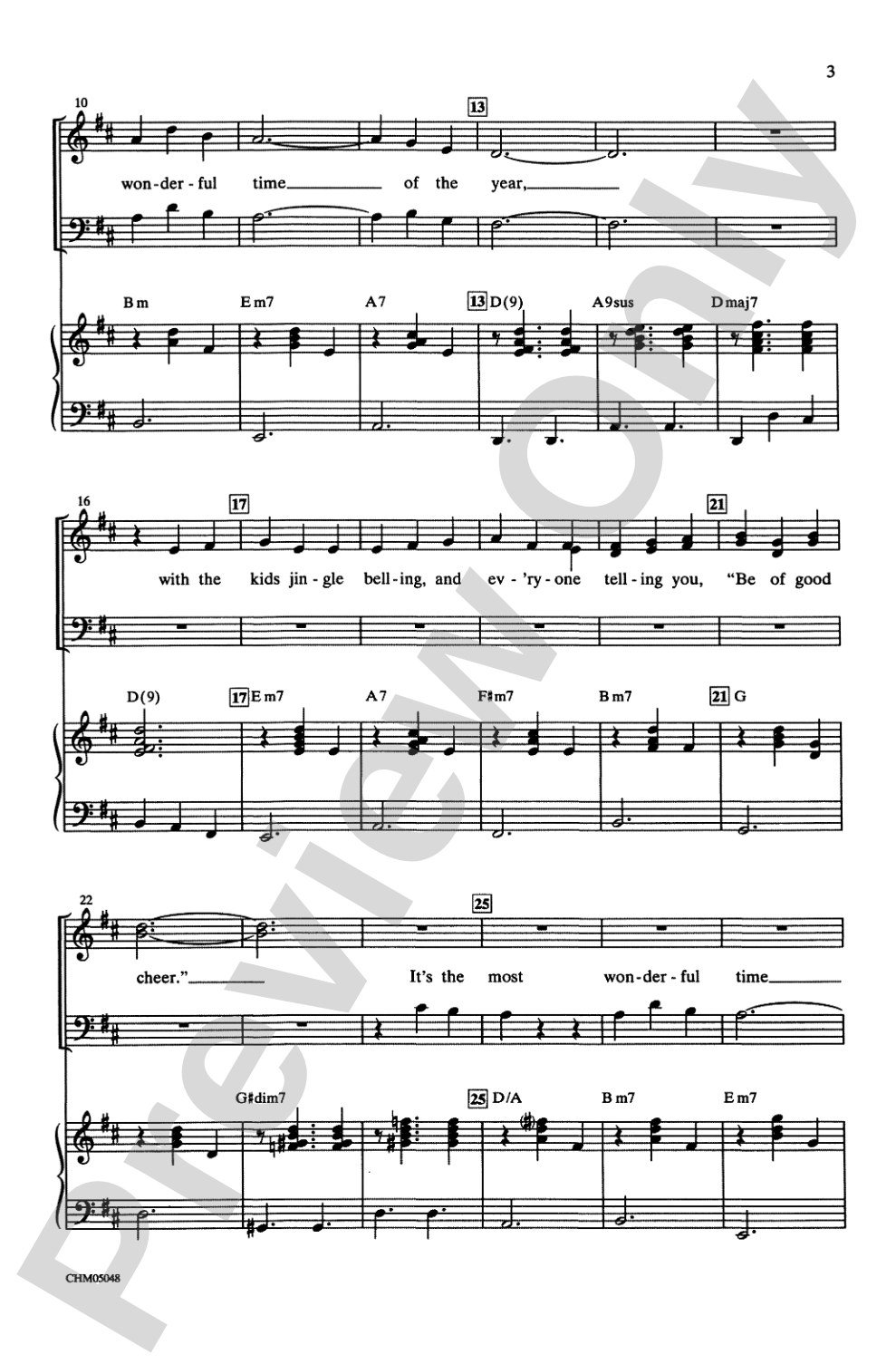
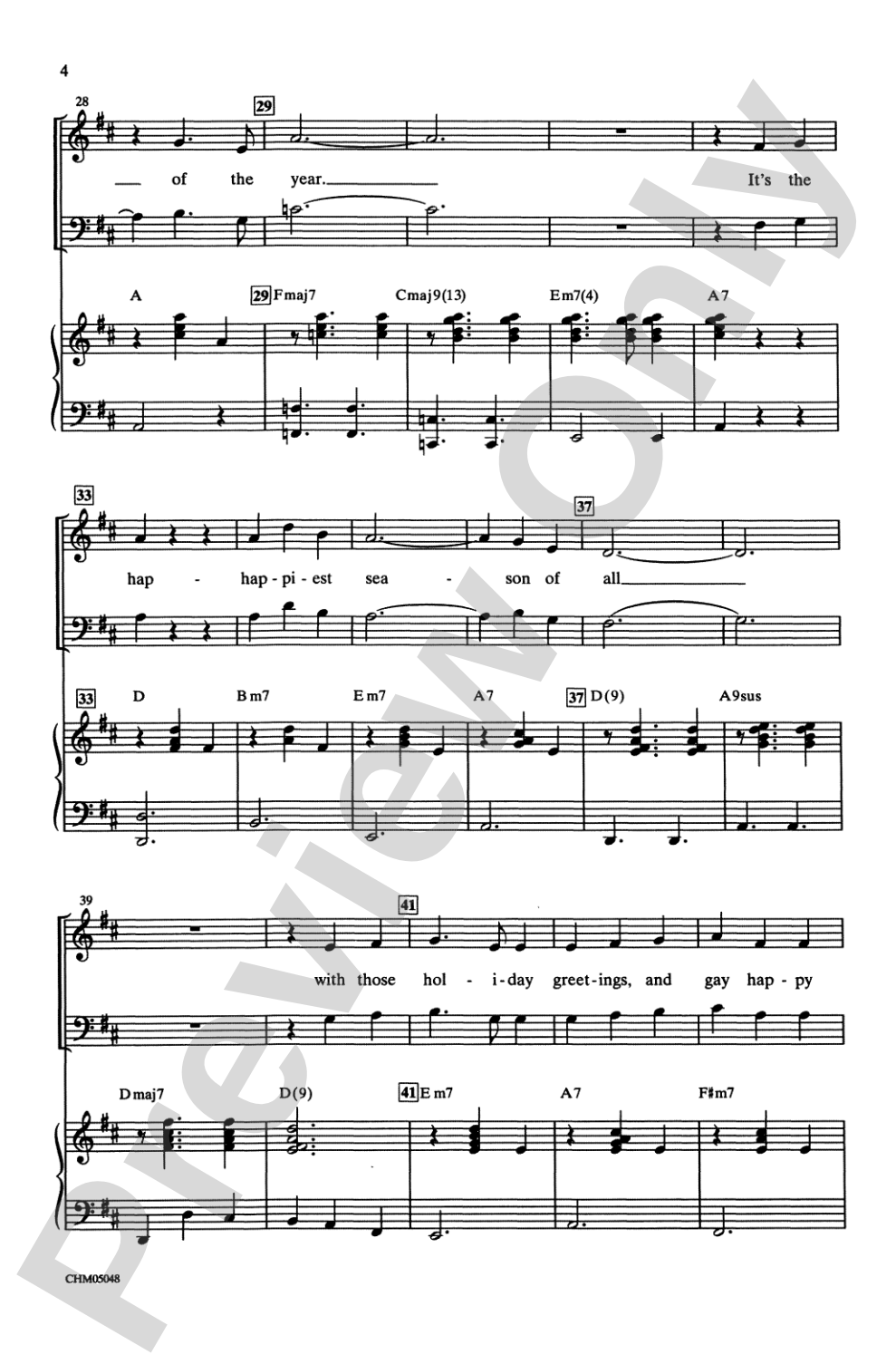

It's the Most Wonderful Time of the Year: 3-Part Mixed Choral Octavo
Words and music by Eddie Pola and George Wyle / arr. Alan Billingsley
Level: Moderate
Item: 00-PO-0003506
$2.25
Minimum order quantity: 20 copies
Pickup currently not available
Related Items
It's the Most Wonderful Time of the Year: SATB Choral Octavo |
$2.25
|
View | |
It's the Most Wonderful Time of the Year: 2-Part Choral Octavo |
$2.25
|
View | |
It's the Most Wonderful Time of the Year: Choral Instrumental Parts |
$15.00
|
View | |
It's the Most Wonderful Time of the Year: SATB Choral Octavo |
$2.75
|
View | |
It's the Most Wonderful Time of the Year: 3-Part Mixed Choral Octavo |
$2.25
|
View | |
It's the Most Wonderful Time of the Year: 2-Part Choral Octavo |
$2.25
|
View | |
It's the Most Wonderful Time of the Year: Choral Instrumental Parts |
$15.00
|
View | |
It's the Most Wonderful Time of the Year: Choral Octavo SoundTrax CD |
$27.99
|
View |
Description
Year-in and year-out this is certainly one of the most programmed of all the secular holiday songs heard each and every year! It's brought to life in this extraordinary setting by Alan Billingsley.


It's the Most Wonderful Time of the Year: 3-Part Mixed Choral Octavo isn't in MakeMusic Cloud just yet...but it could be. Let us know you'd like to see it, and you'll help shape what comes next. In the meantime, start a free trial and dive into thousands of interactive titles your students can play along with today.
Request This Title
Tell us you want it.
Start Your Free Trial
Explore everything that's ready to play right now.
Sample Audio
No sample audio found.
Sample Video
No sample videos found.
Additional Details
Series:
Alfred Pop Choral Series
Publisher:
Alfred Music
Page Count:
16
SKU:
00-PO-0003506
More about this title
About the Composer: Eddie Pola
Eddie Pola composed some of the most enduring popular songs of the mid-20th century, often working in collaboration with George Wyle. His gift for melody and his understanding of what made a song memorable gave his compositions remarkable staying power; many of his songs have become seasonal standards that audiences return to year after year.
Pola's work in popular songwriting demonstrates how strong melodic writing and clear harmonic language can transcend their original context. For music educators, his compositions offer accessible entry points into arranging and interpretation, with melodies that singers grasp immediately and structures that leave room for musical expression.
Why we love this
Alan Billingsley's arrangement respects the melody that audiences know and love while giving it genuine three-part texture and harmonic interest. The moderate difficulty level means your singers can focus on blend and balance rather than wrestling with complex rhythms, and the 16-page octavo length works perfectly for a substantial but not overwhelming concert moment.
What to expect
Warm and inviting. The arrangement captures the nostalgia and genuine happiness of the original while the three-part voicing gives singers enough independence to feel engaged. It radiates the kind of straightforward joy that makes holiday programming memorable.
Who it's for
Directors programming winter or holiday concerts who need a secular piece that connects with audiences of all ages. This arrangement works equally well for community choirs, school choirs seeking a confident finale, and programs that want to include well-loved material without sacrificing musicality.
How to get the most out of it
- Let the familiar melody sit comfortably in the room during the opening chorus; your audience will recognize it immediately, and there's power in that shared moment. Resist the urge to rush.
- Balance the three parts so no voice section overwhelms the others, especially during harmony passages. This requires deliberate attention in rehearsal but pays off in blend.
- The recorded accompaniment locks in tempos and voicings; use it strategically in early rehearsals to establish harmonic context, then gradually reduce dependency so singers own their parts.
- Consider the text and mood: this is celebration and warmth, not sentimentality. Encourage singers to sing with genuine joy rather than manufactured emotion.
How to use it
Place this late in your concert as a crowd-pleaser and send-off; audiences expect to hear it during the winter season, and programming it signals confidence in your singers' musicality. It also pairs well with other secular holiday material or can anchor a mixed concert with its immediate appeal.
Skills your students will build
- Three-part voice independence and blend in SAB voicing
- Harmonic listening and intonation across parts
- Maintaining steady tempo and phrasing with recorded accompaniment
- Interpreting familiar melody in an arranged context