
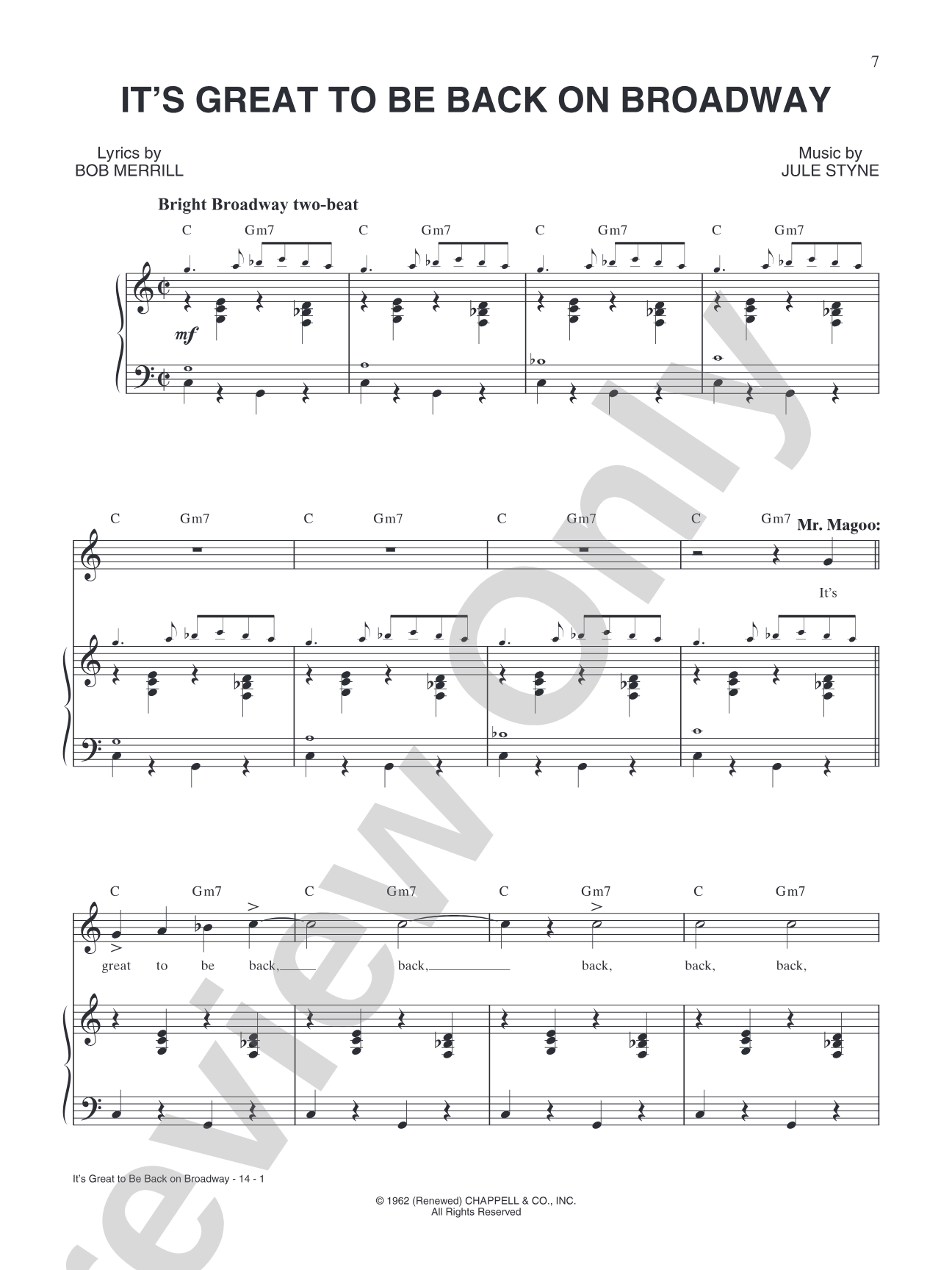
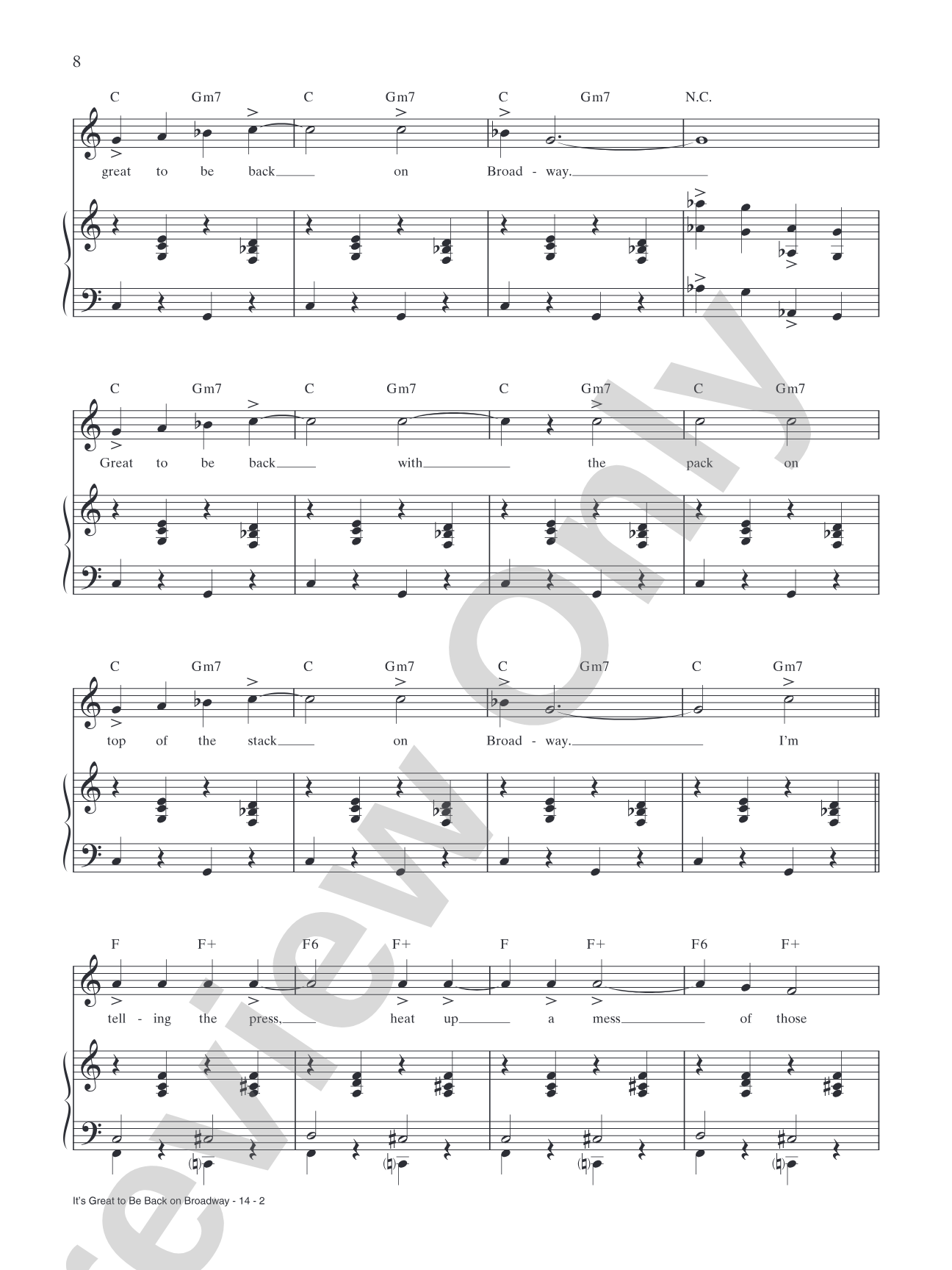
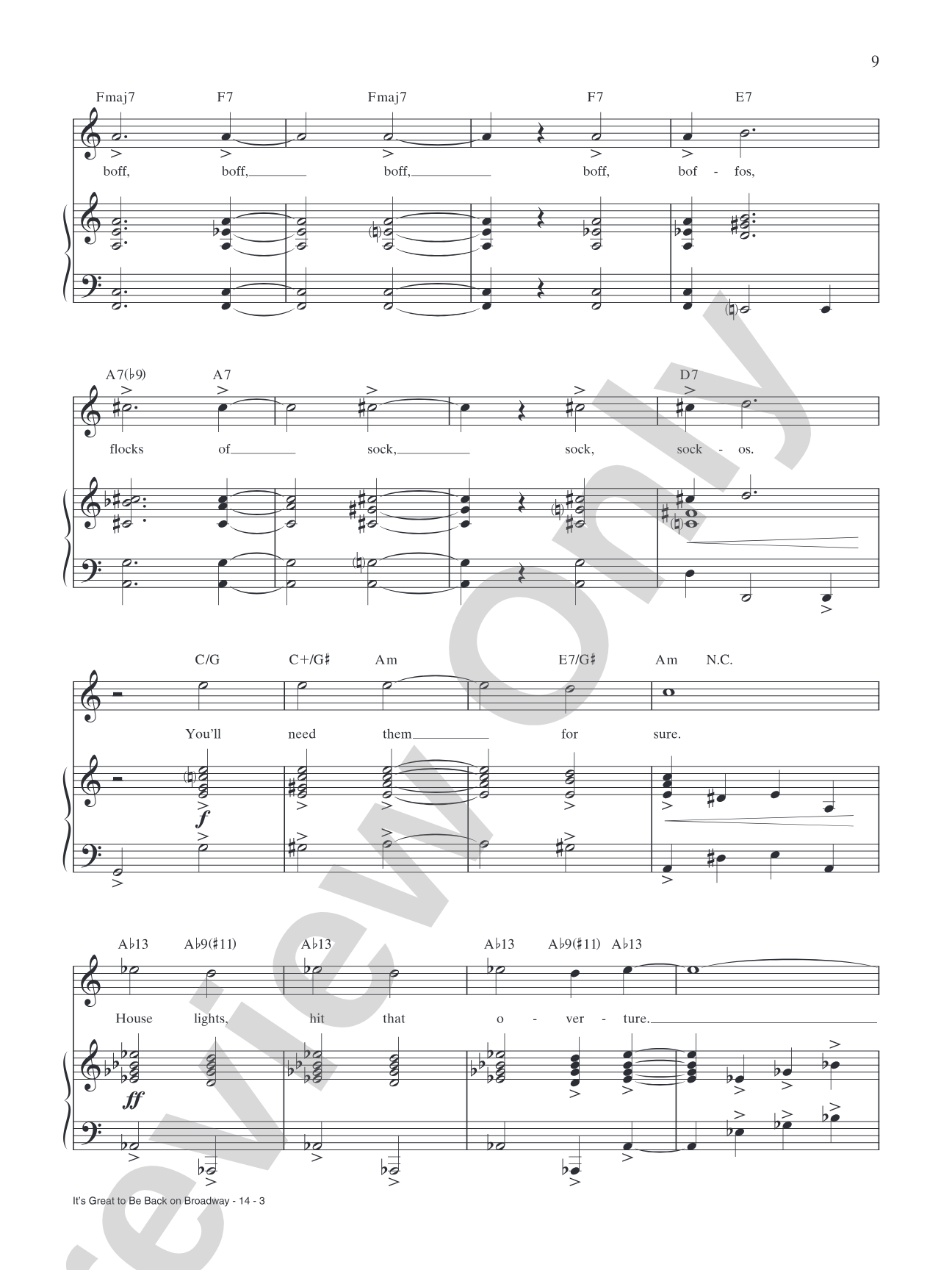

It's Great To Be Back On Broadway: Piano/Vocal/Chords
Sheet Music from the First Animated Christmas Special
Lyrics by Bob Merrill, music by Jule Styne
Item: 00-PS-0013435
$9.99
One moment…
Related Items
Ringle, Ringle: Piano/Vocal/Chords |
$4.99
|
View | |
Winter Was Warm: Piano/Vocal/Chords |
$4.99
|
View | |
The Lord's Bright Blessing (reprise): Piano/Vocal/Chords |
$4.99
|
View | |
The Lord's Bright Blessing: Piano/Vocal/Chords |
$5.99
|
View | |
We're Despicable: Piano/Vocal/Chords |
$4.99
|
View | |
Alone In The World: Piano/Vocal/Chords |
$4.99
|
View |
Description
Mr. Magoo's Christmas Carol debuted on the NBC television network on December 18, 1962, capturing the hearts of milllions with Broadway-caliber songs written by Bob Merrill and Jule Styne (Funny Girl) at the peak of their careers. Although this landmark production gradually became obscured by countless other televised Christmas specials that followed, its score remains noteworthy today for its timeless songs. Now, for the first time, this collectible songbook allows pianists and singers to explore the music and bring it to life anew. A fascinating historical foreword by animation expert Darrell Van Citters is included. Titles: * It's Great to Be Back on Broadway * Ringle, Ringle * The Lord's Bright Blessing * Alone in the World * Winter Was Warm * We're Despicable * The Lord's Bright Blessing (Reprise).


It's Great To Be Back On Broadway: Piano/Vocal/Chords isn't in MakeMusic Cloud just yet...but it could be. Let us know you'd like to see it, and you'll help shape what comes next. In the meantime, start a free trial and dive into thousands of interactive titles your students can play along with today.
Request This Title
Tell us you want it.
Start Your Free Trial
Explore everything that's ready to play right now.
Sample Audio
No sample audio found.
Sample Video
No sample videos found.
Additional Details
Publisher:
Alfred Music
Page Count:
44
SKU:
00-PS-0013435
More about this title
About the Composer: Jule Styne
Jule Styne (1905-1975) was a prolific composer who shaped the sound of American musical theater across five decades. His gift for melody and his collaborative instincts produced some of Broadway's most enduring scores, from Gentlemen Prefer Blondes to Funny Girl, and he brought that same theatrical sophistication to television specials during the 1960s.
Styne's work is characterized by singable, memorable lines that stay with audiences long after the curtain falls. His mastery of orchestration and his ability to write for diverse vocal ranges made him a favorite among performers and conductors alike. For music educators, his catalog offers rich opportunities to study how melody, harmonic support, and lyrical storytelling combine in professional theatrical writing.
Why we love this
This songbook brings back a genuinely theatrical score that students rarely encounter today, despite its professional pedigree and accessible melodic writing. Styne's songs are built for singers, with clear vocal lines and character-driven lyrics that make learning and performing them rewarding. Programming these pieces adds substance and charm to any recital or musical theater concert, and they work beautifully for both solo performance and ensemble singing.
What to expect
These songs carry the warmth and sophistication of live theater, with melodies that feel both theatrical and intimate. The harmonic language is rich and supporting without being heavy; each piece balances emotional sincerity with the buoyancy that made 1960s television specials so engaging. Performing them feels like stepping into a bygone era of American entertainment, where storytelling and musical craft mattered equally.
Who it's for
Pianists who accompany singers in recital or rehearsal, vocalists exploring mid-century theatrical repertoire, and music teachers seeking high-quality performance material that introduces students to professional songwriting standards. This songbook also serves pianists who enjoy learning classic television-era music and want authentic arrangements from their original context.
How to get the most out of it
- Balance the piano accompaniment carefully so it supports without overwhelming the vocalist. These songs are lyric-driven; the accompaniment is there to enhance, not compete.
- Pay attention to the character and story of each song. Winter Was Warm tells a poignant tale, while We're Despicable invites a lighter touch. Let the narrative shape your phrasing and dynamics.
- Use the chord symbols to explore different voicings and comping styles if you're performing as a jazz pianist or in a more contemporary setting. Styne's harmonies are sophisticated enough to support creative reharmonization.
- In ensemble numbers like Ringle, Ringle, lock the rhythm section's feel early in rehearsal so voices can float freely over a steady harmonic foundation.
How to use it
Frame a holiday concert around this score as a seasonal option that avoids overused Christmas standards while maintaining festive appeal. These pieces work equally well as standalone vocal recital selections or grouped together to showcase a single, cohesive theatrical work. Teachers can also use individual songs in voice studio settings as teaching material for interpretation, phrasing, and the marriage of lyrics to melody.
Skills your students will build
- Reading piano/vocal scores with chord symbols and understanding how accompaniment supports melody
- Interpreting lyrics expressively and connecting emotional narrative to musical phrasing
- Understanding harmonic progression in professional theatrical composition
- Balancing solo vocal line with piano accompaniment in rehearsal and performance settings
- Exploring character motivation and storytelling in song performance