
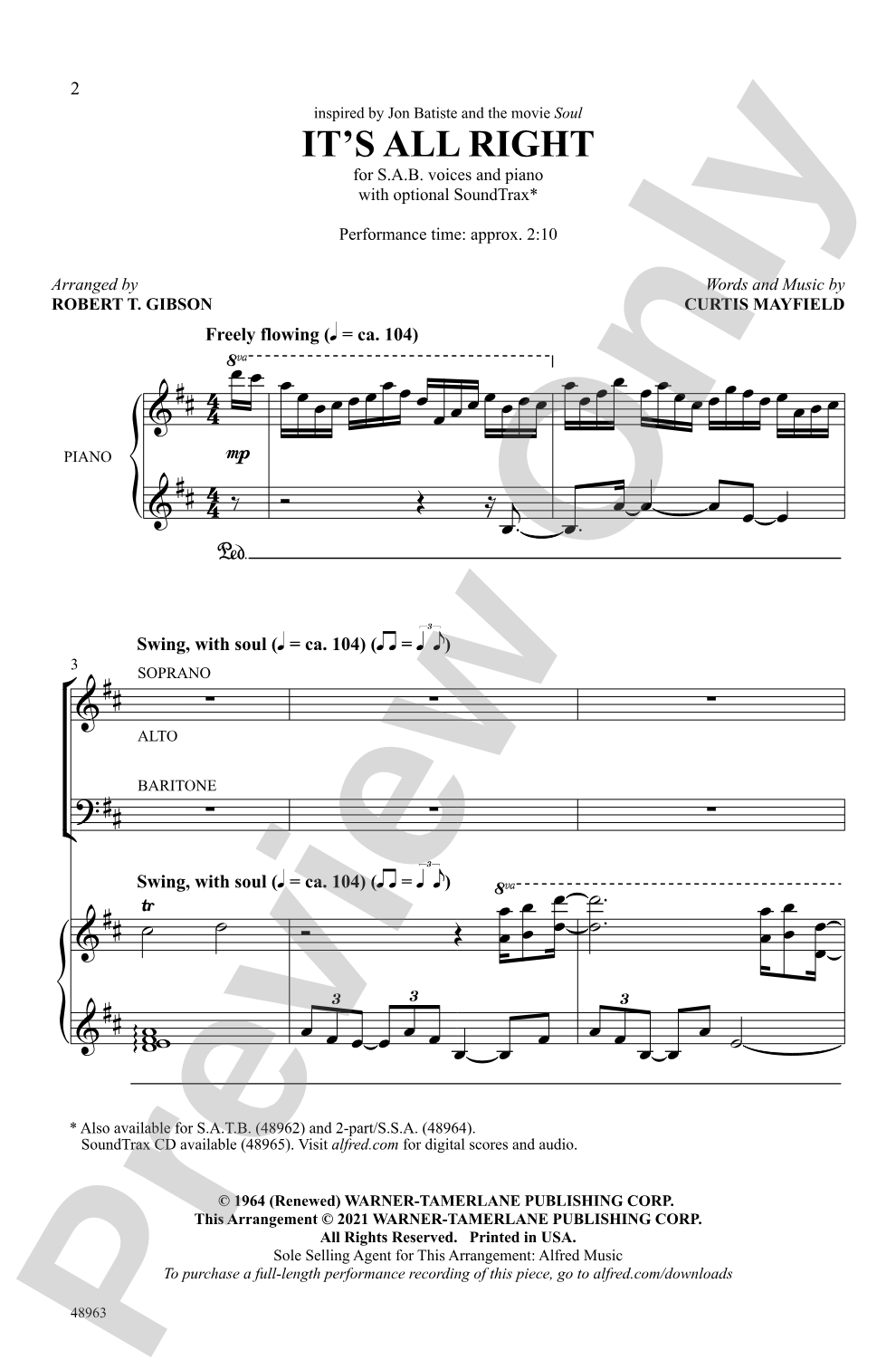
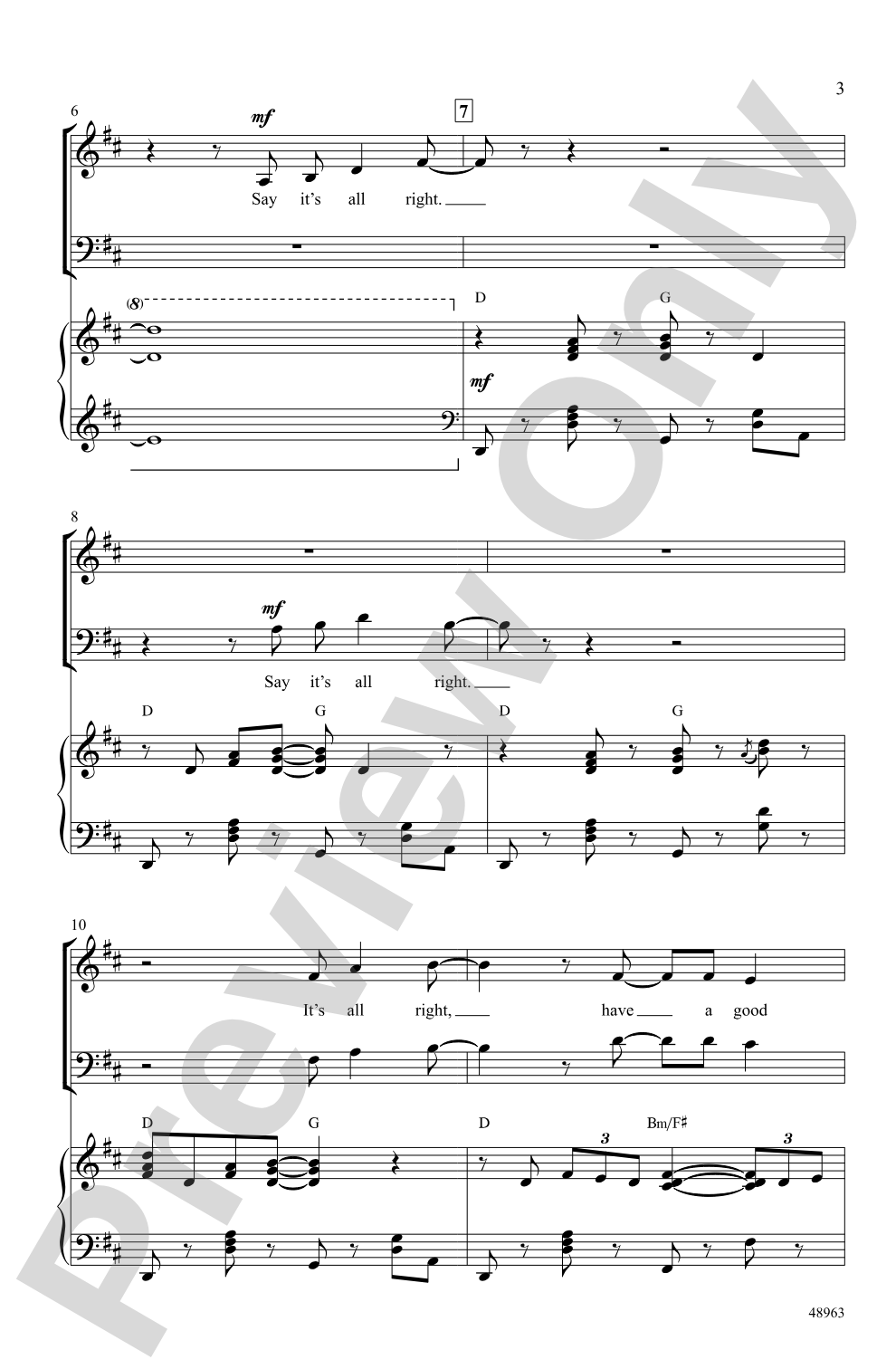
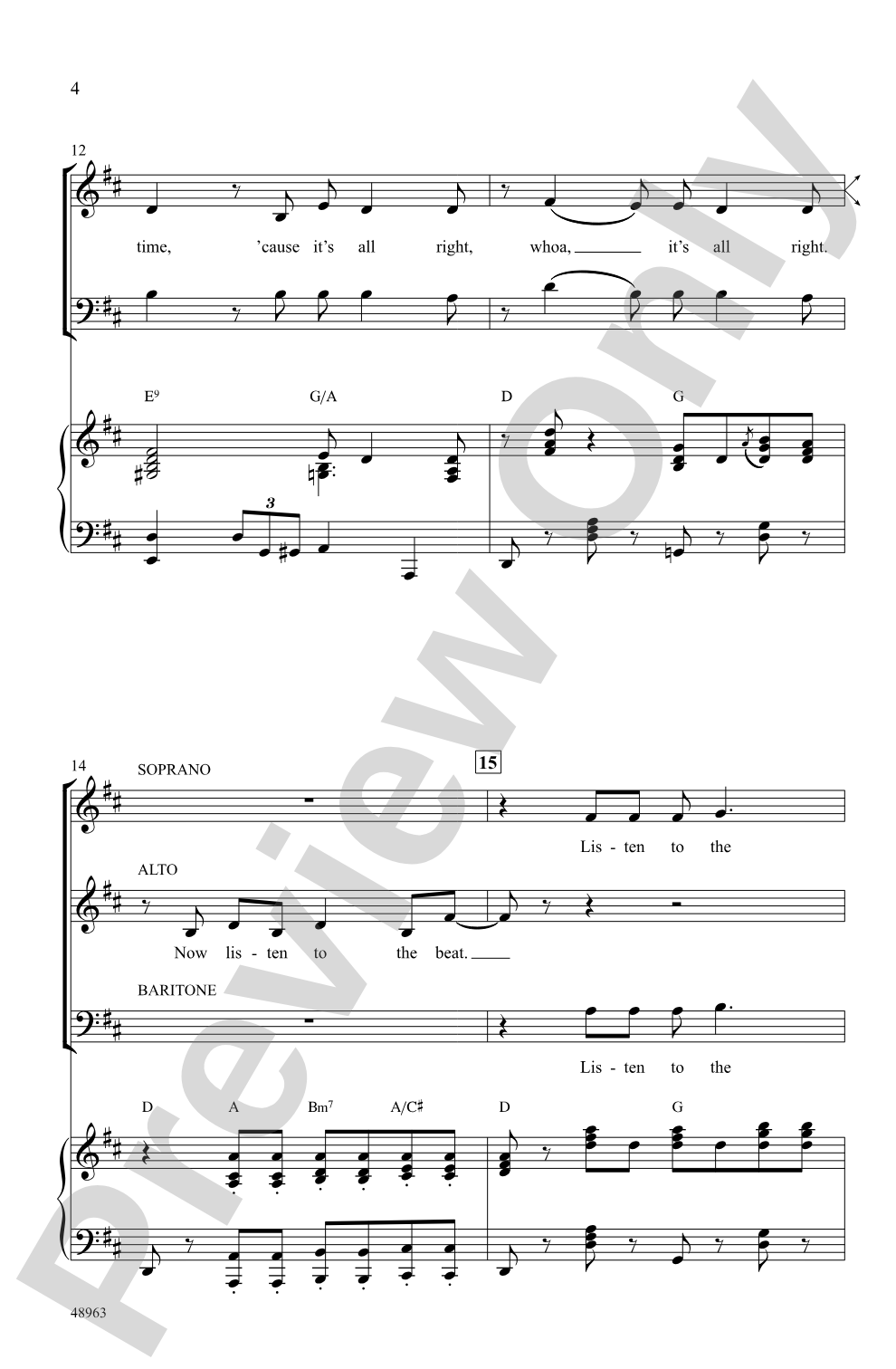

It's All Right: SAB Choral Octavo
Inspired by Jon Batiste for the movie Soul
Words and music by Curtis Mayfield / arr. Robert T. Gibson
Item: 00-PO-0006730
$2.25
Minimum order quantity: 20 copies
One moment…
Related Items
It's All Right: SoundTrax Digital Audio Download |
$29.99
|
View | |
It's All Right: SATB Choral Octavo |
$2.25
|
View | |
It's All Right: 2-Part/SSA Choral Octavo |
$2.65
|
View | |
It's All Right: SATB Choral Octavo |
$2.25
|
View | |
It's All Right: SAB Choral Octavo |
$2.25
|
View | |
It's All Right: 2-Part/SSA Choral Octavo |
$2.65
|
View | |
It's All Right: Choral SoundTrax CD |
$29.99
|
View |
Description
Jon Batiste's cover for Pixar's Soul brings this feel-good Curtis Mayfield song to a whole new generation. Built on a soulful groove, jazzy twists, and and upbeat vibe, it's everywhere! First made famous by The Impressions, a 60s group of which Mayfield was a member, this happy hit has stood the test of time, recorded by many diverse artists over the years. The arranger adds his own authentic touch with some gospel inflections and interjections. "It's all right, have a good time, 'cause it's all right!"


Discover MakeMusic Cloud: thousands of interactive titles your students can play along with today.
Sample Audio
1
Audio File
--:--
0:00
0:00
Sample Video
Additional Details
Series:
Alfred Pop Choral Series
Publisher:
Alfred Music
Page Count:
16
SKU:
00-PO-0006730
More about this title
About the Composer: Curtis Mayfield
Curtis Mayfield shaped the sound of soul and funk from the 1950s onward, first as a founding member and lead vocalist of The Impressions and later as a solo artist and film composer. His songwriting combined socially conscious lyrics with irresistible melodies and innovative arrangements, earning him induction into the Rock and Roll Hall of Fame and lasting influence across multiple generations of musicians. Beyond his recording career, Mayfield composed for film and television, proving his versatility across genres while maintaining an unmistakable artistic voice rooted in gospel, soul, and R&B.
Why we love this
Robert T. Gibson's arrangement respects the song's DNA while giving it contemporary life through gospel inflections and interjections that feel organic rather than forced. The SAB voicing opens this genuine classic to choirs that might otherwise skip over it, and students will feel the immediate cultural relevance (especially after its placement in Soul) without sacrificing the authentic groove that made it memorable in 1963.
What to expect
Warm, optimistic, and undeniably groovy. The arrangement radiates the same invitation to good humor and ease that the original offered, with enough harmonic sophistication to keep singers engaged and satisfied that they've tackled something real. It's the sound of singers genuinely enjoying themselves.
Who it's for
Choirs with solid blend and rhythmic stability who are ready to explore contemporary pop repertoire with roots in soul and gospel. This works particularly well for middle school through adult ensembles seeking material that feels current and joyful without compromising musical substance.
How to get the most out of it
- Lock the rhythmic pocket early in rehearsal. The soulful groove is the foundation; once singers internalize the feel, the gospel touches and jazz harmonies will land naturally.
- Shape the dynamic arc phrase by phrase rather than movement by movement. This song thrives on conversational dynamics and lift within phrases, not sweeping crescendos.
- Lean into the interjections and gospel inflections as dialogue, not decoration. They should sound spontaneous and communicative, like a congregation responding in real time.
- Use the recorded accompaniment from the start to build confidence and groove awareness. Let singers hear how their parts sit within the soulful context before working independence.
How to use it
Program this in a spring concert focused on contemporary or multicultural repertoire, or pair it with other soul and R&B-rooted pieces to create a set with genuine flow and thematic coherence. The accessibility and joy also make it an excellent choice for community performances, pops concerts, or end-of-year celebrations where audience connection matters as much as technical achievement.
Skills your students will build
- singing in SAB voicing with independent parts
- responding to syncopated rhythms and groove-based phrasing
- interpreting jazz harmonies and contemporary harmonic language
- incorporating gospel inflections and call-and-response techniques
- balancing rhythmic precision with the flexibility needed for a conversational, soulful style