
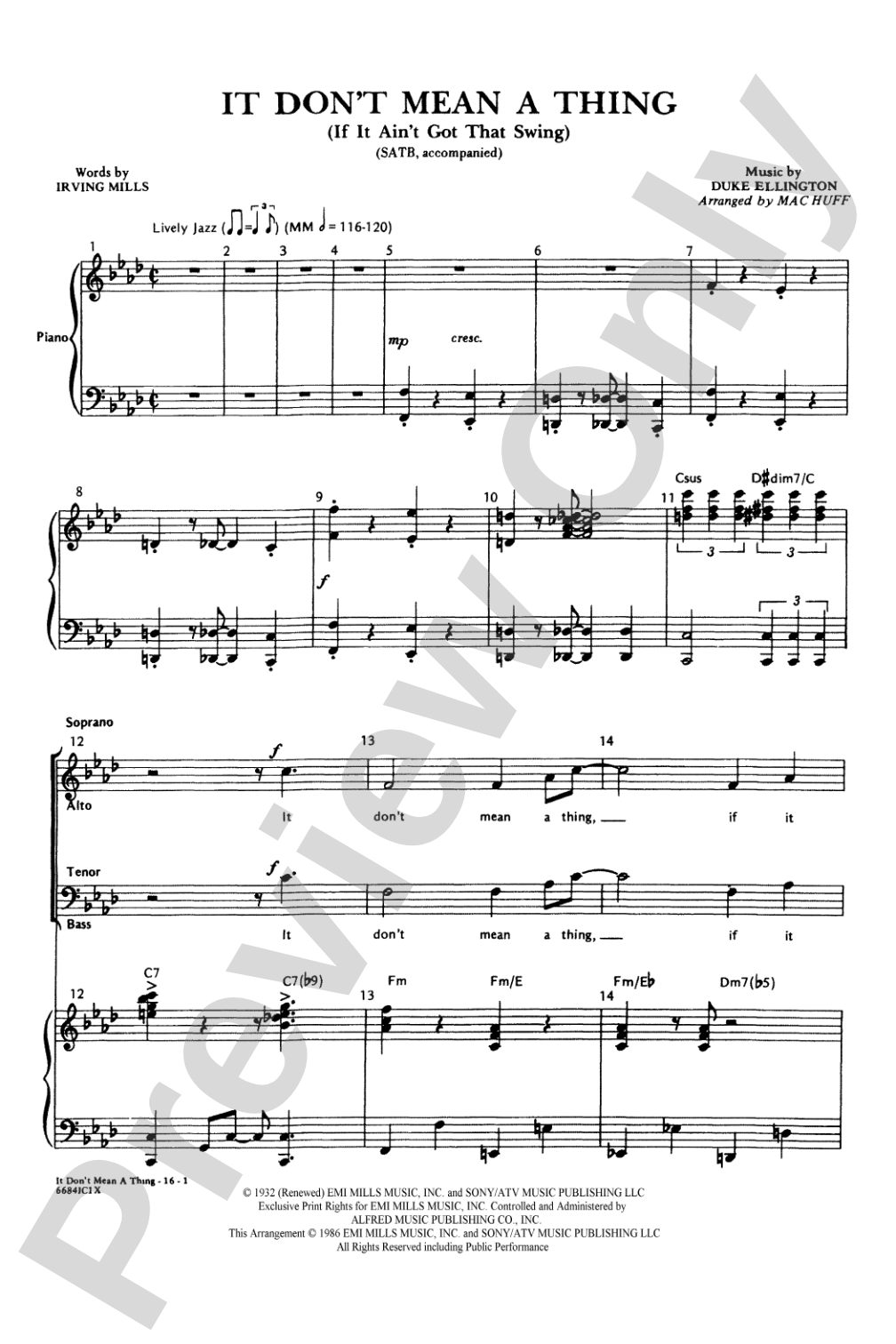
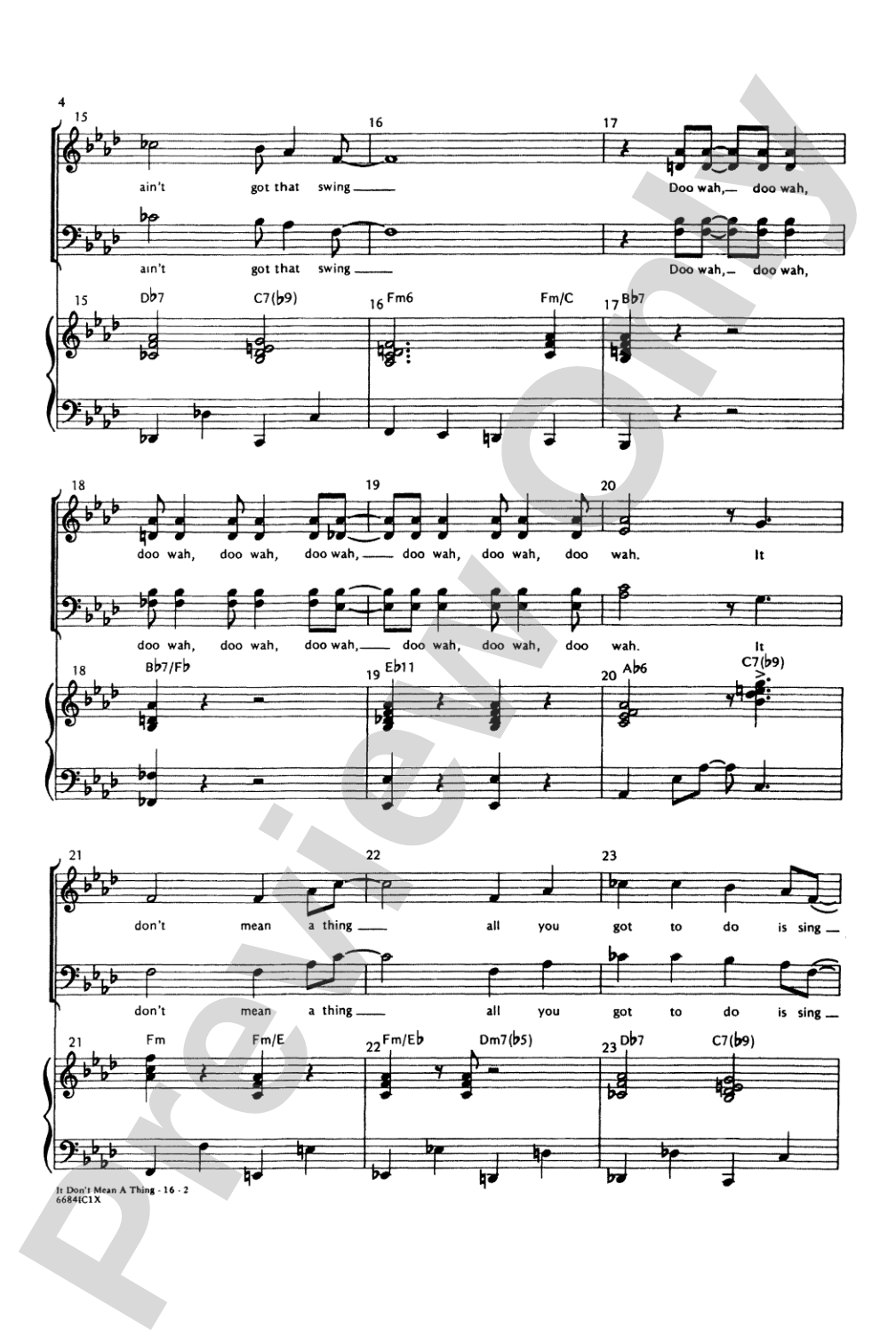
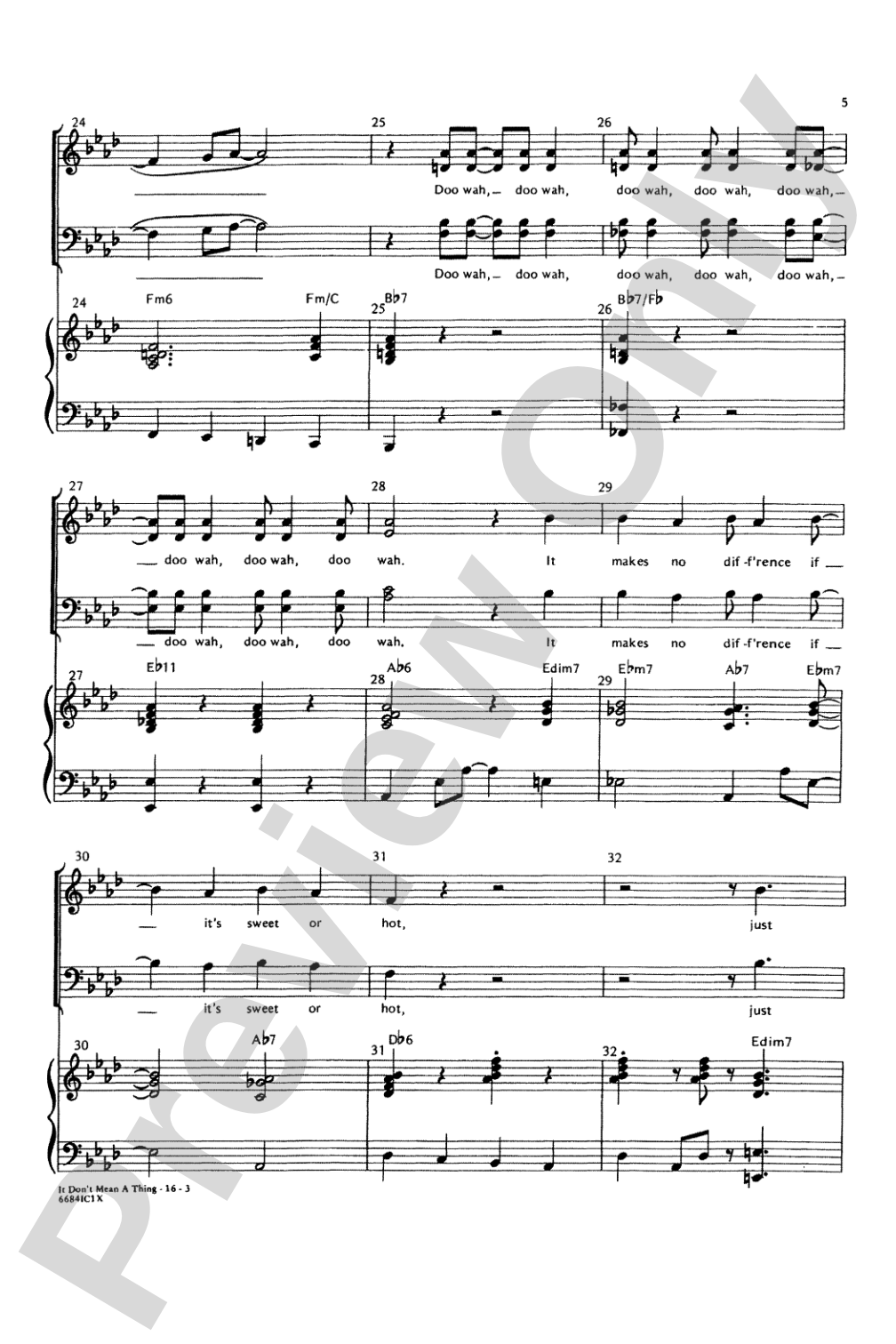
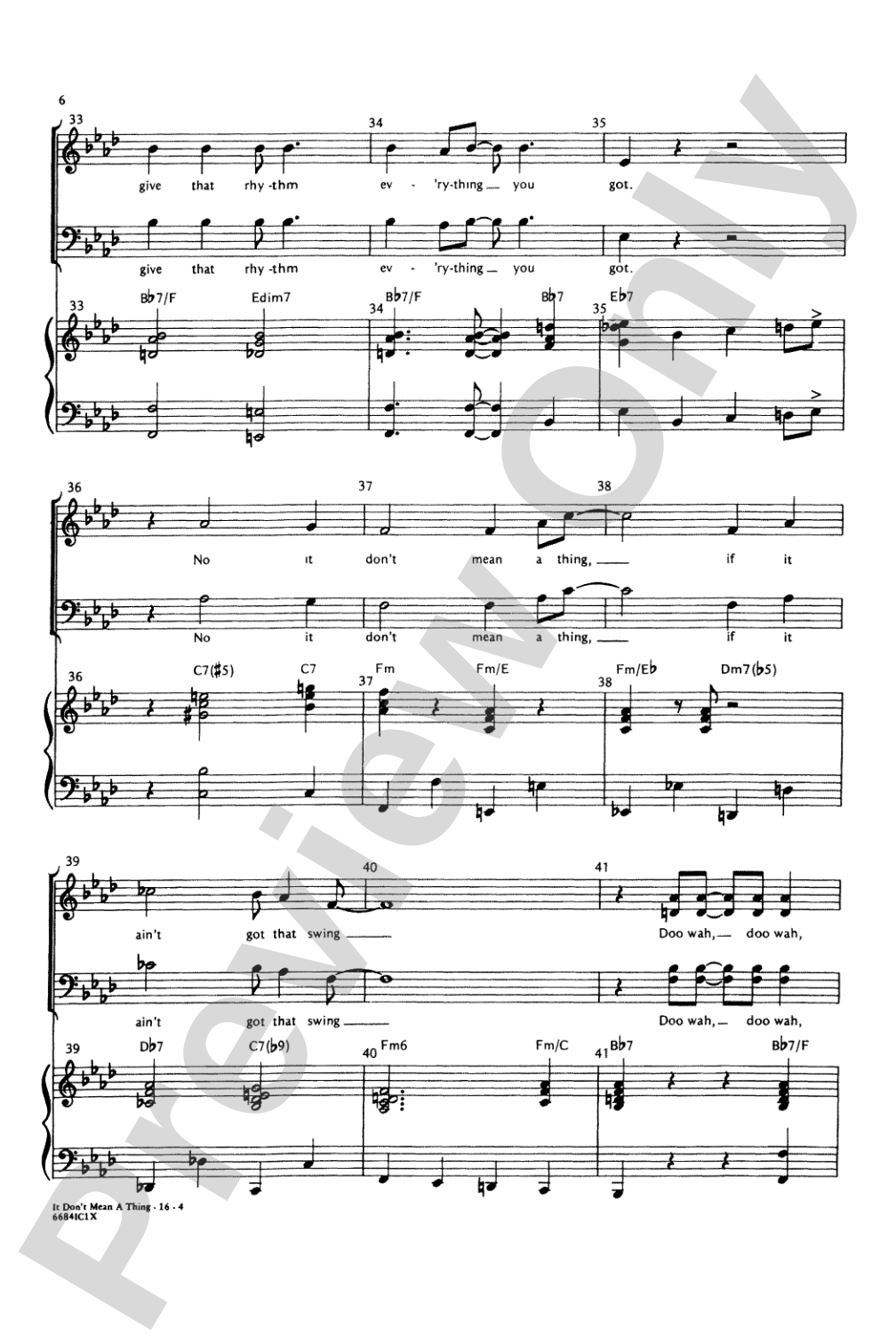

It Don't Mean a Thing (If It Ain't Got That Swing): SATB Choral Octavo
Music by Duke Ellington, lyrics by Irving Mills / arr. Mac Huff
Item: 00-PO-0002479
$2.85
Minimum order quantity: 20 copies
One moment…
Related Items
It Don't Mean a Thing (If It Ain't Got That Swing): SATB Choral Octavo |
$2.85
|
View | |
It Don't Mean a Thing (If It Ain't Got That Swing): SAB Choral Octavo |
$2.95
|
View | |
It Don't Mean a Thing (If It Ain't Got That Swing): SSA Choral Octavo |
$2.25
|
View | |
It Don't Mean a Thing (If It Ain't Got That Swing): Choral Octavo SoundTrax CD |
$27.99
|
View |
Description
Mac Huff keeps things movin' with this swingin' arrangement of Duke Ellington's masterpiece.


It Don't Mean a Thing (If It Ain't Got That Swing): SATB Choral Octavo isn't in MakeMusic Cloud just yet...but it could be. Let us know you'd like to see it, and you'll help shape what comes next. In the meantime, start a free trial and dive into thousands of interactive titles your students can play along with today.
Request This Title
Tell us you want it.
Start Your Free Trial
Explore everything that's ready to play right now.
Sample Audio
No sample audio found.
Sample Video
No sample videos found.
Additional Details
Series:
Alfred Pop Choral Series
Publisher:
Alfred Music
Page Count:
20
SKU:
00-PO-0002479
More about this title
About the Composer: Duke Ellington
Duke Ellington (1899-1974) stands as one of the most prolific and influential composers in American music history. He created a vast catalog of jazz standards, extended works, and theatrical pieces that transcended genre boundaries and established him as a serious composer in the eyes of classical and popular music worlds alike. His compositions remain central to jazz education and continue to inspire musicians across all disciplines.
Ellington's ability to write memorable melodies and sophisticated harmonies made his music accessible to general audiences while satisfying the demands of serious musicians. Pieces like "It Don't Mean a Thing" became cultural touchstones that define the jazz age and remain essential to any director's repertoire knowledge.
Why we love this
Mac Huff's arrangement captures the infectious energy and swagger of Ellington's original while making it genuinely singable across all four voice parts. The piece swings hard without requiring your singers to navigate overly complicated rhythmic or harmonic territory, which means they can focus on nailing the attitude and groove that makes this tune irresistible. It's the kind of arrangement that works equally well at a festival, a concert, or a jazz-focused program.
What to expect
The arrangement grooves with the laid-back confidence of a late-night jazz club, where every note lands with intention and the melody floats over a supportive harmonic foundation. There's swagger in the orchestration and warmth in the voicing. This is music that makes singers smile mid-phrase because the swing feel is so naturally satisfying.
Who it's for
This arrangement serves choirs at the high school through adult community level who want to perform a recognizable standard with real jazz credibility. Directors seeking repertoire that bridges classical training and contemporary pop sensibilities will find this accessible and rewarding. It also works beautifully for groups preparing a jazz-focused concert or looking to add swing language to their season.
How to get the most out of it
- Lock into a consistent swing feel from your first rehearsal. Have the rhythm section (or recorded accompaniment) establish a clear triplet subdivision so singers hear the pocket and can relax into the groove rather than rushing or dragging.
- Shape the melody with intention in the opening phrases. This tune demands personality and confidence in the solo line, so your soprano or featured vocalist should treat each phrase like they're telling the audience something important.
- Balance the syncopated rhythms across all voices by identifying where they sit in the bar. Sing through measures where multiple parts hit syncopated figures together, marking where beats fall so the ensemble lands as one.
- Bring dynamics into your swing. This isn't a ballad, so lean into the forte sections and let the ensemble feel the energy lift. The contrast between punchy sections and laid-back ones will sharpen the arrangement's personality.
How to use it
Program this as an opener or early number on a concert where you want to set an energetic, sophisticated tone. It pairs well with other jazz standards or with contemporary pop arrangements, helping audiences hear the historical thread that connects swing jazz to modern music. The piece also works as a strong closer if you want the final memory to be one of joy and rhythmic vitality.
Skills your students will build
- Singing with swing feel and triplet subdivision
- Maintaining ensemble cohesion in syncopated passages
- Balancing solo melody with harmonic support
- Phrasing with jazz articulation and style
- Reading and performing SATB jazz voicing