
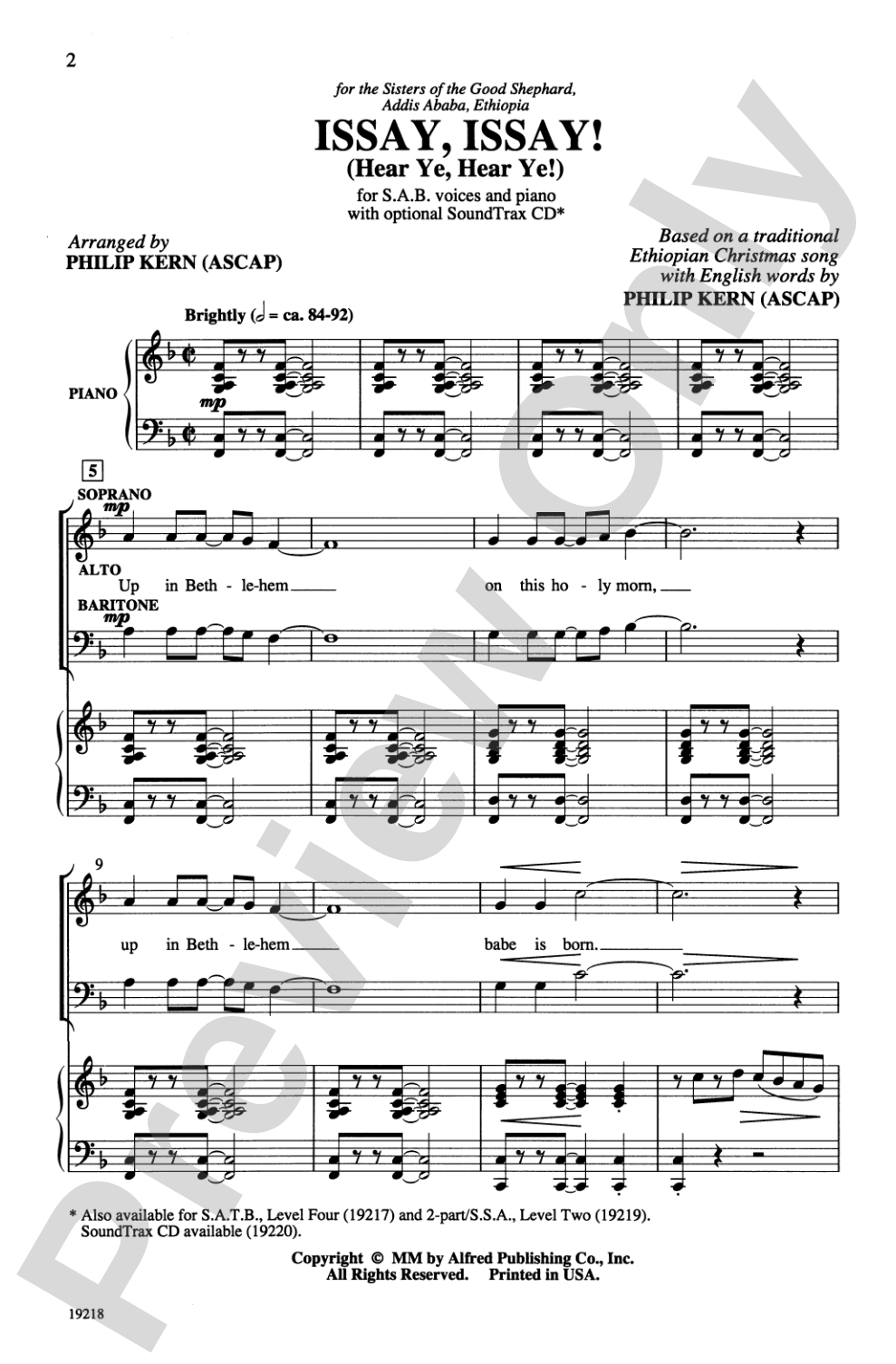
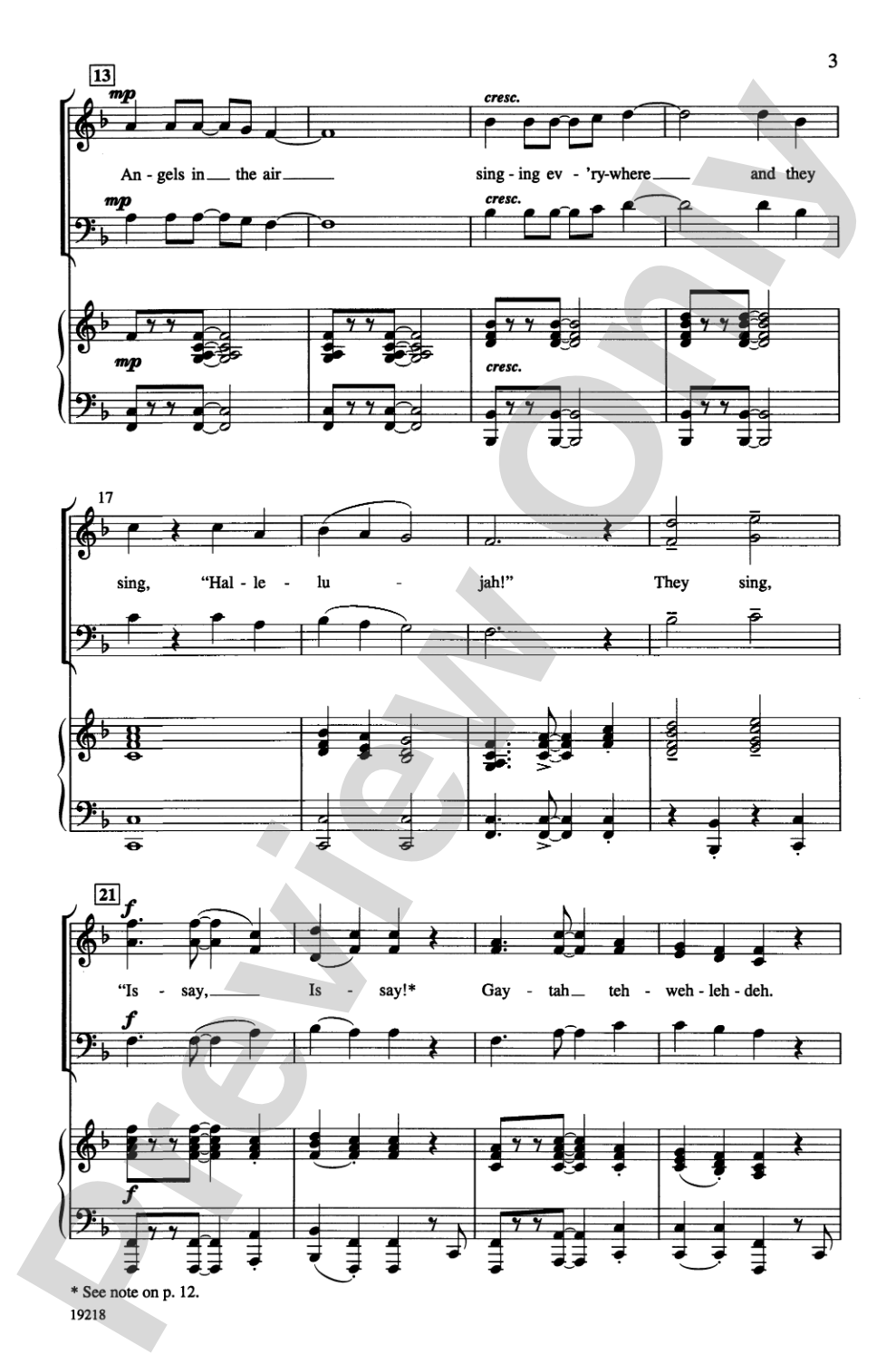
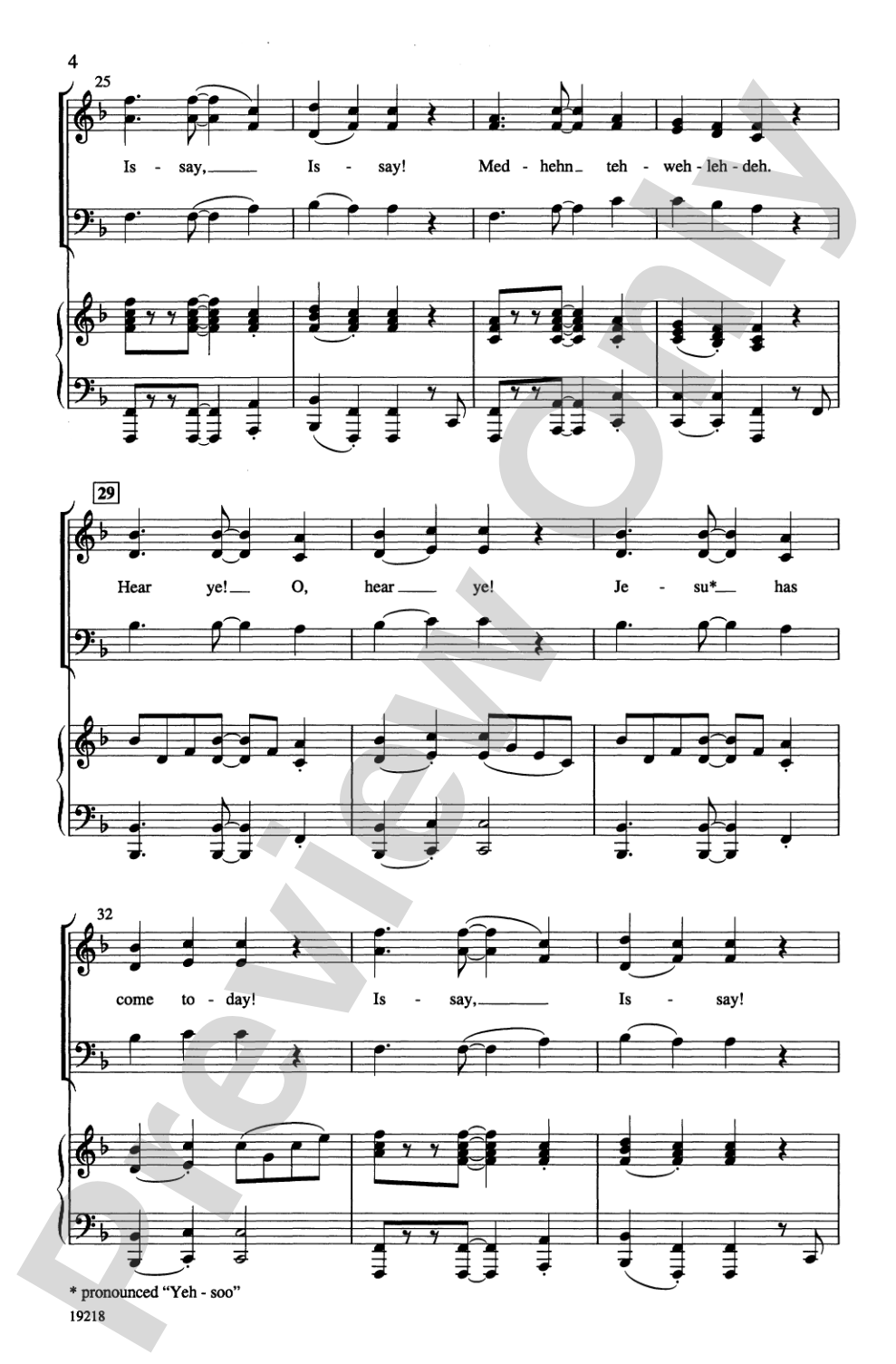

Issay, Issay! (Hear Ye, Hear Ye!): SAB Choral Octavo
Arr. Philip Kern
Item: 00-PO-0004143
$2.25
Minimum order quantity: 20 copies
Pickup currently not available
Related Items
Issay, Issay! (Hear Ye, Hear Ye!): SATB Choral Octavo |
$2.25
|
View | |
Issay, Issay! (Hear Ye, Hear Ye!): 2-Part/SSA Choral Octavo |
$2.25
|
View | |
Issay, Issay! (Hear Ye, Hear Ye!): SATB Choral Octavo |
$2.25
|
View | |
Issay, Issay! (Hear Ye, Hear Ye!): SAB Choral Octavo |
$2.25
|
View | |
Issay, Issay! (Hear Ye, Hear Ye!): 2-Part/SSA Choral Octavo |
$2.25
|
View | |
Issay, Issay! (Hear Ye, Hear Ye!): Choral Octavo SoundTrax CD |
$27.99
|
View |
Description
Expand your group's cross-cultural musical awareness with this Christmas work based on an Ethiopian song. The text includes several phrases in Amharic, a language spoken by millions of North Africans. "Issay, Issay!" means "Hear ye, hear ye!" Phonetic pronunciation is included. It's a well written rhythmic and melodic work that would make a unique addition to your holiday concert. Features solid choral scoring and traditional harmonies to an infectious pulse. Outstanding "world-music" SoundTrax CD.


Issay, Issay! (Hear Ye, Hear Ye!): SAB Choral Octavo isn't in MakeMusic Cloud just yet...but it could be. Let us know you'd like to see it, and you'll help shape what comes next. In the meantime, start a free trial and dive into thousands of interactive titles your students can play along with today.
Request This Title
Tell us you want it.
Start Your Free Trial
Explore everything that's ready to play right now.
Sample Audio
1
Audio File
--:--
0:00
0:00
Sample Video
No sample videos found.
Additional Details
Series:
Alfred Archive Edition: Alfred Choral Designs
Publisher:
Alfred Music
Page Count:
12
SKU:
00-PO-0004143
More about this title
About the Arranger: Philip Kern
Philip Kern is an arranger and composer whose work spans sacred music, seasonal repertoire, and cross-cultural choral literature. His arrangements for Alfred Music have consistently brought fresh arrangements of traditional and world music into the choral classroom, balancing accessibility with musical substance.
Why we love this
This arrangement introduces singers and audiences to genuine Ethiopian musical material without flattening it into a generic 'world music' aesthetic. The rhythmic vitality and harmonic clarity make it feel fresh in a holiday program saturated with European carols, while the recorded accompaniment captures the authentic pulse that makes the piece come alive.
What to expect
Celebratory and grounded at once. The piece carries the joyful proclamation of its title with warmth rather than novelty, anchored by a steady rhythmic foundation that feels both unfamiliar and immediately accessible. There's an infectious quality that engages both performers and listeners.
Who it's for
Holiday programs seeking repertoire that genuinely expands musical perspective rather than simply adding a token multicultural piece. SAB choirs with developing singers who benefit from clear, singable voicing paired with compelling rhythmic material.
How to get the most out of it
- Lock into the infectious rhythmic pulse from the first rehearsal. The steady kick beneath the melody is what makes this piece memorable, so establish it early and keep singers aware of their relationship to the groove, not just their individual lines.
- Allocate rehearsal time specifically for Amharic pronunciation. Singers will gain confidence faster if they understand they're singing real words with meaning, not phonetic approximations. The pronunciation guide provided makes this manageable.
- Use the SoundTrax accompaniment strategically. Begin with full accompaniment to anchor the ensemble in the sound world, then gradually rehearse unaccompanied to build independence before returning to the recorded track for final polish.
- Shape the dynamics with the text in mind. The repeated 'Issay, Issay!' phrases work best when singers vary their energy and projection rather than maintaining a static volume throughout the piece.
How to use it
Position this as a program centerpiece that showcases your ensemble's versatility rather than as a closing encore or filler. The piece has enough substance and character to stand meaningfully alongside traditional holiday selections, and it naturally prompts conversation about music beyond Western classical traditions. Consider pairing it with other works that expand holiday programming beyond the familiar.
Skills your students will build
- Reading and performing in a non-English language with accurate pronunciation
- Understanding and performing rhythmic patterns outside common Western meters
- Identifying and maintaining a consistent harmonic pulse independent of the melody
- Responding to recorded accompaniment with independence rather than dependence
- Engaging with musical traditions outside the European classical canon