

In Your Wildest Dreams: String Orchestra Conductor Score & Parts
By Tyler S. Grant
Grade: 3
Item: 00-PK-0009164
$65.00
Pickup currently not available
Buy Extra Parts (Digital PDF Download)
| Product | Price | Quantity |
|---|---|---|
| In Your Wildest Dreams: Score | $10.00 | |
| In Your Wildest Dreams: 1st Violin | $3.00 | |
| In Your Wildest Dreams: 2nd Violin | $3.00 | |
| In Your Wildest Dreams: 3rd Violin (Viola [TC]) | $3.00 | |
| In Your Wildest Dreams: Viola | $3.00 | |
| In Your Wildest Dreams: Cello | $3.00 | |
| In Your Wildest Dreams: String Bass | $3.00 |
Parts Added to Cart!
Description
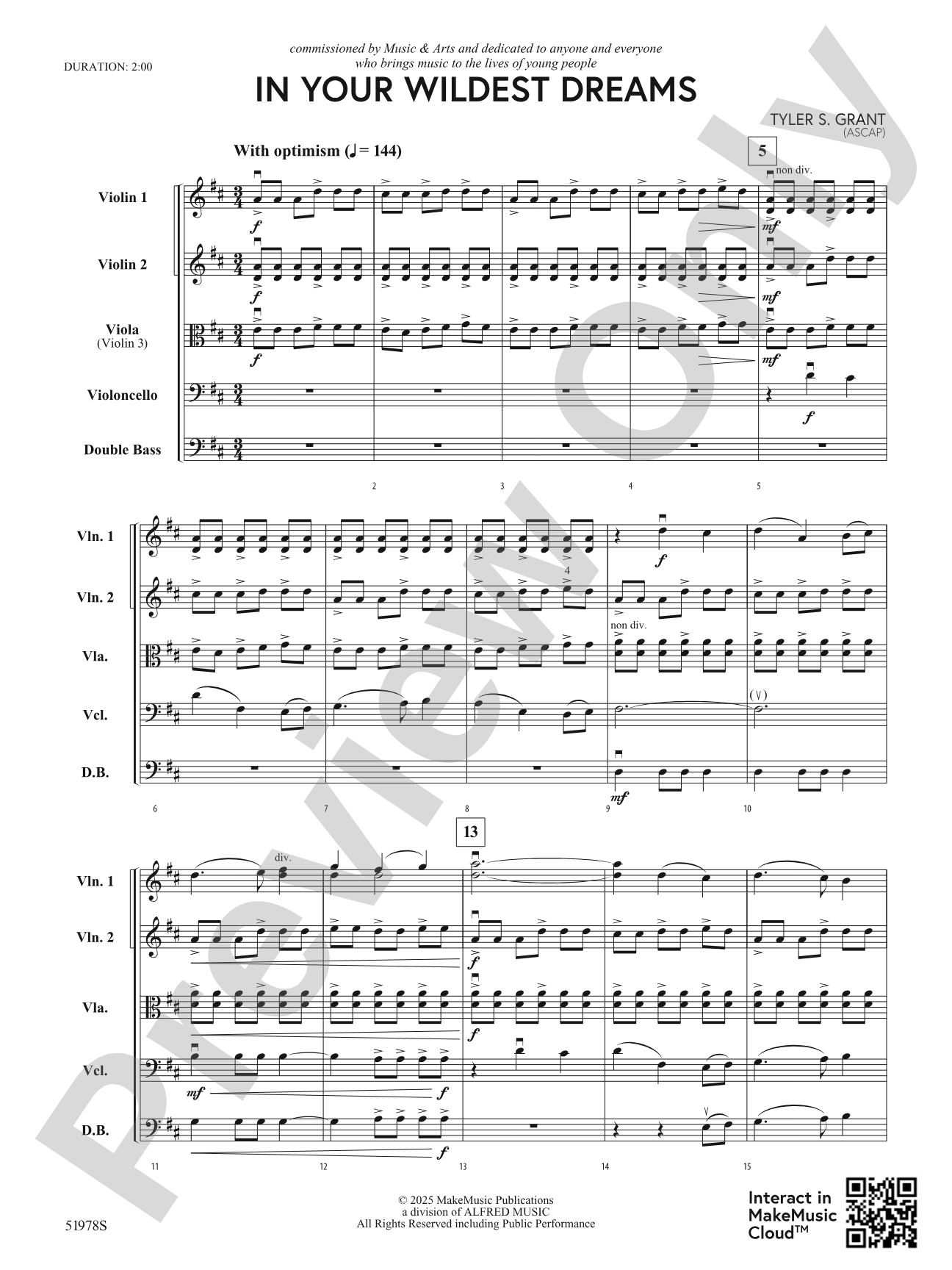
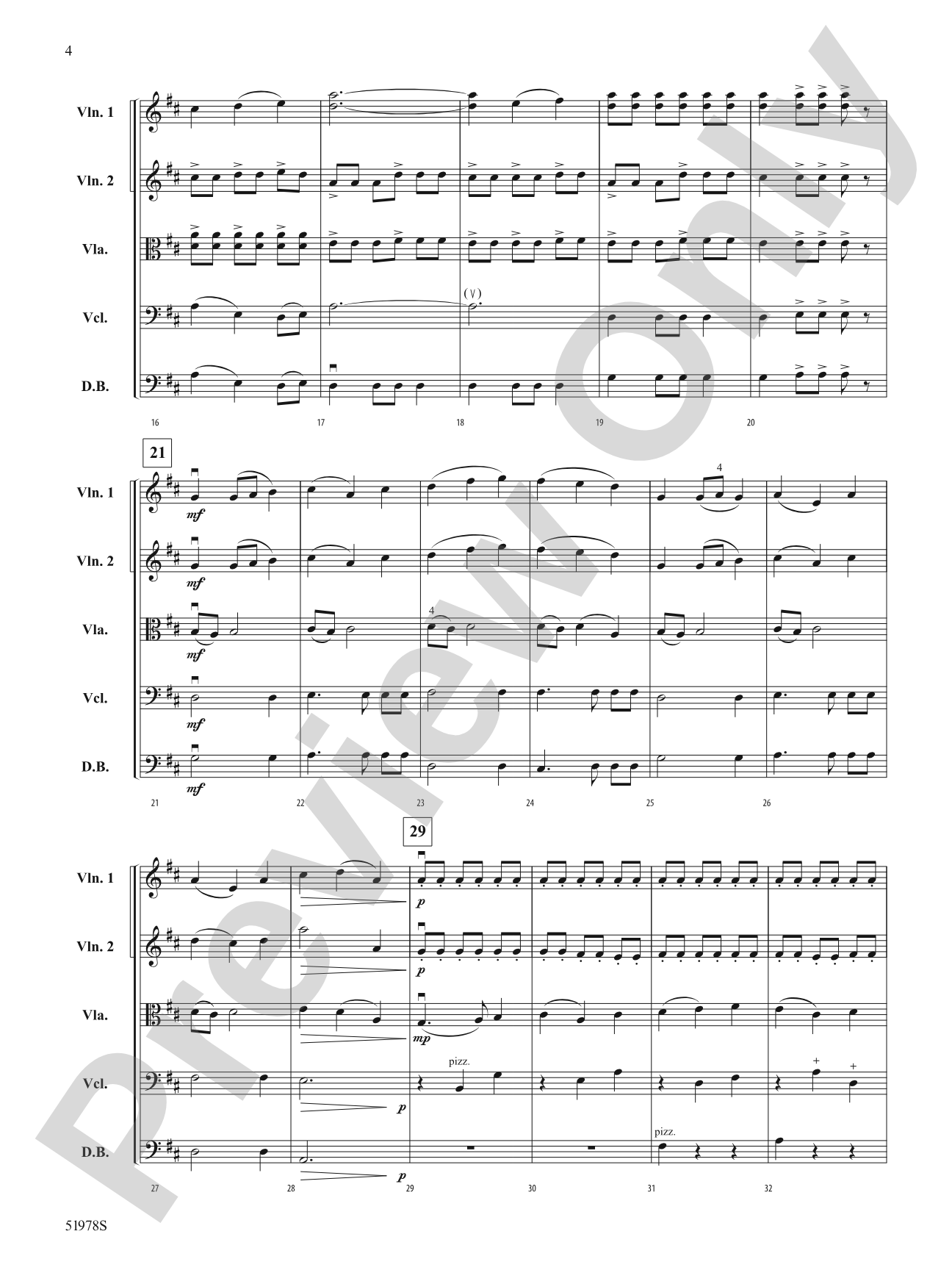
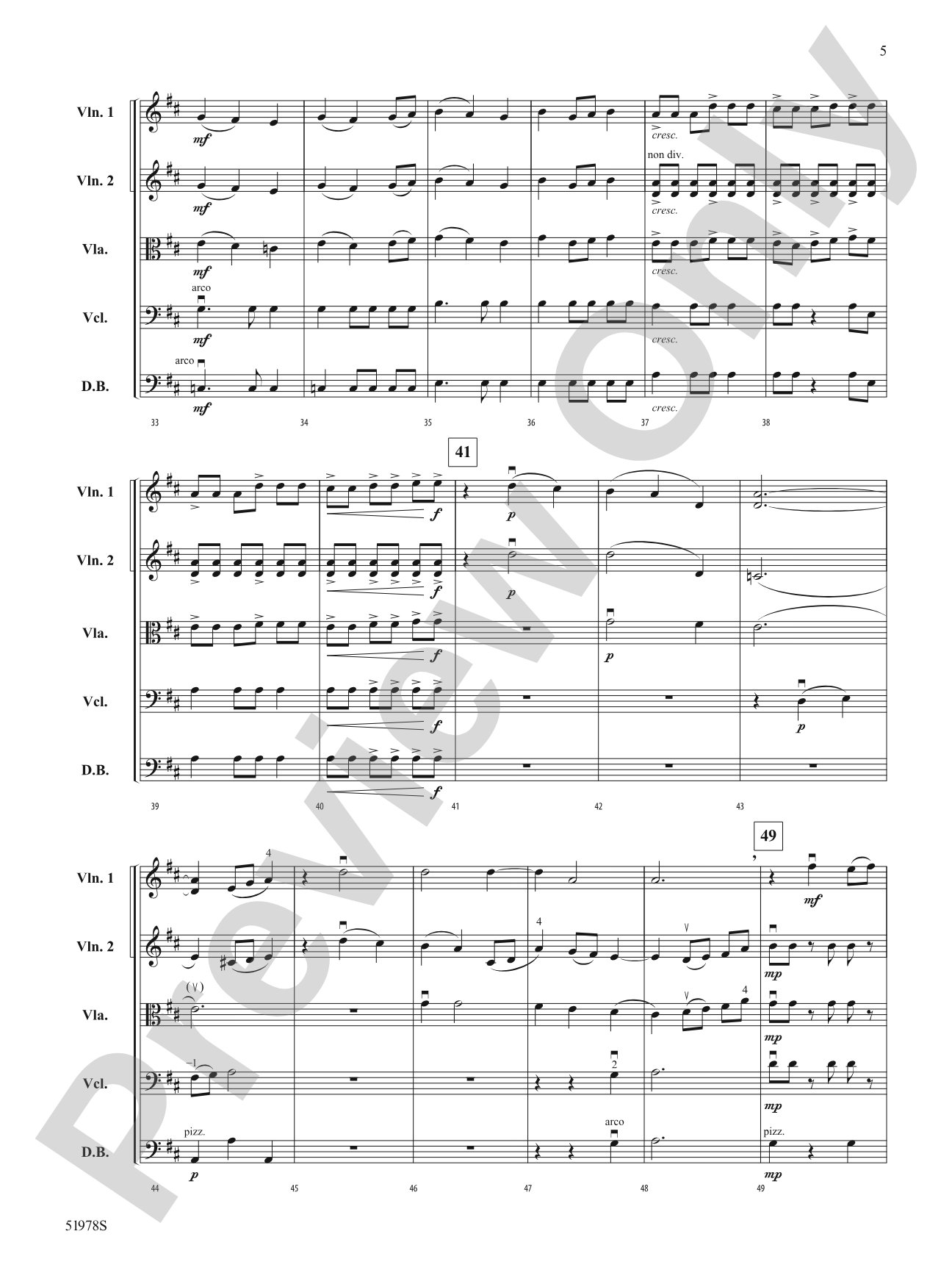
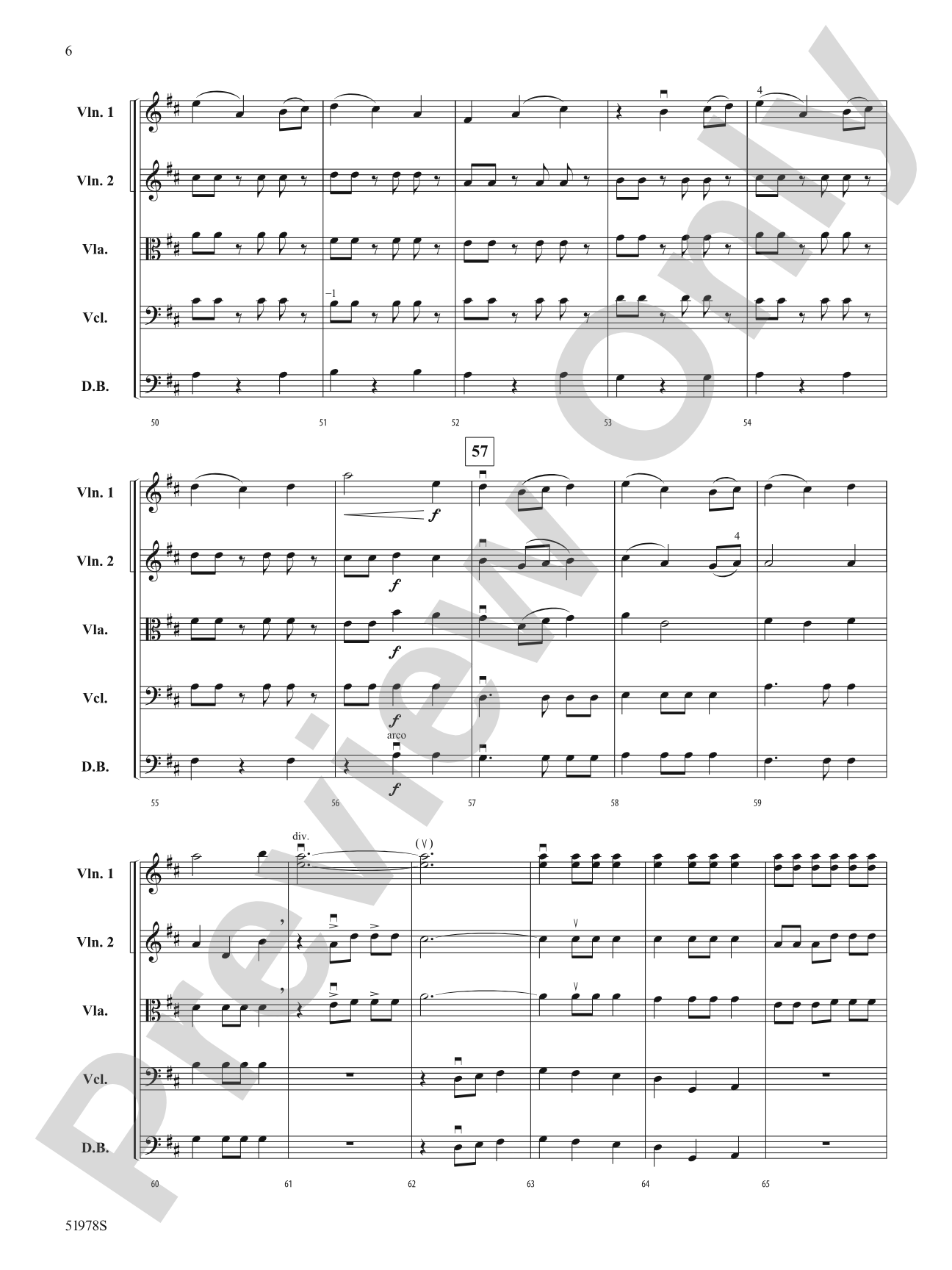
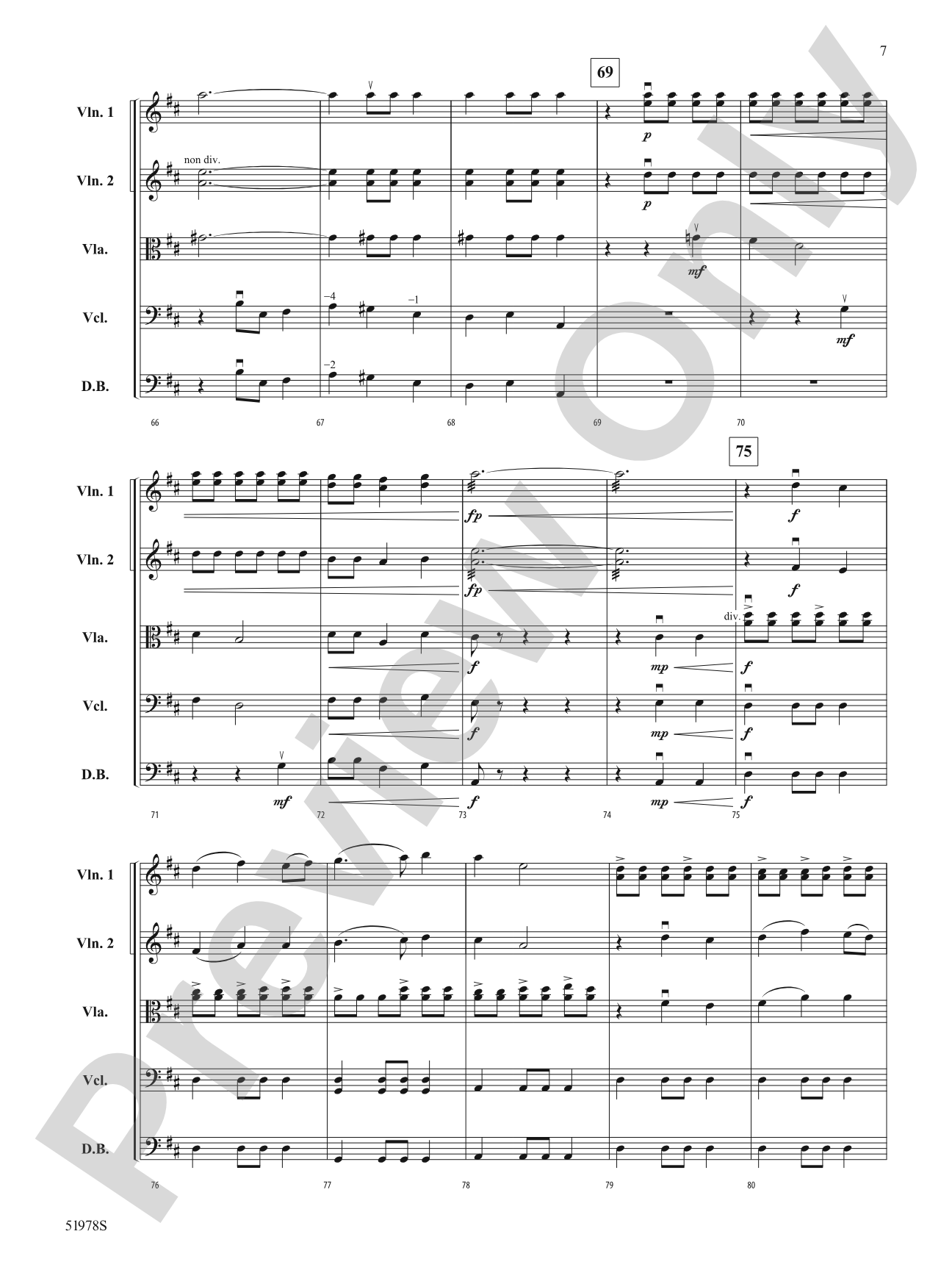
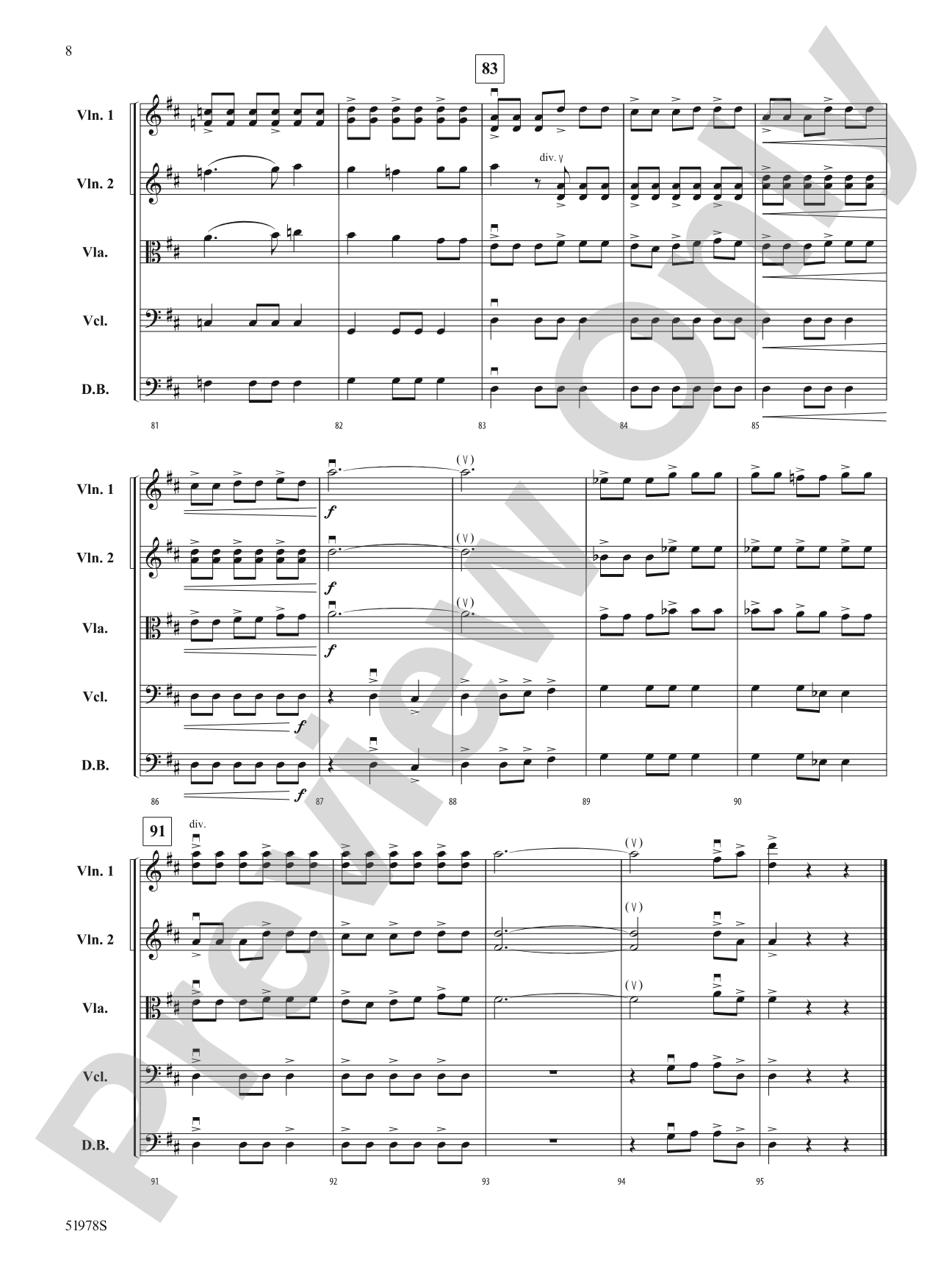
In Your Wildest Dreams by Tyler S. Grant is a joyous and exuberant work. Both inspiring and powerful, it includes lively ostinatos that pair with beautiful sweeping lines in a celebration of the world's dreamers and the determination necessary to make those dreams a reality. Interesting harmonic shifts bring the work to an exhilarating conclusion! (2:00)


In Your Wildest Dreams: String Orchestra Conductor Score & Parts isn't in MakeMusic Cloud just yet...but it could be. Let us know you'd like to see it, and you'll help shape what comes next. In the meantime, start a free trial and dive into thousands of interactive titles your students can play along with today.
Request This Title
Tell us you want it.
Start Your Free Trial
Explore everything that's ready to play right now.
Sample Audio
1
Audio File
--:--
0:00
0:00
Sample Video
Additional Details
Series:
MakeMusic Symphony Strings
Publisher:
MakeMusic Publications
SKU:
00-PK-0009164
More about this title
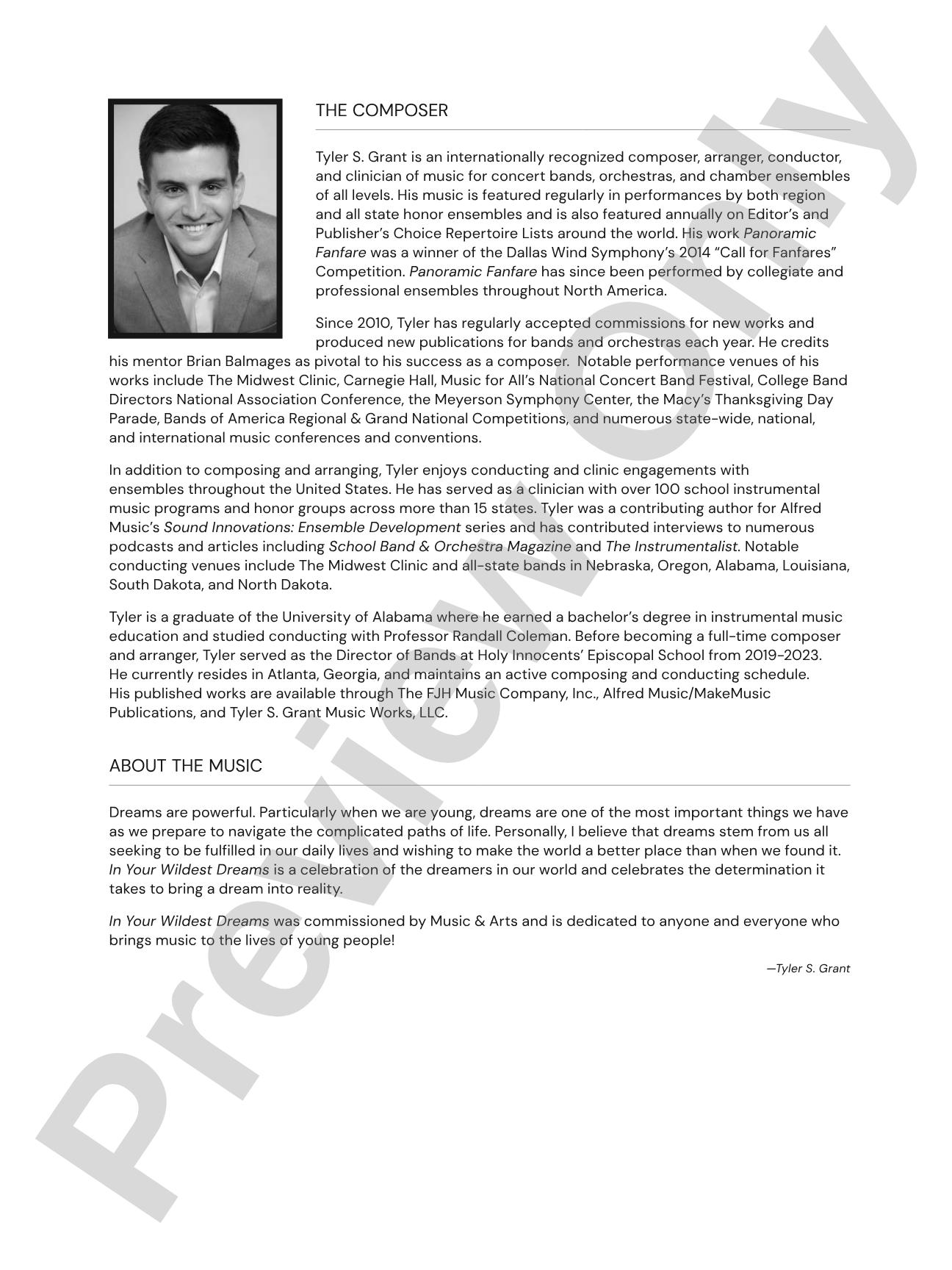
About the Composer: Tyler S. Grant

Tyler S. Grant has established himself as a prolific voice in instrumental music composition and arranging. His works appear regularly on honor ensemble programs across the country and have earned recognition through national competitions, including his fanfare winning the Dallas Wind Symphony's 2014 Call for Fanfares. His music has been performed at prestigious venues from Carnegie Hall to the Meyerson Symphony Center and featured at major festivals including the Midwest Clinic, Music for All's National Concert Band Festival, and Bands of America Grand Nationals.
Beyond composing, Grant maintains an active presence as a conductor and clinician, working with over 100 school programs across 15 states and leading all-state ensembles throughout the region. He holds a degree in instrumental music education from the University of Alabama, where he studied conducting with Randall Coleman. Grant credits composer Brian Balmages as instrumental to his development and has contributed to educational resources including Alfred Music's Sound Innovations series.
Why we love this
Grant writes string music that balances accessibility with genuine compositional substance. The combination of driving ostinatos anchoring luminous melodic writing creates an arrangement that holds both young players' attention and the audience's ear; the harmonic movement ensures this feels sophisticated without becoming unwieldy at the Grade 3 level.
What to expect
Exuberance radiates from the opening, driven by rhythmic vitality and the kind of melodic warmth that makes audiences lean forward. The piece celebrates aspiration and resilience through music that feels both celebratory and earnest, with harmonic surprises that lift the energy toward a powerful finish.
Who it's for
String orchestras at the Grade 3 level looking for a work with energetic, motivational character that doesn't demand virtuosity. This piece serves directors seeking material that excites young musicians while remaining well within their technical grasp and building genuine ensemble texture skills.
How to get the most out of it
- Establish the ostinatos with confidence before layering the sweeping lines over them; a conductor who thinks "texture-building" rather than "adding parts" will find the whole ensemble listening across sections.
- Shape the harmonic shifts in the conclusion with deliberate tempo adjustments or dynamic inflection to let the exhilarating turn of harmony land; avoid rushing through these moments.
- Balance the upper voices against lower string sustains, especially in passages where the melody soars; encourage violins to phrase through dynamic shape rather than relying on vibrato alone.
How to use it
Program this as a midpoint piece on a concert where you want to shift energy and mood; its uplifting character works beautifully between heavier or more introspective works. The two-minute length and contest-eligible designation make it practical for festival repertoire lists without consuming rehearsal time needed for longer programs.
Skills your students will build
- Sustaining ostinato patterns while tracking melodic movement in other sections
- Harmonic awareness and voice leading through unexpected tonal shifts
- Balancing rhythmic precision with lyrical phrasing across extended melodic lines
- Dynamic shaping and ensemble texture control