
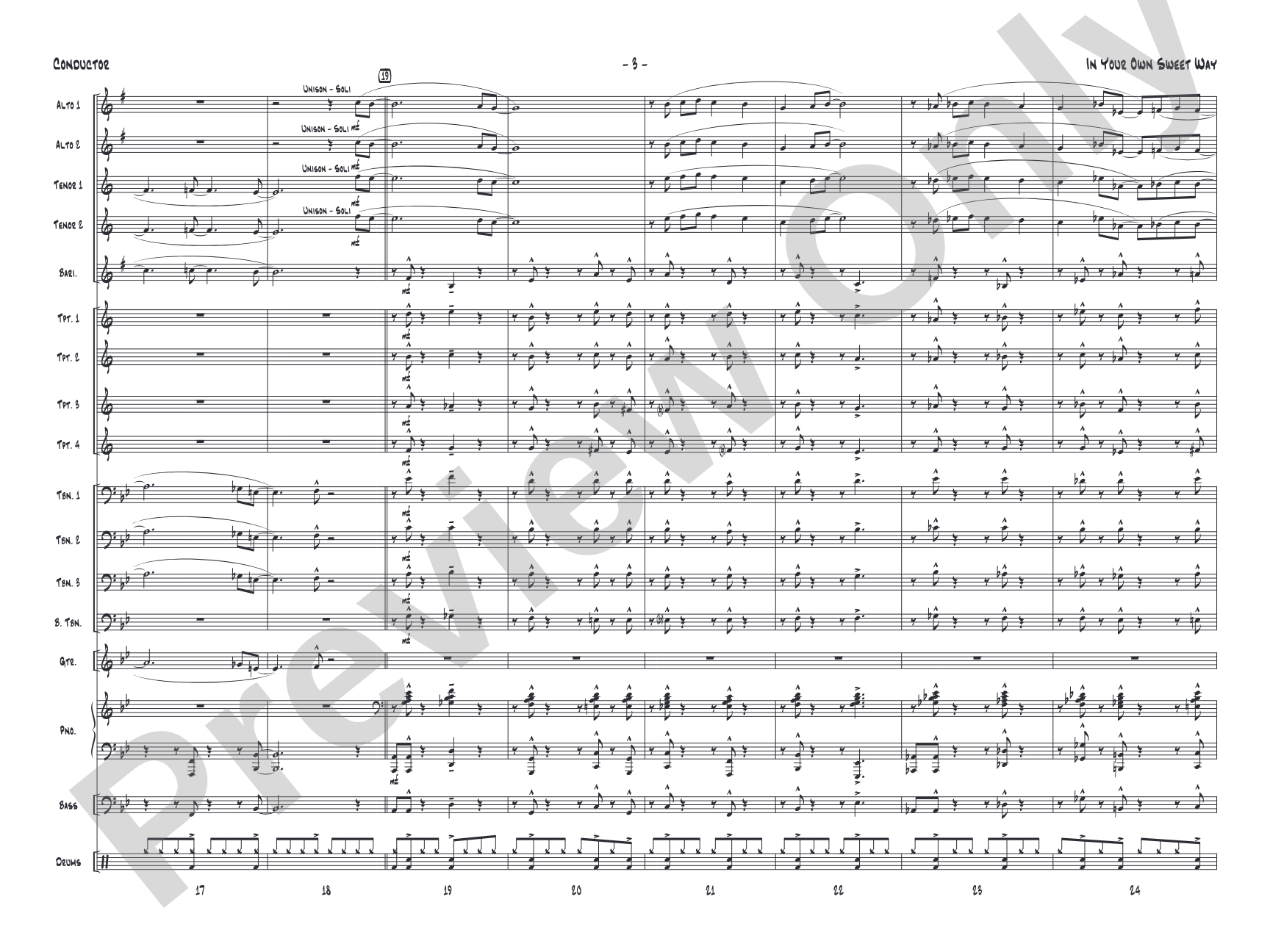
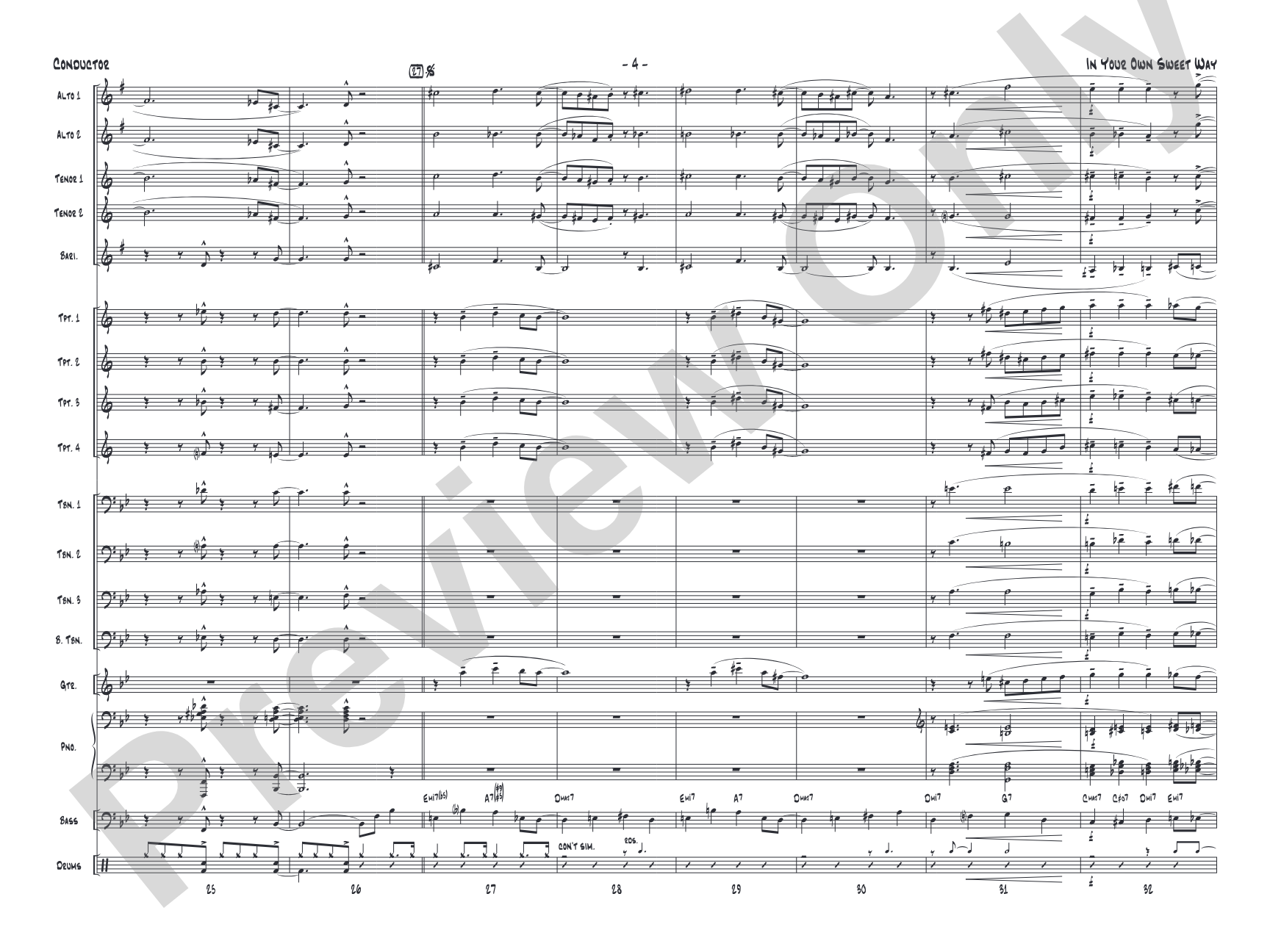
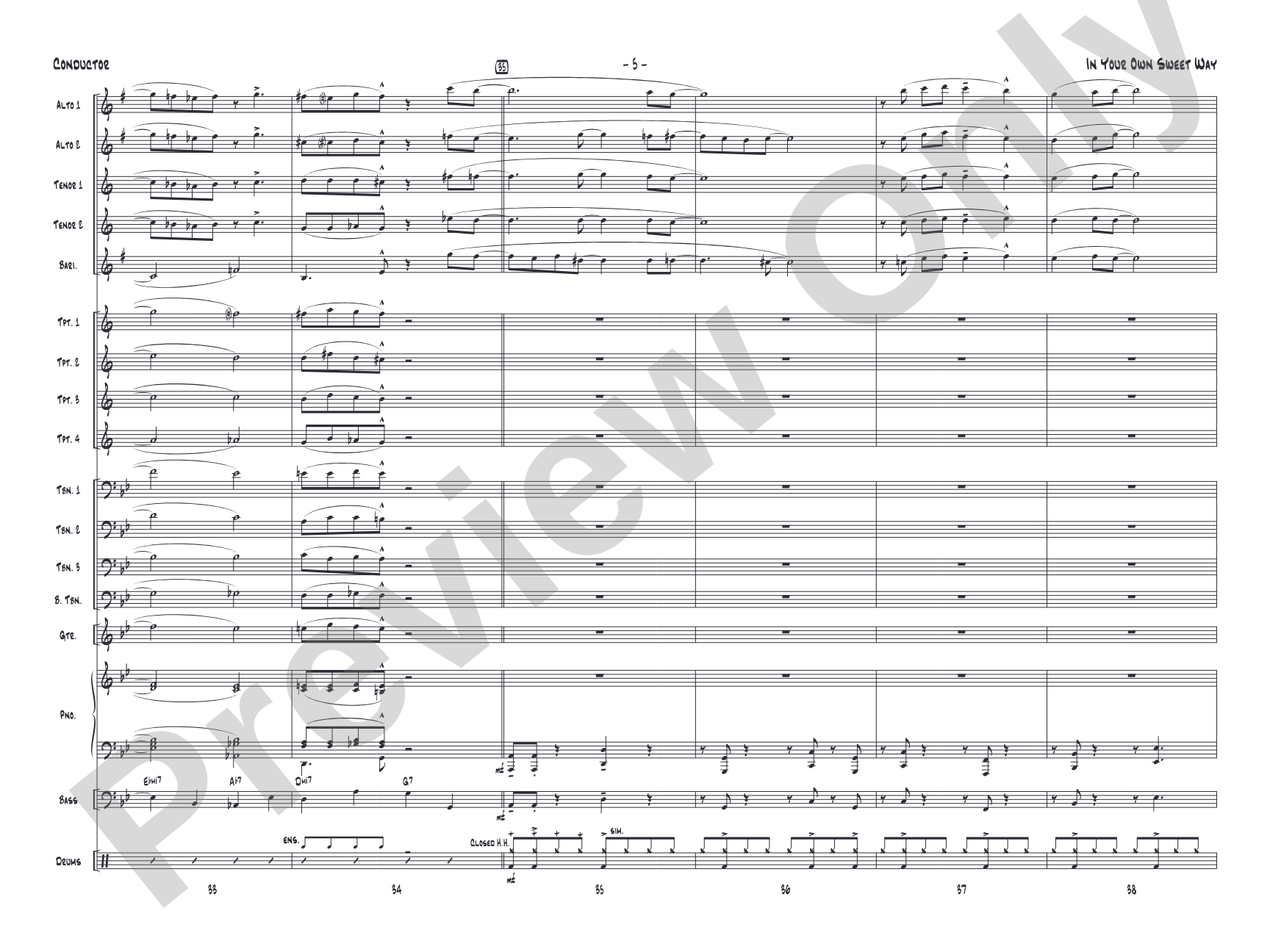
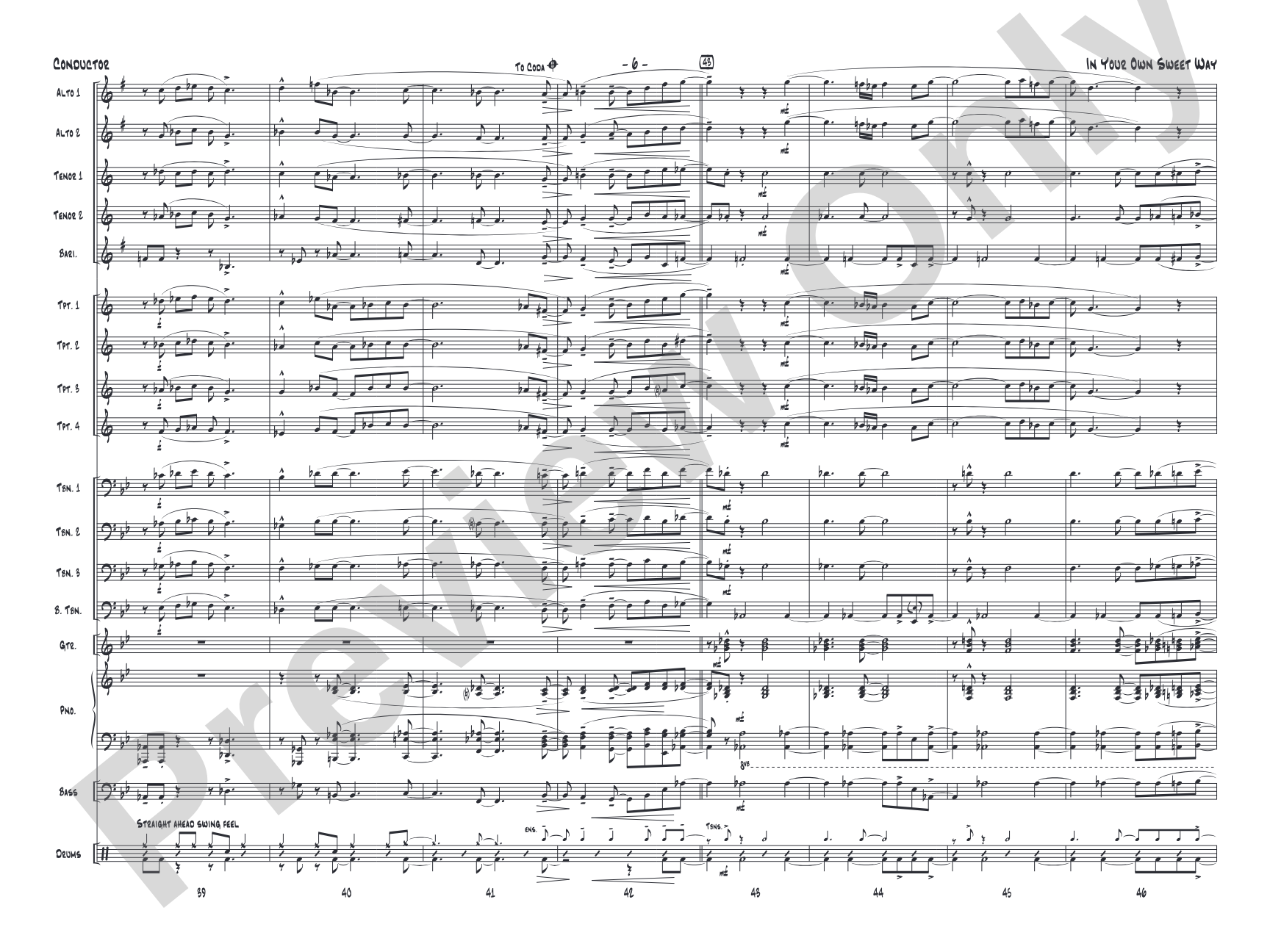
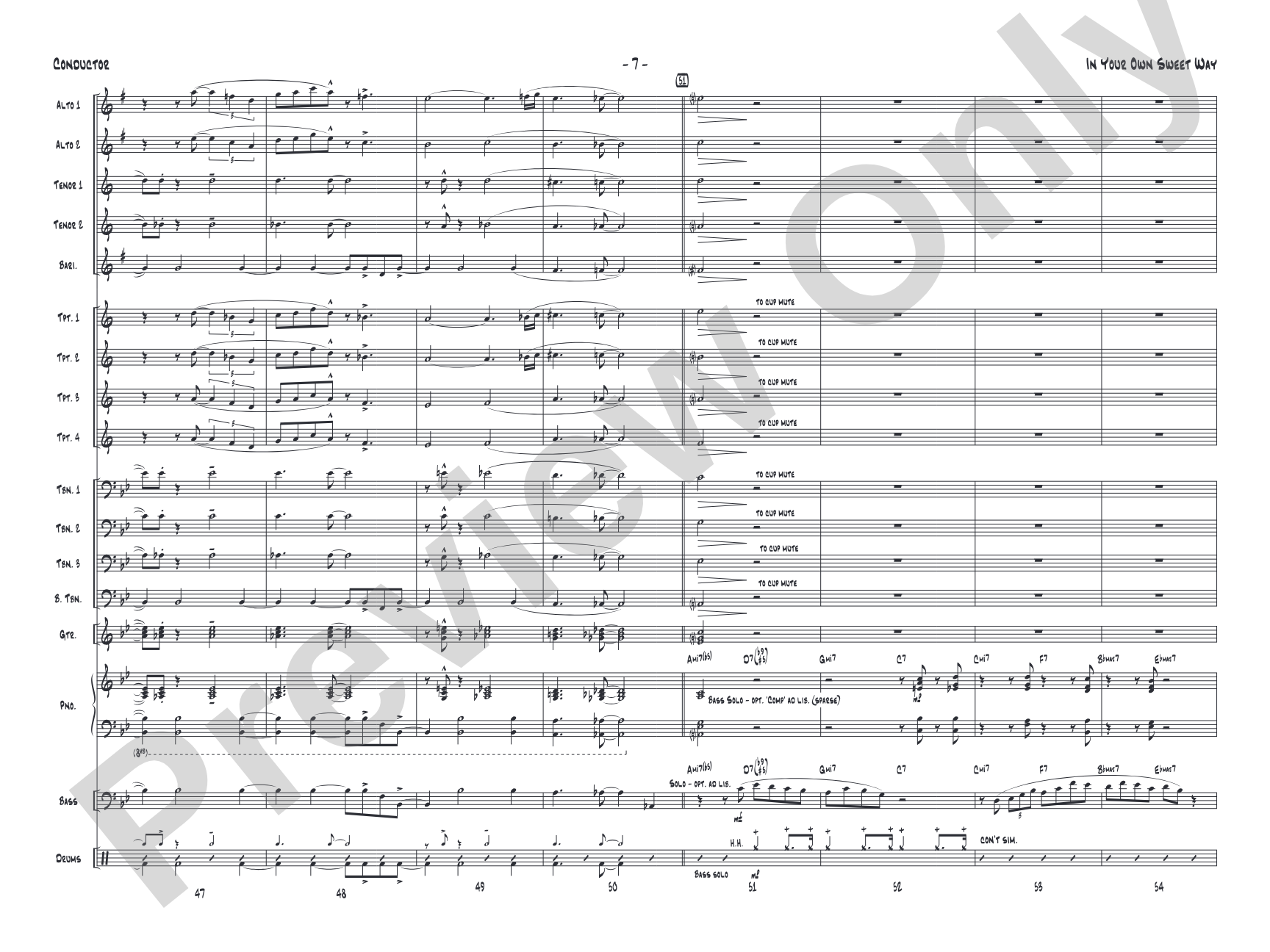
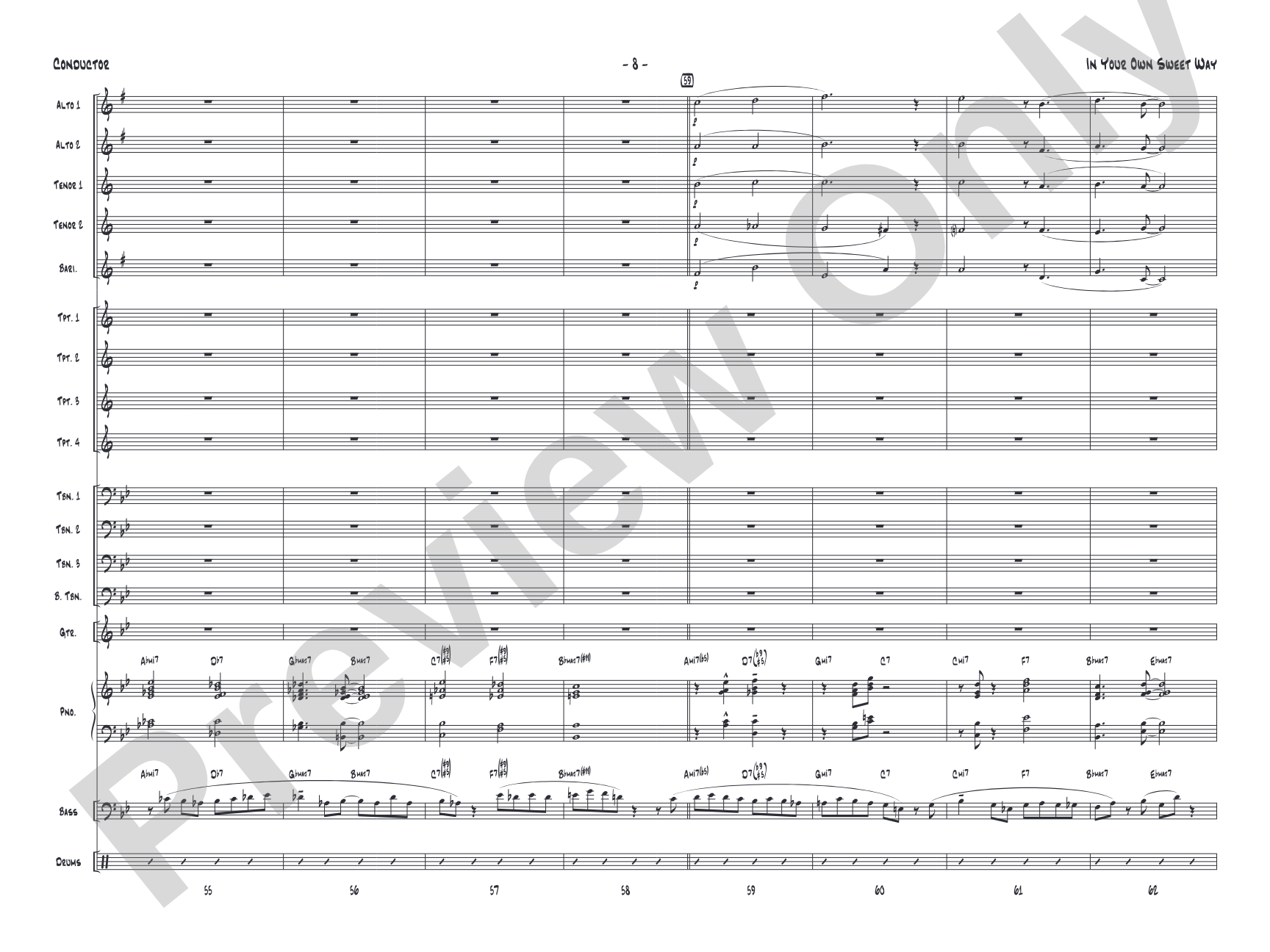
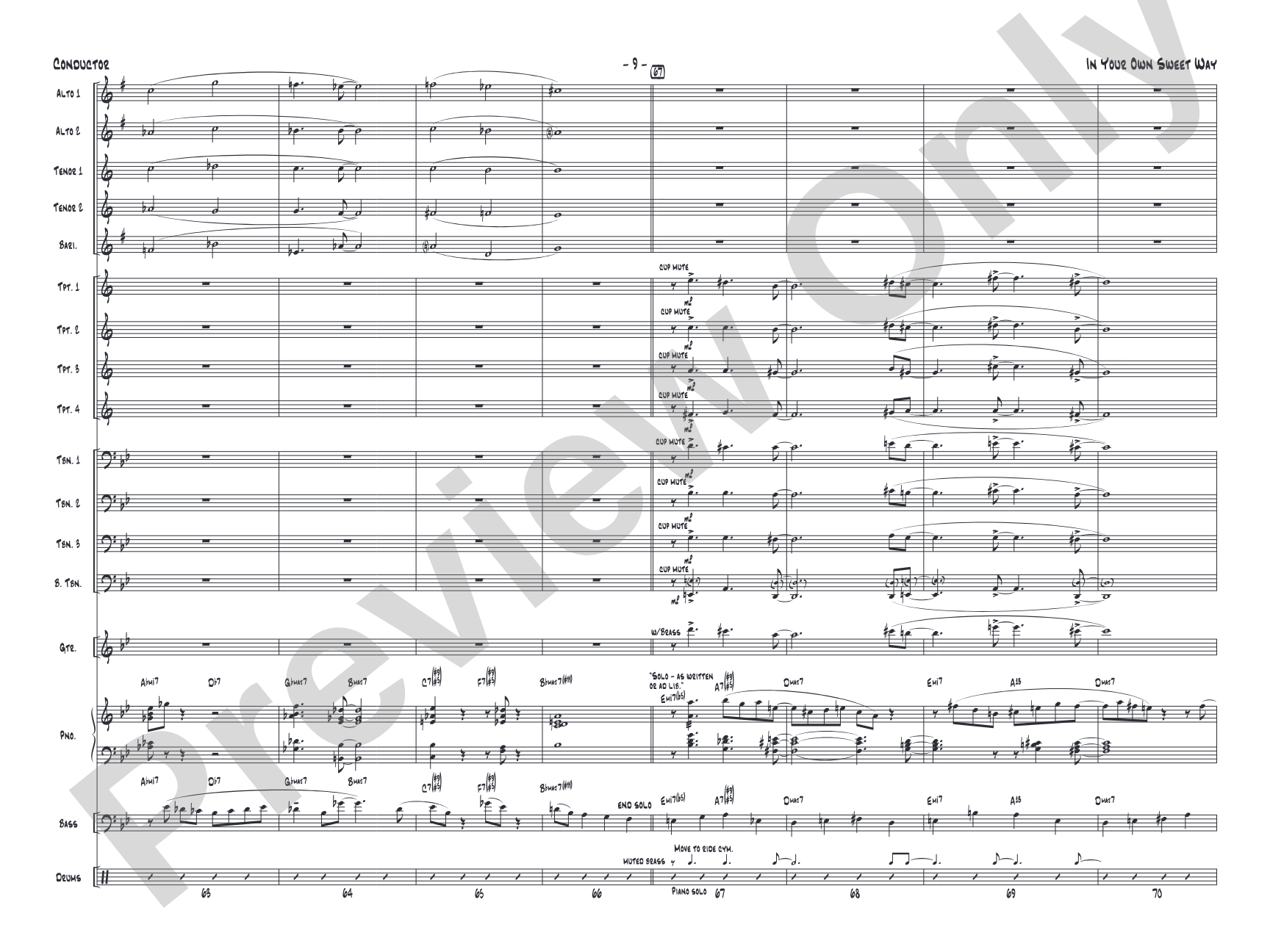
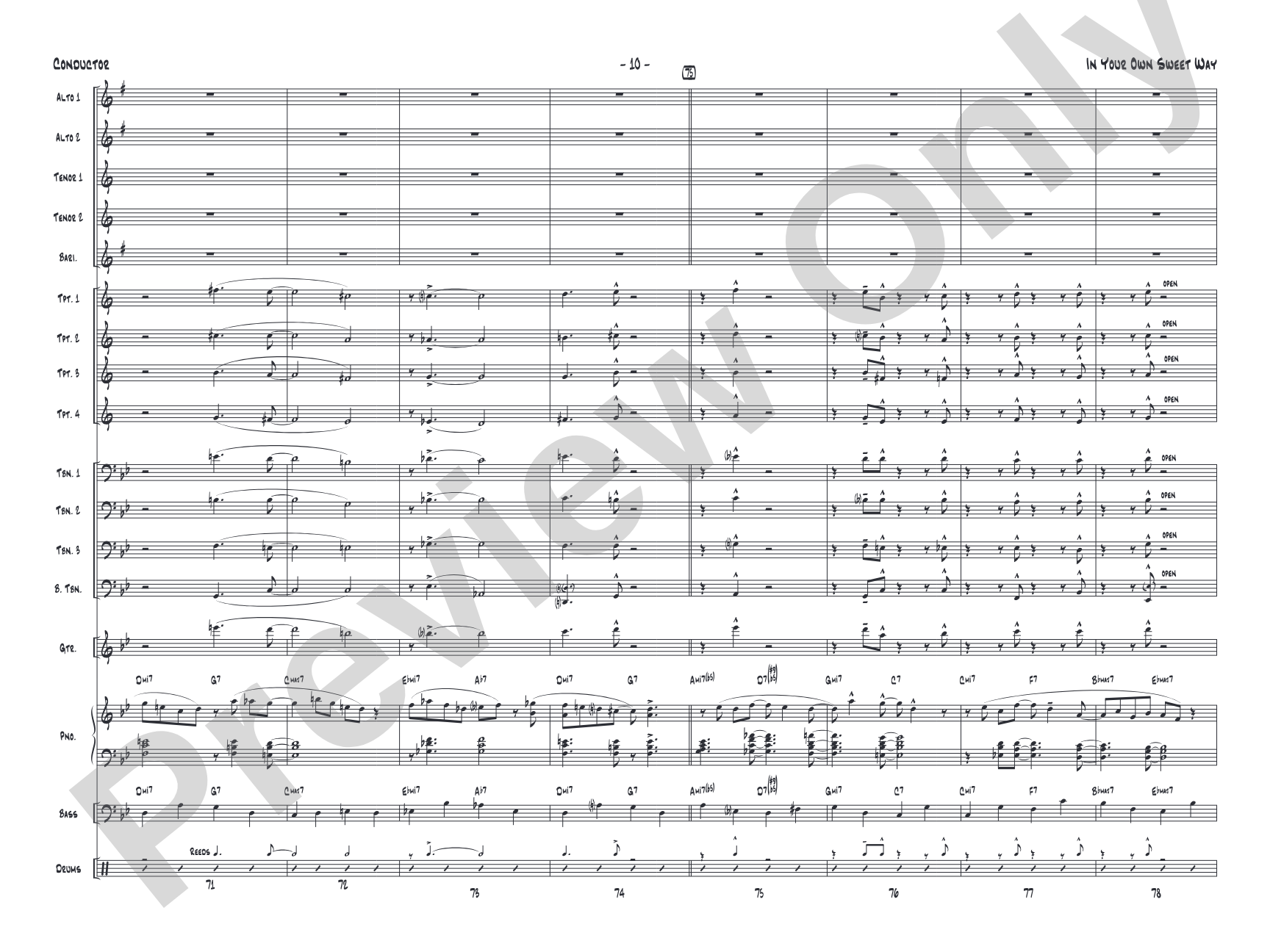
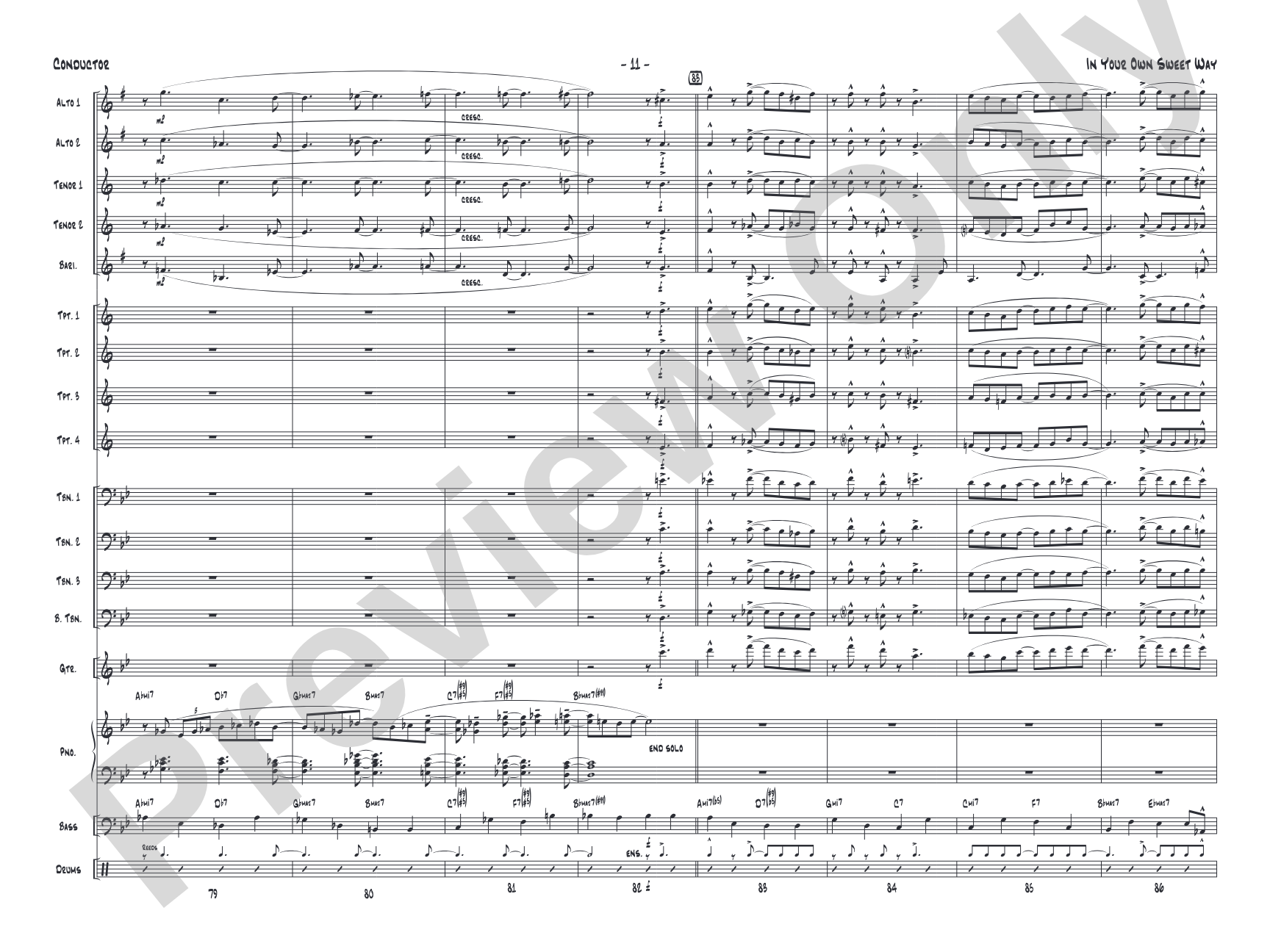
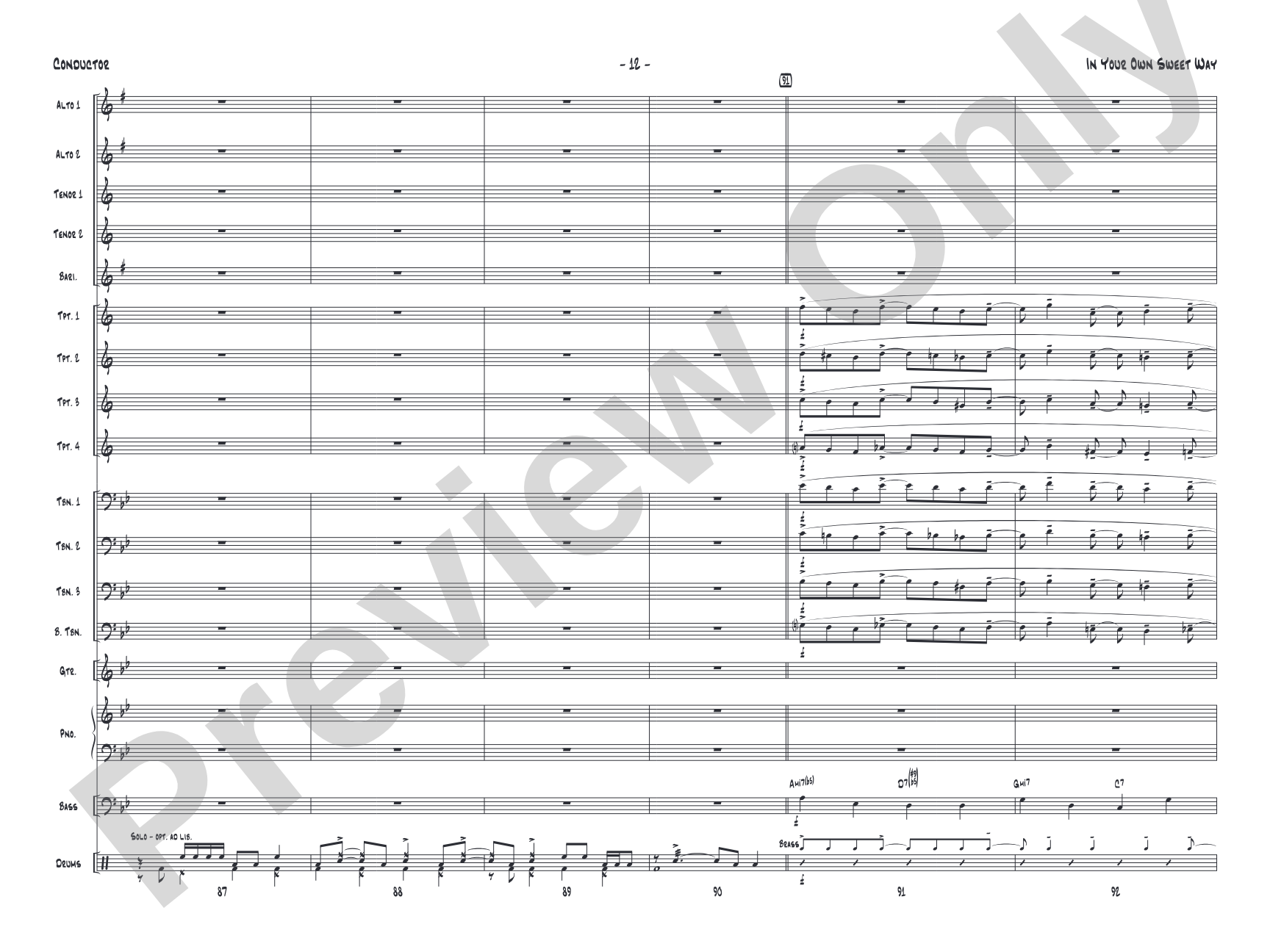
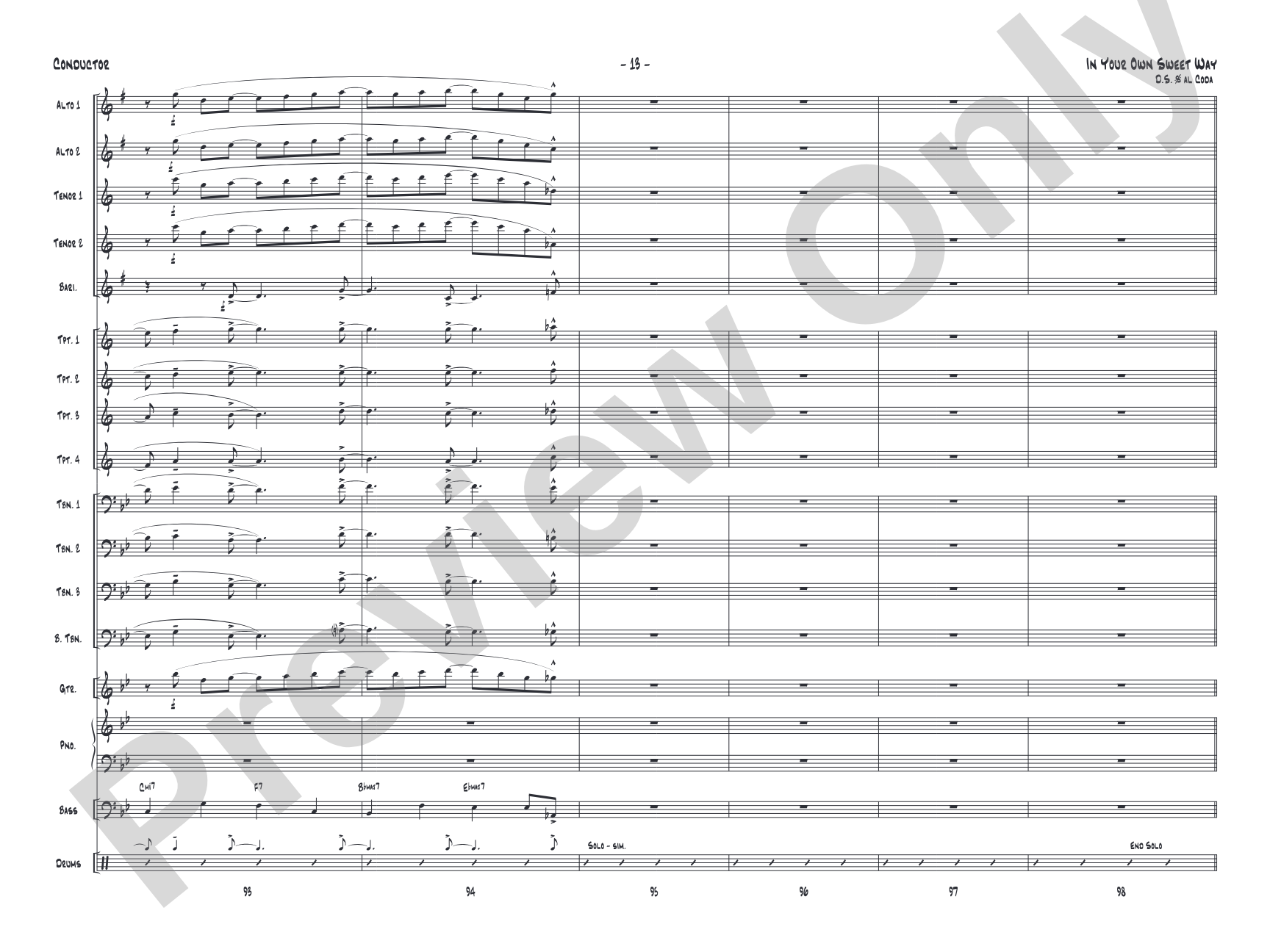
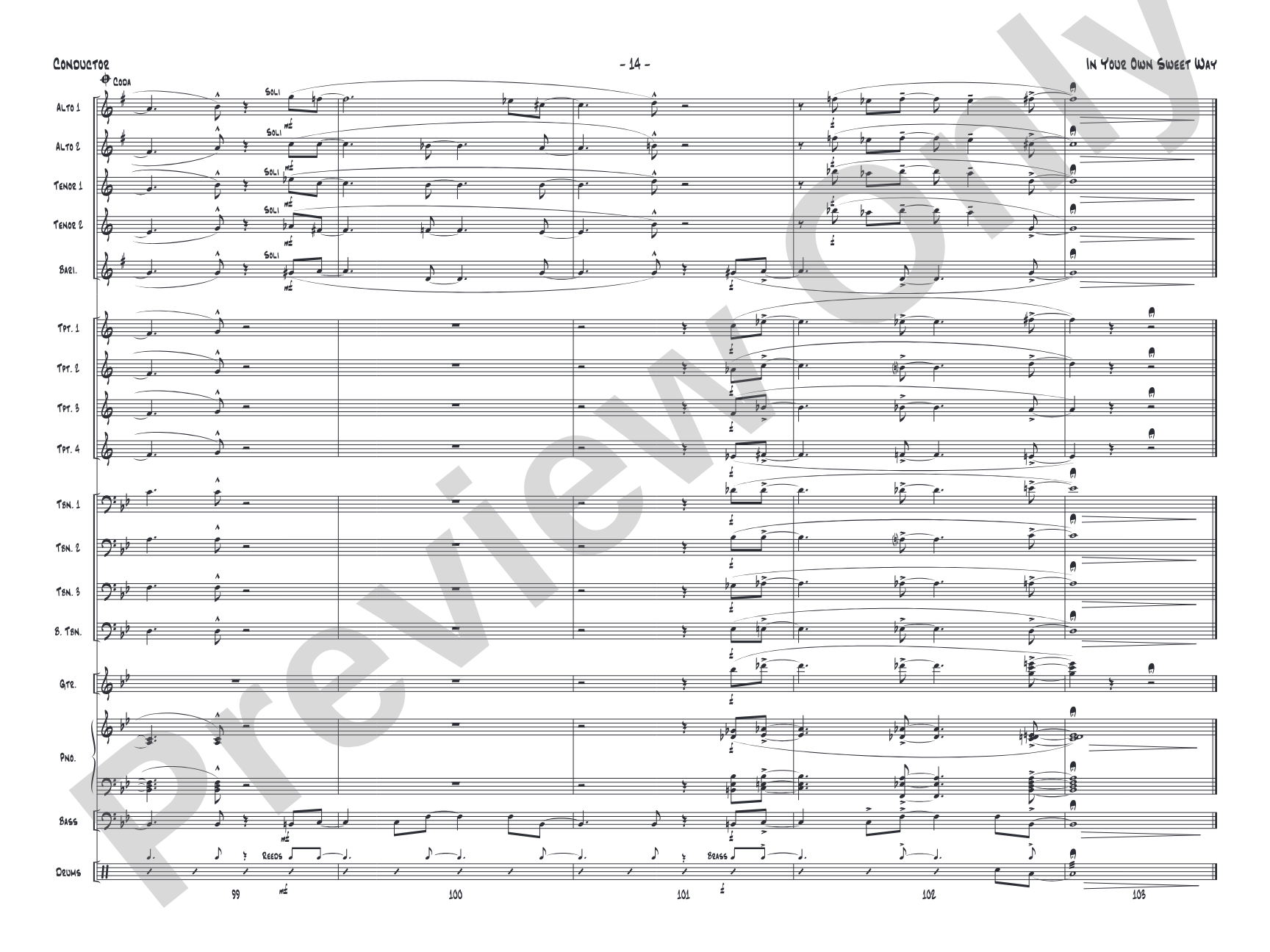

In Your Own Sweet Way: Jazz Ensemble Conductor Score & Parts
By Dave Brubeck / arr. Dave Rivello
Grade: 3 (Medium)
Item: 00-PK-0006928

$48.00
Pickup currently not available
Buy Extra Parts (Digital PDF Download)
Parts Added to Cart!
Related Items
In Your Own Sweet Way: Jazz Ensemble Conductor Score |
$9.00
|
View |
Description
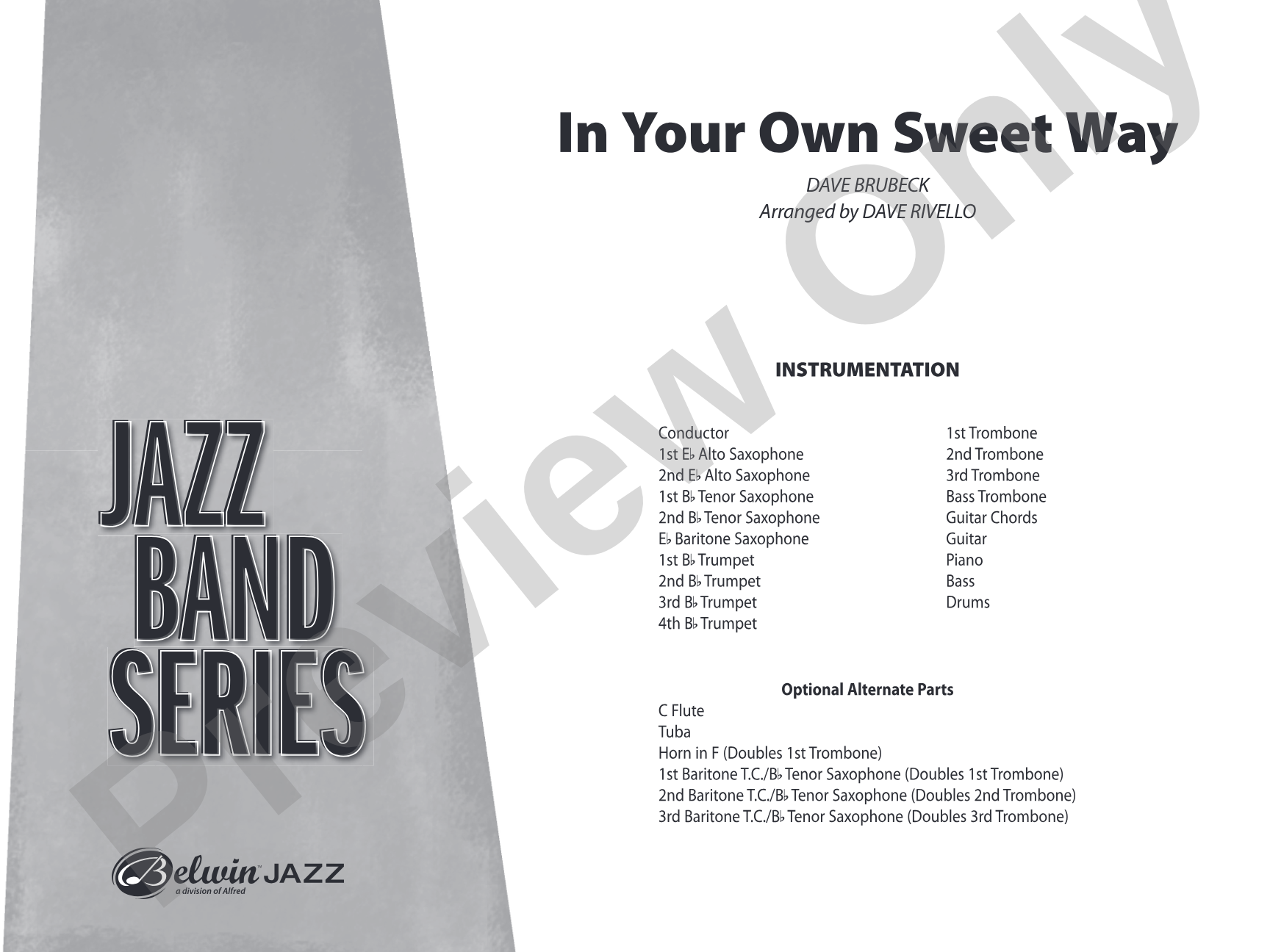
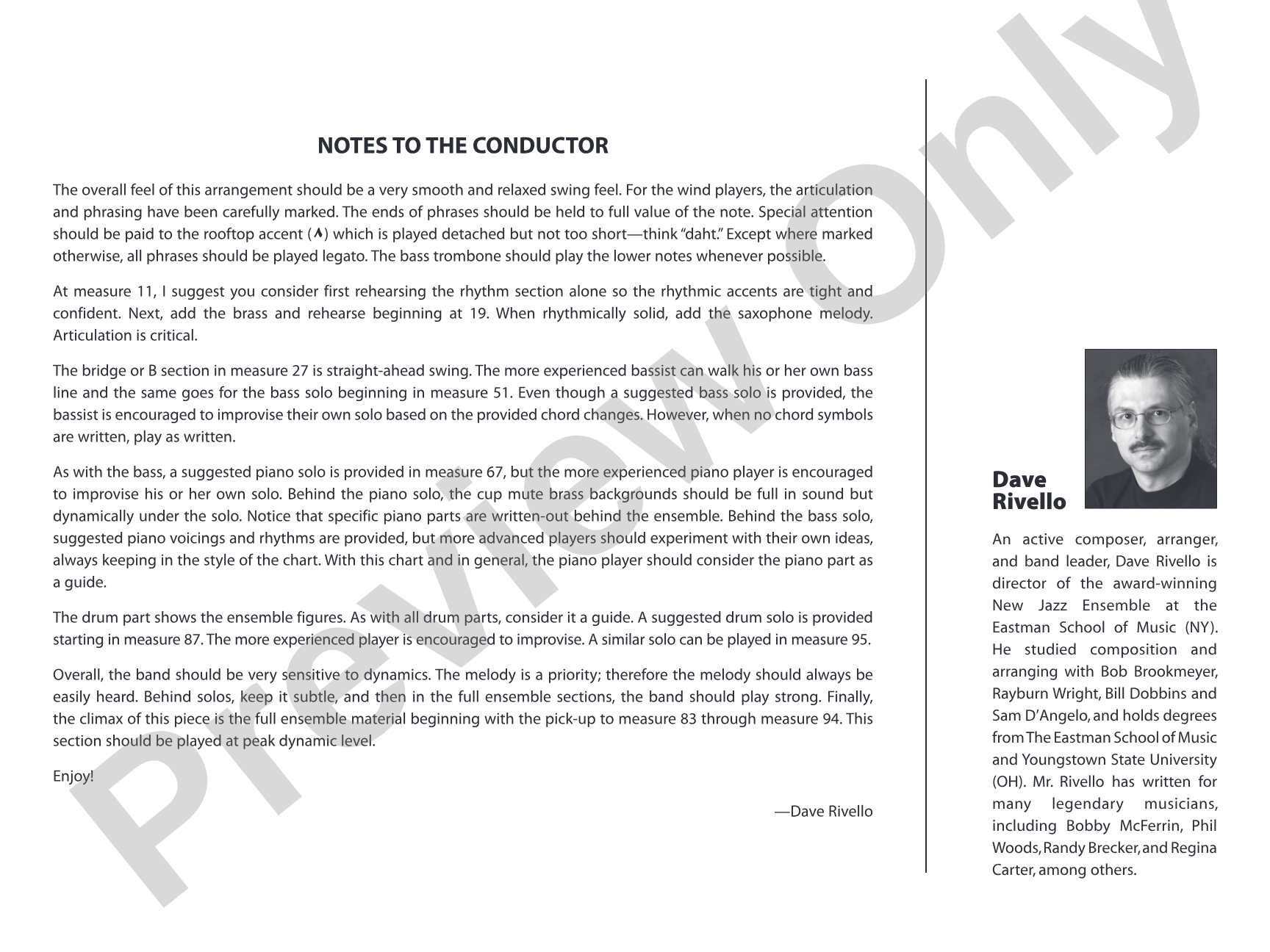
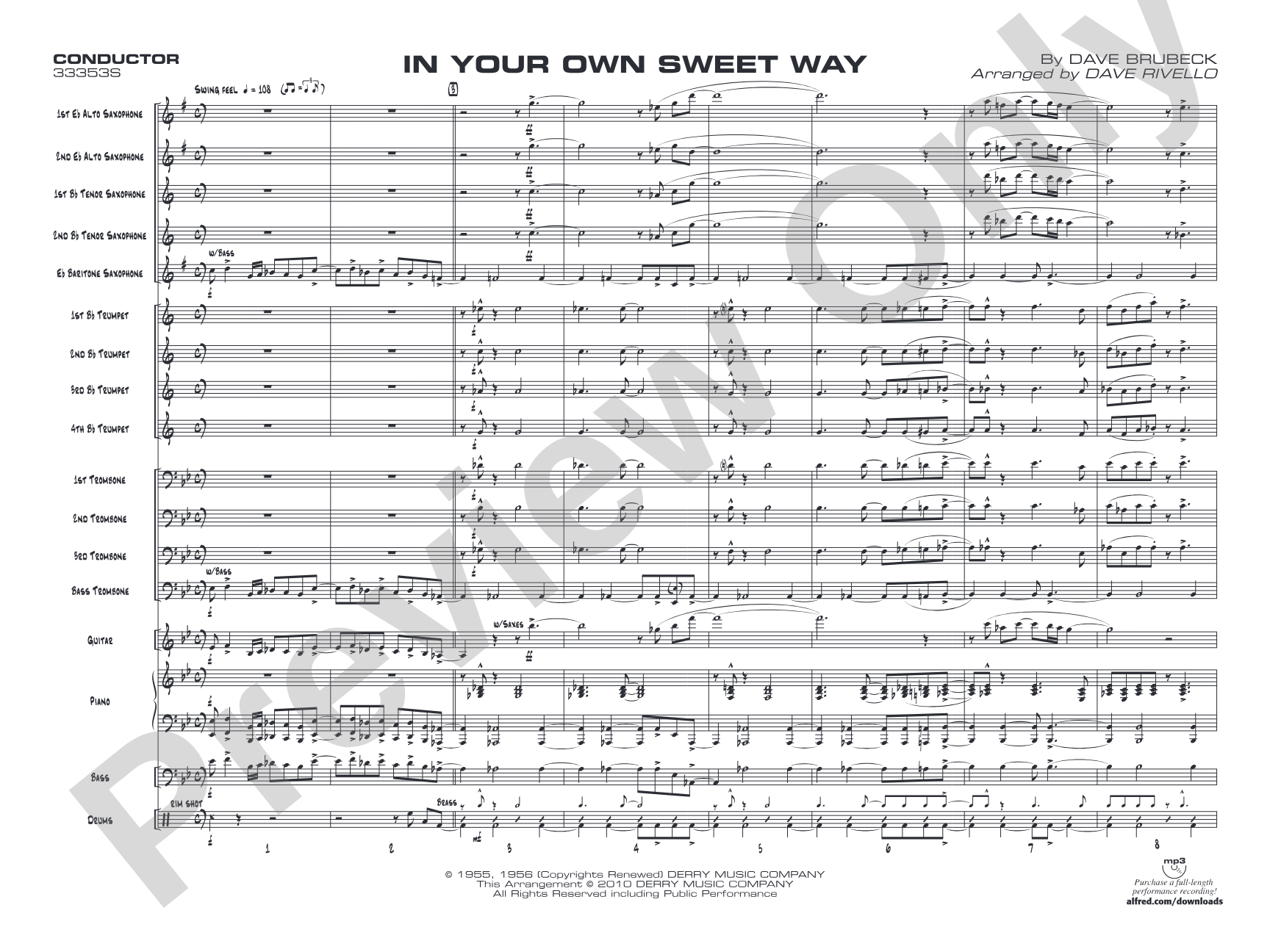
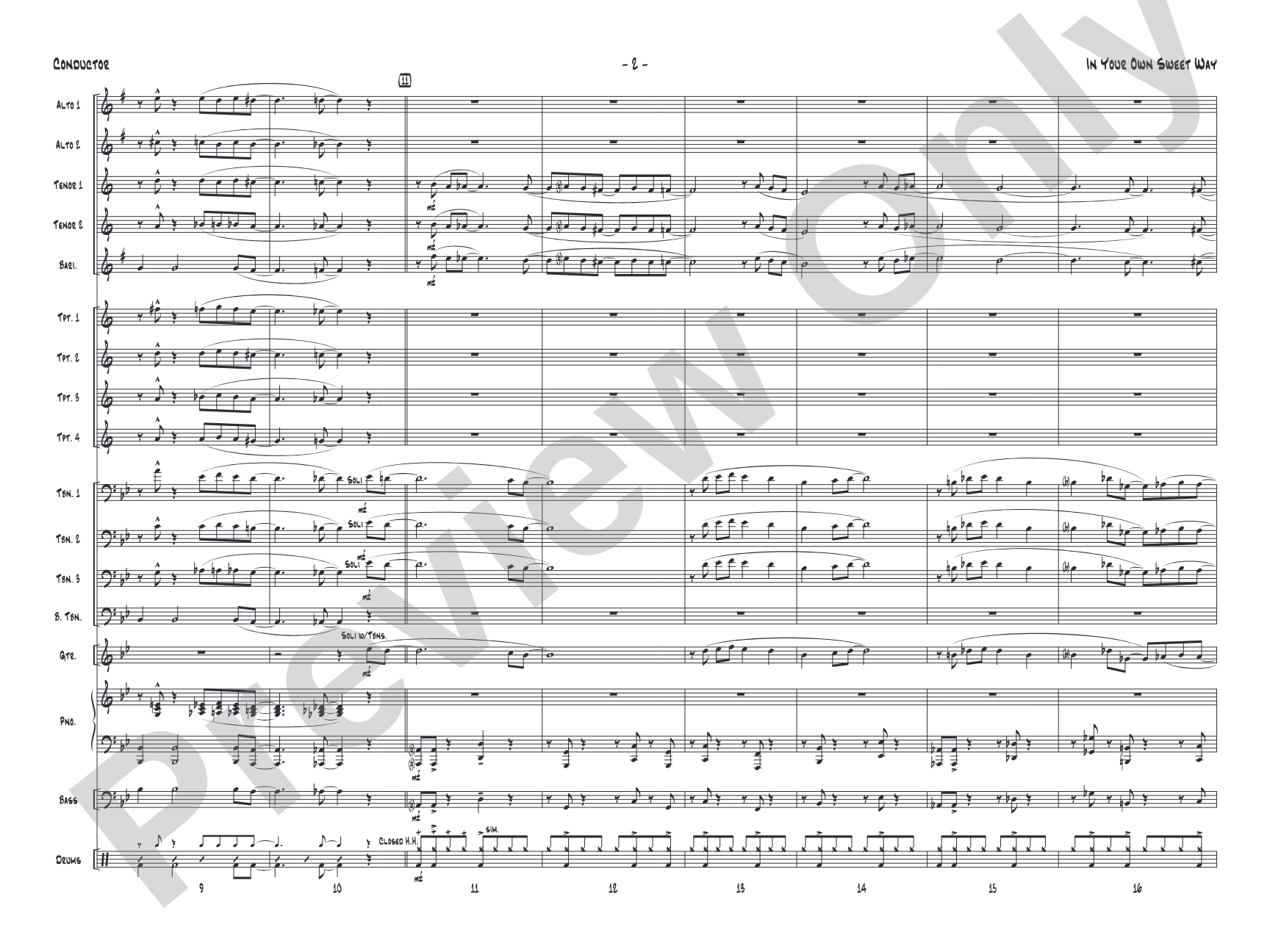
In Your Own Sweet Way is a a level 3 Jazz Band series piece designed for high school and advanced junior high school band. Full instrumentation includes 5 saxophones, 8 brass, and 4 rhythm parts. Optional parts include flute, tuba, horn in F and baritone T.C./tenor sax. Solos are written out with chord change the rhythm section parts suggest chord voicings and rhythms and guitar chord frames are provided to help young guitarists.


Don't just read it, hear it, play along with it, and watch your students grow with it. In MakeMusic Cloud, In Your Own Sweet Way: Jazz Ensemble Conductor Score & Parts comes alive with professional accompaniment, adjustable tempo, and built-in practice tools that turn solo practice into real progress.
Open in the Player
Jump straight in and assign it today.
Start Your Free Trial
Open this title and explore the full library in minutes.
Sample Audio
1
Audio File
--:--
0:00
0:00
Sample Video
No sample videos found.
Additional Details
Series:
Jazz Band Series
Publisher:
Alfred Music
Page Count:
104
SKU:
00-PK-0006928
More about this title
About the Composer: Dave Brubeck
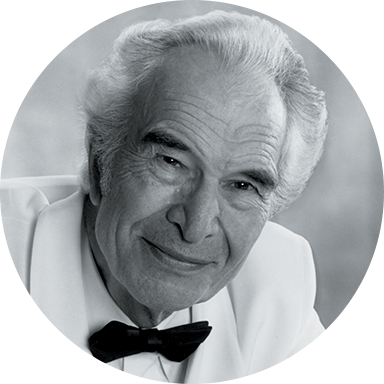
Dave Brubeck stands as one of jazz's most accomplished pianists and a composer who moved fluidly between improvisation and fully notated large-scale works. His output spans choral pieces, orchestral compositions, chamber music, and solo works across multiple instruments. He achieved unprecedented commercial success with the album Time Out, which became the first jazz recording to sell over one million copies, and he composed the iconic "Take Five." Beyond his musical innovations, Brubeck was a pioneering figure in breaking racial barriers in mid-twentieth-century American music.
Brubeck's formal training came from studying with Darius Milhaud at Mills College following World War II, an experience that shaped his approach to synthesizing jazz language with classical structure. His sacred works, including the mass To Hope! and the oratorios The Voice of the Holy Spirit and Beloved Son, have been recorded by major orchestras and performed internationally. Throughout his career, he received recognition including the Grammy Lifetime Achievement Award, the Presidential Medal of the Arts, and election to the American Classical Music Hall of Fame in 2003.
Why we love this
Brubeck's melodies are inherently singable and his harmonic language, while sophisticated, remains accessible to developing musicians. The arrangement balances solo opportunities with ensemble cohesion, making it both a rewarding vehicle for featured players and a genuine ensemble experience that builds section listening skills.
What to expect
The piece swings with the easy sophistication Brubeck brings to melody; there's a warmth to the harmonic movement that invites the band to listen and respond to each other rather than simply execute parts. The written solos and suggested rhythms in the rhythm section create moments of intimacy even within the full ensemble texture.
Who it's for
Jazz ensemble directors working with high school groups and advanced junior high programs who need repertoire that's musically substantial without overwhelming inexperienced soloists. It's ideal for ensembles with a complete rhythm section and mixed woodwind/brass strength.
How to get the most out of it
- Balance the written solos against the ensemble; they're written to sing through the changes without competing with the full band, so let them breathe while the rhythm section provides clear harmonic support.
- Use the provided guitar chord frames as a teaching tool with your rhythm section; they reinforce harmonic literacy and give less experienced guitarists a clear roadmap through the changes.
- Lock the swing feel in the rhythm section first before adding horns and saxes. The pocket determines whether the melody swings or sits flat.
- Treat the optional parts as expansion options once the core voicing is secure; they add color and fuller sound but aren't necessary for the arrangement to function.
How to use it
Program this as a standalone jazz feature or pair it with other medium-difficulty ensemble pieces to showcase your band's stylistic range. It works equally well as a spring concert highlight or as a vehicle for introducing younger ensemble members to the demands of jazz improvisation and section playing.
Skills your students will build
- Swing interpretation and feel in a notated context
- Reading and executing chord changes with written solos
- Section listening and blend within jazz voicings
- Rhythmic precision across mixed meters and syncopation
- Harmonic awareness through chord progression navigation
- Balance between solo and ensemble responsibility