In Your Own Sweet Way Cover Image

In Your Own Sweet Way: Jazz Ensemble Conductor Score

$9.00 USD
Sale price  $9.00 USD Regular price 
Skip to product information
In Your Own Sweet Way Cover Image

In Your Own Sweet Way: Jazz Ensemble Conductor Score

By Dave Brubeck / arr. Dave Rivello

Grade: 3 (Medium)

Item: 00-33353S

$9.00
Shipped

One moment…

Description
In Your Own Sweet Way is a a level 3 Jazz Band series piece designed for high school and advanced junior high school band. Full instrumentation includes 5 saxophones, 8 brass, and 4 rhythm parts. Optional parts include flute, tuba, horn in F and baritone T.C./tenor sax. Solos are written out with chord change the rhythm section parts suggest chord voicings and rhythms and guitar chord frames are provided to help young guitarists.

In Your Own Sweet Way: Jazz Ensemble Conductor Score isn't in MakeMusic Cloud just yet...but it could be. Let us know you'd like to see it, and you'll help shape what comes next. In the meantime, start a free trial and dive into thousands of interactive titles your students can play along with today.

Sample Pages

No sample pages found.

Sample Audio
No sample audio found.
Sample Video
Additional Details
Series: Jazz Band Series
Publisher: Alfred Music
Page Count: 16
UPC: 038081378435
SKU: 00-33353S

More about this title

About the Composer: Dave Brubeck
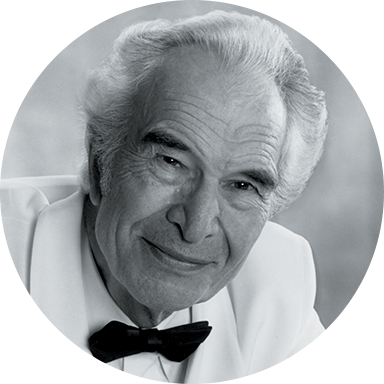
Dave Brubeck

Dave Brubeck's career spanned both the jazz and classical worlds with equal fluency. A pianist whose improvisational brilliance matched his compositional discipline, he wrote everything from chamber music and orchestral works to large-scale choral pieces. His landmark album Time Out became the first jazz recording to sell over a million copies, and "Take Five" remains one of the most performed jazz standards in the repertoire. Beyond his musical achievements, Brubeck was a civil rights pioneer who integrated his ensembles decades before the mainstream music world followed suit.

His compositional voice drew strength from his studies with Darius Milhaud at Mills College, where the French master encouraged him to fuse jazz language with classical craft. This synthesis shaped everything he wrote, from the orchestral suite Elementals to sacred works like To Hope!, which has been performed across the globe. Brubeck received the Grammy Lifetime Achievement Award and was honored with the Presidential Medal of the Arts. In 2003, he was inducted into the American Classical Music Hall of Fame, cementing his legacy as one of the twentieth century's most significant musicians.

Why we love this

Rivello's arrangement captures the harmonic sophistication and rhythmic freedom of Brubeck's jazz writing while keeping it accessible for high school ensembles. The written-out solos preserve the melody's jazz character without requiring advanced improvisation, and the explicit chord voicings and guitar frames guide young rhythm section players through changes that could otherwise feel overwhelming. Programming a Brubeck piece signals that your band knows real jazz history.

What to expect

Elegant and intelligent. The tune unfolds with a gentle sophistication that never sounds precious or overly academic. There's plenty of space for the rhythm section to shine and for soloists to develop phrases organically. The harmonic movement feels natural rather than forced, and the overall character is one of cool, conversational jazz rather than high-energy showmanship.

Who it's for

High school jazz bands and advanced junior high ensembles ready to explore real jazz repertoire. The Grade 3 difficulty level accommodates developing musicians while avoiding oversimplification; students must understand swing feel, chord changes, and section balance but won't need virtuosic chops. This works particularly well for bands that have moved beyond educational jazz and want to program music that respects the tradition.

How to get the most out of it

  • Balance the saxophone section carefully; with five players, they can easily overwhelm the soloists. The reeds should sit just behind the melodic line, particularly during head-in sections.
  • Take time in rehearsal to let students hear how the written solos should swing. Brubeck's melodies have a particular lilt that's different from straight reading. Have soloists listen to recordings to internalize the feel.
  • Watch the rhythm section's interaction with the soloists. The guitarist's voicings should answer, not compete with, what the horns are playing. Rehearse those moments separately if needed.
  • Honor the rubato in the bridge. These compositions breathe differently than big band charts; allow space for the tune to stretch slightly without losing forward momentum.

How to use it

Include this in a concert focused on jazz standards and American composers, pairing it with other pieces that honor the tradition without requiring professional-level chops. The 16-page score works well as a second-half opener, setting a sophisticated tone after an opening number. It's also an excellent choice for jazz festivals where adjudicators recognize Brubeck's name and expect thoughtful interpretation.

Skills your students will build

  • Swing articulation and phrasing in a jazz context
  • Reading and interpreting written jazz solos with appropriate rhythmic freedom
  • Understanding chord changes and their relationship to melody
  • Section balance and blend in a multi-reed, multi-brass configuration
  • Listening and responding to other ensemble members, particularly between soloists and rhythm section
  • Guitar voicing techniques and chord frame reading

You May Also Like