In Your Own Sweet Way Cover Image

In Your Own Sweet Way: Jazz Ensemble Conductor Score

$11.00 USD
Sale price  $11.00 USD Regular price 
Skip to product information
In Your Own Sweet Way Cover Image

In Your Own Sweet Way: Jazz Ensemble Conductor Score

By Dave Brubeck / arr. Annie Booth

Grade: 3

Item: 00-51903S

$11.00
Shipped

One moment…

Description
Check out this gorgeous Brubeck melody set in an easy swing groove around 120 BPM. Featuring your lead alto player on the melody with suggested written-out solo space. Lead trumpet range is to A above the staff, and all the usual optional parts, including flute and vibes. A tasty chart! (3:15)

In Your Own Sweet Way: Jazz Ensemble Conductor Score isn't in MakeMusic Cloud just yet...but it could be. Let us know you'd like to see it, and you'll help shape what comes next. In the meantime, start a free trial and dive into thousands of interactive titles your students can play along with today.

Sample Pages

Sample Audio
0:00
0:00
Sample Video
Additional Details
Series: Jazz Band Series
Publisher: Alfred Music
Page Count: 16
ISBN10: 1-4706-7746-6
ISBN13: 978-1-4706-7746-6
UPC: 038081599632
SKU: 00-51903S

More about this title

About the Composer: Dave Brubeck
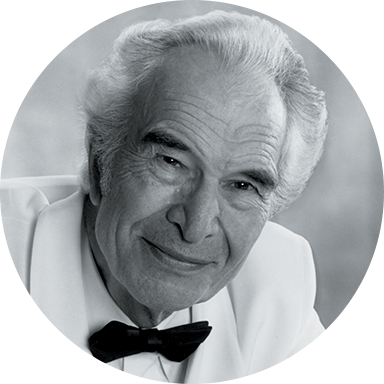
Dave Brubeck

Dave Brubeck was a jazz pianist whose improvisational prowess made him one of the most recorded artists of the twentieth century. Beyond his work as a performer, he composed extensively across multiple genres: choral works, hymns, orchestral pieces, chamber music, ballet suites, and large-scale works for chorus and orchestra. His landmark album "Time Out" became the first jazz recording to sell over a million copies, and his composition "Take Five" remains a jazz standard. Brubeck also studied composition with Darius Milhaud at Mills College after World War II, an influence that shaped his lifelong integration of jazz language with classical forms.

Throughout his career, Brubeck received recognition including the Grammy Lifetime Achievement Award, the Presidential Medal of the Arts, and induction into the American Classical Music Hall of Fame in 2003. Beyond his musical achievements, he played a significant role in advancing racial integration in jazz during the mid-twentieth century. His sacred works, including the mass "To Hope!" and various oratorios, have been performed and recorded worldwide by major orchestras and choral ensembles.

Why we love this

Brubeck's melodic gift shines through in this accessible swing setting, and Annie Booth's arrangement respects the tune's elegance while keeping the chart manageable for high school ensembles. The written-out solo space gives your lead alto a genuine feature, and the optional parts (flute, vibes) expand your instrumentation options without complicating the core chart. At grade 3 and 120 BPM, this hits the sweet spot between being groovy enough to engage students and straightforward enough to rehearse efficiently.

What to expect

Elegant and buoyant. The tune has a lyrical quality that swings without demanding flash, and the groove sits firmly in an easy pocket that lets students hear what good time feel actually sounds like. There's sophistication in Brubeck's original melody, but the arrangement keeps everything accessible and fun to play.

Who it's for

Jazz ensemble directors working with intermediate high school players who are ready for real swing grooves but still developing their improvisation and section cohesion. Lead alto players with solid fundamental technique will appreciate a feature that sits comfortably in their range and plays to the strength of the instrument.

How to get the most out of it

  • Balance the melody line so the lead alto sits clearly above the section voicings; the tune is the anchor, and overstated comping can bury it.
  • Lock the rhythm section's time feel first. The swing groove at 120 BPM depends on solid pocket from your drums and bass before the horns layer in.
  • Give your lead alto space to breathe during the solo section. Encourage them to listen to Brubeck's original recordings for stylistic reference and phrasing ideas.
  • Use the optional vibraphone to add color and sophistication during ensemble passages; it can be subtle enough not to overwhelm but distinctive enough to lift the arrangement.

How to use it

Program this as a strong complement to blues-based standards or bebop pieces; it offers a different melodic character and showcases what a composed jazz tune can do. The 3 minute 15 second length works well as a middle-set closer or a standalone feature that won't overwhelm a concert pacing.

Skills your students will build

  • Swing articulation and feel in a straightforward tempo (120 BPM)
  • Listening and blending within jazz section voicings
  • Reading lead alto melody and navigating simple solo space
  • Rhythmic precision in ensemble passages with optional instrumentation

You May Also Like