
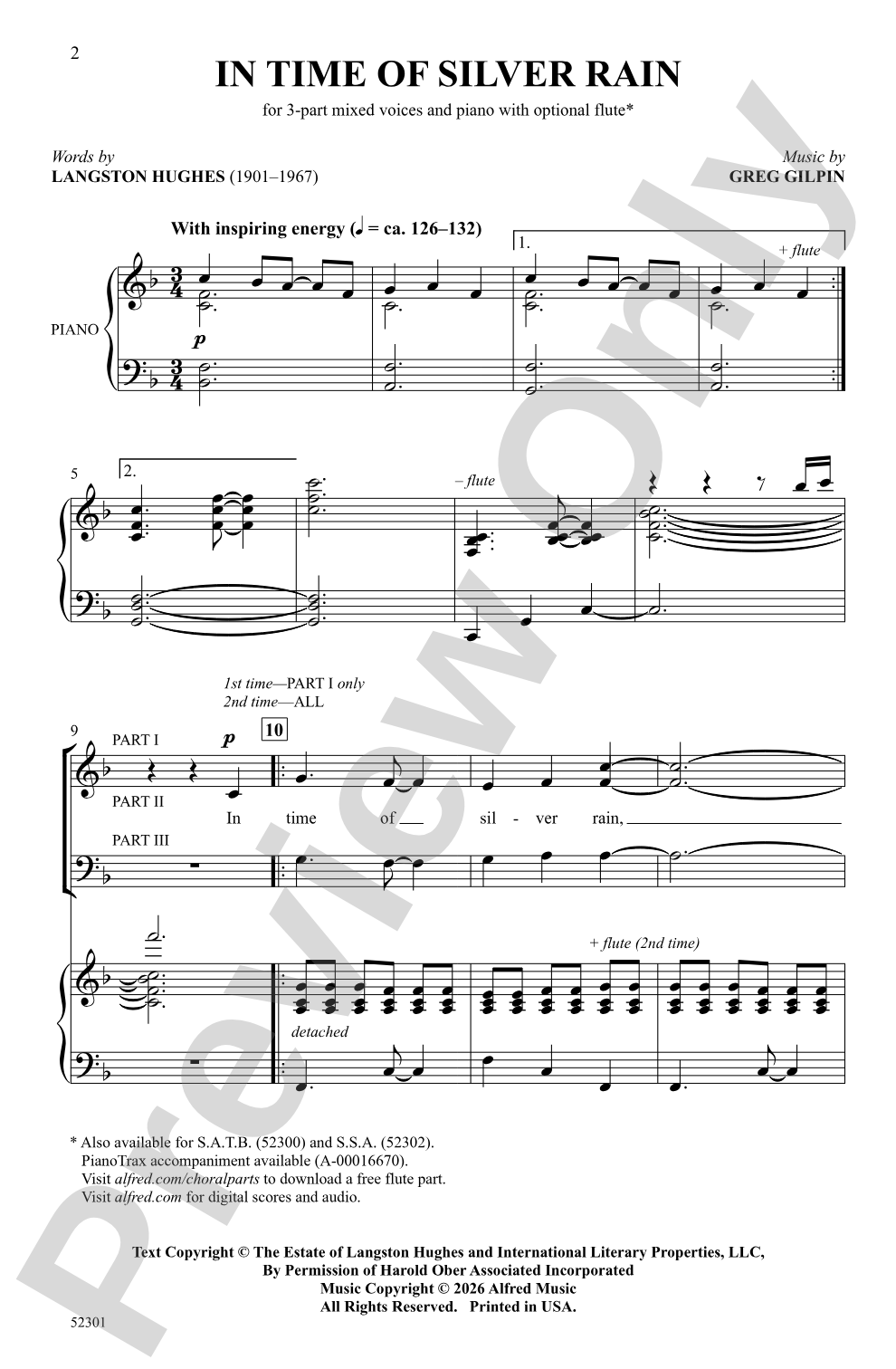

In Time of Silver Rain: 3-Part Mixed Choral Octavo
Words by Langston Hughes, music by Greg Gilpin
Item: 00-PO-0007868
$2.50
Minimum order quantity: 20 copies
Pickup currently not available
Description
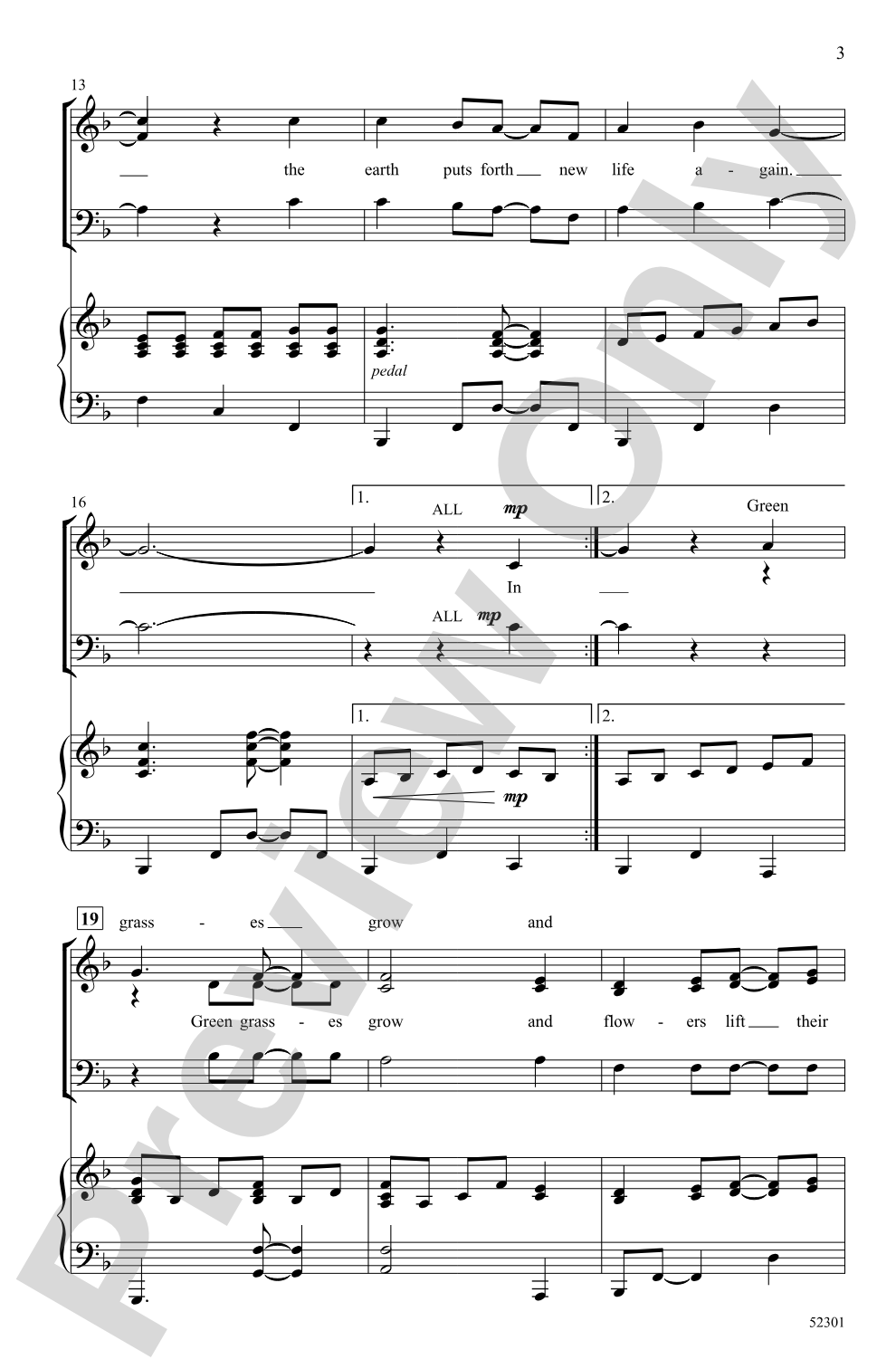
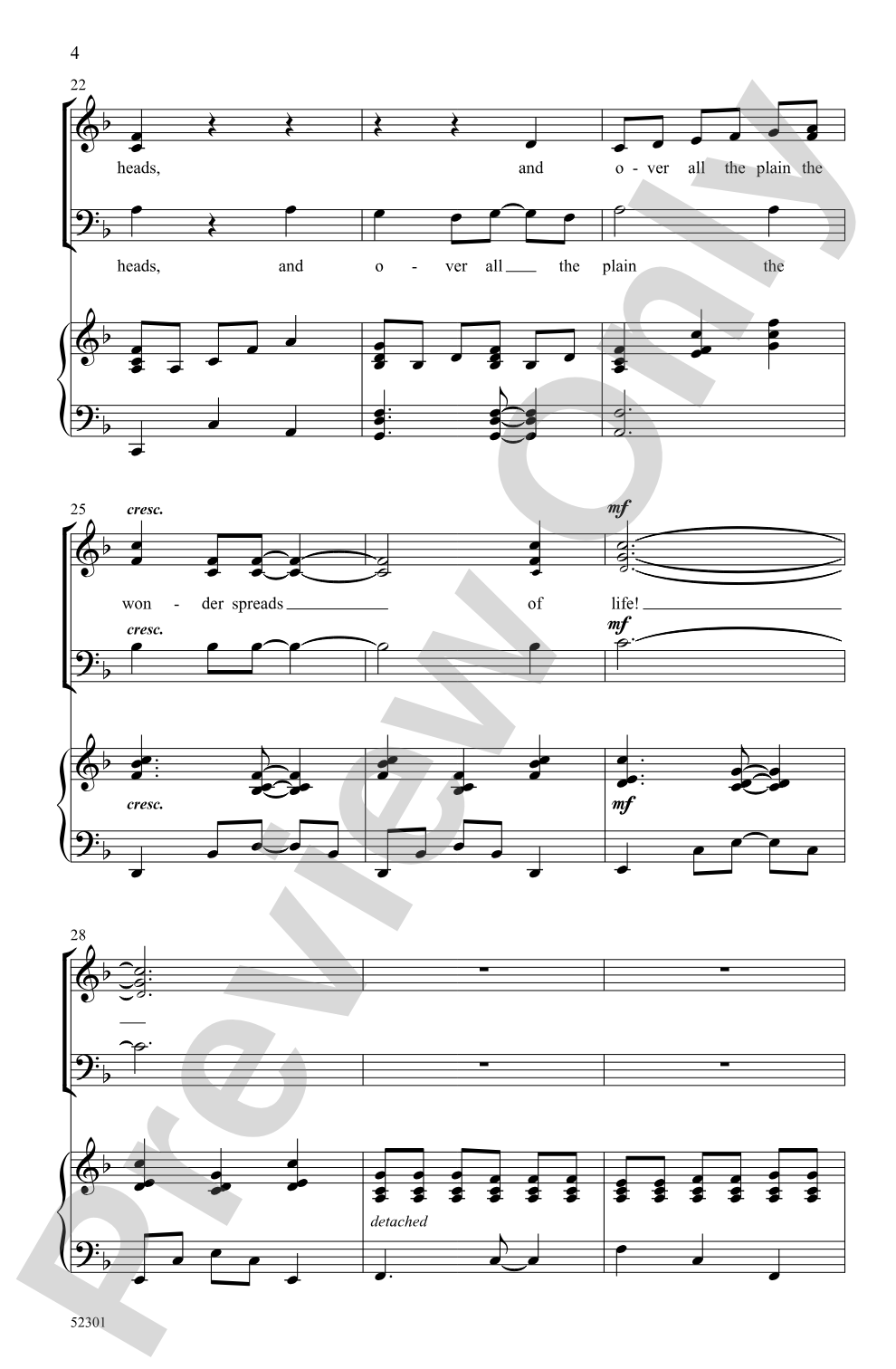
This joyful poem by Langston Hughes uses spring rain as a metaphor for hope and celebrates renewal. Listen for gentle syncopations, a sculpted melodic contour, and a variety of choral textures that flow effortlessly over the rhythmic piano accompaniment. This delightful selection is not difficult to sing, but sounds impressive with or without the nimble flute obbligato.


In Time of Silver Rain: 3-Part Mixed Choral Octavo isn't in MakeMusic Cloud just yet...but it could be. Let us know you'd like to see it, and you'll help shape what comes next. In the meantime, start a free trial and dive into thousands of interactive titles your students can play along with today.
Request This Title
Tell us you want it.
Start Your Free Trial
Explore everything that's ready to play right now.
Sample Audio
1
Audio File
--:--
0:00
0:00
Sample Video
Additional Details
Series:
Alfred Choral Designs
Publisher:
Alfred Music
Page Count:
12
SKU:
00-PO-0007868
Instrumentation:
Flute
More about this title
About the Composer: Greg Gilpin

Greg Gilpin brings decades of experience as both a composer and conductor to his choral writing. His works have been performed at major concert halls across North America, Europe, and Australia, including Carnegie Hall, Lincoln Center, and the Sydney Opera House. As Director of Educational Choral Publications for Shawnee Press, he combines his understanding of what works in the rehearsal room with his skill as an ASCAP-recognized composer.
Beyond the music world, Gilpin has pursued parallel careers in music production and professional organizing, even appearing on network television programs. His versatility as a musician and artist informs the accessibility and craftsmanship evident in his choral arrangements. He remains active in ACDA, NAfME, and Phi Mu Alpha Sinfonia.
Why we love this
Gilpin nails the balance between sounding polished and staying singable. The gentle syncopations and varied textures keep the piece musically interesting without requiring extensive rehearsal time, making it ideal when you need something that impresses both the singers and the audience. Hughes's hopeful text pairs beautifully with music that feels genuinely uplifting rather than saccharine.
What to expect
The music moves with a spring-like buoyancy, mirroring the renewal Hughes describes. You hear gentle rhythmic push in the accompaniment and moments where the parts split and interweave, creating texture without density. The overall effect is bright and hopeful, with enough sophistication in the writing to feel earned rather than simple.
Who it's for
This piece works beautifully for middle school, high school, and community choirs looking for accessible repertoire with genuine musical substance. The modest vocal range and straightforward part writing mean singers at multiple skill levels can succeed, yet the orchestration and text depth engage more experienced performers.
How to get the most out of it
- Shape the melodic contour deliberately at sectional work; mark the peaks and valleys in your score so singers understand where the line breathes and where it builds.
- Balance the piano accompaniment carefully so it supports without overwhelming the voices. The rhythm is nimble enough to stay transparent if kept light.
- If you include the flute obbligato, rehearse it separately with the voices first, then layer it in. It should enhance, not compete with the choral texture.
- Pay attention to the syncopations in context; conduct them clearly and ask singers to feel the push forward rather than fight the rhythm.
How to use it
Place this in a spring concert alongside other nature-inspired or hopeful texts, or use it as a standalone feature when you want a piece that connects literature and music. Its moderate difficulty and impressive sound make it equally suited to contest/festival settings or special assembly performances where you need something that lands with impact in a short rehearsal window.
Skills your students will build
- Reading and performing syncopated rhythms in a choral context
- Blending three-part SAB voicing with attention to harmonic balance
- Responding to poetic text to shape phrasing and dynamic contour
- Coordinate singing with piano accompaniment that drives the rhythm forward
- Optional flute part coordination and layered texture awareness